
What is a Starter Home?
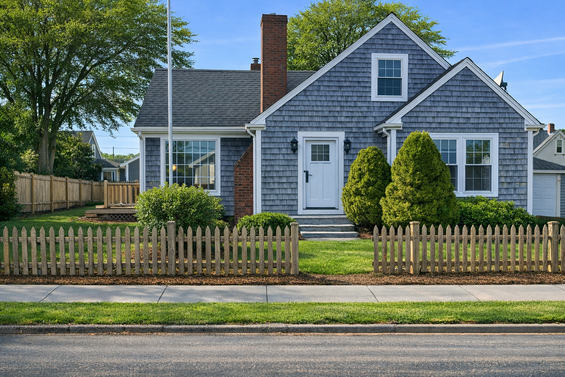
A “starter home” is a smaller single-family home suitable for first-time home buyers, downsizing, smaller households, and people needing a more affordable single-family housing option.
Enacted in 2022 through An Act Relating to Economic Growth and Relief for the Commonwealth (Acts of 2022, Chapter 268), the Starter Home Zoning Districts Act (M.G.L. Chapter 40Y), encourages communities participate in this optional program and create starter home zoning that reduce barriers to creating smaller, more affordable starter homes.
This law encourages towns and cities to allow starter homes where it makes the most sense for their community.
What is Chapter 40Y?
Chapter 40Y - the Starter Home Zoning Overlay District Act - is a state law enacted in 2023 that helps cities and towns voluntarily create zoning districts that support homes that are designed for someone buying their first home, downsizing, or for smaller households.
What 40Y zoning allows and requires
Chapter 40Y encourages cities and towns to adopt zoning that:
- Allows starter homes up to 1,850 square feet to be built as‑of‑right
- Supports creation of smaller single‑family homes on compact lots
- Requires at least 50% of homes to have three or more bedrooms
- Requires at least 10% of homes to be affordable to households earning up to 110% of area median income
- Includes clear local design standards for predictable development
A 40Y district must allow housing at minimum densities of:
- 4 starter homes per acre (4 units/acre)
Projects must be developable as-of-right, subject only to limited site plan review and local design standards. Depending upon how the 40Y zoning is adopted, developers may apply for approval to build under 40Y zoning or under the community’s existing base or “underlying” zone.
Where 40Y districts can be located
Starter Home Zoning Districts may be located in any area of a community that the municipality identifies through its local planning and zoning process. Chapter 40Y does not require districts to be near transit, in village centers, or in any other specific type of location. A district may be placed:
- In existing residential neighborhoods
- Near town or village centers
- Along corridors or other locally identified areas
- Or in any other location chosen by the community, as long as the zoning meets Chapter 40Y requirements and is approved by EOHLC
State approval and financial incentives
To create a 40Y district, a municipality must:
- Submit eligibility application including the proposed zoning to EOHLC for preliminary approval prior to local legislative action
- Adopt the zoning as preliminarily approved
- Receive conditional or final approval from EOHLC
Once EOHLC approves a District, a city or town becomes eligible for two types of state payments, one when receiving conditional or final approval, and the second when construction begins:
- Zoning Incentive Payment — a one-time payment of $10,000 to $600,000, based on the number of additional as-of-right units allowed by the new zoning.
- Density Bonus Payment — $3,000 per new unit when construction begins and any applicable affordability requirements are recorded on homes that were not previously allowed as-of-right.
These incentives can generally be put towards a wide variety of local investments including support of local planning, infrastructure, and implementation of Starter Home Zoning Districts.
Why should cities and towns consider 40Y?
Benefits for local housing and community needs
40Y helps cities and towns:
- expand opportunities for smaller single‑family homes
- set clear, locally crafted rules that make the permitting process predictable and as‑of‑right
- meet local housing needs by allowing modest starter homes, including homes affordable to households earning up to 110% of area median income
- support neighborhood‑scale development that aligns with local planning goals
Financial support for local investments
Cities and towns with an approved 40Y District are eligible for a Zoning Incentive Payment and Density Bonus Payments. These funds can help communities make one‑time capital investments that support local priorities. Eligible uses include:
- transportation and public‑realm improvements, including sidewalks, crosswalks, lighting, and multi‑modal access
- utility or system upgrades needed to support new homes in or near the district, such as water or sewer improvements
- community infrastructure or equipment with a long‑term useful life, such as public safety, public works, or other municipal capital needs
- planning, design, or site work that directly supports a capital project
These examples highlight common eligible uses of 40Y payments. Additional guidance will be provided as EOHLC develops program materials.
Getting a 40Y District Approved
Establishing a 40Y Starter Home Zoning District involves a structured state review process, local adoption, and final approval by EOHLC. Cities and towns design their districts locally within the framework of Chapter 40Y and submit required materials through the online application forms.
Application process
Cities and towns submit a 40Y application that includes the proposed zoning, district boundaries, required calculations, any design standards, and supporting documentation. EOHLC conducts a preliminary review to confirm compliance with Chapter 40Y and 760 CMR 69.00. After preliminary approval, the city or town may proceed to local adoption before seeking final approval.
Required forms
All application materials will be submitted through standardized online forms, which will be made available Summer 2026. Required forms and documentation may include the district application, mapping materials, any proposed design standards, and pre‑and post‑adoption municipal certifications.
Review timeline
The review process for establishing a 40Y District includes:
- A local pre‑application public hearing on the draft district application
- Preliminary eligibility review by EOHLC (45 days from the official application acceptance date)
- Local adoption of the zoning, followed by Attorney General review for towns
- EOHLC approval after submission of the adopted zoning and any required materials
Once final approval is achieved, the city or town generally becomes eligible for the initial zoning incentive payment and, once building permits are issued, one or more density bonus payments.
40Y Resources
These resources offer support, data, and background materials for cities and towns exploring or implementing a 40Y Starter Home Zoning District.
Zoning templates
EOHLC will provide model Starter Home Zoning templates that cities and towns may adapt to local conditions Fall 2026. The templates will incorporate statutory requirements for unit size, bedroom mix, affordability, minimum density, and as‑of‑right development to ensure consistency with Chapter 40Y.
Other 40Y guides
Cities and towns will have access to additional resources to support the development of a 40Y Starter Home Zoning District Fall/Winter 2026. These guides will offer background, examples, and best practices that complement the zoning template and help communities refine their zoning, strengthen district design, and prepare for a smooth review process.
State partners, technical assistance, and funding
- EOHLC 40R Program Staff – technical assistance from early concept through adoption and implementation
- Community One Stop for Growth – grants for planning, zoning, community engagement, and predevelopment work
Regional Planning Agencies (RPAs)
RPAs can assist cities and towns with mapping, build‑out analysis, public engagement, and zoning review.