
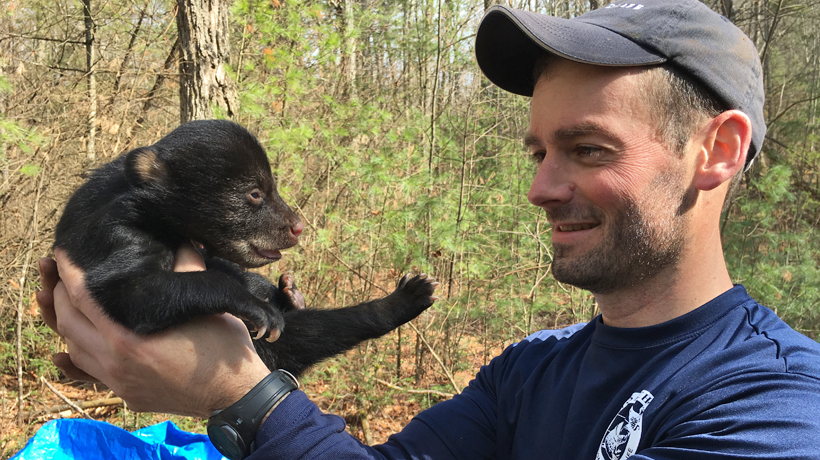
For over 40 years, MassWildlife biologists, graduate students, and researchers have been using radio tracking collars to collect essential information from female black bears, known as sows. On average, about 40 sows are fitted with radio tracking collars across the state. These collars provide data about sow survival, reproduction rates, and cub survival, which is critical to understanding our growing and expanding black bear population.
Winter black bear research
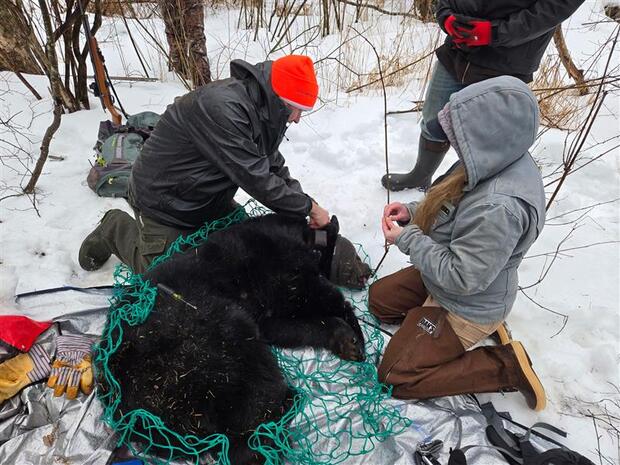
In Massachusetts, black bear mating typically occurs between May and July, peaking in June. Depending on food availability and snow cover, bears will enter a den between early November and mid-December and exit between early March and mid-April. Pregnant females will always den, as this is where they give birth. If food sources, like bird feeders, are available throughout the winter, males, lone females that are not pregnant, and females with yearlings may remain active during the winter.
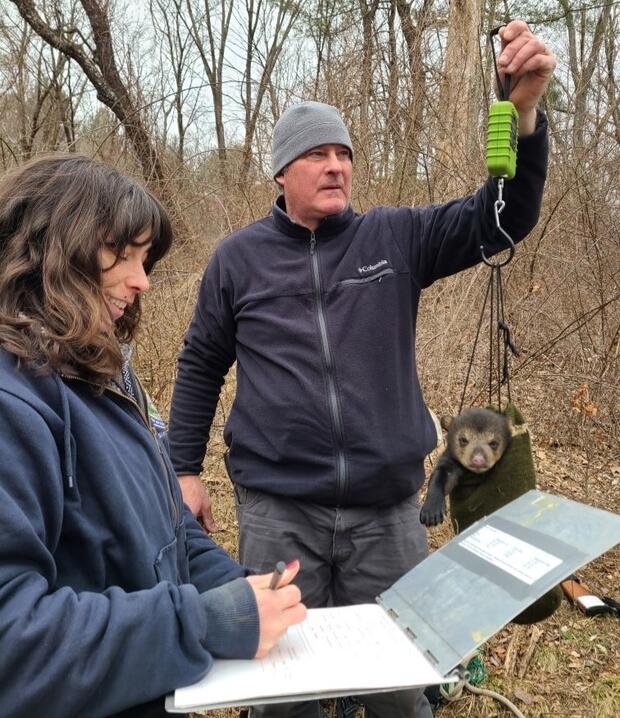
Each winter, MassWildlife biologists visit the dens of sows with radio tracking collars. Winter dens can be a hollow log or tree, rock crevice, or a ground nest under fallen trees or brush. Sows may den alone, with newborn cubs, or with their young born the previous winter, called yearlings. Newborn cubs are born small, blind, and helpless in the den in January. To give the sow a chance to bond with her cubs and for the cubs to grow, biologists wait until the end of February before visiting dens with newborns.
When visiting a den, highly trained staff chemically immobilize the sow and examine her health. The sow’s radio collar is evaluated for proper fit and replaced if necessary. If there are newborn cubs, they are counted, sexed, and weighed. Cubs born this winter will stay with their mother and den again with her next fall as yearlings. When biologists visit a sow and her yearlings the following year, they collect information on cub survival and growth after their first year. Adults and yearlings get blue or orange ear tags with unique identifying numbers, and some female yearlings are fitted with an expandable collar to be added to the study.
What we learn from the study
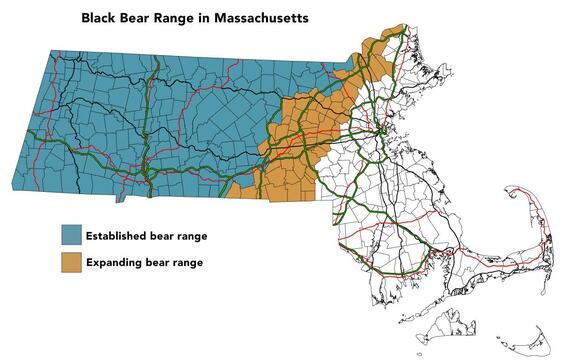
By radio collaring sows, biologists learn about survival and reproductive rates, which enables them to model whether the bear population in Massachusetts is growing, declining, or stable. The models show that our state’s bear population is increasing in size and expand eastward. Through the study, we also know that the average age at first reproduction for sows is 3 years old and the average litter size is 2–3 cubs, with the first litter often being smaller and having lower cub survival rates than subsequent litters.
Thanks to funding from the Massachusetts Department of Transportation (MassDOT), about half of the radio tracking collars have GPS units that track bear movement and habitat use. GPS collars use satellites to record location every 45 minutes. This movement data is then used by MassWildlife and MassDOT to improve habitat connectivity and minimize road impacts on bears and other wildlife. It also provides insight into how black bears regularly use human-dominated landscapes. Study data shows that black bears live in some of the most developed areas of the state, with adult females living and raising cubs in suburban and urban areas across western and central Massachusetts.
Our future with black bears
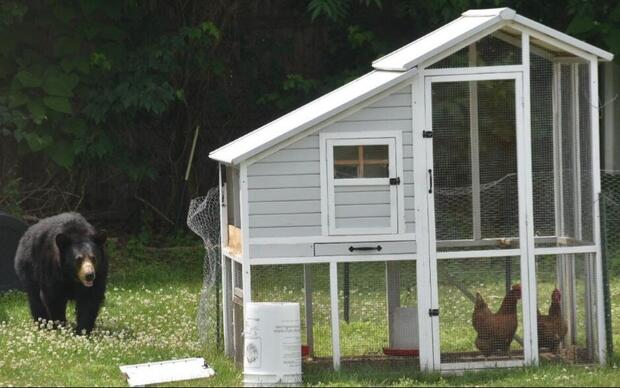
Study data, hunter harvest reports, and public sightings of bears indicate that bear densities are increasing in central Massachusetts, and the occupied bear range is moving east of I-495. This means that more residents need to learn how to coexist with black bears. Black bears spend time in residential areas when they can easily find food, like bird seed and trash. This can cause a bear to lose its fear of people, which can lead to the bear becoming a threat to human safety and needing to be euthanized. You can help keep bears healthy and wild by:
- Never intentionally feeding bears and other wildlife.
- Taking down bird feeders year-round and supporting songbirds by growing native plants and maintaining a clean bird bath instead.
- Protecting chicken coops, beehives, and other small livestock with effective and maintained electric fencing.
- Securing garbage and compost and cleaning up outdoor pet food.
Learn more at mass.gov/bears.