

Introduction
The Facilities Management and Maintenance Standards (FMMS) are issued pursuant to M.G.L. Chapter 7C, Section 26 and are advisory in nature. This March 2019 version supersedes the previous May 2018 edition. The FMMS reflect current state policies, best practices, and industry trends for the maintenance and care of Commonwealth facilities.
The FMMS are available on the DCAMM website as a resource for Commonwealth agencies to enhance and build upon high quality stewardship of Commonwealth assets, along with promoting the uniform and universal care of buildings, as appropriate. Each Standard includes a glossary of definitions and a list of tools and resources, which are compiled for all FMMS in Appendix A and Appendix B, respectively.
References to the most recent Governor’s Executive Orders can be found at: EO 500-599
The FMMS are not intended to be all-inclusive. Agencies should always consult their own general counsel or legal advisor for questions regarding requirements of law for their specific facility and uses.
Security - FMMS 01
Purpose and Scope
This Security Standard establishes summary best practices for the protection of people and property at Commonwealth Facilities.
This Standard includes best practices for:
- Physical Security for the interior, exterior, perimeter, common areas, and public spaces at all facilities.
- Operational Security for management activities related to such facilities.
- Guidelines for access control, intrusion detection, video surveillance, and security communication.
- Coordination of emergency response personnel.
This Standard is based on the Interagency Security Committee (ISC) standards and tools developed in conjunction with the Department of Homeland Security (DHS), Office of Infrastructure Protection (IP), and DHS Science and Technology Directorate (ST).
Childcare centers, hospitals, correctional facilities, and any other specialized facilities must comply with specific statutory and regulatory requirements applicable to the facility, requirements which are not part of this FMMS.
Any specialized security needs within User Agency spaces are the responsibility of the User Agency and should be coordinated with the security needs and practices of the Controlling Agency and any other agency at the facility.
Definitions
Commonwealth Facilities: Buildings owned by the Commonwealth and under the supervision and control of a specific state agency.
Controlling Agency: A state agency with the “legal control or jurisdiction” of the property as provided by M.G.L. Chapter 7C, Section 41, which carries with it the right to “occupy, or make expenditure for the maintenance of, any land, buildings or other state-owned or state-occupied facilities.” The Controlling Agency is usually a User Agency as well. Control and jurisdiction does not mean that a state agency is the owner of the property since the Commonwealth owns all state property.
Department of Homeland Security (DHS): The federal agency responsible for protecting the United States and its territories (including protectorates) from and responding to terrorist attacks, man-made accidents, and natural disasters.
DHS Office of Infrastructure Protection (IP): The office responsible for leading the national effort to protect critical infrastructure from all hazards by managing risk and enhancing resilience through collaboration with the critical infrastructure community. The office conducts and facilitates vulnerability and consequence assessments to help critical infrastructure owners and operators and state, local, tribal, and territorial partners understand and address risks. IP provides information on emerging threats and hazards so that appropriate actions can be taken. The office also offers tools and training to partners to help them manage the risks to their assets, systems, and networks.
DHS Science and Technology Directorate (ST): The primary research and development arm of DHS which manages science and technology research from development through transition for the Department's operational components and first responders.
Facility Manager: The person responsible for the maintenance and operation of a facility, under the control and jurisdiction of the Controlling Agency, which includes oversight of all internal Facility Staff and external contract Service Providers.
Facility Security Assessment (FSA): A written document that is based on the collection of background information, an on-scene survey, and on an analysis of that information.
Facility Staff: Internal Service Providers reporting to the Facility Manager for maintenance and operation of a facility.
Interagency Security Committee (ISC): The federal committee created under U.S. Executive Order 12977 to address continuing government-wide security for federal facilities. The ISC’s mandate is to enhance the quality and effectiveness of Physical Security in, and the protection of buildings and nonmilitary federal facilities in the United States. The ISC standards apply to all nonmilitary federal facilities in the United States - whether government-owned, leased or managed; to be constructed or modernized; or to be purchased.
Level of Protection (LOP): A set of protective measures that may be customized to address site-specific threat conditions.
Licensee: Individual or entity that is not a state agency or state employee but occupies the space of a User Agency as part of a service contract or other arrangement with the User Agency to further the User Agency’s mission. For example, a private consulting firm hired by an agency might be provided with offices inside the agency’s space. The consulting firm would be a Licensee.
Life Safety and Security Manager: The person responsible for implementing safety policies and procedures at a Commonwealth Facility and for leading the Controlling Agency’s response to emergencies. The Life Safety and Security Manager works in close coordination with the Facility Manager.
Massachusetts Emergency Management Agency (MEMA): The state agency charged with ensuring that the state is prepared to withstand, respond to, and recover from all types of emergencies and disasters. MEMA ensures the Commonwealth’s ability to rapidly recover from disasters by assessing and mitigating hazards, enhancing preparedness, ensuring effective response, and building the capacity to recover.
Occupant(s): The individuals or entities that occupy space in a Commonwealth Facility by virtue of their status as a Controlling Agency and/or User Agency including their employees, or because they are permitted to use the space as a Licensee of a User Agency.
Occupant Usable Areas: The areas of a building designated for exclusive use by an Occupant (typically a User Agency) for business purposes that houses personnel, equipment, fixtures, furniture and supplies. It is measured to the inside face of the Occupant area demising walls and the limit of the floor area at exterior walls. It is commonly referred to as ‘carpetable area.’
Occupant Emergency Plan (OEP): Process and procedures to guide building Occupants through various incidents. The purpose of the OEP is to create a healthy and safe environment for building Occupants and visitors in a coordinated response for all emergencies.
Operational Security: A component of the facility/building security program/plan focused on people. This includes the provision of staff to support the security protocol, education, and training of employees, and the procedures for managing contractors, vendors, and visitors.
Physical Security: The type of security that addresses actions one can take to protect buildings, property, and assets against intruders. When designing a Physical Security program, the three levels one needs to protect are the outer perimeter, the inner perimeter, and the interior. Examples of Physical Security measures include barriers, fences, gates, walls, outside perimeter lighting, signage, locks, and access control points.
Security Staff: In-house security presence that performs a range of security roles, and may be cross-trained for duties such as control center monitoring, incident investigation, and emergency preparedness support.
Security Technology Standards: Series of technology specifications for equipment installed at Commonwealth Facilities. These specifications identify acceptable security equipment and technology to be used to provide the LOP specified from the Facility Security Assessment. The Security Technology Standards include information on access control software, cards and readers, video cameras, storage systems, management software, screening equipment and turnstiles, site protection systems (bollards, fencing, gates), and other related systems.
Service Providers: The parties responsible for completing the maintenance and management activities at Commonwealth Facilities. Service Providers at the facility may be internal Facility Staff, external contract providers, or both.
Technological Security: A component of the facility security program that involves the management of technical data and systems, alarm systems for intrusion detection, video monitoring systems, building automation systems that control HVAC and lighting, fire alarm systems, communication systems such as radios and emergency call boxes, and access control of spaces.
User Agency or Agencies: A state agency or agencies that have the legal right to use and occupy all or a portion of any building, facility, improvement, or property owned by the Commonwealth for its agency mission and purposes. A User Agency may have the exclusive use of an entire building, or in a multi-occupancy facility, it may have the exclusive use of part of the building (the User Agency’s Occupant Usable Area) and the right to use common areas which is shared with other Occupants. A User Agency is also an “Occupant” as defined herein.
Best Practices
1.0 Roles
| Number | Details |
|---|---|
| 1.1 | The Controlling Agency is responsible for implementation of this Standard at its facilities. |
| 1.2 | The Controlling Agency and each User Agency should identify their specific security needs at the facility, and coordinate these needs with those of the entire facility including, but not limited to, providing the proper physical, operational, and technical security. |
| 1.3 | The Controlling Agency, in coordination with all User Agencies, should oversee the completion of all activities under this Standard during both normal operations and actual disaster/emergency incidents and should determine the individuals responsible for providing these services at the facility. These individuals may include, but are not limited to, the following a. Life Safety and Security Manager b. Security Staff c. Facility Manager d. Facility Staff e. Contracted Service Providers |
| 1.4 | Facility security measures are managed by the Controlling Agency and should be coordinated with the Facility Manager and the Life Safety and SecurityManager. |
2.0 Implementation
| Number | Details |
|---|---|
| 2.1 | The Controlling Agency should ensure that the following security service activities occur at its Commonwealth Facilities, and should determine the individuals responsible for carrying out each activity listed below on a case-by-case basis depending on the specific facility. |
| 2.2 | Ensure there is agreement between the Controlling Agency and User Agencies (which are responsible for their Occupants) concerning the level of security needs at the facility. |
| 2.3 | Provide, at a minimum, the following: a. Physical Security for the facility interior, exterior, perimeter, common areas, and public spaces. b. Operational Security for carrying out all security practices on a day-to-day basis and for managing all facility Occupants during and after an actual disaster/emergency event. c. Technological Security for access control, intrusion detection, video surveillance, and security communication. d. Coordination of emergency response personnel. |
| 2.4 | Complete a Facility Security Assessment (FSA) to determine the Level of Protection (LOP) required for the facility and the specific measures necessary to achieve this LOP. |
| 2.5 | Document the results of the FSA and the recommendations for achieving the LOP in a report that may be made available to all facility Occupants and regulatory agencies involved with security at the facility. |
| 2.6 | Establish a security management program at the facility, and review the program on a regular basis to ensure compliance with current best practices. |
| 2.7 | Coordinate with all relevant authorities having jurisdiction (specifically the Massachusetts State Police station of jurisdiction and if applicable, local law enforcement) to ensure they are aware of on-site activities involving security. |
| 2.8 | Provide guidance during all phases of security operations to assist with providing the proper Physical, Operational, and Technological Security. |
| 2.9 | 2.9 Ensure Physical Security measures are in place: a. Coordinate security measures to provide Physical Security of the facility interior, exterior, perimeter, common areas, and public spaces. b. Where current security measures in place do not achieve the LOP identified during the FSA, document what elements are missing. |
| 2.10 | 2.10 Implement security planning activities, including, but not limited to, the following: a. Plan and coordinate response to security incidents including coordination with first responders and authorities having jurisdiction, specifically the Massachusetts State Police, and, if applicable, local law enforcement. b. Record and report information on routine procedures, emergency situations, and unusual incidents. |
3.0 Materials and Equipment
| Number | Details |
|---|---|
| 3.1 | Physical Security Measures (i.e., materials, products, equipment, and tools) should be considered for installation at the facility based on the findings of the FSA. These measures include, but are not limited to, the following: a. Access control points b. Barriers and walls c. Fences d. Gates e. Exterior security lighting f. Signage g. Locks |
| 3.2 | Physical Security measures installed at the facility shall meet all federal and state laws, regulations, and requirements in place at the time of purchase. |
| 3.3 | 3.3 Control of security systems should be established and centralized at each facility or at an off-site designated control center. The Life Safety and Security Manager should specify when the control needs to be established on-site or off-site. a. Access control systems should be integrated with other security systems in place at the facility. b. Intrusion detection systems should be designed and installed to operate in coordination with other building systems. |
4.0 Regulatory Compliance
| Number | Details |
|---|---|
| 4.1 | Ensure compliance with applicable codes, laws, and regulations. |
| 4.2 | Ensure all Service Providers comply with applicable health and safety training related to the services they provide and the products they use. |
5.0 Training
| Number | Details |
|---|---|
| 5.1 | An ongoing training program should be in place for all security Service Providers and User Agency representatives to ensure compliance with security-related best practices, procedures, processes, products, and contract requirements. |
| 5.2 | Training content should follow applicable industry standards for security procedures, including, but not limited to, the following: a. Security management of the facility/building. b. Communication skills necessary for dealing with Occupants, Service Providers, local jurisdictions, and visitors. c. The Occupant Emergency Plan (OEP) for each facility. These plans include, but are not limited to, the following activities: • Facility/building evacuation, including evacuating persons with disabilities. • Fire safety planning. • Emergency management planning. |
| 5.3 | Occupants should be trained in proper Security and OEP procedures. Training of Occupants is usually the responsibility of the Life Safety and Security Manager at a facility. In addition to the above training programs, security contract Service Providers shall comply with any other training requirements their contracts require. |
6.0 Communication
| Number | Details |
|---|---|
| 6.1 | The Controlling Agency and User Agencies should ensure specific and appropriate communication across staff, Service Providers, and their Occupants, if any. |
| 6.2 | Service Providers should not communicate directly with facility Occupants. All communication with facility Occupants should only occur through the Facility Manager, Life Safety and Security Manager or a designated representative, as appropriate to the situation. |
| 6.3 | Security Staff should be provided with accurate and updated contact information for key facility personnel and services (e.g., Life Safety and Security Manager, Facility Manager, etc.). |
| 6.4 | Communication of the following by the appropriate people and through the designated processes should be ensured: a. Pertinent advisories transmitted from the Massachusetts Emergency Management Agency (MEMA), the Federal Emergency Management Agency (FEMA), the Massachusetts State Police, and other appropriate authorities. b. Any changes to the Physical Security of the facility. c. Regular updates to Occupants on security planning and procedures. d. Information about emergency situations and unusual incidents. |
7.0 Recordkeeping and Tracking
| Number | Details |
|---|---|
| 7.1 | The Controlling Agency and all User Agencies should ensure proper recordkeeping activities occur at its Commonwealth Facilities, and should determine the individuals responsible for tracking and collecting the below information on a case-by-case basis depending on the specific facility |
| 7.2 | Best practices and lessons learned from other Commonwealth Facilities. |
| 7.3 | Required changes into the physical, operational, and technical security programs |
| 7.4 | Security data for the facility, including: a. Visitor processing statistics. b. Alarm activation and response. c. Documentation of conditions and incidents. |
| 7.5 | Security activity and incident tracking log. |
Tools and Resources
N/A
Suggested Metrics
Time to process visitors through security.
Grounds and Landscape Maintenance - FMMS 02
Purpose and Scope
This Grounds and Landscape Maintenance Standard establishes summary best practices for exterior site work at Commonwealth Facilities. Grounds and Landscape Maintenance services should reflect the actual conditions at the facility and the specific needs of the User Agencies;
Grounds and Landscape Maintenance plans should incorporate site-specific vegetation, environmental, and cultural elements at each site, and should conform to applicable strategies established through certification programs (i.e. LEED or SITES™).
Activities included within the scope of this Standard should be carried out in a manner that complies with all regulatory industry requirements. Specialized requirements for facilities occupied by the Massachusetts Department of Conservation and Recreation (DCR) and other agencies may be addressed in facility-specific documents, requirements which are not part of this FMMS.
Massachusetts Executive Order 515: Establishing an Environmental Purchasing Policy (2009), pursuant to which the Massachusetts Operational Services Division (OSD) has created the Environmentally Preferable Products (EPP) Program, which requires all Executive Branch agencies and Service Providers to use EPPs, including environmentally preferable green cleaning products and equipment.
Definitions
Controlling Agency: A state agency with the “legal control or jurisdiction” of the property as provided by M.G.L. Chapter 7C, Section 41, which carries with it the right to “occupy, or make expenditure for the maintenance of, any land, buildings or other state-owned or state-occupied facilities.” The Controlling Agency is usually a User Agency as well. Control and jurisdiction does not mean that a state agency is the owner of the property since the Commonwealth owns all state property.
Environmentally Preferable Product (EPP): Products or services that have a reduced effect on human health and the environment when compared with competing products or services that serve the same purpose. EPPs include practices that minimize waste, conserve energy or water, reduce the amount of toxins either disposed or consumed, and products with recycled content.
Facility Manager: The person responsible for the maintenance and operation of a facility, under the control and jurisdiction of the Controlling Agency, which includes oversight of all internal Facility Staff and external contract Service Providers.
Facility Staff: Internal Service Providers reporting to the Facility Manager for maintenance and operation of a facility.
Green Grounds and Landscape Maintenance: A planned and organized approach to grounds and landscape maintenance that uses products and processes to reduce negative impacts on human health and the environment.
Impervious Surfaces: Paved, developed, or naturally occurring surfaces that do not allow precipitation (rainwater, storm water, hose water, etc.) to pass through to subsequent soil layers. Examples of Impervious Surfaces include roofs, paved roads, parking areas, sidewalks, and some hard soils that have been compacted either by design or by use.
Invasive (Non-Native) Plant Species: Plants that grow in an environment outside their natural habitat range by being introduced (planted) to the area either deliberately or accidentally. Invasive plants can thrive in areas beyond their natural range of dispersal. These plants are characteristically adaptable, aggressive, and have a high reproductive capacity. Their vigor combined with a lack of natural predators in introduced habitats often lead to outbreak populations.
Leadership in Energy and Environmental Design for Existing Buildings (LEED): Operations and Maintenance (LEED EB: O+M): A rating system established through the U.S. Green Building Council (USGBC) that encourages owners and operators of existing buildings to implement sustainable practices and reduce the environmental impacts of their buildings, while addressing the major aspects of ongoing building operations.
Native Plant Species: Plant types that grow naturally in a particular region, ecosystem, or habitat without direct or indirect human actions (Federal Native Plant Conservation Committee, 1994). Existing plant species growing prior to European settlement in eastern North America are considered native to the eastern United States.
Occupant(s): The individuals or entities that occupy space in a Commonwealth Facility by virtue of their status as a Controlling Agency and/or User Agency including their employees, or because they are permitted to use the space as a Licensee of the User Agency.
Occupational Safety and Health Administration (OSHA): The organization established by the Occupational Safety and Health Act of 1970(OSHA Act) to prevent workers from being killed or seriously harmed at work. OSHA sets and enforces protective workplace safety and health standards. OSHA also provides information, training, and assistance to employers and workers. Under OSHA, employers have the responsibility to provide a safe workplace.
Service Providers: The parties responsible for completing the maintenance and management activities at Commonwealth Facilities. Service Providers at the facility may be internal Facility Staff, external contract providers, or both.
Sustainable Sites Initiative (SITES™): A program to promote sustainable land development and management practices that can apply to sites with and without buildings. The SITES program will provide tools for those who influence land development and management practices and can address increasingly urgent global concerns such as climate change, loss of biodiversity, and resource depletion.
Best Practices
1.0 Roles
| Number | Details |
|---|---|
| 1.1 | The Controlling Agency is responsible for implementation of this Standard at its facilities. |
| 1.2 | This Controlling Agency should oversee the performance of grounds and landscape maintenance services under this Standard, and should determine the individuals responsible for ensuring compliance at the facility, including, but not limited to, the Facility Manager, Facility Staff, and contracted cleaning Service Providers. |
| 1.3 | The Facility Manager should: a. Work with the User Agencies and other Occupants to identify any special needs related to grounds and landscape maintenance. b. Work with the Operational Services Division (OSD) to establish contracts for grounds and landscape maintenance services in compliance with the following: • Executive Order 515. • Current Statewide Contracts for Lawns and Grounds, Equipment, Parts and Services. • Current Statewide Contracts for Landscaping Services, Tree Trimming, Catch Basin Cleaning, Snow Removal and Related Services. • Current Statewide Contracts for Landscaping and Green Roof Products, Playground Equipment, Site Amenities and Related Products. |
| 1.4 | Service Providers should: a. Perform grounds and landscape maintenance operations to achieve the following goals: • Benefit human health, native species and the environment. • Prevent pollution. • Preserve and protect Native Plant Species and wildlife habitats. • Reduce potable water use. • Infiltrate water into the ground. b. Meet minimum qualification best practices to perform grounds and landscape maintenance services, including all applicable certifications and training. • A certified arborist should be responsible for all tree trimming or removal. Certification may be through the International Society of Arboriculture (ISA) or the Massachusetts Certified Arborist Program (MCA). • A contracted Service Provider that is a “Certified Horticulturalist” under the Massachusetts Nursery and Landscape Association should manage landscaping activities. c. Ensure appropriate training in all tasks under this Standard, including, but not limited to, the following: • Landscape management. • Irrigation design. • Plant science. • Soil testing. |
2.0 Implementation
| Number | Details |
|---|---|
| 2.1 | The scope of grounds and landscape maintenance services includes, but is not limited to, the following: a. Landscaping • Tree trimming and removal. • Invasive plant control. • Fertilization. • Watering and irrigation. b. Cleaning • Building exterior, pavement, and Impervious Surfaces. • Catch basin. c. Grounds keeping and general site maintenance • Turf and Landscape Integrated Pest Management (refer to FMMS 07 Integrated Pest Management). • Landscape Erosion and Sedimentation Control. • Composting. • Snow- related services (i.e. snow removal – shoveling and plowing, application of deicers, pretreatment of roadways, parking lots and walkways, etc.). • Water conservation – implement a landscaping program which focuses on low flow season, human demands and promotes potable water conservation, including the planting of native species which do not need regular irrigation. d. Developing an itemized task list e. Establishing frequency of service f. Providing documentation of: • Procedures • Controls • Quality Assurance • Training • Safety g. Tracking performance |
3.0 Materials and Equipment
| Number | Details |
|---|---|
| 3.1 | Meet applicable federal, state, and local requirements for safety and quality. |
| 3.2 | Comply with Executive Order 515 EPP Program green products guidelines. |
| 3.3 | Procure materials and services that meet environmental preferable standards through current Statewide Contracts for: a. Lawn and Grounds Equipment, Parts and Services. b. Landscaping and Green Roof Products, Playground Equipment, Site Amenities and Related Specialty EPPs. |
| 3.4 | Use equipment that reduces impact on the environment wherever possible, including, but not limited to, the following: a. Equipment operated with alternative fuel (e.g. electricity compressed natural gas). b. Practices that reduce fossil fuel usage and reduce carbon emissions. c. Practices that reduce use of potable water for irrigation. d. Standards published by the Massachusetts Water Resources Commission. e. Use of drought resistant, Native Plant Species, wherever possible, that do not need irrigation. |
| 3.5 | Comply with FMMS 03 Cleaning for cleaning products used for exterior cleaning operations. |
4.0 Regulatory Compliance
| Number | Details |
|---|---|
| 4.1 | Ensure compliance with applicable codes, laws and regulations. |
| 4.2 | Ensure all Service Providers comply with applicable health and safety training related to the services they provide and the products they use. |
| 4.3 | Adopt the Massachusetts Water Conservation Standards for lawn and landscape water use. |
| 4.4 | Implement safety procedures for the following: a. Handling and tracking of chemicals (fertilizers, weed control products, snow removal products, etc.). b. Operation and maintenance of equipment. c. Establish a communications plan to inform building Occupants of cleaning practices and chemical use. |
| 4.5 | 4.5 Personnel should complete all applicable health and safety training related to the services they provide and the products they use on a regular or infrequent basis. a. Comply with Massachusetts Division of Occupational Safety and Occupational Health and Safety Administration (OSHA) requirements. b. Provide current documentation of training and certification for personnel. |
5.0 Training
| Number | Details |
|---|---|
| 5.1 | Contracted Service Providers should follow training requirements specified in Statewide Contracts. |
| 5.2 | Training for cleaning, and grounds and landscape maintenance personnel shall comply with applicable industry standards and manufacturers’ specifications for all products and equipment. |
| 5.3 | Facility Managers and Service Providers are responsible for meeting all additional training requirements pertaining to cleaning (refer to FMMS 03 Cleaning). |
6.0 Communication
| Number | Details |
|---|---|
| 6.1 | Service Providers should not communicate directly with facility Occupants. All communication with facility Occupants should only occur through the Facility Manager or a designated representative. |
| 6.2 | Ensure procedures are communicated to all staff for chemical handling and tracking, and equipment maintenance and operation procedures. |
7.0 Recordkeeping and Tracking
| Number | Details |
|---|---|
| 7.1 | Provide documentation of compliance with EPP Program requirements related to the services of this Standard. |
| 7.2 | Contract vendors are responsible for identifying and meeting all tracking requirements in place at the time they execute a contract for services. |
Tools and Resources
The following tools and resources related to this Standard are also referenced in Appendix B to the FMMS:
- Massachusetts Executive Order 515: Establishing an Environmental Purchasing Policy (2009)
- International Society of Arboriculture
- Leadership in Energy and Environmental Design (LEED), Existing Buildings: Operations and Maintenance Rating System (current version)
- Massachusetts Certified Arborist Program (MCA)
- Massachusetts Nursery and Landscape Association:
- Massachusetts Statewide Contracts for Healthier Schools, How to Use Massachusetts Contracts for Pollution Prevention in Schools
- Operational Services Division, Massachusetts Environmentally Preferable Products (EPP) Procurement Program
- Massachusetts Water Resources Commission, Massachusetts Water Conservation Standards
- Current Statewide Contracts for Lawns and Grounds, Equipment, Parts and Services
- Current Statewide Contracts for Landscaping Services, Tree Trimming, Catch Basin Cleaning, Snow Removal and Related Services
- Current Statewide Contracts for Landscaping and Green Roof Products, Playground Equipment, Site Amenities and Related Products
- Operational Services Division, Massachusetts Statewide Contracts, Massachusetts Environmentally Preferable Products (EPP) Procurement Program, Recycled and Environmentally Preferable Products Guide to Massachusetts Statewide Contracts (Updated March 2017)
Suggested Metrics
N/A
Cleaning - FMMS 03
Purpose and Scope
This Cleaning Standard establishes summary best practices for routine cleaning services performed at Commonwealth Facilities to provide a clean working environment and protect the health of building Occupants. This Standard establishes and defines cleaning tasks (such as mopping floors, dusting furniture, vacuuming carpeting, etc.), products, equipment, roles and responsibilities, and performance measurements. This Standard applies to Facility Staff and cleaning Service Providers.
Sources for this Standard include, but are not limited to, the following:
- Massachusetts Executive Order 515: Establishing an Environmental Purchasing Policy (2009), pursuant to which the Massachusetts Operational Services Division (OSD) has created the Environmentally Preferable Products (EPP) Program, which requires all Executive Branch agencies and Service Providers to use EPPs, including environmentally preferable green cleaning products and equipment.
- Certification through the International Sanitary Supply Association’s (ISSA) Cleaning Industry Management Standard - Green Building (CIMS-GB), which establishes the procedures and principles cleaning organizations should follow to deliver efficient, quality service management and environmentally preferable cleaning programs.
Cleaning services should be consistent across Commonwealth Facilities of similar type and coordinated with the specific program needs and regulatory requirements of the User Agencies.
Definitions
Approved Green Products List for Current Statewide Contract: A list of Green Cleaning products, equipment, and supplies approved for use under the current Statewide Contract: Green Cleaning Products, Programs, Equipment, and Supplies.
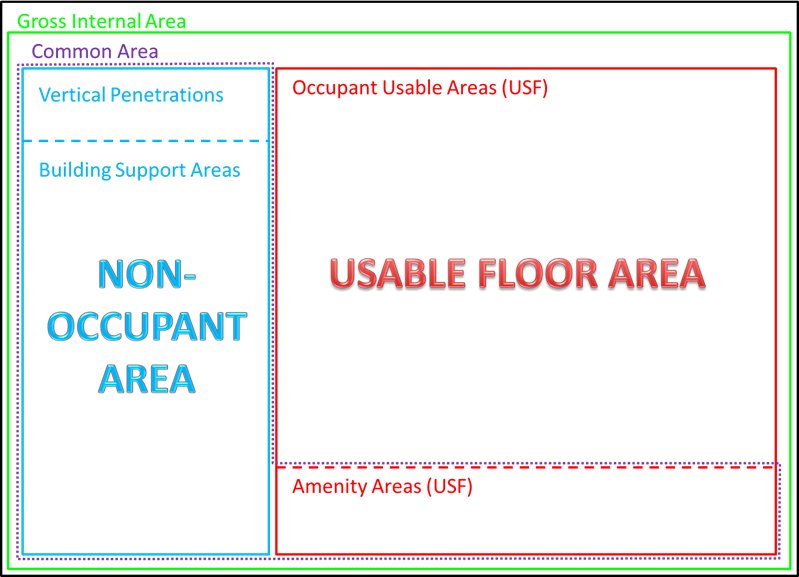
Building Support Areas: Non-occupant areas that serve all occupants in the building and/or building maintenance and operation. This type of space generally includes entry lobbies and vestibules, security operations, egress corridors, toilet rooms, balconies and covered galleries, parking garages and bicycle storage, janitor’s closets, receiving areas, loading platforms, trash rooms, building storage areas, and mechanical equipment. (At a detailed level, it also includes the thickness of demising walls and unmeasured space between the edge of the Occupant Usable Areas and the internal dominant face of the exterior wall.)
Common Area: All areas of the building outside Occupant Usable Areas which may be used by all Occupants and/or those who manage and operate the building. Common Area = Building Support Areas, Vertical Penetrations and Amenity Areas.
Common Area is the sum of the following component areas:
Usable Floor Area
- Amenity Areas (USF)
Non-Ouccupant Area
- Verticle Penetrations
- Building Support Areas
Commonwealth Facilities: Buildings owned by the Commonwealth and under the supervision and control of a specific state agency.
Controlling Agency: A state agency with the “legal control or jurisdiction” of the property as provided by M.G.L. Chapter 7C, Section 41, which carries with it the right to “occupy, or make expenditure for the maintenance of, any land, buildings or other state-owned or state-occupied facilities.” The Controlling Agency is usually a User Agency as well. Control and jurisdiction does not mean that a state agency is the owner of the property since the Commonwealth owns all state property.
Environmentally Preferable Product (EPP): Products or services that have a reduced effect on human health and the environment when compared with competing products or services that serve the same purpose. EPPs include practices that minimize waste, conserve energy or water, reduce the amount of toxins either disposed or consumed, and products with recycled content.
Facility Manager: The person responsible for the maintenance and operation of a facility, under the control and jurisdiction of the Controlling Agency, which includes oversight of all internal Facility Staff and external contract Service Providers.
Facility Staff: Internal Service Providers reporting to the Facility Manager for maintenance and operation of a facility.
Green Cleaning: The use of cleaning products and practices that have lower environmental impacts than conventional products and practices.
Green Seal: A non-profit organization that develops life cycle-based sustainability standards for products, services, and companies in addition to offering third-party certifications.
International Sanitary Supply Association’s (ISSA) Cleaning Industry Management Standard - Green Building (CIMS-GB): Procedures and principles cleaning organizations shall follow to deliver efficient, quality service management and environmentally preferable cleaning programs. CIMS and CIMS-GB certification demonstrates an organization is prepared to deliver quality, customer-focused services and ensures an organization is capable of delivering a comprehensive Green Cleaning program based on LEED: EB O&M green-cleaning criteria.
Leadership in Energy and Environmental Design for Existing Buildings: Operations and Maintenance (LEED EB: O+M): A rating system established through the U.S. Green Building Council (USGBC) that encourages owners and operators of existing buildings to implement sustainable practices and reduce the environmental impacts of their buildings, while addressing the major aspects of ongoing building operations.
Licensee: Individual or entity that is not a state agency or state employee but occupies the space of a User Agency as part of a service contract or other arrangement with the User Agency to further the User Agency’s mission. For example, a private consulting firm hired by an agency might be provided with offices inside the agency’s space. The consulting firm would be a Licensee.
Occupant(s): The individuals or entities that occupy space in a Commonwealth Facility by virtue of their status as a Controlling Agency and/or User Agency including their employees, or because they are permitted to use the space as a Licensee of the User Agency.
Occupant Usable Areas: The areas of a building designated for exclusive use by an Occupant (typically a User Agency) for business purposes that houses personnel, equipment, fixtures, furniture and supplies. It is measured to the inside face of the Occupant area demising walls and the limit of the floor area at exterior walls. It is commonly referred to as ‘carpetable area.’
Occupational Safety and Health Administration (OSHA): The organization established by the Occupational Safety and Health Act of 1970(OSHA Act) to prevent workers from being killed or seriously harmed at work. OSHA sets and enforces protective workplace safety and health standards. OSHA also provides information, training, and assistance to employers and workers. Under OSHA, employers have the responsibility to provide a safe workplace.
Service Providers: The parties responsible for completing the maintenance and management activities at Commonwealth Facilities. Service Providers at the facility may be internal Facility Staff, external contract providers, or both.
Usable Floor Area: The total space in a building that can be used by Occupants for business purposes. Usable Floor Area = Occupant Usable Areas + Amenity Areas.
User Agency or Agencies: A state agency or agencies that have the legal right to use and occupy all or a portion of any building, facility, improvement, or property owned by the Commonwealth for its agency mission and purposes. A User Agency may have the exclusive use of an entire building, or in a multi-occupancy facility, it may have the exclusive use of part of the building (the User Agency’s Occupant Usable Area) and the right to use common areas which is shared with other Occupants. A User Agency is also an “Occupant” as defined herein.
Vertical Penetrations: Non-Occupant areas that create vertical zones in the building. Examples are stairs, elevators, shafts and atriums and floor voids.
Best Practices
1.0 Roles
| Number | Details |
|---|---|
| 1.1 | The Controlling Agency is responsible for implementation of this Standard at its facilities. |
| 1.2 | The Facility Manager should identify the specific scope of cleaning services at the facility, including, but not limited to, level of cleanliness, frequency of individual cleaning tasks, regulations, and statutory requirements related both to the cleaning services and to the User Agency type. |
| 1.3 | 1.3 The Facility Manager should oversee the completion of all activities under this Standard and should determine the individuals responsible for providing these services at the facility. These individuals include, but are not limited to, the following: a. Facility Staff b. Contracted Service Providers c. Internal and external subject matter experts |
| 1.4 | All contracted cleaning Service Providers at Commonwealth Facilities should ensure ISSA CIMS-GB certification and maintain this certification for the life of the cleaning services contract. |
2.0 Implementation
| Number | Details |
|---|---|
| 2.1 | The Controlling Agency, through its Facility Manager, should ensure the following cleaning service activities occur at all of its Commonwealth Facilities and determine the individuals responsible for carrying out each activity listed below on a case-by-case basis depending on the specific facility. |
| 2.2 | Determine the base level services to be included in the cleaning contract, including, but not limited to, specific itemized tasks related to the following: a. Cleaning and restocking restrooms. b. Floor cleaning, servicing, and maintenance for attached carpeting, hard surfaces, and walk-off mats at all facility entrances (e.g., vacuuming, washing, sweeping, stripping, waxing, buffing) on a schedule consistent with recommendations from the Institute of Inspection Cleaning and Restoration Certification (IICRC) S100 Carpet Cleaning guideline. c. Cleaning of furniture, fixtures, and interior building surfaces (e.g., dusting, washing, and periodic steam cleaning) on a schedule consistent with recommendations from the IICRC S300 Upholstery Cleaning guideline. d. All related activities under FMMS 04 Solid Waste Management and FMMS 07 Integrated Pest Management. e. All other applicable cleaning services as defined in the cleaning service provider contract for the specific facility. |
| 2.3 | Use Green Cleaning procedures and practices in compliance with all applicable standards including, but not limited to, the following: a. ISSA CIMS-GB. b. Green Seal’s Environmental Standard for Commercial Cleaning Services (current version). c. Leadership in Energy and Environmental Design (LEED), Existing Buildings: Operations and Maintenance Rating System (EB: O&M) Approved Green Products List for Current Statewide Contract. |
| 2.4 | Comply with applicable legal requirements relating to cleaning, chemical handling and tracking, and equipment maintenance and operation. |
| 2.5 | Define all required cleaning services at the facility by means of a spreadsheet, which lists each task and indicates the frequency and procedures of tasks. |
| 2.6 | Provide opportunity for Occupants to self-identify chemical sensitivities, which may influence the cleaning products acceptable for use at the facility and in the User Agency space. |
3.0 Materials and Equipment
| Number | Details |
|---|---|
| 3.1 | Cleaning products and equipment shall comply with the EPP Guide to Massachusetts Statewide Contracts and the requirements of Executive Order 515. All acceptable products are listed on the Approved Green Products List for Current Statewide Contract. |
| 3.2 | Green Cleaning products and equipment shall be used when available. |
| 3.3 | Cleaning services and products shall comply with all applicable health and safety requirements (e.g., OSHA). |
| 3.4 | Requests to utilize non-Green Cleaning products (whether in response to a specific condition or incident) may be submitted for review by OSD and TURI (Toxics Use Reduction Institute) to determine if alternative Green Cleaning equivalent products are available. |
| 3.5 | Cleaning products that fall within the scope of this Standard include, but are not limited to, the following: a. General-purpose, bathroom, glass, carpet, and hard floor cleaners. b. Sanitizers and disinfectants. c. Specialized cleaners. d. Disposable paper products and trash bags. e. Hand soaps and cleaners. |
| 3.6 | Equipment (e.g., floor buffers, vacuums, carpet steam cleaners). |
| 3.7 | Service Providers should provide all equipment necessary for the effective and efficient cleaning of the facility in accordance with the intent and the letter of specifications. All cleaning equipment should be state-of-the-art and consistent with good cleaning practices and kept in first class working order and clean (spotless, like new) at all times. a. All power equipment is to have the original or factory replacement cord with molded end caps. b. Power and extension cords shall not have splice repairs or electrical tape repairs. c. Modifications to equipment required to prevent damage to any of the architectural finishes of the Facility should be made at the direction and with the written approval of the Facility Manager at no additional cost to the Facility Manager. d. Electrical machinery (vacuums, polishers, scrubbers, etc.) should be kept free of sharp edges and any other condition that presents a hazard to persons or property. e. Wheels and rolling parts on carts should be maintained so as to roll easily; carts should have wide (min. 1”) wheels with a minimum 4” diameter in order to avoid getting caught in ridges and cracks; carts should have area large enough to accommodate all equipment without having to strap on contents. f. Mechanical equipment (wet-vac, scrubbing machine, etc.) should be free of dirt residue; containers/nozzles for spray liquids are to be maintained in clean condition without buildup of dirt or liquid. g. Brooms should have even bristles that do not scratch surfaces being swept. h. Signs should be clean and neat at all times with lettering clear and distinct. |
| 3.8 | Cleaning chemicals in use at the facility should be evaluated at regular intervals to identify opportunities to reduce or eliminate their use while still meeting the cleaning service best practices of the facility and the User Agency. |
4.0 Regulatory Compliance
| Number | Details |
|---|---|
| 4.1 | Ensure compliance with applicable codes, laws, and regulations. |
| 4.2 | Ensure all Service Providers comply with applicable health and safety training related to the services they provide and the products they use. |
5.0 Training
| Number | Details |
|---|---|
| 5.1 | The Facility Manager should approve and oversee training content and procedures and ensure that all cleaning Service Providers have proper training in compliance with the best practices under their specific contracts and for the User Agency’s specific uses |
| 5.2 | There should be an ongoing training program for all cleaning Service Providers and User Agency representatives to ensure compliance with all cleaning-related requirements, procedures, processes, and products. |
| 5.3 | Training content should follow applicable industry standards for cleaning procedures, as well as the manufacturers’ specifications for cleaning products and equipment. |
| 5.4 | Training should include, but not be limited to, use and safe handling of appropriate cleaning products and equipment and proper procedures and frequency for completing all cleaning tasks. |
| 5.5 | Training for all cleaning Service Providers should include the approximate six-month training process required for CIMS-GB Certification, as well as any training programs offered through Green Seal’s GS-42 (or current version) Standard for Commercial Cleaning Services Program. |
| 5.6 | In addition to the above training programs, cleaning Service Providers should be required to comply with any other training best practices their contracts require (e.g. training regarding use, proper ventilation, and product SDS). |
6.0 Communication
| Number | Details |
|---|---|
| 6.1 | The Facility Manager should ensure specific and appropriate communication actions across Facility Staff, Service Providers, and Occupants for the successful and transparent implementation of this Standard. |
| 6.2 | Service Providers should not communicate directly with facility Occupants. All communication with facility Occupants should only occur through the Facility Manager or a designated representative. |
| 6.3 | The Facility Manager should clearly communicate procedures to the proper parties for chemical handling and tracking, and equipment maintenance and operation. |
| 6.4 | Service Providers shall follow the scope of services for the specific contract/building and inform the Facility Manager of cleaning practices and chemical use. The communications plan is important for targeting facility Occupants that are unusually sensitive to chemicals due to illness or allergies. |
7.0 Recordkeeping and Tracking
| Number | Details |
|---|---|
| 7.1 | The Controlling Agency and Facility Manager should determine the individuals responsible for tracking and collecting information on a case-by-case basis depending on the specific facility. Below are suggestions for information that may be gathered. |
| 7.2 | Annual facility assessments of the appearance level and cleanliness of the facility to the extent required to meet all program certification requirements (e.g., LEED, APPA, CIMS, and OSHA) and to ensure that cleaning services meet the agreed-upon service level. |
| 7.3 | Records required by the EPP Program, applicable laws, and the cleaning service provider’s contract. |
| 7.4 | A list of all approved cleaning products in addition to Safety Data Sheets (SDS) for all cleaning products, kept in a location that is easily accessible by all facility Occupants. |
| 7.5 | Product specification sheets from the manufacturer verifying that cleaning products and equipment meet the Green Cleaning requirements. |
| 7.6 | Cleaning equipment maintenance logs including equipment purchase date, purchasing entity, and details of repairs and preventive maintenance. |
| 7.7 | Inventory of cleaning equipment and sustainable criteria for all powered equipment. |
| 7.8 | Maintenance logs for all hard floor care, which include maintenance task, date, number of coats of finish applied, and length of time between stripping and refinishing activities. |
| 7.9 | Documentation of the training of all staff members and any gaps in the training program. |
Tools and Resources
The following tools and resources related to this Standard are also referenced in Appendix B to the FMMS:
- International Sanitary Supply Association, Cleaning Industry Management Standard (CIMS)
- Massachusetts Executive Order 511: Employee Safety - Establishing a Massachusetts Health and Safety Advisory Committee (2009)
- Current Statewide Contracts for Green Cleaning Products
- Current Statewide Contracts for Janitorial Services, Environmentally Preferable Products
Suggested Metrics
- Cost per square foot for cleaning services vis-à-vis industry standards and benchmark facilities.
- Results of the annual cleanliness audit of the facility to determine the appearance level of the facility and ensure Service Providers are meeting the agreed-upon level of service.
- Occupant annual survey results.
Solid Waste Management - FMMS 04
Purpose and Scope
This Solid Waste Management Standard establishes summary best practices for solid Waste and Recycling services at Commonwealth Facilities.
This Standard not only identifies the people responsible for Waste Disposal and Recycling related services, but also includes guidelines for implementing the solid Waste management plans that meet all state and federal laws, with the ability to customize solid Waste and Recycling programs to address specific Occupant needs at each Commonwealth Facility. The actual scope of services for any particular facility will be determined by the Controlling Agency.
State regulations, orders and policies that guide Solid Waste Management in the Commonwealth include, but are not limited to, the following:
- Massachusetts Executive Order 515: Establishing an Environmental Purchasing Policy (2009), pursuant to which the Massachusetts Operational Services Division (OSD) has created the Environmentally Preferable Products (EPP) Program, which requires all Executive Branch agencies and Service Providers to use EPPs, including environmentally preferable green cleaning products and equipment.
- 310 CMR § 19.017, Massachusetts Solid Waste Management Regulations: Waste Bans. In 1990, the Massachusetts Department of Environmental Protection (MassDEP) introduced its first bans on landfilling and combustion of easy-to-recycle and toxic materials. Additional "Waste Bans" have been phased in over time.
- Massachusetts 2010-2020 Solid Waste Master Plan: Pathway to Zero Waste
outlines the vision of solid Waste Reduction and management in the Commonwealth and sets the 2020 goal of reducing annual solid Waste Disposal 30 percent below the 2008 statewide total.
Hazardous and medical Waste producing facilities must comply with legal requirements specific to that facility, requirements which are not part of this FMMS. For example, when providing service to any Department of Correction (DOC) facility, contractors must meet all DOC rules and regulations.
Definitions
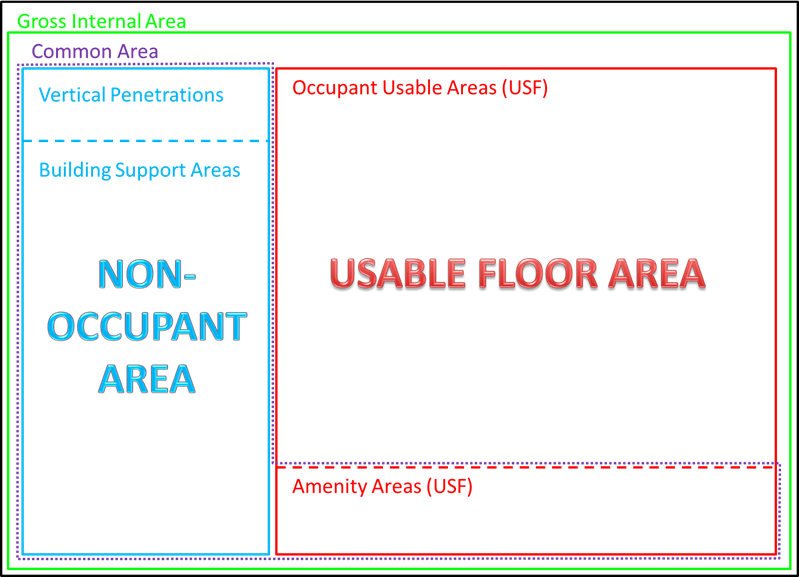
Amenity Areas: Areas within a building or building complex that house services which are helpful to the building Occupants and whose presence is a convenience and shared by all or multiple Occupants. Examples include food facilities, central copying services, express mail collection, fitness centers, retail, conference centers and child care centers.
Baseline Service Level Audit: Contains, but is not limited to, the following components:
• Characterization of the type of Waste generated by the facility (e.g. paper, plastic, bottles, cans, etc.).
• Types of collection containers in the facility (for trash, Recycling, pallets, cardboard, etc.).
• How materials get to their final destination.
• Approximate amounts and weights of Waste generated during collection period.
Building Support Areas: Non-occupant areas that serve all occupants in the building and/or building maintenance and operation. This type of space generally includes entry lobbies and vestibules, security operations, egress corridors, toilet rooms, balconies and covered galleries, parking garages and bicycle storage, janitor’s closets, receiving areas, loading platforms, trash rooms, building storage areas, and mechanical equipment. (At a detailed level, it also includes the thickness of demising walls and unmeasured space between the edge of the Occupant Usable Areas and the internal dominant face of the exterior wall.)
Common Area: All areas of the building outside Occupant Usable Areas which may be used by all Occupants and/or those who manage and operate the building. Common Area = Building Support Areas, Vertical Penetrations and Amenity Areas.
Common Area is the sum of the following component areas:
Usable Floor Area
- Amenity Areas (USF)
Non-Ouccupant Area
- Verticle Penetrations
- Building Support Areas
Commonwealth Facilities: Buildings owned by the Commonwealth and under the supervision and control of a specific state agency.
Controlling Agency: A state agency with the “legal control or jurisdiction” of the property as provided by M.G.L. Chapter 7C, Section 41, which carries with it the right to “occupy, or make expenditure for the maintenance of, any land, buildings or other state-owned or state-occupied facilities.” The Controlling Agency is usually a User Agency as well. Control and jurisdiction does not mean that a state agency is the owner of the property since the Commonwealth owns all state property.
Environmentally Preferable Product (EPP): Products or services that have a reduced effect on human health and the environment when compared with competing products or services that serve the same purpose. EPPs include practices that minimize waste, conserve energy or water, reduce the amount of toxins either disposed or consumed, and products with recycled content.
Facility Manager: The person responsible for the maintenance and operation of a facility, under the control and jurisdiction of the Controlling Agency, which includes oversight of all internal Facility Staff and external contract Service Providers.
Facility Staff: Internal Service Providers reporting to the Facility Manager for maintenance and operation of a facility.
Landfills: Waste Disposal sites for solid Waste from human activities.
Licensee: Individual or entity that is not a state agency or state employee but occupies the space of a User Agency as part of a service contract or other arrangement with the User Agency to further the User Agency’s mission. For example, a private consulting firm hired by an agency might be provided with offices inside the agency’s space. The consulting firm would be a Licensee.
Occupant(s): The individuals or entities that occupy space in a Commonwealth Facility by virtue of their status as a Controlling Agency and/or User Agency including their employees, or because they are permitted to use the space as a Licensee of a User Agency.
Occupant Usable Areas: The areas of a building designated for exclusive use by an Occupant (typically a User Agency) for business purposes that houses personnel, equipment, fixtures, furniture and supplies. It is measured to the inside face of the Occupant area demising walls and the limit of the floor area at exterior walls. It is commonly referred to as ‘carpetable area.’
Occupational Safety and Health Administration (OSHA): The organization established by the Occupational Safety and Health Act of 1970 (OSHA Act) to prevent workers from being killed or seriously harmed at work. OSHA sets and enforces protective workplace safety and health standards. OSHA also provides information, training, and assistance to employers and workers. Under OSHA, employers have the responsibility to provide a safe workplace.
Recycling: The collection, reprocessing, marketing and use of materials that were diverted or recovered from the solid Waste stream.
Recycling Collection Area: An area located in regularly occupied space in a building for the collection of Occupants’ recyclables. A building may have numerous collection areas from which recyclable materials are typically removed to a central collection and storage area.
Reuse: Return of materials to active use in the same or a related capacity as their original use, thus extending the lifetime of materials that would otherwise be discarded.
Service Providers: The parties responsible for completing the maintenance and management activities at Commonwealth Facilities. Service Providers at the facility may be internal Facility Staff, external contract providers, or both.
Source Reduction: Reduction of the amount of unnecessary material brought into a building. One example is purchasing products with less packaging.
Tipping Fees: Fees charged by a Landfill for the disposal of Waste, typically quoted per ton.
Usable Floor Area: The total space in a building that can be used by Occupants for business purposes. Usable Floor Area = Occupant Usable Areas + Amenity Areas.
User Agency or Agencies: A state agency or agencies that have the legal right to use and occupy all or a portion of any building, facility, improvement, or property owned by the Commonwealth for its agency mission and purposes. A User Agency may have the exclusive use of an entire building, or in a multi-occupancy facility, it may have the exclusive use of part of the building (the User Agency’s Occupant Usable Area) and the right to use common areas which is shared with other Occupants. A User Agency is also an “Occupant” as defined herein.
Vertical Penetrations: Non-Occupant areas that crate vertical zones in the building. Examples are stairs, elevators, shafts and atriums and floor voids.
Waste: Comprises all materials that flow from the building to final disposal. Examples include paper, grass trimmings, food scraps, and plastics. Waste refers to all materials that are capable of being diverted from the building’s Waste Stream through Waste Reduction.
Waste Disposal: Eliminates Waste by means of burial in a Landfill, combustion in an incinerator, or any other way that is not Recycling or Reuse.
Waste Diversion: A management activity that disposes of Waste other than through incineration or the use of Landfills. Examples include Reuse and Recycling.
Waste Reduction: Includes both Source Reduction and Waste Diversion through Reuse or Recycling.
Waste Stream: The overall flow of Waste from the building to a Landfill, incinerator, or other disposal site.
Best Practices
1. Roles
| Number | Details |
|---|---|
| 1.1 | The Controlling Agency is responsible for implementation of this Standard at its facilities. |
| 1.2 | This Standard applies to the performance of Waste Disposal and Recycling services and requires the involvement of Facility Managers, Facility Staff, Service Providers, and the building Occupants. |
| 1.3 | Facility Managers should: a. Work with the building Occupants to develop a solid Waste management policy that establishes hierarchy for management of Waste within the facility. b. Identify a solid Waste management plan that outlines service levels, locations, equipment, and Facility Staff and Occupant responsibility. c. Conduct a Baseline Service Level Audit identifying Waste flows through the facility and identifying responsible parties for oversight/management of each identified Waste flow. d. Procure a cleaning services contract for User Agencies based on their identified needs and level of service. The contract should clearly define all cleaning related tasks and requirements, as well as costs to the User Agencies and their Occupants, if applicable. e. Work with the Operational Services Division (OSD) to obtain a Solid Waste and Recycling Services provider (either combined or separate for Waste Disposal and Recycling) for the facility in compliance with the current Statewide Contract for Solid Waste Collection Services (haulers and Waste facilities). f. Adhere to municipal by-laws, and comply with Waste bans. g. Ensure all Facility Staff, solid Waste Service Providers, janitorial Service Providers, and building Occupants are aware of the solid Waste management requirements for the facility, as well as materials regulated under the Massachusetts Waste Bans. h. Ensure that banned materials collected do not go for disposal at Landfills, municipal Waste combustion facilities, or transfer stations. Implement Recycling collection programs with haulers that ensure collection and management of all restricted materials in a way that prevents disposal. i. Use Waste ban requirements to improve Recycling by Occupants and hold haulers responsible for Recycling services. j. Designate someone in the facility to act as the Recycling coordinator. |
| 1.4 | Waste Service Providers should include the following tasks in their contracts: a. Collect refuse and Recycled Waste at a facility or group of facilities on a regular schedule as identified in the contract between the service provider and the Facility Manager (i.e. frequency, process, procedures, notifications, etc.). b. Assist in the development of a Recycling program that works and is cost-effective, including specific suggestions on the types of materials to recycle and the collection and storage system that would work best for the facility. c. Comply with all Occupant specific regulations and statutory requirements (i.e. hospitals, detention centers, schools, childcare, etc.). d. Comply with current Statewide Contract for Solid Waste Collection Services (haulers and Waste facilities). e. Comply with Executive Order 515. Leave the area surrounding the container(s) in the same condition it was in prior to the pick-up. |
| 1.5 | Janitorial Service Providers should: a. Empty trash and Recycling bins and bring to collection/storage area for Waste and recyclables, (i.e. loading dock) where contracted Waste hauler will pick-up Waste and Recycling for transport to processing facility. b. Ensure that separated Recyclables and trash are kept separate and placed in the proper container when bringing them to the collection/storage area. |
| 1.6 | Building Occupants should: a. Understand the solid Waste and Recycling policies for the building. b. Minimize the materials disposed into garbage cans, and place Waste materials in the appropriate end-use location (i.e. Recycling bin, Reuse, hazardous Waste bin, etc.). |
2.0 Implementation
| Number | Details |
|---|---|
| 2.1 | Implement an environmentally preferable solid Waste management policy that addresses Reuse, Recycling, or composting of products used during regular operations of the building, as well as non-regular building activities (i.e. renovations). Products include, but are not limited to, the following: a. Ongoing Waste • Standard, daily use items i.e. paper, cardboard, plastics, packaging, etc. • Food. b. Durable Goods Waste • Office furniture. • Appliances. c. Hazardous Waste • Mercury containing materials (i.e. batteries and lamps). • Medical Waste. • Construction Waste Laboratory and chemical wastes. • Electric powered equipment. |
| 2.2 | Facility Managers should identify, if possible, what Recyclable items are generated in large quantities and ensure they are a focus of the Recycling program. |
| 2.3 | Facility Managers should retain flexibility with the contracted solid Waste Service Provider to alter the Recycling program to change or add materials during the agreement period. |
| 2.4 | Facility Managers should ask contractors to provide credits for Recyclable materials that are uncontaminated and have a market value, if applicable. |
| 2.5 | Collection and Storage Procedures include, but are not limited to, the following: a. Designate and visibly mark easily accessible central collection and storage locations for Recyclable materials, including mixed paper, corrugated cardboard, glass, plastics, and metals. b. In consultation with Occupants, establish Recycling collection points within Common Areas, such as classrooms, break rooms, open offices, and any location where Occupants may need to recycle. Recycling areas should include signage to discourage contamination, protection from the elements, and security for high-value materials to discourage illegal disposal. c. The central collection and storage area should provide easy access for both maintenance staff and collection vehicles. d. Consider how Recycling activities might affect a building’s indoor environmental quality. Activities that create odors, noise, and air contaminants should be isolated or performed when the building is not occupied. e. For sites with multiple buildings, it may be possible to create a central collection area that is outside a building’s footprint. In this case, establish a continuing strategy for transporting Recyclable materials to the separate collection area. f. For sites with landscaping, consider designating an area for collecting plant debris. g. Establish safe storage areas for hazardous Waste materials (i.e. batteries, mercury-containing lamps, Waste oil and other automotive fluids, HVAC lubrication, etc.). h. Determine collection frequency for both internal processes and pick-up by the contracted Service Provider. i. Develop and implement confidential procedures for shredding security sensitive and personnel/private documents. j. Contractors must collect all Waste and Recyclable materials in accordance with the Massachusetts Waste Ban Regulations and inform Building Managers of any incidences of non-compliance. k. Collection points must be left in clean and sanitary condition. Tops and access doors on containers and dumpsters must be closed after each pick up, and materials frozen in containers must be removed or container replaced. l. All contractors should be required to agree to reduce collection frequency or change the size of collection containers at any time during the agreement period should a facility request such a reduction as a result of greater Recycling and/or Waste prevention activities. Such reductions in collections should result in associated reductions in price. |
3.0 Materials and Equipment
| Number | Details |
|---|---|
| 3.1 | Facility Managers should work with Occupants and contracted Service Providers to determine the appropriate collection bins for the facility (i.e. under desk bins, Common Area bins, collection area dumpsters, etc.). |
| 3.2 | For all appropriate services, contracted Service Providers must provide containers which are fully enclosed, leak proof, fire retardant, labeled, and in good condition (for all outdoor containers). |
| 3.3 | Contractors should clean containers on a schedule to be agreed upon by the contractor and the Building Manager. |
| 3.4 | Comply with all requirements established by the Environmentally Preferable Product Procurement Program (EPP Program), established under Executive Order 515. |
4.0 Regulatory Compliance
| Number | Details |
|---|---|
| 4.1 | Ensure compliance with applicable codes, laws and regulations. |
| 4.2 | Ensure all Service Providers comply with applicable health and safety training related to the services they provide and the products they use. |
| 4.3 | Ensure procedures are in place and clearly communicated for the proper disposal of hazardous Wastes and medical wastes. |
| 4.4 | Establish a communications plan to inform building Occupants of both commonly used materials that contain hazardous materials not permitted in traditional Waste Streams, as well as proper disposal of hazardous materials. |
| 4.5 | Ensure all Service Providers are current on all applicable health and safety training related to the services they provide and the products they use on a regular or infrequent basis (i.e. OSHA, blood borne pathogens, sharps, etc.). |
| 4.6 | Adhere to all Waste Material Regulations, including, but not limited to, the following. a. 310 CMR § 19.000: Waste Bans. The following materials and items are prohibited from disposal and/or transfer for disposal in Massachusetts: • Asphalt pavement, brick and concrete (ABC Waste). • Cathode ray tubes. • Clean gypsum wallboard. • Commercial organic material (food material, only from facilities that dispose of one ton or more per week) (effective October 1, 2014). • Ferrous & non-ferrous metals. • Glass & metal containers. • Lead acid batteries. • Leaves and yard waste. • Recyclable paper, cardboard and paperboard. • Single resin narrow-necked plastics. • Treated and untreated wood & wood waste (banned from Landfills only). • White goods (large appliances). • Whole tires (banned from Landfills only; shredded tires acceptable). b. The Massachusetts Mercury Management Act, passed in 2008, prohibits the disposal of any product that contains mercury. c. The Massachusetts Bottle Deposit Law places a five cent deposit on all carbonated soft drinks, beer, malt beverages and sparkling water sold in Massachusetts with the assurance that consumers can redeem their empty beverage containers for cash. |
5.0 Training
| Number | Details |
|---|---|
| 5.1 | Facility Managers and User Agencies are responsible for Occupant training, assessment, and educational services. |
| 5.2 | Contractors are responsible for identifying and meeting all training requirements in place at the time they enter into a contract with the Commonwealth for Waste management services. |
6.0 Communications
| Number | Details |
|---|---|
| 6.1 | Service Providers should not communicate directly with facility Occupants. All communication with facility Occupants should only occur through the Facility Manager or a designated representative. |
| 6.2 | Include janitorial staff when discussing Waste management options; ask contractors to propose training/educational activities to promote Recycling. |
| 6.3 | Get top management support for the Recycling program through a memo, email or other department-wide communication. |
| 6.4 | Facility Managers should teach User Agencies, maintenance personnel and other building users about activities to reduce and Reuse materials instead of Recycling, which will reduce the volume of recyclables. |
| 6.5 | Facilities should have appropriate signage to inform all building Occupants about the solid Waste and Recycling programs in place at the facility. |
| 6.6 | Facilities should have appropriate signage by garbage and Recycling bins to ensure proper solid Waste Disposal by building Occupants. Signage should include at a minimum the types of materials and products that should and should not be disposed of in each bin. |
| 6.7 | Facilities should have signage that identifies how and where to dispose of materials and products not allowed in the trash or Recycling bins (i.e. batteries, electronics, light bulbs, etc.). |
7.0 Recordkeeping and Tracking
| Number | Details |
|---|---|
| 7.1 | A solid Waste/trash stream audit can identify the following solid Waste related issues for the facility: a. Determine the profile (amount and composition) of the solid Waste/trash stream. b. Identify efficient methods for the collection, storage, and transfer of wastes for disposal Recycling, and composting. c. Determine the right service level for solid Waste/trash collection and removal to minimize Waste shipments. |
| 7.2 | Recycling and Waste Reports: Monthly hauler reports for buildings should be provided by the contractor. The Recycling and Waste hauling reports should contain sufficient data to calculate Waste Diversion and Waste removal costs. Information to be tracked on a regular basis includes, but is not limited to, the following: a. Records by material category (i.e. wood, paper, plastic, etc.) for type, quantity, and weight of each material category that is salvaged, Reused, recycled, treated, or disposed. b. Total quantity of Waste recycled as a percentage of total Waste. c. Recycling and Processing Facility Records: Indicate receipt and acceptance of recyclable materials by Recycling and processing facilities licensed to accept them. Include manifests, weight tickets, receipts, and invoices. Include documentation for back-charge fees, if any, for improperly segregated materials. d. Disposal Records: Indicate receipt and acceptance of Waste by Landfills, municipal Waste combustion facilities, and transfer stations licensed to accept Waste materials. Include manifests, weight tickets, receipts, and invoices. e. Records that document proper handling and disposal of all hazardous Wastes. |
Tools and Resources
The following tools and resources related to this Standard are also referenced in Appendix B to the FMMS:
- Leadership in Energy and Environmental Design (LEED), Existing Buildings: Operations and Maintenance Rating System (current version)
- Massachusetts Executive Order 515: Establishing an Environmental Purchasing Policy (2009)
- MassDEP Pursuant to M.G.L. Chapter 16, Section 21, 2010-2020 Solid Waste Master Plan: A Pathway to Zero Waste
- Massachusetts Toxics Use Reduction Reform Act of 2006
- Massachusetts Mercury Task Force Pursuant to M.G.L. Chapter 21H, Sections 6A-6N, Massachusetts Zero Mercury Strategy
- MassDEP Waste Wise Program
- MassDEP, Municipal Compliance Fact Sheet: Waste Bans
- Current Statewide Contract User Guide for the Solid Waste and Recycling Services Statewide Contract
- Current Statewide Contract User Guide for Hazardous/Universal, Medical, and Electronic Waste Disposal and Emergency Response
Suggested Metrics
- A record by material category (i.e. wood, paper, plastic, etc.) of the type and quantity, by weight, of each material category salvaged, Reused, recycled, treated, or disposed.
- Total quantity of Waste recycled as a percentage of total Waste.
Routine Maintenance - FMMS 05
Purpose and Scope
This Routine Maintenance Standard establishes summary best practices for carrying out day-to-day maintenance needs and responding to unplanned Work Order requests at Commonwealth Facilities.
Routine Maintenance activities involve Facility Managers, Facility Staff such as custodians, grounds workers, general maintenance crews, and as necessary, specialized contracted Service Providers. Routine Maintenance services should reflect the actual systems and equipment at the facility and the specific needs of User Agencies and other Occupants. This Standard applies to the baseline performance of all related services at Commonwealth Facilities. The actual scope of services should be determined by the Facility Manager and, when applicable, a designated representative for a User Agency or other Occupant.
This Standard includes the following summary best practices:
- Maintain a safe, healthy, and comfortable environment for Occupants.
- Maintain or restore the facility and all related elements (i.e. finishes, structure, landscape, equipment and systems) to ensure they serve their intended purpose.
- Provide a timely and effective response to work-order requests.
- Maximize the productive lifespan of the building and equipment.
- Maximize building efficiency.
- Lower overall operating costs.
- Protect the Commonwealth’s capital investments.
- Achieve Environmental Sustainability.
Childcare centers, hospitals, correctional facilities, and any other specialized facilities must comply with specific statutory and regulatory requirements applicable to the facility, requirements which are not part of this FMMS.
Massachusetts Executive Order 515: Establishing an Environmental Purchasing Policy (2009), pursuant to which the Massachusetts Operational Services Division (OSD) has created the Environmentally Preferable Products (EPP) Program, which requires all Executive Branch agencies and Service Providers to use EPPs, including environmentally preferable green cleaning products and equipment.
Definitions
Capital Asset Management Information System (CAMIS): A database application that includes several modules related to DCAMM functions, including, but not limited to, land/building portfolio management, real estate/leasing transactions, space management, condition assessment/deferred maintenance, and operations and maintenance of state facility infrastructure, both major (i.e. elevators,
HVAC and its major related components) and minor (fire extinguishers), as well as tasks (i.e. cleaning windows, cleaning carpets, etc.). The system includes a maintenance management work order program, available to all Commonwealth Facilities, to catalog data related to work order scheduling of preventive and corrective maintenance activities.
Commonwealth Facilities: Buildings owned by the Commonwealth and under the supervision and control of a specific state agency.
Custodial Maintenance: The cleaning and upkeep of the facility, including the routine (daily, monthly, and semi-annual) tasks and purchases for cleaning equipment and supplies).
Emergency Maintenance: Consists of situations requiring immediate attention due to a failure in or around the facility that can cause significant damage to the building, building systems, and/or equipment. Such emergencies can create unmanageable situations and/or unsafe physical conditions which require immediate attention.
Environmentally Preferable Product (EPP): Product or services that have a reduced effect on human health and the environment when compared with competing products or services that serve the same purpose. EPPs include practices that minimize waste, conserve energy or water, reduce the amount of toxins either disposed or consumed, and products with recycled content.
Facility Manager: The person responsible for the maintenance and operation of a facility, under the control and jurisdiction of the Controlling Agency, which includes oversight of all internal Facility Staff and external contract Service Providers.
Facility Staff: Internal Service Providers reporting to the Facility Manager for maintenance and operation of a facility.
Landscape Maintenance: Upkeep of landscape, flower beds, trees and shrubs, water gardens and hardscape areas such as parks, parking lots, and walkways around the building. This not only includes the maintenance of the landscape and hardscape areas, but also seasonal tasks such as snow removal, leaf clean-up and removal, and winter preparation of the landscape and water gardens.
Leadership in Energy and Environmental Design for Existing Buildings: Operations and Maintenance (LEED EB: O+M): A rating system established through the U.S. Green Building Council (USGBC) that encourages owners and operators of existing buildings to implement sustainable practices and reduce the environmental impacts of their buildings, while addressing the major aspects of ongoing building operations.
Massachusetts Facilities Managers Association (MAFMA): A network of state Facilities Managers that meets periodically to discuss specific topics of interest, disseminates information on training opportunities and new technologies, informs facilities personnel of proposed regulatory or statutory changes, and maintains working committees to address issues of interest to facilities operators and managers.
Occupational Safety and Health Administration (OSHA): The organization established by the Occupational Safety and Health Act of 1970 (OSHA Act) to prevent workers from being killed or seriously harmed at work. OSHA sets and enforces protective workplace safety and health standards. OSHA also provides information, training, and assistance to employers and workers. Under OSHA, employers have the responsibility to provide a safe workplace.
Operational Efficiency: The life-cycle, cost-effective mix of preventive, predictive, and reliability-centered maintenance technologies, coupled with equipment calibration, tracking, and computerized maintenance management capabilities all targeting reliability, safety, Occupant comfort, and system efficiency.
Preventive Maintenance: Work performed by various facilities personnel based on scheduled inspections, scheduled testing, and minor element replacements for the purpose of improving equipment life, avoiding any unplanned maintenance activity, and minimizing equipment breakdowns.
Reactive (Corrective) Maintenance: Unplanned repair or adjustment of equipment or components.
Routine Maintenance: Simple small-scale activities and specific work-order requests associated with general upkeep and continued operation of a building, site, equipment, machine, plant, or system against normal wear and tear. Typically, Routine Maintenance includes activities that are completed by the Facility Staff and regularly contracted facility Service Providers, rather than specialized professionals. Routine Maintenance is done within a specific period of time e.g. daily, weekly, monthly, etc.
Routine Maintenance Plan: A plan that documents how an asset should be maintained to delay or prevent the failure of critical building systems and equipment.
Safety Data Sheets (SDS): Documents that provide information regarding the product, manufacturer contact information, chemical ingredients, physical and health hazards associated with the chemical(s), protective equipment, and safe work practices, (29 CFR § 1910.1200) or Hazardous Substance Disclosure by Employers (Massachusetts Right-to-Know Law, M.G.L. Chapter 111F).
Service Providers: The parties responsible for completing the maintenance and management activities at Commonwealth Facilities. Service Providers at the facility may be internal Facility Staff, external contract providers, or both.
Subcontracted Maintenance: Maintenance that is typically performed by outside contractors or by Facility Staff outside of their usual job description.
Work Order: Written (or electronic) request for a task or project to be completed. The order can be sent from an Occupant to a Facility Manager, from a customer to a contractor, or internally from one department to another. Work Orders can range in scope from small (i.e. fixing a leak), to large (i.e. replacing old plumbing).
Best Practices
1.0 Roles
| Number | Details |
|---|---|
| 1.1 | The Controlling Agency is responsible for implementation of this Standard at its facilities. |
| 1.2 | The Controlling Agency or a designated representative should determine the individuals responsible for ensuring compliance at the facility. These individuals may include, but are not limited to, the following: a. Facility Manager b. Facility Staff c. Contracted Service Providers |
| 1.3 | Facility Managers should: a. Develop and implement a Routine Maintenance Plan (RMP). b. Review, revise, and adjust the RMP either as conditions warrant or annually at a minimum. c. Collect and prioritize Work-Order requests. d. Create daily and weekly maintenance plans to coordinate activities and priorities of Facility Staff and contracted Service Providers. e. Track Routine Maintenance activities in the Capital Asset Management Information System (CAMIS). f. Ensure all Routine Maintenance Service Providers have the appropriate licensing and certifications. g. Ensure that all Routine Maintenance performed at the facility complies with applicable rules and regulations. |
| 1.4 | On-site Facility Staff and contracted Service Providers should: a. Most daily tasks fall under the scope of Routine Maintenance and are completed by the on-site Facility Staff. Contracted Service Providers can also provide these services if there is insufficient capacity among Facility Staff. b. Specific staffing needs include, but are not limited to, the following: • General Maintenance Crews • Custodians (various levels) • Grounds Workers and Landscapers • Electricians • Plumbers/Pipefitters • HVAC/Controls Mechanics • Carpenters • Painters • Trade Workers • Locksmiths c. Assist the Facility Manager with the creation and implementation of a RMP. d. Identify Routine Maintenance needs and report them to the Facility Manager. e. Work under the direction of the Facility Manager to carry out day-to-day maintenance needs and respond to unplanned Work Order requests. f. Comply with all requirements, rules, and regulations applicable to the Routine Maintenance services provided. g. Comply with any Occupant specific regulations, statutory, and code requirements (i.e. hospitals, detention centers, schools, childcare, etc.). |
| 1.5 | Occupants should: a. Submit Work Order requests using CAMIS or another maintenance management system. |
2.0 Implementation
| Number | Details |
|---|---|
| 2.1 | The scope of services included within this Standard, includes, but is not limited to, the following: a. Custodial Maintenance. b. Landscape Maintenance . c. Reactive (Corrective) Maintenance (i.e. Work Order requests, etc.). d. Emergency Maintenance (i.e. system failure, floods, etc.). |
| 2.2 | Typical Routine Maintenance tasks include, but are not limited to, responding to the following requests: a. HVAC - space temperature is not within acceptable limits. b. Plumbing - dripping faucet, clogged toilet, leaking pipe. c. Electrical - power malfunction or burned out light fixture. d. Finishes - walls are scratched or faded, floor tiles are broken. e. Carpentry - broken door, ceiling tile replacement. |
| 2.3 | A RMP should be created to identify the activities and processes involved in providing Routine Maintenance services specific to the needs of the facility and its Occupants. |
| 2.4 | The RMP should contain the following: a. Overview of potential Routine Maintenance activities. b. Staffing: • List of on-site maintenance staff and contracted Service Providers. • Tasks the staff can perform. • Contract tasks. • Schedules. • Training and certification needs. c. Equipment list and parts inventory. d. A list of Routine Maintenance activities and the associated procedures, practices, and performance levels. e. Prioritization standard (process for receiving and prioritizing Work Order requests). f. The computerized system in place to record, manage and communicate Routine Maintenance activities and requests. |
| 2.5 | The RMP should determine the actual extent of services necessary at each facility, including, but not limited to: a. Facility use / occupancy. b. Occupants’ desired service level. c. Prioritization thresholds. d. Identified level of need. e. Detailed task and procedure lists. f. Schedule and frequency of services. |
3.0 Materials and Equipment
| Number | Details |
|---|---|
| 3.1 | Sustainable methods and applications should be employed whenever possible for all products within the scope of this Standard, in accordance with Executive Order 515. |
| 3.2 | Products should conform to all federal, state, and local standards for quality and safety requirements. |
| 3.3 | The Facility Manager and Service Providers should make available at all times the product-specific information for products used to perform Routine Maintenance, including, but not limited to, the following: a. Product name and manufacturer. b. Product label. c. Product cut sheet or specification. d. Safety Data Sheets (SDS |
4.0 Regulatory Compliance
| Number | Details |
|---|---|
| 4.1 | Ensure compliance with applicable codes, laws and regulations. |
| 4.2 | Ensure all Service Providers comply with applicable health and safety training related to the services they provide and the products they use. |
| 4.3 | All work shall comply with the applicable requirements of 29 CFR § 1910, and all applicable federal, state, municipal safety, environmental and health requirements. Where there is a conflict, the most stringent requirement shall apply. |
5.0 Training
| Number | Details |
|---|---|
| 5.1 | Facility Managers and Facility Staff should provide training opportunities for all Facility Staff, contracted Service Providers, and User Agencies as appropriate, on topics including, but not limited to, the following: a. Systems and equipment. b. Work request processing and prioritization levels. c. Maintenance procedures and practices (by level of service provision). d. CAMIS. e. OSHA/Safety. |
| 5.2 | Training content should follow applicable industry standards, as well as the manufacturer’s specifications for products and equipment. |
| 5.3 | Facility Managers and Facility Staff should participate in Massachusetts Facilities Manager Association (MAFMA) trainings and events. |
6.0 Communication
| Number | Details |
|---|---|
| 6.1 | Service Providers should not communicate directly with facility Occupants. All communication with facility Occupants should only occur through the Facility Manager or a designated representative. |
| 6.2 | The Facility Manager should provide information (signage, occupant handbook, etc.) to the User Agencies identifying the process for submitting Work Order requests. |
| 6.3 | The Facility Manager should provide notice to Occupants if any Routine Maintenance needs or corrective actions will have an impact on their daily operations (i.e. lavatory out of order, system shut-down, spill in common area, etc.). Communication should include description of activity, impact to Occupants, any applicable safety information, and duration of maintenance activity. |
7.0 Recordkeeping and Training
| Number | Details |
|---|---|
| 7.1 | The Facility Manager should track Routine Maintenance and Work Order request activities and indicators in an effort to generate useful metrics that inform future decisions by the Facilities Manager about the Routine Maintenance program and the Service Providers. The following tools and resources related to this Standard are also referenced in Appendix B to the FMMS:
|
Tools and Resources
The following tools and resources related to this Standard are also referenced in Appendix B to the FMMS:
- ASHRAE Guidelines 4-2008: Preparation of Operating and Maintenance Documentation for Building Systems (or superseding version)
- Leadership in Energy and Environmental Design (LEED), Existing Buildings: Operations and Maintenance Rating System (current version)
- Operational Services Division, Massachusetts Statewide Contracts, Massachusetts Environmentally Preferable Products (EPP) Procurement Program, Recycled and Environmentally Preferable Products Guide to Massachusetts Statewide Contracts (Updated March 2017)
- Operational Services Division, Massachusetts Environmentally Preferable Products (EPP) Procurement Program
Suggested Metrics
- Capacity factor (actual operation vs. full utilization operation).
- Work Orders generated vs. closed out.
- Backlog of corrective maintenance (number of requests and duration).
- Safety record (number of loss-of-time incidents or total number of reportable incidents).
- Maintenance spending.
- Emergency Maintenance vs. total maintenance.
Preventive Maintenance - FMMS 06
Purpose and Scope
This Preventive Maintenance Standard establishes summary best practices for carrying out Preventive Maintenance services at Commonwealth Facilities.
Preventive Maintenance services should reflect the actual systems and equipment at the facility and the specific needs of the User Agencies and other Occupants. The actual scope of services should be determined by the Facility Manager and, when necessary, a designated representative for the User Agency.
This Standard includes summary best practices intended to effectively and efficiently support the life cycle of the facility by eliminating unplanned shutdowns and realizing life-cycle cost savings, such as:
- Maintaining a safe, healthy, and comfortable environment for Occupants.
- Replacing system components at the appropriate time to ensure cost-effective, reliable plant operation.
- Prolonging equipment life and maximizing the productive lifespan of the building.
- Maximizing building efficiency.
- Optimizing inventory control.
Childcare centers, hospitals, correctional facilities, and other specialized facilities must comply with specific statutory and regulatory requirements applicable to the facility, requirements which are not part of this FMMS.
Also related to this Standard is Massachusetts Executive Order 515: Establishing an Environmental Purchasing Policy (2009), pursuant to which the Massachusetts Operational Services Division (OSD) has created the Environmentally Preferable Products (EPP) Program, which requires all Executive Branch agencies and Service Providers to use EPPs, including environmentally preferable green cleaning products and equipment.
Definitions
Capital Asset Management Information System (CAMIS): A database inventory of state facility infrastructure – both major (i.e. elevators, HVAC and its major related components) and minor (fire extinguishers), as well as tasks (i.e. cleaning windows, cleaning carpets, etc.). CAMIS is a maintenance software program available to all Commonwealth Facilities to catalog data related to maintenance operations, including equipment condition, work order scheduling, and deferred maintenance needs.
Commissioning (Cx): A process for enhancing the delivery of a new construction project. The process focuses upon verifying and documenting that the facility and all of its systems and assemblies are planned, designed, installed, tested, operated, and maintained to meet the owner's project requirements.
Commonwealth Facilities: Buildings owned by the Commonwealth and under the supervision and control of a specific state agency.
Computerized Maintenance Management System (CMMS): A database application that includes several modules related to DCAMM functions, including, but not limited to, land/building portfolio management, real estate/leasing transactions, space management, condition assessment/deferred maintenance, and operations and maintenance of state facility infrastructure, both major (i.e. elevators, HVAC and its major related components) and minor (fire extinguishers), as well as tasks (i.e. cleaning windows, cleaning carpets, etc.). The system includes a maintenance management work order program, available to all Commonwealth Facilities, to catalog data related to work order scheduling of preventive and corrective maintenance activities.
Contracted Maintenance: Maintenance that is typically performed by outside contractors or by Facility Staff.
Controlling Agency: A state agency with the “legal control or jurisdiction” of the property as provided by M.G.L. Chapter 7C, Section 41, which carries with it the right to “occupy, or make expenditure for the maintenance of, any land, buildings or other state-owned or state-occupied facilities.” The Controlling Agency is usually a User Agency as well. Control and jurisdiction does not mean that a state agency is the owner of the property since the Commonwealth owns all state property.
Custodial Maintenance: The cleaning and upkeep of the facility, including the routine (daily, monthly, and semi-annual) tasks and purchases for cleaning equipment and supplies.
Director of Property Operations: The person responsible for overseeing the facility’s operations, budgets, and Occupant needs in Commonwealth Facilities.
Emergency Maintenance: Consists of situations requiring immediate attention due to a failure in or around the facility that can cause significant damage to the building, building systems, and/or equipment. Such emergencies can create unmanageable situations and/or unsafe physical conditions which require immediate attention.
Environmentally Preferable Product (EPP): Products or services that have a reduced effect on human health and the environment when compared with competing products or services that serve the same purpose. EPPs include practices that minimize waste, conserve energy or water, reduce the amount of toxins either disposed or consumed, and products with recycled content.
Existing Building Commissioning (EBCx): A comprehensive process of reviewing and adjusting building systems to perform interactively to meet the current facility requirements.
Facility Manager: The person responsible for the maintenance and operation of a facility, under the control and jurisdiction of the Controlling Agency, which includes oversight of all internal Facility Staff and external contract Service Providers.
Facility Operations and Maintenance Plan (FOMP): A document that provides the facility users, operators, and Occupants with detailed information on the building systems and operations as well as a foundation for training and system analysis. The FOMP also provides a means to reduce operating costs through a comprehensive maintenance assessment and implementation plan that looks at all maintenance at a facility and identifies best practices to save time and money, while increasing efficiency and the productive life of equipment.
Facility Staff: Internal Service Providers reporting to the Facility Manager for maintenance and operation of a facility.
Landscape Maintenance: Upkeep of landscape, flowerbeds, trees and shrubs, water gardens, and hardscape areas such as parks, parking lots, and walkways around the building. This not only includes the maintenance of the landscape and hardscape areas, but also seasonal tasks such as snow removal, leaf clean-up and removal, and winter preparation of the landscape and water gardens.
Massachusetts Facilities Managers Association (MAFMA): A network of state Facilities Managers that meets periodically to discuss specific topics of interest, disseminates information on training opportunities and new technologies, informs facilities personnel of proposed regulatory or statutory changes, and maintains working committees to address issues of interest to facilities operators and managers.
Occupant(s): The individuals or entities that occupy space in a Commonwealth Facility by virtue of their status as a Controlling Agency and/or User Agency including their employees, or because they are permitted to use the space as a Licensee of a User Agency.
Occupational Safety and Health Administration (OSHA): The organization established by the Occupational Safety and Health Act of 1970 (OSHA Act) to prevent workers from being killed or seriously harmed at work. OSHA sets and enforces protective workplace safety and health standards. OSHA also provides information, training, and assistance to employers and workers. Under OSHA, employers have the responsibility to provide a safe workplace.
Ongoing Commissioning: The application of Cx related activities on a continuous basis to ensure that the current facility requirements are being met and to support the continuous improvement of system performance.
Operational Efficiency: The life-cycle, cost-effective mix of preventive, predictive, and reliability-centered maintenance technologies, coupled with equipment calibration, tracking, and computerized maintenance management capabilities, all targeting reliability, safety, Occupant comfort, and system efficiency.
Preventive Maintenance: Work performed by various facilities personnel based on scheduled inspections, scheduled testing, and minor element replacements for the purpose of improving equipment life, avoiding any unplanned maintenance activity, and minimizing equipment breakdowns.
Preventive Maintenance Plan (PMP): A plan containing Preventive Maintenance task descriptions and schedules, troubleshooting, replacement parts, Service Providers, operating quantity and unique storage requirements for spare parts. The Plan also lays out a regularly scheduled inspection of building interior and exterior equipment and systems for signs of wear and tear that will require routine and/or corrective maintenance. The inspection process is usually performed by building facilities staff independently or in collaboration with contracted Service Providers.
Retro-Commissioning (RCx): The application of the Cx process to an existing building that was not previously commissioned or was not properly commissioned. The process is similar to re-commissioning, but the building has generally been in use longer. RCx often identifies no/low cost energy and water savings opportunities as well as capital improvements with energy and water saving implications.
Safety Data Sheets (SDS): Documents that provide information regarding the product, manufacturer contact information, chemical ingredients, physical and health hazards associated with the chemical(s), protective equipment, and safe work practices, (29 CFR § 1910.1200) or Hazardous Substance Disclosure by Employers (Massachusetts Right-to-Know Law, M.G.L. Chapter 111F).
Service Providers: The parties responsible for completing the maintenance and management activities at Commonwealth Facilities. Service Providers at the facility may be internal Facility Staff, external contract providers, or both.
Work Order: A written (or electronic) request for a task or project to be completed. The order can be sent from an Occupant to a Facility Manager, from a customer to a contractor, or internally from one department to another. Work Orders can range in scope from small (i.e. fixing a leak), to large (i.e. replacing old plumbing).
Best Practices
1.0 Roles
| Number | Details |
|---|---|
| 1.1 | The Controlling Agency is responsible for implementation of this Standard at its facilities. |
| 1.2 | The Facility Manager or a designated representative oversees the completion of all measures under this Standard and determines the individuals responsible for ensuring compliance at the facility. These individuals may include, but are not limited to, the following: a. Facility Manager b. Facility Staff c. Contracted Service Providers |
| 1.3 | Facility Managers should: a. Develop a Facility Operations and Maintenance Plan (FOMP) and a Preventive Maintenance Plan (PMP). Review, renew, and adjust the FOMP and the PMP, either as conditions warrant or annually at a minimum. b. Create the timeline and schedule for all Preventive Maintenance activities. c. Work with the Operational Services Division (OSD) to contract for Preventive Maintenance services under statewide contracts as applicable. Coordinate activities of all facilities maintenance staff and contracted Service Providers. d. Track all facility equipment in the Capital Asset Management Information System (CAMIS) database program. This includes the entry, updating, and management of facility equipment and associated Preventive Maintenance procedures. |
| 1.4 | Service Providers should: a. Assist the Facility Manager with the creation and implementation of the FOMP and the PMP as applicable. b. Comply with all requirements, rules, and regulations applicable to the services provided. c. Comply with all Occupant specific statutory and regulatory requirements (i.e. hospitals, detention centers, schools, childcare, etc.). d. Preventive Maintenance Service Providers include crafts specializing in: • Painting • Carpentry • Plumbing • HVAC • Controls • Electrical e. Independent, third party Commissioning (Cx) agents should provide Existing Building Commissioning (EBCx) services (Re/Retro-Commissioning (RCx) or Ongoing Commissioning). |
2.0 Implementation
| Number | Details |
|---|---|
| 2.1 | The general scope of services included within this Standard includes, but is not limited to, the following services: a. Inspection and servicing of: • HVAC • Lighting and electrical • Plumbing • Process equipment • Elevators • Roofs • Fire safety/protection and alarms • Cleaning and landscape/grounds equipment (i.e. floor buffers, lawn mowers, etc.) |
| 2.2 | Preventive Maintenance services at Commonwealth Facilities should maintain a minimum DCAMM Facility Maintenance Standard of “Level 4: Comprehensive Maintenance.” |
| 2.3 | A FOMP should be in place prior to start- up and, if applicable, Cx of the facility’s equipment. |
| 2.4 | The PMP should supplement the FOMP by establishing system and equipment specific maintenance procedures to extend their useful life, as well as the processes in place to carry out these procedures. |
| 2.5 | At a minimum, the PMP should include the following equipment and system specific information: a. Individual systems and equipment at the facility. b. System/equipment description (operating criteria, set points, etc.). c. Start-up and shut-down procedures. d. Operating schedules (controls, occupied hours, off-hour operation, etc.). e. Maintenance tasks/procedures. f. Maintenance schedule (daily, weekly, monthly, quarterly, seasonal, annual, etc.). g. Maintenance staff and Service Providers (equipment specific) and the Preventive Maintenance activities they are responsible for completing as scheduled. h. Tracking and reporting. i. Troubleshooting: Identifying potential problems and solutions. j. Replacement parts. k. Building equipment tag information. l. Manufacturer’s literature and warranties. m. Figures and illustrations. |
3.0 Materials and Equipment
| Number | Details |
|---|---|
| 3.1 | Sustainable methods and applications should be employed whenever possible for all products within the scope of this Standard, in accordance with Executive Order 515. |
| 3.2 | Products shall conform to all federal, state, and local standards for quality and safety requirements. |
| 3.3 | The Facility Manager and Service Providers should make available at all times the product-specific information for products used to perform Routine Maintenance. a. Product name and manufacturer. b. Product label. c. Product cut sheet or specification. d. Safety Data Sheets (SDS). |
4.0 Regulatory Compliance
| Number | Details |
|---|---|
| 4.1 | Ensure compliance with applicable codes, laws and regulations. |
| 4.2 | Ensure all Service Providers comply with applicable health and safety training related to the services they provide and the products they use. |
| 4.3 | All work shall comply with the applicable OSHA requirements and all applicable federal, state and municipal safety and health requirements. Where there is a conflict, the most stringent requirement shall apply. |
5.0 Training
| Number | Details |
|---|---|
| 5.1 | Facility Managers should provide training opportunities to all Facility Staff and contracted Service Providers. Training topics include, but are not limited to, the following: a. Systems and equipment training. b. Maintenance procedures and practices. c. Training in the use of the CAMIS. d. OSHA/Safety training. e. Program specific orientation and maintenance issues. |
| 5.2 | Facility Managers and Facility Staff should participate in Massachusetts Facilities Managers Association (MAFMA) trainings and events. |
6.0 Communications
| Number | Details |
|---|---|
| 6.1 | Service Providers should not communicate directly with facility Occupants. All communication with facility Occupants should only occur through the Facility Manager or a designated representative. |
| 6.2 | The Facility Manager should provide notice to building Occupants if any preventive or scheduled maintenance activities will have an impact on their daily operations. The notice should include a description of the activity, impact to Occupants, any applicable safety information, and duration of maintenance activity. |
7.0 Recordkeeping and Tracking
| Number | Details |
|---|---|
| 7.1 | Equipment should be entered into the CAMIS system before the facility is brought online. DCAMM enters into CAMIS the equipment and associated Preventive Maintenance measures installed in connection with DCAMM capital projects. |
| 7.2 | The Facility Manager should track preventive and scheduled maintenance activities and indicators in an effort to generate useful metrics that inform future decisions on equipment specifications. (See “Suggested Metrics” section below for a list of information that should be tracked at all facilities). |
Tools and Resources
The following tools and resources related to this Standard are also referenced in Appendix B to the FMMS:
- ASHRAE Guidelines 4-2008: Preparation of Operating and Maintenance Documentation for Building Systems (or superseding version)
- DCAMM, CAMIS Standard Operating Procedures
- DCAMM, Standards for Building Maintenance: Status Chart and Guidance for Indicator Levels
- Leadership in Energy and Environmental Design (LEED), Existing Buildings: Operations and Maintenance Rating System (current version)
Suggested Metrics
- Pieces of equipment in CAMIS.
- Preventive Maintenance Work Orders completed.
- Emergency Maintenance Work Orders vs. total maintenance Work Orders.
- Maintenance standard level for each Indicator noted in DCAMM’S standard status chart.
Integrated Pest Management - FMMS 07
Purpose and Scope
This Integrated Pest Management Standard establishes summary best practices for pest management services provided at Commonwealth Facilities.
This Standard identifies the parties responsible for pest management services at Commonwealth Facilities, as well as best practices related to carrying out these services. IPM services should be consistent with the specific needs of the building Occupants and uses at the facility. The actual scope of services should be determined by the Facility Manager.
State laws, regulations, policies, and orders that guide pest management in the Commonwealth include, but are not limited to, the following:
- Massachusetts Pesticide Control Act, M.G.L. Chapter 132B, Section 6, passed in 1978 and amended in 1994, makes it illegal to do any of the following:
- Distribute, purchase, or use a pesticide that is not registered.
- Alter or misbrand any pesticide.
- Distribute any pesticide that is open or unsealed.
- Distribute any pesticide container that is unsafe or damaged.
- Destroy or detach any pesticide label.
- An Act Protecting Children and Families from Harmful Pesticides, Chapter 85 of the Acts of 2000, makes it mandatory for parents, staff, and children of any school or daycare to receive notification whenever pesticide applications are being made on the property.
- 333 CMR § 14.00, Protection of Children and Families from Harmful Pesticides.
- Massachusetts Executive Order 403: Integrated Pest Management for Massachusetts State Agencies (1998) requires the use of IPM in all state buildings and facilities.
- Massachusetts Executive Order 515: Establishing an Environmental Purchasing Policy (2009), pursuant to which the Massachusetts Operational Services Division (OSD) has created the Environmentally Preferable Products (EPP) Program, which requires all Executive Branch agencies and Service Providers to use EPPs, including environmentally preferable green cleaning products and equipment.
Childcare centers, hospitals, correctional facilities, and any other specialized facilities must comply with the specific statutory and regulatory requirements applicable to the facility, requirements which are not part of this FMMS. Certain pests, including birds, mosquitoes, bed bugs, snakes, bats, vertebrates that are not common rodents, and termites and other wood-destroying organisms have specialized treatment methods for prevention and extermination that the Facility Manager should meet.
Definitions
Commonwealth Facilities: Buildings owned by the Commonwealth and under the supervision and control of a specific state agency.
Facility Manager: The person responsible for the maintenance and operation of a facility, under the control and jurisdiction of the Controlling Agency, which includes oversight of all internal Facility Staff and external contract Service Providers.
Facility Staff: Internal Service Providers reporting to the Facility Manager for maintenance and operation of a facility.
Integrated Pest Management (IPM): A process for achieving long term, environmentally sound pest control using a wide variety of management practices. An IPM program should include a combination of pest monitoring, good sanitation practices, education, appropriate solid waste management, building maintenance, cultural pest control measures, mechanical pest control measures, and biological pest controls. Chemical pesticides should be used only when the use of these measures is warranted and when used as part of an integrated pest management plan (IPM Plan).
Occupant(s): The individuals or entities that occupy space in a Commonwealth Facility by virtue of their status as a Controlling Agency and/or User Agency including their employees, or because they are permitted to use the space as a Licensee of a User Agency.
Occupant Usable Areas: The areas of a building designated for exclusive use by an Occupant (typically a User Agency) for business purposes that houses personnel, equipment, fixtures, furniture, and supplies. It is measured to the inside face of the Occupant area demising walls and the limit of the floor area at exterior walls. It is commonly referred to as ‘carpetable area.
Preventive Maintenance: Work performed by various facilities personnel based on scheduled inspections, scheduled testing, and minor element replacements for the purpose of improving equipment life, avoiding any unplanned maintenance activity, and minimizing equipment breakdowns.
Safety Data Sheets (SDS): Documents that provide information regarding the product, manufacturer contact information, chemical ingredients, physical and health hazards associated with the chemical(s), protective equipment, and safe work practices, (29 CFR § 1910.1200) or Hazardous Substance Disclosure by Employers (Massachusetts Right-to-Know Law, M.G.L. Chapter 111F).
Service Providers: The parties responsible for completing the maintenance and management activities at Commonwealth Facilities. Service Providers at the facility may be internal Facility Staff, external contract providers, or both.
User Agency or Agencies: A state agency or agencies that have the legal right to use and occupy all or a portion of any building, facility, improvement, or property owned by the Commonwealth for its agency mission and purposes. A User Agency may have the exclusive use of an entire building, or in a multi-occupancy facility, it may have the exclusive use of part of the building (the User Agency’s Occupant Usable Area) and the right to use Common Area which is shared with other users. A User Agency is also an “Occupant” as defined herein.
Best Practices
1.0 Roles
| Number | Details |
|---|---|
| 1.1 | The Controlling Agency is responsible for implementation of this Standard at its facilities. |
| 1.2 | This Standard establishes baseline practices that apply to the performance of pest management services for Commonwealth Facilities, and involves Facility Managers, Facility Staff, contracted Service Providers, and the building Occupants working together. |
| 1.3 | The Controlling Agency should oversee the completion of all measures under this Standard and will determine the individuals responsible for ensuring compliance at the facility. These individuals include, but are not limited to, the following: a. Facility Manager b. Facility Staff c. Contracted Service Providers |
| 1.4 | The Facility Manager should: a. Identify potential and actual pest infestation at the facility and work with Facility Staff or contract with pest management professionals and specialists as necessary. b. Create an IPM services contract for Occupants based on their identified needs and level of service. This contract should clearly define all related tasks and best practices, as well as costs to the Occupants. c. Work with the Operational Services Division (OSD) to obtain an IPM Services provider for the facility in compliance with the current IPM Statewide Contract or successor contract. d. Implement a Preventive Maintenance program that identifies and corrects conditions that contribute to pest infestation. e. Work with an IPM professional to review, renew, and adjust (either as conditions warrant, or at a minimum annually) the IPM Plan. f. Ensure that all pest management Service Providers have the appropriate licensing and certifications. g. Ensure that all pest management services performed at the facility comply with the appropriate rules and regulations. |
| 1.5 | External IPM Contractors should: a. Work with the Facility Manager, Facility Staff, and building Occupants to create an IPM Plan for the facility. b. Comply with all Occupant specific statutory and regulatory requirements (i.e. hospitals, detention centers, schools, childcare, etc.). c. Comply with the IPM Statewide Contract. |
| 1.6 | Janitorial Service Providers ensure that trash, especially food waste and crumbs, do not accumulate at the facility and promote pest infestation. |
| 1.7 | Building Occupants should be: a. Responsible for understanding the IPM policies for the building. b. Responsible for notifying the Facility Manager of pest infestations or areas that may cause a potential infestation. |
2.0 Implementation
| Number | Details |
|---|---|
| 2.1 | Establish an IPM Plan for the facility. The IPM Plan should establish the management, Preventive Maintenance and treatment procedures for achieving long term, environmentally sound pest control. The IPM Plan should include: a. IPM Team identification. b. Provisions for utilizing environmentally friendly products as a first resort before using fertilizers, pesticides, or other potentially harmful products. c. Company and employee qualifications/certifications to perform Pest Management night inspections. d. On-line and paper-based pest logging and reporting procedures. e. Training of Facility Staff, external contractors, and Occupants. f. Frequency of technician visits and activities performed. g. Pest Management planners and quality assurance. |
| 2.2 | IPM Base Services a. Perform and document initial IPM Assessment. b. Develop and implement IPM Plan. c. Prevent pest infestations: identify and correct conditions and activities that have the potential to cause pest infestation. d. Eliminate pest infestations: monitoring, trapping, pesticide application, and pest removal. e. Turf and Landscape IPM (see FMMS 02 Grounds and Landscape Maintenance). |
| 2.3 | The IPM Facility Assessment and Plan should determine the actual extent of services necessary at the facility. |
| 2.4 | All species found within the structure of the building should be covered within the scope of the IPM program. |
| 2.5 | Pest populations that are located immediately outside of the buildings and pose a possible infestation hazard or threat are included within the scope. |
| 2.6 | Treatment of pests damaging to landscaping elements, including treatments prior to infestation problems, is within the scope. |
3.0 Materials and Equipment
| Number | Details |
|---|---|
| 3.1 | Products within the scope of this Standard include, but are not limited to, the following: a. Portable vacuums with HEPA or MICRO filtration. b. Trapping devices. c. Chemical pesticide products. d. Bait stations and bait formulations of types other than sprays. |
| 3.2 | Sustainable methods and applications should be employed whenever possible for all products within the scope of this Standard, in accordance with Executive Order 515. |
| 3.3 | Products shall conform to all federal, state, and local standards for quality and safety. |
| 3.4 | The Facility Manager and all Service Providers should make available the product-specific information for products used in the prevention and management of pest infestation. a. Product name and manufacturer. b. Product label. c. Safety Data Sheets (SDS). |
4.0 Regulatory Compliance
| Number | Details |
|---|---|
| 4.1 | Ensure compliance with applicable codes, laws and regulations. |
| 4.2 | Ensure all Service Providers comply with applicable health and safety training related to the services they provide and the products they use. |
| 4.3 | Ensure procedures are in place and clearly communicated for the proper disposal of hazardous wastes. |
| 4.4 | All work shall comply with the applicable requirements of 29 CFR § 1910 and all applicable federal, state and municipal safety, environmental and health requirements. Where there is a conflict, the most stringent requirements shall apply. |
5.0 Training
| Number | Details |
|---|---|
| 5.1 | Training content should follow all applicable industry standards for pest management, as well as the manufacturer’s specifications for all products and equipment. |
| 5.2 | Contractors should provide one training session per year to Facility Staff and facility Occupants. The contractor should provide additional training sessions as necessary for a mutually agreed upon additional cost. |
| 5.3 | In addition to the above training, assessment, and educational best practices, contractors are responsible for identifying and meeting all training requirements in place at the time they enter into a contract with the Commonwealth for IPM services. |
6.0 Communications
| Number | Details |
|---|---|
| 6.1 | Service Providers should not communicate directly with facility Occupants. All communication with facility Occupants should only occur through the Facility Manager or a designated representative. |
| 6.2 | Signs, placards, literature, or other information should be used to inform building Occupants of the nature of the pest application. |
| 6.3 | Notification should be given to building Occupants no less than 72 hours prior to the use of pesticides. |
| 6.4 | Notification should be given to building Occupants no more than 24 hours after application of a pesticide in the event of an emergency. |
7.0 Recordkeeping and Training
| Number | Details |
|---|---|
| 7.1 | Service Providers should provide secure online capabilities to accomplish one or more of the following tasks: a. Pest logging. b. Contractor service reports. c. Contractor financial reports. d. Contractor reports of pesticide applications. |
| 7.2 | The Facility Manager is responsible for maintaining a pest control logbook or file for each building or site. The monitoring and documentation of pest locations and actions taken is to prevent recurring infestations. |
Tools and Resources
The following tools and resources related to this Standard are also referenced in Appendix B to the FMMS:
- U.S. EPA, Integrated Pest Management in Buildings. This reference guide defines IPM, describes proper IPM implementation in buildings, and outlines the roles and responsibilities necessary for success:
- The Federal Insecticide, Fungicide and Rodenticide Act, Public Law 92-516
- Leadership in Energy and Environmental Design (LEED), Existing Buildings: Operations and Maintenance Rating System (current version)
- Massachusetts Pesticide Control Act, M.G.L. Chapter 132B, Section 6; and 333 CMR § 2.00 et. seq.
- Massachusetts Executive Order 403: Integrated Pest Management for Massachusetts State Agencies (1998)
- An Act Protecting Children and Families from Harmful Pesticides, Chapter 85 of the Acts of 2000
- Massachusetts Department of Fish and Wildlife Regulations
- Massachusetts Department of Agricultural Resources
- Massachusetts Executive Order 515: Establishing an Environmental Purchasing Policy (2009)
- Current Statewide Contract for Integrated Pest Management (IPM)
- Operational Services Division, Massachusetts Statewide Contracts, Massachusetts Environmentally Preferable Products (EPP) Procurement Program, Recycled and Environmentally Preferable Products Guide to Massachusetts Statewide Contracts (Updated March 2017)
- Massachusetts Statewide Contracts for Healthier Schools, How to Use Massachusetts Contracts for Pollution Prevention in Schools
- Operational Services Division, Massachusetts Environmentally Preferable Products (EPP) Procurement Program
- Radcliffe, E.B., Hutchison, W. D., & R. E. Cancelado [eds.], Radcliffe's IPM World Textbook, University of Minnesota, St. Paul, MN
- San Francisco’s Department of the Environment (SF Environment) explains the listing criteria and process and has an updated 2007 reduced-risk pesticide list for screened pesticide active ingredients
Sugested Metrics
- Customer survey responses.
- Number of unscheduled visits due to customer requests.
Health and Safety - FMMS 08
Purpose and Scope
This Health and Safety Standard establishes summary best practices to maintain a safe and healthy environment at Commonwealth Facilities by reducing the potential for injury, illness, and other hazards to facility Occupants and visitors. The benefit to the Commonwealth is a reduction in costs due to unscheduled medical leave, medical care, and disability.
This Standard includes guidance for the assessment of health and safety risks at buildings, development of a plan to manage specific risks, and implementation of a facility-specific plan in the operation of the facility.
Commonwealth and municipal employees are covered under the Occupational Safety and Health Administration (OSHA) regulations; however, there are important distinctions related to written programs, training, and chemical inventory requirements depending on whether employees work for the Executive Branch or Non-Executive Branch. Executive Branch Agencies are required to follow the Hazard Communication Standard (HCS) under 454 CMR § 25 and 29 CFR § 1910.1200. Municipal, county, and Non-Executive Branch Agencies are required to follow Right-to-Know under 454 CMR § 21.00 and M.G.L. Chapter 111F. Employers who follow the HCS are considered to be in compliance with Right-to-Know requirements.
Massachusetts Executive Order 511: Establishing the Massachusetts Employee Safety and Health Advisory Committee (2009) requires all state agencies to maintain, track and report data related to occupational injuries, illnesses, and deaths in the workplace, and manage and perform training under the guidance of their health and safety coordinator.
Health and safety activities shall also comply with regulations promulgated under the Occupational Safety and Health Act, as set forth in 29 CFR § 1904, Recording and Reporting Occupational Injuries and Illnesses.
Definitions
Asbestos: A naturally occurring silicate mineral used commercially for its desired physical properties. Asbestos (Chrysotile) became increasingly popular among manufacturers and builders in the late 19th century because of its sound absorption, tensile strength, resistance to damage (fire, heat, electrical, and chemical), and affordability. It was used in such applications as electrical insulation for hotplate wiring and in building insulation. When Asbestos is used for its resistance to fire or heat the fibers are often mixed with cement (resulting in fiber cement) or woven into fabric or mats. In the mid 1980’s Asbestos became a health concern for respiratory diseases. Although it has not been banned in the U.S., it is regulated by the U.S. Environmental Protection Agency under OSHA 29 CFR § 1926, and by the Massachusetts Department of Environmental Protection and the Massachusetts Department of Labor Standards.
Combustible Materials: Building materials such as wood and paper products, fuels (oil, gas, kerosene, and coal), and flammable products that may be stored in buildings (e.g. solvents, paper, etc.).
Commonwealth Facilities: Buildings owned by the Commonwealth and under the supervision and control of a specific state agency.
Confined Space: An area whose configuration hinders activities of any employees who must enter into, perform work in, and exit from it. Confined Spaces have limited or restricted means of access, are large enough to permit access for the performance of necessary work, and are not designed for continuous occupancy.
Facility Manager: The person responsible for the maintenance and operation of a facility, under the control and jurisdiction of the Controlling Agency, which includes oversight of all internal Facility Staff and external contract Service Providers.
Facility Staff: Internal Service Providers reporting to the Facility Manager for maintenance and operation of a facility.
Hazard Communication Standard (HCS): The Hazard Communication Standard (HCS), which applies to all Executive Branch Agencies, provides a common and coherent approach to classifying chemicals and communicating hazard information on labels and Safety Data Sheets. All employers with hazardous chemicals in their workplaces must have labels and Safety Data Sheets for their exposed workers, and train them to handle the chemicals appropriately.
Hazardous Materials: Substances that workers may be exposed to during building maintenance/repair; these materials include, but are not limited to, sewerage, sewer gases, radiation, Asbestos, lead, fibrous glass (e.g. insulation), pesticides, or polychlorinated biphenyl (PCB) containing materials. Other hazards include chemicals used in cleaning products.
Health and Safety Policy: Programs and procedures that enable employers to provide a safe and healthy workplace for employees and visitors.
IAQ-Building Education and Assessment Model (I-BEAM): A U.S. Environmental Protection Agency guidance tool designed for use by building professionals and others interested in maximizing Indoor Air Quality in facilities/buildings. Implement I-BEAM with assistance from the Massachusetts Department of Public Health/IAQ-Program.
Indoor Air Quality (IAQ): Air quality within and around buildings and structures, especially as it relates to the health and comfort of building Occupants. IAQ can be affected by indoor environmental contaminants, quantity and quality of fresh air, temperature, and relative humidity. Source control, filtration and use of ventilation to dilute contaminants are examples of methods for improving Indoor Air Quality in buildings.
Massachusetts Right-to-Know Law: M.G.L. Chapter 111F, which applies to municipalities, counties and non-Executive Branch agencies, regulates how information about workplace chemical hazards is communicated to Occupants, employees and visitors.
Occupant(s): The individuals or entities that occupy space in a Commonwealth Facility by virtue of their status as a Controlling Agency and/or User Agency including their employees, or because they are permitted to use the space as a Licensee of a User Agency.
Occupant Usable Areas: The areas of a building designated for exclusive use by an Occupant (typically a User Agency) for business purposes that houses personnel, equipment, fixtures, furniture and supplies. It is measured to the inside face of the Occupant area demising walls and the limit of the floor area at exterior walls. It is commonly referred to as ‘carpetable area.’
Occupational Safety and Health Administration (OSHA): The organization established by the Occupational Safety and Health Act of 1970 (OSHA Act) to prevent workers from being killed or seriously harmed at work. OSHA sets and enforces protective workplace safety and health standards. OSHA also provides information, training, and assistance to employers and workers. Under OSHA, employers have the responsibility to provide a safe workplace.
Personal Protective Equipment (PPE): Equipment worn to minimize exposure to hazards that cause serious workplace injuries and illnesses. These injuries and illnesses may result from contact with chemical, radiological, physical, electrical, mechanical, or other workplace hazards. PPE may include items such as gloves, safety glasses and shoes, earplugs or muffs, hard hats, respirators, or coveralls, vests and full body suits based on the specific facility and work needed.
Polychlorinated Biphenyls (PCBs): Widely used as dielectric and coolant fluids in transformers, capacitors, and electric motors. They were also used in construction materials like caulking as a plasticizer to improve a product’s resistance to degradation. They are known to cause cancer in animals and thought to do so in humans. They were banned from new construction or renovations, but may still be present in older facilities. PCB management is regulated under the Toxic Substance Control Act (TSCA).
Radon: An invisible, radioactive gas that results from the decay of radium, which may be found in rock formations beneath buildings or in certain building materials themselves.
Safety Data Sheets (SDS): Documents that provide information regarding the product, manufacturer contact information, chemical ingredients, physical and health hazards associated with the chemical(s), protective equipment, and safe work practices, pursuant to the HCS (29 CFR § 1910.1200) or Hazardous Substance Disclosure by Employers (Massachusetts Right-to-Know Law, M.G.L. Chapter 111F).
Service Providers: The parties responsible for completing the maintenance and management activities at Commonwealth Facilities. Service Providers at the facility may be internal Facility Staff, external contract providers, or both.
User Agency or Agencies: A state agency or agencies that have the legal right to use and occupy all or a portion of any building, facility, improvement, or property owned by the Commonwealth for its agency mission and purposes. A User Agency may have the exclusive use of an entire building, or in a multi-occupancy facility, it may have the exclusive use of part of the building (the User Agency’s Occupant Usable Area) and the right to use common areas which is shared with other Occupants. A User Agency is also an “Occupant” as defined herein.
Volatile Organic Compounds (VOCs): Organic chemicals that have a high vapor pressure at ordinary, room-temperature conditions. Common VOCs such as formaldehyde and other hydrocarbons create Indoor Air Quality hazards and/or are potential groundwater contaminants.
Best Practices
1.0 Roles
| Number | Details |
|---|---|
| 1.1 | The Controlling Agency is responsible for implementation of this Standard and its best practices at its Facilities. |
| 1.2 | The Controlling Agency should oversee the completion of all measures under this Standard and should determine the individuals responsible for ensuring compliance at the facility. These individuals include, but are not limited to, the following: a. Facility Manager b. Facility Staff c. Occupant Agency Staff d. Contracted Service Providers |
| 1.3 | The Facility Manager should: a. Eliminate or reduce hazards in the workplace to achieve the following: • Prevent conditions that may result in pedestrian hazards (e.g. tripping hazards, slip-and-fall hazards, etc.). • Work to reduce exposure to VOCs and eliminate exposure to, lead, Asbestos, PCBs, and other hazardous or regulated materials in the facility. • Promote the use of Personal Protective Equipment (PPE) where needed. b. Develop and maintain a current Health and Safety Policy for the facility. c. Collect and track information on health and safety-related incidents and complaints that affect operation and all building Occupants. d. Provide relevant Information to the Human Resources unit regarding reported health and safety incidents. e. Verify that all Service Providers adhere to the Health and Safety Policy. f. Maintain building systems to provide acceptable IAQ and adequate ventilation. |
| 1.4 | The Occupant Agency should: a. Adhere to the facility Health and Safety Policy. b. Maintain a healthy environment in its work areas. c. Manage the collection and tracking of data related to health and safety incidents within the space it uses. |
| 1.5 | Service Providers should: a. Provide SDS to the Facility Manager prior to initiating site activities. b. Comply with the health and safety programs of their employers. (Please note that the Commonwealth is not responsible for ensuring compliance with an external Service Providers’ health and safety program). |
2.0 Implementation
| Number | Details |
|---|---|
| 2.1 | Perform a periodic health and safety risk assessment for each facility. The facility health and safety risk assessment should contain the following elements: a. Assessment scope and methodology. b. Documentation of existing conditions. c. Identification of actual or potential health and safety hazards including the presence of Hazardous Materials and other regulated materials. d. Prioritization of hazards to be addressed. e. Identification of facility/building users at risk. |
| 2.2 | Develop a Health and Safety Policy which addresses the following health and safety hazard prevention elements (as needed): a. Occupant health and safety practices. b. Emergency action planning. c. Hazard communication or compliance including Right-to-Know requirement. d. Occupant and visitor first aid. e. Occupant personal equipment. f. PPE. g. Where hazards are identified, evaluate safer alternatives. |
| 2.3 | Implement an incident and complaint reporting and tracking system. |
| 2.4 | Review the health and safety assessment and Policy at least annually and in response to any major event or incident. |
3.0 Materials and Equipment
| Number | Details |
|---|---|
| 3.1 | 3.1 The approved Health and Safety Policy for each facility should address specific hazards at that particular facility, which may include, but are not limited to: a. Building materials and furnishings containing Volatile Organic Compounds (VOCs). b. Equipment and supplies containing hazardous or regulated materials. c. Indoor air quality (IAQ). d. Low lighting levels in corridors and other areas of public travel. e. Occupational noise exposure. f. Confined Spaces. g. Improper, inadequately maintained, or malfunctioning equipment. h. Lead paint (in older and/or child occupied buildings). i. Deteriorated Asbestos insulation (in older buildings). j. Polychlorinated Biphenyls (PCBs) (in older buildings), e.g. caulking, electrical transformer, and lighting ballast. k. Material exposed to conditions that may cause it to become wet or damp, presenting a host environment for mold and mildew growth. l. Electrical energizing equipment. |
4.0 Regulatory Compliance
| Number | Details |
|---|---|
| 4.1 | Ensure compliance with applicable codes, laws, and regulations. |
| 4.2 | Ensure all Service Providers comply with applicable health and safety training related to the services they provide and the products they use. |
| 4.3 | Comply with 29 CFR § 1904 and Executive Order 511. a. Maintain, track and report data related to occupational injuries, illnesses, and deaths in the workplace. b. Manage and perform training in accordance with the requirements established by the User Agency health and safety coordinator. c. Acquire SDS for Hazardous Material-containing products. |
5.0 Traininig
| Number | Details |
|---|---|
| 5.1 | User Agencies and other Occupants should be trained on the HCS and/or Right-to-Know requirements as applicable. |
| 5.2 | User Agencies and other Occupants should be trained on the Health and Safety Policy. |
| 5.3 | User Agencies and other Occupants should be trained on how to identify potential hazards such as: a. Individual sources of pollution. b. Sources of potential combustion (e.g. unprotected combustible building materials, oil, gas, kerosene, coal, wood, solvents, etc.). c. Unsafe and unhealthy activities by Occupant Agency. d. Maintenance and housekeeping practices. e. Occupant health symptoms (e.g. symptom relief after leaving the facility/building). f. Proper use of chemicals, including appropriate ventilation methods. |
6.0 Communication
| Number | Details |
|---|---|
| 6.1 | Service Providers should not communicate directly with facility Occupants. All communication with facility Occupants should only occur through the Facility Manager or a designated health and safety coordinator, as appropriate to the situation. |
| 6.2 | The Facility Manager should: a. Create and maintain a list of Occupant liaisons and facility contacts. b. Make key contact information readily available to facility Occupants. c. Inform Occupants of upcoming pest management chemical applications. d. Notify Occupants of upcoming unusual cleaning and maintenance activities. e. Notify Occupants of renovations, equipment replacements, and other capital projects that may affect Occupant health and safety. |
| 6.3 | Occupants should provide the following information to the Facility Manager: a. Key contact information. b. All health and safety incidents and relevant complaints taking place in or as a result of conditions in program spaces, and/or conditions of building systems and elements. c. Potential health and safety hazards observed in the facility. d. All SDS. |
7.0 Recordkeeping and Tracking
| Number | Details |
|---|---|
| 7.1 | Document IAQ testing on a regular basis. a. Use IAQ-Building Education and Assessment Model (I-BEAM) in consultation with the Massachusetts Department of Public Health’s IAQ Program. |
| 7.2 | Document Preventive Maintenance of items affecting health and safety |
Tools and Resources
The following tools and resources related to this Standard are also referenced in Appendix B to the FMMS:
- MassDEP
- Massachusetts Department of Labor Standards
- Massachusetts Department of Public Health Indoor Air Quality Program
- National Institute of Occupational Safety and Health and U.S. EPA, Building Air Quality Action Plan, DHHS Publication No. 98-123 (June 1998)
- U.S. EPA, An Introduction to Indoor Air Quality (IAQ) – Do you suspect your office has an indoor air problem
- U.S. EPA, IAQ (Indoor Air Quality) Building Education and Assessment Model (I-BEAM) (2002)
- U.S. Government Printing Office, December 1991, Building Air Quality, A Guide for Building Owners and Facility Managers, SSOP, Washington DC, ISBN 0-16-035919-8
- 29 CFR § 1926, Code of Federal Regulations for Construction
- 29 CFR § 1910, Code of Federal Regulations for Construction
Suggested Metrics
Current and accurate data: workplace injuries, illnesses and deaths.
Resilience and Emergency Management - FMMS 09
Purpose and Scope
This Resilience and Emergency Management Standard establishes summary best practices for disaster and emergency management planning and Business Continuity, in addition to facility-specific Mitigation planning to minimize the impacts of a disaster while protecting life and property. Events to which this Standard can be applied include, but are not limited to:
- Weather related natural disasters, including blizzards, hurricanes, tornados, and floods.
- Human-caused events such as work stoppage, acts of terrorism, attacks, and other acts of workplace violence.
- Technology related events including unforeseen failures of structural, architectural, mechanical, or electrical systems.
Sources for this Standard are:
- Massachusetts Emergency Management Agency (MEMA), as the state agency with primary responsibility for the state's disaster Response.
- Massachusetts Executive Order 469: Designation of the National Incident Management System as the Commonwealth’s Incident Management Standard (2005), which requires Massachusetts to incorporate the National Incident Management System (NIMS) into its Emergency Management Plan as a prerequisite for receiving federal funding.
- Commonwealth of Massachusetts Comprehensive Emergency Management Plan (CEMP) (Base Plan and ESF Annexes), dated February 2017, as may be amended from time to time, which plan provides a flexible framework for emergency operations in the Commonwealth.
While certain elements of the information contained in these sources have been extracted and included in this Standard, all of the applicable recommendations and requirements contained in the resources should be followed by the individuals responsible for implementation of this Standard.
Definitions
Business Continuity: The continuing of operations and services under adverse conditions due to threatened or actual natural disasters and human-caused or technology-related events.
Commonwealth Facilities: Buildings owned by the Commonwealth and under the supervision and control of a specific state agency.
Commonwealth of Massachusetts Comprehensive Emergency Management Plan (CEMP): The plan that describes the system that will be used by the Commonwealth to prevent, prepare for, respond to, and recover from an emergency or disaster. The CEMP is an all hazards plan and was drafted in accordance with relevant federal and state laws and conforms to federal guidance. Specific requirements and responsibilities can be reasonably varied by each User Agency for specific facility needs.
Disaster/Emergency Management: An ongoing process to mitigate, prepare for, respond to, and maintain continuity during and recover from an incident that threatens life, property, operations, or the environment. Emergency Management, in order to lessen the impact, must be comprehensive, progressive, risk-driven, integrated, collaborative, coordinated, flexible, and professional.
Emergency Management Institute (EMI): A component of FEMA that directly supports the implementation of NIMS, the National Response Framework (NRF), the National Disaster Recovery Framework (NDRF), and the National Preparedness Goal (NPG) by conveying necessary knowledge and skills to improve the nation’s capability.
Emergency Management Plan (EMP): A document that defines the goals and objectives for emergency Response, identifies the roles and the Response team during an emergency, and lists relevant regulatory or legal requirements.
Facility Manager: The person responsible for the maintenance and operation of a facility, under the control and jurisdiction of the Controlling Agency, which includes oversight of all internal Facility Staff and external contract Service Providers.
Facility Staff: Internal Service Providers reporting to the Facility Manager for maintenance and operation of a facility.
Federal Emergency Management Agency (FEMA): As part of the U. S. Department of Homeland Security, the organization that coordinates the federal government's role in preparing for, preventing, mitigating the effects of, responding to, and recovering from all federal disasters, whether natural or man-made, including acts of terror. FEMA provides expertise and resources to support local and regional governments in emergency planning, preparation, Response and Recovery.
Incident Management Team (IMT): A group of representatives working in a Unified Command Structure (UCS) from public safety departments, including the Facility Manager and the Life Safety and Security Manager, that manages the logistical, fiscal, planning, operational, safety, and community issues related to an incident, emergency or other event and is trained to serve in command and general staff positions during the initial hours following an emergency. An IMT can respond to a wide range of emergencies, including fires, floods, earthquakes, hurricanes, tornadoes, tsunamis, riots, spilling of hazardous materials, and other natural or human-caused incidents.
Life Safety and Security Manager: The person responsible for implementing safety policies and procedures at a Commonwealth Facility and for leading the Controlling Agency’s response to emergencies. The Life Safety and Security Manager works in close coordination with the Facility Manager.
Massachusetts Emergency Management Agency (MEMA): The state agency charged with ensuring that the state is prepared to withstand, respond to, and recover from all types of emergencies and disasters. MEMA ensures the Commonwealth's ability to rapidly recover from disasters by assessing and mitigating hazards, enhancing Preparedness, ensuring effective Response, and building the capacity to recover.
Mitigation: Structural and non-structural actions taken to lessen the impact of a hazard to a building through the review of possible risks.
National Incident Management System (NIMS): The system administered by the U.S. Department of Homeland Security and referenced in FEMA Publication P-501, or the most current updated publication. This publication provides a consistent nationwide template to enable federal, state, tribal, and local governments, nongovernmental organizations (NGOs), and the private sector to work together to prevent, protect against, respond to, recover from, and mitigate the effects of incidents, regardless of cause, size, location, or complexity. NIMS specifies standardized terminology, Unified Command Structures (UCS), consolidated action plans, uniform standards for personnel qualification, planning and training, comprehensive resource management, and designated incident facilities during emergencies or disasters.
Occupant(s): The individuals or entities that occupy space in a Commonwealth Facility by virtue of their status as a Controlling Agency and/or User Agency including their employees, or because they are permitted to use the space as a Licensee of a User Agency.
Occupant Usable Areas: The areas of a building designated for exclusive use by an Occupant (typically a User Agency) for business purposes that houses personnel, equipment, fixtures, furniture and supplies. It is measured to the inside face of the Occupant area demising walls and the limit of the floor area at exterior walls. It is commonly referred to as ‘carpetable area.’
Preparedness: Ongoing activities, tasks, and systems to develop, implement, and maintain program capabilities. This is completed by a cycle of planning, organizing, training, equipping, exercising, evaluating, and improving.
Prevention: Preventing hazards to humans, primarily from potential natural disasters, accidents, or human acts of violence.
Recovery: The process of bringing the affected building and its operations back to Business Continuity and some degree of normalcy.
Response: The effort to mitigate the impact of an incident on the public and the environment.
Service Providers: The parties responsible for completing the maintenance and management activities at Commonwealth Facilities. Service Providers at the facility may be internal Facility Staff, external contract providers, or both.
Unified Command Structure (UCS): An authority structure in which the role of incident commander is shared by two or more individuals, each having authority in a different responding agency.
User Agency or Agencies: A state agency or agencies that have the legal right to use and occupy all or a portion of any building, facility, improvement, or property owned by the Commonwealth for its agency mission and purposes. A User Agency may have the exclusive use of an entire building, or in a multi-occupancy facility, it may have the exclusive use of part of the building (the User Agency’s Occupant Usable Area) and the right to use common areas which is shared with other Occupants. A User Agency is also an “Occupant” as defined herein.
Best Practices
1.0 Roles
| Number | Details |
|---|---|
| 1.1 | The Controlling Agency is responsible for implementation of this Standard at its facilities. |
| 1.2 | The Controlling Agency and the Life Safety and Security Manager should implement this Standard and should determine the individuals responsible for ensuring compliance at their facilities. These include, but are not limited to: a. Life Safety and Security Manager b. Incident Management Team (IMT) c. User Agency emergency team personnel and/or on-site managers |
| 1.3 | The Life Safety and Security Manager should: a. Establish a facility-specific Emergency Management Plan (EMP) in accordance with the CEMP, including coordination of emergency first responses and notification/reposition requirements. b. Verify (with the IMT) that the EMP meets the requirements of Executive Order 469. c. Communicate the EMP to the occupant agency liaisons. d. Execute the EMP. e. Assist the IMT in executing the EMP. f. Test and improve the EMP in collaboration with the IMT. g. Assist the IMT during an emergency. |
| 1.4 | The Incident Management Team should: a. Verify with the Facility Manager that the Plan meets the requirements of the CEMP. b. Manage the Plan continuously and during all emergencies. c. Evaluate, assess, and report following each incident. |
| 1.5 | It is the responsibility of the Occupant, suppliers, and visitors to adhere to the emergency plan during testing and during an actual disaster/emergency. |
| 1.6 | User Agencies and Occupants should: a. Review the EMP with the Life Safety and Security Manager to ensure that it functions as intended. b. Provide any needed assistance to the IMT and Facility Manager during the execution of all phases of the EMP. |
2.0 Implementation
| Number | Details |
|---|---|
| 2.1 | Emergency Prevention and Mitigation activities should focus on: a. Preventing injury to building Occupants and visitors to the property. b. Providing permanent protection from emergencies. c. Preparing and implementing a facility-specific EMP that includes the following elements: • Identification of goals and objectives for the EMP. • Identification of the present condition of the facility and repairs and upgrades that are needed Identification of all functions performed in the building operation to determine the minimum requirements. • Establishment of requirements and responsibilities for: • Resource management • Emergency Response • Communications • Business Continuity • Information technology • Employee assistance • Incident management d. Performing a comprehensive hazard identification and risk assessment to identify risks of natural disasters and human-caused events, as well as the potential effects of such disasters including: • The vulnerability of occupant agency Occupants and visitors. • The vulnerability of the facility/building. • The potential risks to the environment if a disaster/emergency affects a facility/building. • Operations within the facility/building that could be disrupted by a disaster/emergency. e. Performing an annual review of the hazard identification and risk assessment. f. Preparing emergency equipment and procedures for use when a disaster/emergency occurs, including: • Sources and locations for temporary shelter within the facility /building that do not put occupant agency Occupants at risk. • A 24/7 communication system for the facility/building that can be utilized immediately in the event of an emergency. • Back-up utility services that can support critical facility/building functions. • Simulated evacuation drills from the facility/building, with required participation by the Facility Manager and occupant agency Occupants. |
| 2.2 | Response activities should focus on: a. Determining and prioritizing the requirements for evacuation of the facility/building. b. Recording and retaining the requirements for shelter-in-place at the facility/building. c. Determining and prioritizing the requirements for lock-down of the facility/building. d. Coordinating all disaster Response with first responders and MEMA. |
| 2.3 | Recovery activities should focus on: a. An orderly transition from the Response phase. b. Identification and reporting of all potential off-site temporary Recovery locations. c. Restoration of normal facility operations by performing the following tasks: • A complete and accurate damage assessment by the facility manager. • Removal of debris to an offsite location. • Restoration of facility/building utility services as quickly as possible. • Restoration of access and transportation to the facility/building as quickly as possible. d. Ensuring effective Business Continuity so that critical functions are available to occupant agencies, suppliers, and others. |
3.0 Materials and Equipment
| Number | Details |
|---|---|
| 3.1 | At a minimum, the facility/building should have the following safety equipment readily available: a. Fire extinguishers. b. Automated External Defibrillator (AED) (facility appropriate). c. Displayed emergency contact information. d. Displayed Emergency exit plan. e. Signs highlighting emergency exits. f. Emergency lighting. g. First aid kits. h. Emergency communication equipment. |
4.0 Regulatory Compliance
| Number | Details |
|---|---|
| 4.1 | Ensure compliance with applicable codes, laws, and regulations. |
| 4.2 | Ensure all Service Providers comply with applicable health and safety training related to the services they provide and the products they use. |
| 4.3 | Ensure that the emergency evacuation plan is in place and clearly displayed. |
| 4.4 | During an emergency, the IMT shall inform facility/building Occupants and visitors of the proper Response. |
| 4.5 | After evacuation, the IMT shall account for all Occupants and visitors at designated staging areas. |
| 4.6 | During an emergency, establish communications between the IMT, the Facility Manager, local emergency authorities, and MEMA. |
5.0 Training
| Number | Details |
|---|---|
| 5.1 | 5.1 Personnel who perform critical functions before, during, and after inclement weather or a disaster should receive periodic emergency Response training. a. Identify agency individuals that perform critical emergency Response functions. b. Identify backup replacements for critical functions. c. Identify Occupant and User Agency liaisons for interface with the Life Safety and Security Manager. d. Train personnel according to NIMS standards. |
6.0 Communications
| Number | Details |
|---|---|
| 6.1 | Service Providers should not communicate directly with facility Occupants. All communication with facility Occupants should only occur through the Life Safety and Security Manager, Facility Manager, or a designated representative. |
| 6.2 | User Agencies are responsible for communicating the following information to the Life Safety and Security Manager: a. Any changes at the User Agency. b. Any Memorandum of Understanding or Agreement (MOU or MOA) with a User Agency or other involved Occupant. c. Any potential hazards. d. Any problematic issues with emergency exits. e. Any missing, damaged, or expired safety equipment. |
| 6.3 | The Facility Manager is responsible for communicating the following information to the Life Safety and Security Manager and the IMT: a. Any changes in the condition of the facility/building that could affect emergency management. b. Any changes in training requirements for the IMT and the User Agencies and any other Occupants. c. Any changes in hazard identification and risk assessment as generated from the annual review. |
| 6.4 | The Life Safety and Security Manager reports to the relevant leadership (as well as to the Facility Manager and MEMA): a. Any changes to the EMP as a result of plan reviews. b. The occurrence of a disaster/emergency at the facility to the Facility Manager and MEMA. c. The status of an ongoing disaster/emergency until (or if) First Responders arrive at the scene. d. Any additional requirements to the Facility Manager as a result of the disaster/emergency. e. The status of the Recovery operation to the Facility Manager. |
7.0 Recordkeeping and Tracking
| Number | Details |
|---|---|
| 7.1 | The Life Safety and Security Manager and the Facility Manager should review the EMP with the User Agency liaisons on a regular basis. |
| 7.2 | The review of the Plan should be used to make necessary changes and plan improvements. |
Tools and Resources
The following tools and resources related to this Standard are also referenced in Appendix B to the FMMS:
- Commonwealth of Massachusetts Comprehensive Emergency Management Plan (CEMP) (February 2017)
- U.S. Department of Homeland Security, National Incident Management System (NIMS)
Suggested Metrics
- Time to complete full building evacuation.
- Number of emergency drills performed.
- Number of after action reports prepared.
Title Energy Management and Sustainability - FMMS 10
Purpose and Scope
This Energy Management and Sustainability Standard establishes summary best practices to ensure that Commonwealth Facilities are operating efficiently, minimizing energy use and costs, and reducing greenhouse gas emissions.
Energy Management and Sustainability is an important part of facility maintenance and management to reduce energy use from daily activities and operations and to reduce wear and tear on equipment.
This Standard applies to activities that affect energy use and sustainability at all existing facilities, and requires the involvement of Facility Managers, Facility Staff, User Agencies, building Occupants, and contracted Service Providers.
The basis of this Standard is:
- Massachusetts Executive Order 484: Leading By Example- Clean Energy and Efficient Buildings (2007), which aims to reduce environmental impacts of state agencies and establishes specific high-level environmental targets for Commonwealth agencies. The specific targets that directly relate to the operations and maintenance of facilities are:
- 2020 Targets
- 40% reduction in greenhouse gas emissions from 2002 levels.
- 35% reduction in energy consumption per square foot from 2004 levels.
- 30% of annual electricity consumption from renewable sources (either through purchase of renewable energy or through installation of on-site resources).
- 15% reduction in potable water use from 2006 levels.
- 2050 Targets
- 80% reduction in greenhouse gas emissions from 2002 levels.
- 2020 Targets
- Massachusetts Executive Order 515: Establishing an Environmental Purchasing Policy (2009), pursuant to which the Massachusetts Operational Services Division (OSD) has created the Environmentally Preferable Products (EPP) Program, which requires all Executive Branch agencies and Service Providers to use EPPs, including environmentally preferable green cleaning products and equipment.
Definitions
Capital Asset Management Information System (CAMIS): A database application that includes several modules related to DCAMM functions, including, but not limited to, land/building portfolio management, real estate/leasing transactions, space management, condition assessment/deferred maintenance, and operations and maintenance of state facility infrastructure, both major (i.e. elevators, HVAC and its major related components) and minor (fire extinguishers), as well as tasks (i.e. cleaning windows, cleaning carpets, etc.). The system includes a maintenance management work order program, available to all Commonwealth Facilities, to catalog data related to work order scheduling of preventive and corrective maintenance activities.
Commissioning (Cx): A process for enhancing the delivery of a new construction project. The process focuses upon verifying and documenting that the facility and all of its systems and assemblies are planned, designed, installed, tested, operated, and maintained to meet the Owner's Project Requirements.
Commonwealth Building Energy Information (CBEI): (Formerly named the Enterprise Energy Management System or EEMS) A metering system installed at several state facilities that allows Facility Managers to view energy performance on a real-time basis.
Commonwealth Facilities: Buildings owned by the Commonwealth and under the supervision and control of a specific state agency.
Controlling Agency: A state agency with the “legal control or jurisdiction” of the property as provided by M.G.L. Chapter 7C, Section 41, which carries with it the right to “occupy, or make expenditure for the maintenance of, any land, buildings or other state-owned or state-occupied facilities.” The Controlling Agency is usually a User Agency as well. Control and jurisdiction does not mean that a state agency is the owner of the property since the Commonwealth owns all state property.
Demand Response (DR): A voluntary temporary reduction, or shift, in a facility’s electricity use, in response to a request from the utility company to reduce electrical use during periods when the electrical grid experiences peak demand (e.g. hot summer days). This shift in energy usage is accomplished by several means including switching to on-site emergency generators and load curtailment (temporarily turning off non-essential equipment).
Energy Efficiency and Sustainability Group (E-Team): The business unit in DCAMM’s Office of Facilities Management and Maintenance charged with reducing energy consumption, utility costs, and greenhouse gas emissions. The team also works to ensure that new construction and major renovation projects meet energy and water efficiency targets.
Energy Master Plan (EMP): A document that establishes a long-term plan for a building or facility’s energy systems that steadily moves them toward a sustainable, high performance future (i.e. less energy use, more use of renewable energy, etc.).
ENERGY STAR: A U.S. Environmental Protection Agency voluntary program that helps businesses and individuals save money and protect the environment through superior energy efficiency.
ENERGY STAR Portfolio Manager: A free online tool that Facility Managers can use to measure and track energy and water consumption as well as greenhouse gas emissions. It is used to benchmark the performance of one building or a whole portfolio of buildings.
Environmentally Preferable Product (EPP): Product or services that have a reduced effect on human health and the environment when compared with competing products or services that serve the same purpose. EPPs include practices that minimize waste, conserve energy or water, reduce the amount of toxins either disposed or consumed, and products with recycled content.
Existing Building Commissioning (EBCx): A comprehensive process of reviewing and adjusting building systems to perform interactively to meet the current facility requirements.
Facility Manager: The person responsible for the maintenance and operation of a facility, under the control and jurisdiction of the Controlling Agency, which includes oversight of all internal Facility Staff and external contract Service Providers.
Facility Staff: Internal Service Providers reporting to the Facility Manager for maintenance and operation of a facility.
Leadership in Energy and Environmental Design for Existing Buildings: Operations and Maintenance (LEED EB: O+M): A rating system established through the U.S. Green Building Council (USGBC) that encourages owners and operators of existing buildings to implement sustainable practices and reduce the environmental impacts of their buildings, while addressing the major aspects of ongoing building operations.
Leadership in Energy and Environmental Design for Interior Design and Construction (LEED ID+C): A rating system established through the U.S. Green Building Council (USGBC) for certifying high-performance Occupant spaces that are healthy, productive places to work; are less costly to operate and maintain, and have a reduced negative environmental footprint.
Leading by Example (LBE): A state program established via Executive Order 484 that includes energy reduction and renewable energy use targets.
Life Cycle Cost Analysis (LCCA): The process of estimating the true cost of a building or its components over its anticipated lifetime. LCCA includes not only the initial capital cost, but also reflects any available (utility) rebates in addition to operation and maintenance costs calculated in present value.
Massachusetts Department of Energy Resources (DOER): The Commonwealth’s energy policy office which oversees efforts to ensure deployment of cost-effective energy efficiency measures including the development of clean energy resources, the ensurance of reliable energy supplies, and the minimization of clean energy relative costs, in addition to supporting Massachusetts’ clean energy initiatives. The DOER LBE Program works with DCAMM and many other agencies to develop strategies and programs to support clean energy and sustainability efforts across state government.
Massachusetts Department of Environmental Protection (MassDEP): The Department responsible for ensuring clean air and water, the safe management of toxics and hazards, the recycling of solid and hazardous wastes, the timely cleanup of hazardous waste sites and spills, and the preservation of wetlands and coastal resources throughout the Commonwealth. Through its participation in the Clean Energy Results Program, MassDEP advances environmental protection by promoting the development of renewable energy and energy efficiency projects in Massachusetts through its efforts to reduce barriers to clean and energy efficient development across the state.
Mass LEED Plus: Part of the standards included in Executive Order 484 which applies to all new construction and major renovation projects over 20,000 square feet. This standard includes:
- Certification by the U.S. Green Building Council Leadership in Energy and Environmental Design (LEED) program.
- Energy Performance 20% better than the Massachusetts Energy Code.
- Independent 3rd party Cx.
- Reduction of outdoor water consumption by 50% and indoor water consumption by 20% relative to standard baseline projections.
- Conformance with at least 1 of 4 identified smart growth criteria.
MassSave® Incentive Program: An initiative sponsored by Massachusetts’ gas and electric utilities and energy efficiency Service Providers. The sponsors of Mass Save work closely with DOER to provide a wide range of services, incentives, trainings, and information promoting energy efficiency.
Monitoring Based Commissioning (Persistent Commissioning): The use of technology to mine savings from building management system data.
Occupant(s): The individuals or entities that occupy space in a Commonwealth Facility by virtue of their status as a Controlling Agency and/or User Agency including their employees, or because they are permitted to use the space as a Licensee of the User Agency.
Occupant Usable Areas: The areas of a building designated for exclusive use by an Occupant (typically a User Agency) for business purposes that houses personnel, equipment, fixtures, furniture, and supplies. It is measured to the inside face of the Occupant area demising walls and the limit of the floor area at exterior walls. It is commonly referred to as ‘carpetable area.’
Ongoing Commissioning: The application of Cx-related activities on a continuous basis to ensure that the current facility requirements are being met and to support the continuous improvement of system performance.
Owner’s Project Requirements: A written document that details the functional requirements of a project and the expectations of how it will be used and operated. These include project goals, measurable performance criteria, cost considerations, benchmarks, success criteria, and supporting information.
Retro-Commissioning (RCx): The application of the Cx process to an existing building that was not previously commissioned or was not properly commissioned. The process is similar to re-commissioning, but the building has generally been in use longer. RCx often identifies no/low cost energy and water savings opportunities as well as capital improvements with energy and water saving implications.
Service Providers: The parties responsible for completing the maintenance and management activities at Commonwealth Facilities. Service Providers at the facility may be internal Facility Staff, external contract providers, or both.
User Agency or Agencies: A state agency that has the legal right to use and occupy all or a portion of any building, facility, improvement, or property owned by the Commonwealth for its agency mission and purposes. A User Agency may have the exclusive use of an entire building, or in a multi-occupancy facility, it may have the exclusive use of part of the building (the User Agency’s Occupant Usable Area) and the right to use Common Area which is shared with other users. A User Agency is also an “Occupant” as defined herein.
Water Best Management Practices: Practices implemented by Facility Staff to reduce interior and exterior water consumption. These include, but are not limited to: landscaping with native (and/or drought resistant) plants, capturing rainwater, using soil amendments, encouraging use of water filling stations, aerators on sinks, and dual flush valves.
Best Practices
1.0 Roles
| Number | Details |
|---|---|
| 1.1 | The Controlling Agency is responsible for implementation of this Standard at its facilities. |
| 1.2 | The Controlling Agency should oversee the completion of all measures under this Standard and determine the individuals responsible for ensuring compliance at the facility. These individuals may include, but are not limited to, the following: a. Facility Manager b. Facility Staff c. User Agencies d. Contracted Service Providers |
| 1.3 | Facility Managers and Facility Staff should: a. Carry out facility operation and maintenance activities to optimize energy efficiency, including managing operations and load. b. Establish facility-specific processes and procedures to reduce energy use. c. Ensure that the facility supports all applicable statewide goals established for sustainability, energy, and water use. d. Ensure that the operation of the facility is in compliance with environmental rules and regulations. e. Work with E-Team to identify and carry out capital projects designed to reduce the facility’s energy and water consumption. f. Work with the E-Team to identify and implement Existing Building Commissioning (Cx) activities designed to reduce the facility’s energy and water consumption and improve facility operations. (Re/Retro-Commissioning (RCx), Monitoring Based Commissioning, or Ongoing Commissioning). g. Conduct periodic energy system assessments and record findings in the Capital Asset Management Information System (CAMIS) database. . h. Comply with all best practices for tracking and reporting of energy and water use data. i. Work with DCAMM and/or contracted Service Providers, as applicable, to ensure all energy and water projects apply for and receive maximum utility incentives. j. Participate in Demand Response (DR) programs, as applicable. |
| 1.4 | User Agencies should: a. Provide information and education to staff and Occupants to reduce energy and water use in the building. |
| 1.5 | Contracted Service Providers (i.e. janitorial, mechanical, landscape, etc.) should: a. Comply with processes and procedures in place at the facility for reducing energy and water use related to the specific type of contracted service. b. Comply with all energy and sustainability related requirements included in the statewide service contract in place for the services being provided (i.e. creation of an Environmental Plan and Environmentally Preferable Purchasing). |
2.0 Implementation
| Number | Details |
|---|---|
| 2.1 | Utilize all available tools (i.e. equipment, operational processes and procedures, energy information, utility incentives, education, etc.) to reduce energy use at the facility. a. Energy reduction should not negatively interfere with, or prevent, the day-to-day activities of the building Occupants. |
| 2.2 | Identify opportunities to implement innovative and cost-effective measures for energy use reduction at the facility. |
| 2.3 | Implement energy management practices for activities that are part of the day-to-day use of the facility and daily task related equipment (not including mechanical, electrical or plumbing systems). |
| 2.4 | Daily energy management activities: a. Monitor performance of any on-site renewable energy systems. b. Where real-time energy data is available, review and utilize such data on a regular basis to identify buildings that are not performing at an acceptable standard and make changes to schedules, equipment and/or building systems to bring buildings into acceptable energy use parameters. |
| 2.5 | Energy project contracts a. Work with DCAMM E-Team to identify the appropriate contract type, develop procurement documents, review proposals, and coordinate implementation. b. As permitted by state procurement laws, contract for services to implement projects that lead to a reduction in energy and water use at the facility. |
| 2.6 | Demand Response a. Work with DCAMM E-Team to enroll in, and meet the requirements for participation of the facility in the ISO New England (ISO-NE) DR Program. b. Contract with Service Providers to provide support services for facilities enrolled by the Commonwealth in the Forward Capacity Market. |
| 2.7 | Participate in major renovation projects to ensure that the project meets all Massachusetts LEED Plus goals and any other state policy directives. |
| 2.8 | Support environmentally preferable transportation options. |
3.0 Materials and Equipment
| Number | Details |
|---|---|
| 3.1 | Ensure that all equipment and appliances for use at the facility comply with the Commonwealth’s ENERGY STAR best practices and all relevant state procurement guidelines at time of purchase and during operation. |
| 3.2 | The procurement of all materials and equipment by a Facility Manager, Facility Staff, User Agencies and/or contracted Service Providers is subject to Executive Order 515. |
| 3.3 | Products are subject to all federal, state, and local standards for quality and safety best practices. |
| 3.4 | The Facility Manager should work with Facility Staff, and contracted Service Providers to ensure that all equipment specified and procured for the facility is high-efficiency and appropriate for the specific application. |
| 3.5 | Ensure all purchases of materials and equipment meet utility incentives for energy and water use reduction and maximize utility incentives opportunities. |
| 3.6 | As per Executive Order 484 and Executive Order 515, replace all incandescent lighting with ENERGY STAR rated or Design Light Consortium listed LED lamps unless prevented by special circumstances resulting from legal and/or safety best practices for the specific facility and fixture location/type. |
| 3.7 | Enter into CAMIS, as appropriate, relevant information regarding building energy equipment purchased for the facility. |
4.0 Regulatory Compliance
| Number | Details |
|---|---|
| 4.1 | Ensure compliance with applicable codes, laws and regulations. |
| 4.2 | Ensure all Service Providers comply with applicable health and safety training related to the services they provide and the products they use. |
5.0 Training
| Number | Details |
|---|---|
| 5.1 | All training should be consistent with the specific operational/programming best practices of the User Agencies in the facility. |
| 5.2 | Facility Managers, Facility Staff, and contracted Service Providers should provide and receive ongoing training not only on new equipment at the facility, but also on innovative new technologies that can reduce energy and water use. |
| 5.3 | Service Providers should include training and/or education and outreach for Facility Managers, Facility Staff, and Occupants as part of their contracted services. |
| 5.4 | A training program should be established to ensure that Facility Staff have appropriate skills to operate equipment and systems efficiently. |
6.0 Communication
| Number | Details |
|---|---|
| 6.1 | Service Providers should not communicate directly with facility Occupants. All communication with facility Occupants should only occur through the Facility Manager or a designated representative, as appropriate to the situation. |
| 6.2 | Work with Occupants to reduce energy use through their daily activities. |
| 6.3 | Ensure regular communication with DCAMM E-Team and DOER on energy and water savings projects. |
| 6.4 | Inform Occupants of the status of projects implemented at the facility to reduce energy and water use. |
| 6.5 | Provide information to Occupants on building energy and water performance. |
7.0 Recordkeeping and Tracking
| Number | Details |
|---|---|
| 7.1 | All facilities should track and report on energy use to meet DOER and Leading by Example (LBE) best practices. a. Facility Managers should ensure annual reporting to DOER. b. Facility Managers or other appropriate Facility Staff should provide updates to DOER on any changes to utility accounts. |
| 7.2 | All facilities that have real-time energy metering in place should conduct regular energy performance reviews at least weekly to ensure energy performance is being maintained and that equipment, systems, and schedules are performing as designed. |
| 7.3 | Consider the use of ENERGY STAR Portfolio Manager to benchmark facility performance against other similar facilities. |
Tools and Resources
The following tools and resources related to this Standard are also referenced in Appendix B to the FMMS:
- Massachusetts Executive Order 484: Leading By Example- Clean Energy and Efficient Buildings (2007)
- DOER LBE Program
- ENERGY STAR
- ENERGY STAR Portfolio Manager
- Massachusetts Executive Order 515: Establishing an Environmental Purchasing Policy (2009)
- Leadership in Energy and Environmental Design (LEED)
- MassDEP and DOER Clean Energy Results Program
- MassSave
- LED Lighting Resources
- DCAMM, Energy & Sustainability
- DCAMM, DR and Energy Credits
Suggested Metrics
- Energy use and costs per square foot.
- KBTUs per square foot.
- List of Incentives received.
- ENERGY STAR Portfolio Rating.
Space Management - FMMS 11
Purpose and Scope
This Space Management Standard establishes summary best practices for allocating and managing space at Commonwealth Facilities at the building level to ensure the appropriate assignment of space. This Standard focuses on the maintenance of accurate building occupancy information and consistent space management parameters to assist Facility Managers in meeting the needs of User Agencies.
Space Management practices in Commonwealth Facilities should:
- Establish consistent methodology to measure space, such as: Usable Floor Area, Occupant Usable Areas, Amenity Areas, Non-Occupant Area, Vertical Penetrations, Building Support Areas and Common Areas.
- Calculate the operation and management costs for each facility.
- Ensure the efficient use of existing space.
- Accurately report and track current space use to forecast future requirements. Ensure that if design occupancy is exceeded, commensurate modifications related to heating, ventilation, and air-conditioning are implemented.
Space Management should be consistent across all Commonwealth Facilities and coordinated with the specific program needs and requirements of both the facility type and User Agencies. Childcare centers, hospitals, correctional facilities and any other specialized facilities must comply with specific statutory and regulatory requirements applicable to the facility, requirements which are not part of this FMMS.
Implementation of all activities under this Standard should ensure, and when appropriate, enhance accessibility for facility Occupants.
Definitions
The following definitions are identified with initial capitals throughout this Standard and are also included in an Appendix A to the FMMS:
Agency Allocation Area: The total of an agency’s usable area, plus a prorated percentage of the Common Areas.
Amenity Areas: Areas within a building or building complex that house services which are helpful to the building Occupants and whose presence is a convenience and shared by all or multiple Occupants. Examples include food facilities, central copying services, express mail collection, fitness centers, retail, conference centers and child care centers.
AutoCAD: A computer-aided design (CAD) program used for 2-D and 3-D design and space planning. AutoCAD allows users to design a building and structure and its components in 3-D, annotate the model with 2-D drafting elements, and access building information from the building’s model database.
Building Code: A defined body of rules that govern and constrain the design, construction, alteration, and repair of buildings. Such codes are based on requirements for the safety, health, and quality of life of building Occupants and neighbors, and vary from municipality to municipality.
Building Information Modeling (BIM): A Building Information Model (BIM) is a digital representation of physical and functional characteristics of a facility. As such it serves as a shared knowledge resource for information about a facility forming a reliable basis for decisions during its life-cycle from inception onward.
Building Support Areas: Non-occupant areas that serve all occupants in the building and/or building maintenance and operation. This type of space generally includes entry lobbies and vestibules, security operations, egress corridors, toilet rooms, balconies and covered galleries, parking garages and bicycle storage, janitor’s closets, receiving areas, loading platforms, trash rooms, building storage areas, and mechanical equipment. (At a detailed level, it also includes the thickness of demising walls and unmeasured space between the edge of the Occupant Usable Areas and the internal dominant face of the exterior wall.)
Capital Asset Management Information System (CAMIS): A database application that includes several modules related to DCAMM functions, including, but not limited to, land/building portfolio management, real estate/leasing transactions, space management, condition assessment/deferred maintenance, and operations and maintenance of state facility infrastructure, both major (i.e. elevators, HVAC and its major related components) and minor (fire extinguishers), as well as tasks (i.e. cleaning windows, cleaning carpets, etc.). The system includes a maintenance management work order program, available to all Commonwealth Facilities, to catalog data related to work order scheduling of preventive and corrective maintenance activities.
Common Area: All areas of the building outside Occupant Usable Areas which may be used by all Occupants and/or those who manage and operate the building. Common Area = Building Support Areas, Vertical Penetrations and Amenity Areas.
Common Area is the sum of the following component areas:
Usable Floor Area
- Amenity Areas (USF)
Non-Ouccupant Area
- Verticle Penetrations
- Building Support Areas
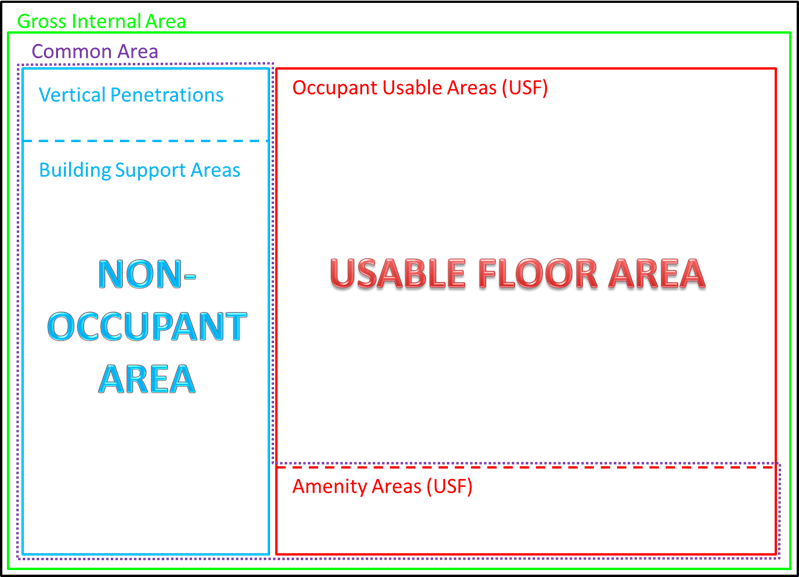
Commonwealth Facilities: Buildings owned by the Commonwealth and under the supervision and control of a specific state agency.
Controlling Agency: A state agency with the “legal control or jurisdiction” of the property as provided by M.G.L. Chapter 7C, Section 41, which carries with it the right to “occupy, or make expenditure for the maintenance of, any land, buildings or other state-owned or state-occupied facilities.” The Controlling Agency is usually a User Agency as well. Control and jurisdiction does not mean that a state agency is the owner of the property since the Commonwealth owns all state property.
Facility Manager: The person responsible for the maintenance and operation of a facility, under the control and jurisdiction of the Controlling Agency, which includes oversight of all internal Facility Staff and external contract Service Providers.
Facility Staff: Internal Service Providers reporting to the Facility Manager for maintenance and operation of a facility.
Finish Surface: The wall or ceiling surface, excluding the thickness of special finishes applied by the Occupant.
Gross External Area [IPMS 1] (GSF): The sum of the areas of each floor level of a building, measured to the outer perimeter of external construction, as described in detail by the International Property Measurement Standards: Office Buildings, IPMS 1. This includes balconies, covered galleries, rooftop terraces, basements, interior parking garages and enclosed mechanical penthouses. It excludes open light wells or covered light atriums at upper levels (floor voids), patios and decks at ground level and external (unenclosed) fire stairs.
Gross External Area [IPMS 1] (GS) - The sum of the areas of each floor level of a building measured to the outer perimeter of external construciotn.
Includes:
- Balconies
- Covered galleries
- Rooftop terraces
- Basements
- Enclosed mechanical penthouses
Excludes:
- Open light wells or (covered) Atriums at upper levels (floor voids)
- Patios and decks on ground level
- External (unenclosed) fire stairs
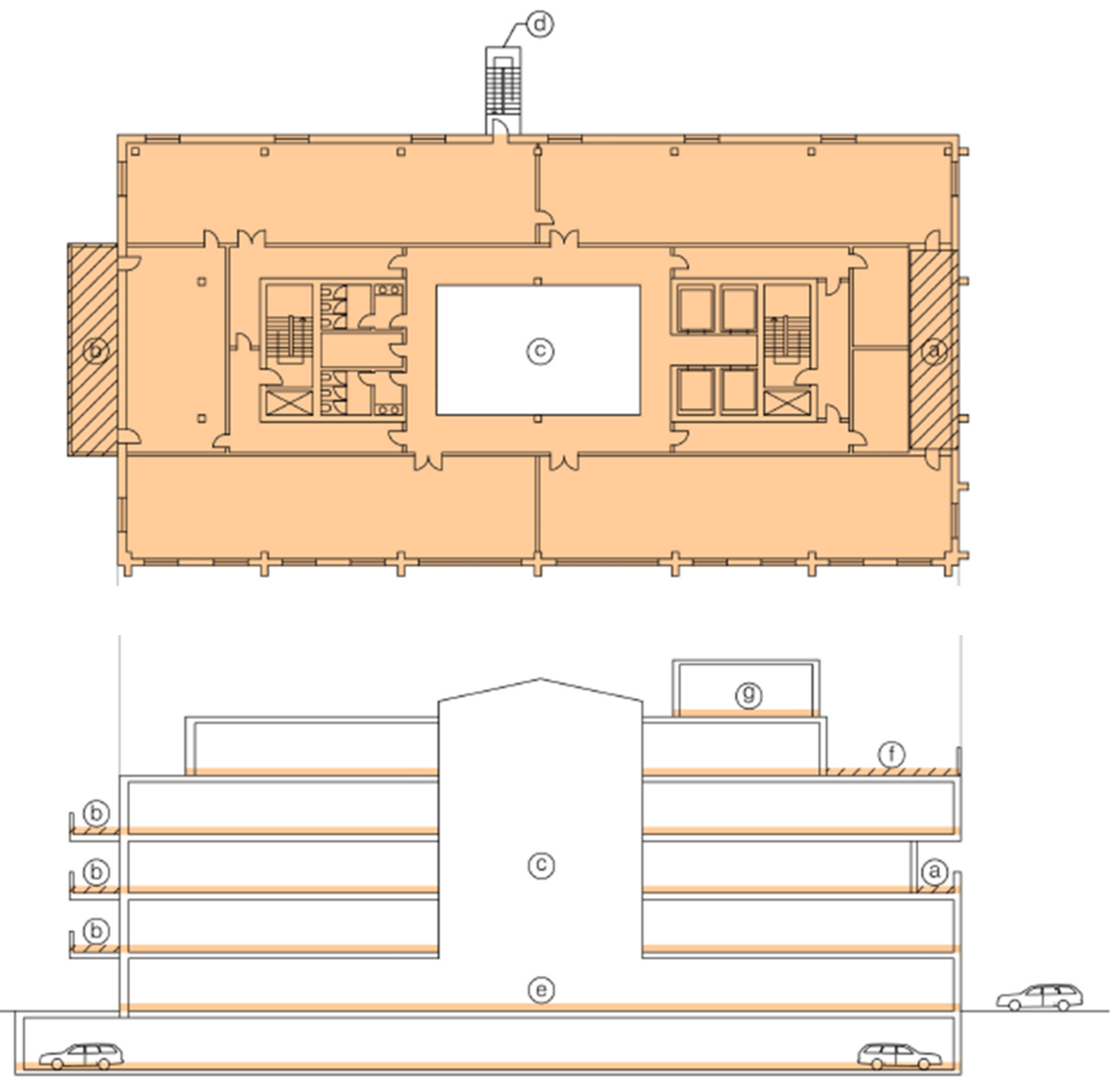
- covered galleries
- balcony
- open light well/upper level void of atriums
- open external stairway (not integral part of the structure)
- atrium ground level
- roof terrace
- lift/elevator motor room
Hatched areas are to be stated separately.
Gross Internal Area, [IPMS 2] or Boundary Area [BOMA]: The sum of the areas of each floor level of a building measured to the internal dominant face [IPMS 2] or dominant portion [BOMA], which is typically the inside face of glass OR the inside face of the exterior wall, whichever is more than 50% of the height of the wall. It excludes atriums at upper levels (floor voids). Gross Internal Area = Non-Occupant Area + Usable Floor Area
Gross Areas of a Building: Standard Methods of Measurement (ANSI/BOMA Z65.3-current version): A uniform basis which is used to compute, communicate, and compare the measurement of buildings by Gross Building Area and other floor area measurements.
Gross External Area or [IPMS 1] or [GSF]: The sum of the areas of each floor level of a building, measured to the outer perimeter of external construction, as described in details by the International Property Measurement Standards: Office Buildings, IPMS 1 [www.ipmsc.org]. This includes balconies, covered galleries, rooftop terraces, basements, interior parking garages and enclosed mechanical penthouses. It excludes open light wells or covered light atriums at upper levels (floor voids), patios and decks at ground level and external (unenclosed) fire stairs.
Gross Internal Area, [IPMS 2] or Boundary Area [BOMA]: The sum of the areas of each floor level of an office building measured to the internal dominant face [IPMS 2] or dominant portion [BOMA], which is typically the inside face of glass OR the inside face of the exterior wall, whichever is more than 50% of the height of the wall. It excludes atriums at upper levels (floor voids). Gross Internal Area = Non-Occupant Area + Usable Floor Area.
Gross Internal Area [IPMS 2] or Boundary Area [BOMA]
The sum of the areas of each floor level of an Office Building measured to the Internal Dominant Face [IPMS 2] or Dominant Portion [BOMA], which is typically the inside face of glass or the inside face of the exterior wall, whichever is more than 50% of the height of the wall.
Excludes:
- Atriums at upper levels (floor voids)
- Columns and projections necessary to the building are ignored.
- Perimeter HVAC units are ignored.
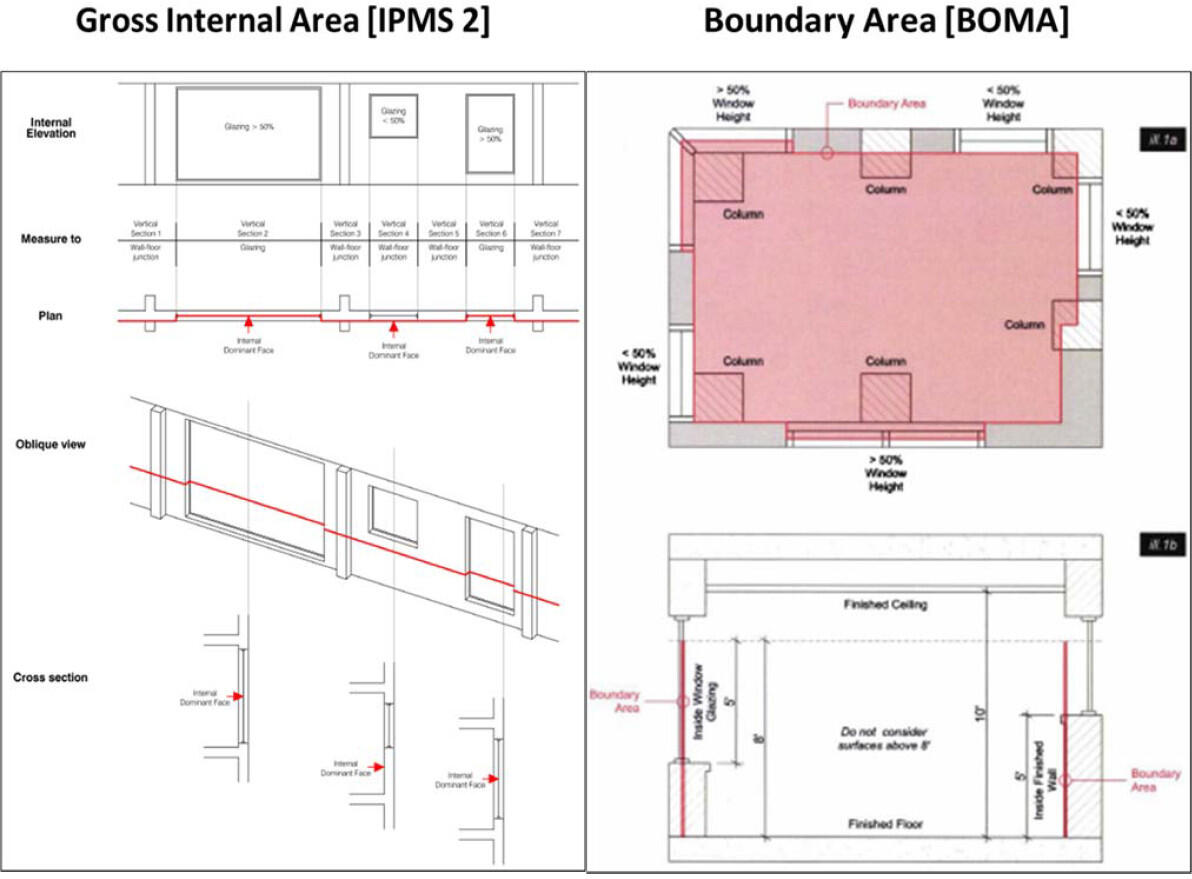
Gross Internal Area [IPMS2] or Boundary Area [BOMA] is the sum of the following 4 component areas:
Usable Floor Area:
1. Occupant Usable Areas (USF)
- Assigned to individual agencies or tenants for exclusive use; (“Facility Plan Form 1” Usable Area).
- Measured to interior face of tenant suite demising walls and limit of floor area at exterior walls. Also known as “Carpet-able Area.
2. Amenity Areas (USF)
- Cafeteria / Food Service / Retail
- Shared Conference Rooms
- Day Care / Prayer / Mother’s Rooms
- Health / Fitness
Non-Occupant Area:
3. Vertical Penetrations
- Stairs
- Elevators
- Shafts
- Atriums or Voids
4. Building Support Areas
- Lobby
- Corridors: Building access, Egress, Tenant access, Elevator access
- Mechanical, Electrical, Tel-data, Fire control, Security, Elevator machine, Facility operations, Mech. Penthouse
- Parking garage, Bicycle storage, Loading dock, Building storage, Tenant storage on non-occupant floors
- Toilet rooms, Janitor closet
- Other: Balconies, Covered galleries, Thickness of tenant demising walls, Zone between usable floor area and Gross Internal Area along exterior walls
Non-Occupant Area: Areas of the building that are not available to be used for business purposes or amenities, but are necessary to support the Occupants’ use of the building and the operation and management of the building. Non-Occupant Area = Building Support Areas + Vertical Penetrations.
Occupancy Payment: Occupant’s proportionate share, based on the Agency Allocation Area, of costs and expenses to operate, maintain and repair a facility, including but not limited to, minor repairs necessary to keep the facility in good working order.
Occupant(s): The individuals or entities that occupy space in a Commonwealth Facility by virtue of their status as a Controlling Agency and/or User Agency including their employees, or because they are permitted to use the space as a Licensee of a User Agency.
Occupant Usable Areas: The areas of a building designated for exclusive use by an Occupant (typically a User Agency) for business purposes that houses personnel, equipment, fixtures, furniture, and supplies. It is measured to the inside face of the Occupant area demising walls and the limit of the floor area at exterior walls. It is commonly referred to as ‘carpetable area.’
Office Buildings: Standard Methods of Measurement (ANSI/BOMA Z65.1- 2017 version): Guidelines for measuring usable space in both existing and new sites by taking a building wide approach to floor area measurement. It identifies and assists in measuring both Occupant space as well as the space that benefits all Occupants.
OmniClass: A classification table that is used to name building spaces on floor plan documentation.
Portfolio: A financial term for a collection of investments.
Revit: Software specifically built for BIM, empowering design and construction professionals to bring ideas from concept to construction with a coordinated and consistent model-based approach. Revit® is a single application that includes features for architectural design, MEP and structural engineering, and construction.
Service Providers: The parties responsible for completing the maintenance and management activities at Commonwealth Facilities. Service Providers at the facility may be internal Facility Staff, external contract providers, or both.
Space Information Management: Spatial information taken directly from drawings or BIM models.
Space Management: A comprehensive system for centralizing and storing real-time information about building(s), space under management, and Occupants.
Space Management Plan: A facility space inventory that assists in the analysis of capital outlay budget requests for new construction, renovation, and other space-related factors.
Usable Floor Area: The total space in a building that can be used by Occupants for business purposes. Usable Floor Area = Occupant Usable Areas + Amenity Areas.
User Agency or Agencies: A state agency or agencies that have the legal right to use and occupy all or a portion of any building, facility, improvement, or property owned by the Commonwealth for its agency mission and purposes. A User Agency may have the exclusive use of an entire building, or in a multi-occupancy facility, it may have the exclusive use of part of the building (the User Agency’s Occupant Usable Area) and the right to use Common Area which is shared with other users. A User Agency is also an “Occupant” as defined herein.
Vertical Penetrations: Non-Occupant areas that create vertical zones in the building. Examples are stairs, elevators, shafts and atriums and floor voids.
Best Practices
2.0 Roles
| Number | Details |
|---|---|
| 2.1 | The Controlling Agency is responsible for implementation of this Standard at its facilities. |
| 2.2 | The Controlling Agency should oversee the completion of all measures under this Standard, utilizing the appropriate individuals such as: a. Facility Manager b. Facility Staff c. Contracted Service Providers |
| 2.3 | The Controlling Agency should: a. Support the efficient Space Management of Commonwealth Facilities including: • Measurement of building areas. • Development and implementation of a Space Management Plan. • Review of overall expenses to determine how to reduce occupancy costs. • Production of accurate Occupancy Payment reports. • Management of space inventory. • Publication of space and occupancy information. b. Implement strategic planning processes for space utilization that align space to support the User Agency’s strategic goals and maximize the efficient use of space through consolidation. c. Coordinate User Agency strategic plans information with space utilization standards. d. Provide accurate updates of User Agency and Occupant space utilization information to the Facility Manager. |
| 2.4 | The Facility Manager should: a. Identify and update the location of various Occupants in facility/building areas. b. Translate facility/building measurements to Building Information Modeling (BIM), where applicable. c. Collect operational and maintenance costs of the building/facility. d. Conduct space audits and reports and communicate with HR departments to maintain current Occupant data. e. Collaborate with each User Agency and other Occupants to maintain occupancy data. f. Conduct regular reviews of the Space Management Plan to adjust for changes. |
| 2.5 | All Service Providers should: a. Provide Space Management services specific to both the User Agency space(s) and to the facility common spaces as identified in the Space Management Plan and the provider’s service contract. b. Comply with all legal requirements applicable to Space Management and the specific User Agency they provide services to |
3.0 Implementation
| Number | Details |
|---|---|
| 3.1 | Document the building areas including: • Gross External Area [IPMS 1] • Gross Internal Area [IPMS 2] or [BOMA] • Usable Floor Area • Occupant Usable Areas • Amenity Areas • Non-Occupant Area • Vertical Penetrations • Building Support Areas • Common Area |
| 3.2 | Develop a Space Management Plan using the following information: a. Different types of spaces b. Space standards c. Building Codes |
| 3.3 | Determine ways to reduce occupancy costs by identifying and reducing vacancy and managing output density. |
| 3.4 | In collaboration with User Agencies, plan for making the most of existing space by re-purposing vacant space and avoiding new leases and construction. |
| 3.5 | Manage space inventory. |
| 3.6 | Allocate space to User Agencies: a. Access shared spaces and circulation. b. Establish Occupancy Payments based on each User Agency’s proportionate share of actual building operating, repair, and maintenance costs. |
| 3.7 | Manage occupancy. |
| 3.8 | Create an inventory showing all spaces within the Portfolio and key attributes such as the type of space, size and design characteristics. Maintain the inventory in the Capital Asset Management Information System (CAMIS). |
| 3.9 | Allocate space to other Occupants. |
| 3.10 | Provide the data necessary to establish cost recovery of operating expenses. |
| 3.11 | Manage requests for additional space by identifying underutilized space or procuring new space via lease of property acquisition. |
| 3.12 | Annually maintain accurate drawings that reflect up-to-date depictions of occupancy for a given property. |
| 3.13 | Complete on-going data quality audits to ensure that space inventory is up-to-date and all allocated space is being used as agreed by User Agencies and their Occupants. |
| 3.14 | Ensure floor plans are up-to-date for Commonwealth Facilities based on availability of drawings through the following electronic methods: (refer to Standard 13 Facility Information Management). a. Use BIM to document floor plans for facilities without existing AutoCAD or BIM drawings. b. Maintain distinct data sets for documenting the facility’s floor plans with separate layers derived from AutoCAD or BIM files for facilities currently documented in AutoCAD or BIM. |
| 3.15 | Maintain current information on space occupancy and space utilization including: a. Each User Agency and Occupant. b. Number of personnel. c. Individuals assigned to work spaces. |
| 3.16 | Identify areas within the facility that are not in compliance with space utilization standards and document the resolution of any deviations. |
| 3.17 | Develop and maintain accurate calculations of management and operations costs to be borne by User Agencies and their Occupants, based on Agency Allocation Area calculations. |
| 3.18 | Prepare a Space Allocation and Utilization Report for the facility, identifying all User Agencies (and their Occupants) and the respective floor areas they occupy as a percentage of the Usable Floor Area. Review spaces by type (OmniClass 13) in each facility (e.g. training rooms, meeting rooms) to identify areas where space utilization efficiency can be increased. |
| 3.19 | Review costs periodically to verify that allocations are accurate and that all costs associated with the operation and management of the facility are fully accounted for in the cost allocation specified for each Occupant. |
4.0 Materials and Equipment
| Number | Details |
|---|---|
| 4.1 | AutoCAD software package |
| 4.2 | Revit software package |
| 4.3 | BIM software package |
| 4.4 | CAMIS software package |
5.0 Regulatory Compliance
| Number | Details |
|---|---|
| 5.1 | Ensure compliance with applicable codes, laws and regulations. |
| 5.2 | Ensure all Service Providers comply with applicable health and safety training related to the services they provide and the products they use. |
6.0 Training
| Number | Details |
|---|---|
| 6.1 | Select staff should be trained to access and input data into the AutoCAD and Revit programs. |
| 6.2 | Select staff should be trained to access and input data into the BIM program. |
| 6.3 | Select staff should be trained to access and input data into the CAMIS program. |
7.0 Communication
| Number | Details |
|---|---|
| 7.1 | Service Providers should not communicate directly with facility Occupants. All communication with facility Occupants should only occur through the Facility Manager or a designated representative. |
| 7.2 | The Facility Manager is responsible for communicating the following: a. Accurate updates to the Controlling Agency of any new or changed occupancy status by a User Agency or Occupant. b. Operational and maintenance costs collected at the facility/building. c. Updates to the Controlling Agency of any changes initiated by a User Agency or Occupant. |
8.0 Record Keeping and Tracking
| Number | Details |
|---|---|
| 8.1 | Regularly updated CAMIS, CAD and BIM drawings and databases. |
| 8.2 | Database of all usable and assignable areas by space and floor. |
| 8.3 | Different space types within the facility. |
Tools and Resources
The following tools and resources related to this Standard are also referenced in Appendix B to the FMMS:
- BOMA 2017 For Office Buildings, Standard Methods of Measurement
- International Property Measurement Standards (IPMS): Office Buildings, November 2014
- DCAMM Space Office Planning Standards
Suggested Metrics
- Occupants per square foot.
- Cost per square foot.
- Percent of facility-managed square feet recorded in CAMIS.
Deleted - FMMS 12
Facility Information Management - FMMS 13
Purpose and Scope
This Facility Information Management Standard establishes summary best practices for using software to provide facilities information over the entire life-cycle of a physical asset.
Facility Information Management should create greater operating efficiencies in the following ways:
- Standardize data to eliminate data discrepancies and redundancy.
- Allow agencies to optimize space use reporting and management.
- Maximize equipment service lives by optimizing maintenance management.
- Efficiently plan and obtain funding for capital modernization and improvements.
- Reduce energy consumption.
This Standard includes information management best practices for the Facility Manager related to design, procurement, construction, condition assessment, repair, renovation, adaptation, utilization, capital planning and budgeting, life safety, security, and sustainability of Commonwealth Facilities.
This Standard applies to all existing facilities and new facilities that are planned and constructed.
Definitions
The following definitions are identified with initial capitals throughout this Standard and are also included in Appendix A to the FMMS:
AutoCAD: A computer-aided design (CAD) program used for 2-D and 3-D design and space planning. AutoCAD allows users to design a building and structure and its components in 3-D, annotate the model with 2-D drafting elements, and access building information from the building’s model database.
Building Information Modeling (BIM): A Building Information Model (BIM) is a digital representation of physical and functional characteristics of a facility. As such it serves as a shared knowledge resource for information about a facility forming a reliable basis for decisions during its life-cycle from inception onward.
Capital Asset Management Information System (CAMIS): A database application that includes several modules related to DCAMM functions, including, but not limited to, land/building portfolio management, real estate/leasing transactions, space management, condition assessment/deferred maintenance, and operations and maintenance of state facility infrastructure, both major (i.e. elevators, HVAC and its major related components) and minor (fire extinguishers), as well as tasks (i.e. cleaning windows, cleaning carpets, etc.). The system includes a maintenance management work order program, available to all Commonwealth Facilities, to catalog data related to work order scheduling of preventive and corrective maintenance activities. Commissioning (Cx): A process for enhancing the delivery of a new construction project. The process focuses upon verifying and documenting that the facility and all of its systems and assemblies are planned, designed, installed, tested, operated, and maintained to meet the owner's project requirements.
Commonwealth Facilities: Buildings owned by the Commonwealth and under the supervision and control of a specific state agency.
Construction Operations Building Information Exchange (COBie): A format through which data reported/exported from a BIM may be read/imported into a system such as CAMIS. COBie is recognized as a part of the National BIM Standard (NBIMS).
Controlling Agency: A state agency with the “legal control or jurisdiction” of the property as provided by M.G.L. Chapter 7C, Section 41, which carries with it the right to “occupy, or make expenditure for the maintenance of, any land, buildings or other state-owned or state-occupied facilities.” The Controlling Agency is usually a User Agency as well. Control and jurisdiction does not mean that a state agency is the owner of the property since the Commonwealth owns all state property.
Decommissioning: The process of closing down and mothballing a facility.
Existing Building Commissioning (EBCx): A comprehensive process of reviewing and adjusting building systems to perform interactively to meet the current facility requirements.
Facility Information Management: An integration of process and technology to enable the efficient life-cycle management of facilities. A key ingredient of Facility Information Management is the use of BIM.
Facility Life Cycle: The view of a facility over the course of its entire life taking into account the design, construction, Cx, operation, EBCx, and Decommissioning phases.
Facility Manager: The person responsible for the maintenance and operation of a facility, under the control and jurisdiction of the Controlling Agency, which includes oversight of all internal Facility Staff and external contract Service Providers.
Facility Staff: Internal Service Providers reporting to the Facility Manager for maintenance and operation of a facility.
Facility Systems Analysis: Measurement of how a facility’s performance compares to the design model predictions to ensure that the facility is operating to specified design and sustainable standards. It typically focuses on how a facility’s mechanical system operates and how much energy a facility uses.
Geographic Information Systems (GIS): The collection, management, and use of facility digital data accurately referenced to a precise location on the earth’s surface. BIM data can be integrated with GIS to create a seamless re-use and re-purposing of facility data. GIS tools enable users to access and manipulate GIS data.
Maintenance History: The documentation of all actions (work orders, routine, replacement and preventive maintenance) and observations relevant to the operation and performance of an asset. This history is maintained in the CAMIS application.
Occupant(s): The individuals or entities that occupy space in a Commonwealth Facility by virtue of their status as a Controlling Agency and/or User Agency including their employees, or because they are permitted to use the space as a Licensee of a User Agency.
OmniClass Construction Classification System (OCCS): A means of organizing and retrieving information specifically designed for the construction industry. It is designed to provide a standardized basis for classifying information created and used by the North American architectural, engineering and construction (AEC) industry, throughout the Facility Life- Cycle from conception to demolition or reuse.
Preventive Maintenance: Work performed by various facilities personnel based on scheduled inspections, scheduled testing, and minor element replacements for the purpose of improving equipment life, avoiding any unplanned maintenance activity, and minimizing equipment breakdowns.
Programming: Identification of the spatial, functional, and operational requirements for a facility (uses, areas, required adjacencies, etc.) to meet the projected needs and goals of the facility or partial facility. Program validation assesses the accuracy, efficiency and effectiveness of a design in meeting those requirements.
Record Model: An accurate digital representation of the physical conditions, environment, and assets of a facility BIM model.
Routine Maintenance: Simple, small-scale activities and specific work-order requests associated with general upkeep and continued operation of a building, site, equipment, machine, plant, or system against normal wear and tear. Typically, Routine Maintenance includes activities that are completed by Facility Staff and regularly contracted facility Service Providers, rather than specialized professionals. Routine Maintenance is done within a specific period of time e.g. daily, weekly, monthly, etc.
Service Providers: The parties responsible for completing the maintenance and management activities at Commonwealth Facilities. Service Providers at the facility may be internal Facility Staff, external contract providers, or both.
1.0 Roles
| Number | Details |
|---|---|
| 1.1 | The Controlling Agency is responsible for implementation of this Standard at its facilities. |
| 1.2 | The Facility Manager, or a designated representative, should coordinate implementation of this Standard and determine the individuals responsible for ensuing compliance at the facility. |
| 1.3 | The Facility Manager should: a. Maintain current documentation of facility operational plans including: • Facility Security Plan, including security infrastructure. • Facility Health and Safety Plan. • Emergency Management Plan. b. Maintain current maintenance management documentation for: • Contracts for services (e.g. grounds and landscape maintenance, cleaning, solid waste management, integrated pest management, etc.). • Procedures and policies for maintenance functions. c. Maintain operational information throughout the occupancy of the facility relating to: • Routine Maintenance, including work orders (see FMMS 05 Routine Maintenance). • Preventive and scheduled maintenance (see FMMS 06 Preventive and Scheduled Maintenance). • Space utilization (see FMMS 11 Space Management). • Systems performance (BAS-generated data) including energy consumption. d. Ensure training is provided to facility management staff to review and update existing information systems with current information. Contracted Service Providers should furnish all contract documents in digital format. |
2.0 Implementation
| Number | Details |
|---|---|
| 2.1 | Data Collection a. Data currently maintained on paper or in other legacy formats should be saved in an integrated computerized management system, such as the Capital Asset Management Information System (CAMIS). New or updated information related to the facility should be documented in a centrally maintained electronic system, such as CAMIS, CAD or Building Information Modeling (BIM), as appropriate and available. b. Facility information should include documentation of Commissioning (Cx) and Existing Building Commissioning (EBCx) activities. |
| 2.2 | Data Maintenance a. Collect and maintain facility information throughout the occupancy phase of the building life cycle. b. Work with capital project teams to document changes to facility design, engineering, and construction as a result of updates and renovations. c. Document changes to service contractors, equipment suppliers, system details, quantities and replacement equipment, to provide for accurate Preventive Maintenance planning. d. Update locations and access to facility equipment as it is replaced to aid in planned maintenance and emergency management. |
| 2.3 | Space management should be done using industry standard software, such as CAD, as the means to analyze the existing space utilization, evaluate proposed changes, and effectively plan for future needs. a. Maintain current and accurate information concerning changes to space utilization and occupancy. b. Promptly and accurately record changes in Occupant floor plans. |
| 2.4 | Geographic Information Systems (GIS) a. When possible, use GIS tools to maintain current and accurate information and provide support for: • Facility mapping. • Real estate site selection for agencies. • Maintenance and service route management. • Emergency and evacuation planning. • Data analysis. |
| 2.5 | Maintenance Management a. Document maintenance activities through the use of CAMIS or another computerized maintenance management system. b. Manage and provide access to facility record documents through CAMIS. |
| 2.6 | Energy and Water Consumption Data a. If the facility has appropriate technology, energy and water consumption data, including project savings information, this should be recorded in the centralized information management system for the purposes of analysis and planning for future conservation and efficiency improvements. b. Provide energy account information to DCAMM and the Leading By Example (LBE) program to allow for utility energy consumption tracking. If energy account numbers change, provide DCAMM and LBE with an updated list of all utility accounts and providers. |
| 2.7 | Building Automation Systems data documentation shall include the following: a. Operation of system controllers. b. Interior environmental conditions for Occupants such as ambient temperature, humidity, etc. c. Central plant function. d. Alarms and security equipment testing. |
| 2.8 | Capital Planning information a. Data obtained from Facility Condition Assessments (FCAs) on the type and condition of major systems and components should be tabulated in the format specified by DCAMM for integration into CAMIS. |
3.0 Materials, Equipment and Technology
| Number | Details |
|---|---|
| 3.1 | BIM software. |
| 3.2 | CAMIS data entry application. |
| 3.3 | CAD software. |
| 3.4 | Reports and other documents. |
4.0 Regulatory Compliance
| Number | Details |
|---|---|
| 4.1 | Ensure compliance with applicable codes, laws and regulations. |
| 4.2 | Ensure all Service Providers comply with applicable health and safety training related to the services they provide and the products they use. |
| 4.3 | BIM Standards a. BIM should be created and maintained in accordance with recognized BIM Standards. |
| 4.4 | OmniClass Construction Classification System (OCCS) a. OCCS should be used to normalize facility, operational, and service data. |
5.0 Training
| Number | Details |
|---|---|
| 5.1 | CAMIS Training a. General: Provide training to facility management personnel in the use of CAMIS as needed to assure the complete and accurate maintenance of facility information. b. Service Requests: Provide training for creating and managing maintenance requests and work orders. c. Buildings and Equipment: Provide training in equipment inventory and location management. d. Preventive Maintenance: Provide training in Preventive Maintenance data management. |
6.0 Communication
| Number | Details |
|---|---|
| 6.1 | Service Providers should not communicate directly with facility Occupants. All communication with facility Occupants should only occur through the Facility Manager or a designated representative |
| 6.2 | Ensure that Facility Information Management procedures are communicated to all staff responsible for accessing, using, updating, and/or managing facility-related information. |
7.0 Recordkeeping and Tracking
| Number | Details |
|---|---|
| 7.1 | Document compliance with the best practices of this Standard on a periodic basis. |
Tools and Resources
The following tools and resources related to this Standard are also referenced in Appendix B to the FMMS:
- Executive Office for Administration and Finance, Building Information Modeling (BIM) List of Design, Preconstruction and Construction Services (February 27, 2016 or current version)
- DCAMM, CAD Standards Manual (December 19, 2017 or current version)
- DCAMM, CAMIS Job Aids (available within the system) (current version)
Suggested Metrics
- Number of capital, energy, space management and real estate projects completed, which data has been entered into CAMIS upon closeout.
Deleted - FMMS 14
Accessibility - FMMS 15
Purpose and Scope
This Accessibility Standard establishes summary best practices for operating and maintaining Commonwealth Facilities in compliance with state and federal Accessibility regulations and for carrying out Accessibility improvements so that when viewed in their entirety, the programs, services, and activities that occur at these facilities, are accessible to, and usable by persons with disabilities.
The Commonwealth of Massachusetts is committed to providing buildings and facilities that are usable by all persons.
In addition to the best practices of this Standard, all Commonwealth Facilities are subject to state and federal Disability-related, non-discrimination laws, regulations and orders including, but not limited to:
- The Americans with Disabilities Act (ADA).
- Rules and Regulations of the Massachusetts Architectural Access Board (MAAB) found at 521 Code of Massachusetts Regulations (CMR).
- The 2010 ADA Standards for Accessible Design.
- Massachusetts Executive Order 526: Non-discrimination, Diversity, Equal Opportunity and Affirmative Action (2011).
Although Accessibility measures at Commonwealth Facilities are subject to state and federal laws for all facility common spaces, additional measures may be necessary and further tailored to the specific program needs and regulatory requirements of the User Agencies.
Childcare centers, hospitals, correctional facilities and any other specialized facilities must comply with specific statutory and regulatory requirements applicable to the facility, requirements which are not part of this FMMS.
Definitions
The following definitions are identified with initial capitals throughout this Standard and are also included in Appendix A to the FMMS:
2010 ADA Standards for Accessible Design: Guidelines issued by the U.S. Access Board establishing minimum requirements – both scoping and technical – for new construction and alteration of state and local government facilities, public accommodations, and commercial facilities to be readily accessible to and usable by individuals with disabilities. These Standards, which became effective March 15, 2011, supersede the Americans with Disabilities Architectural Guidelines (ADAAG), issued in 1991.
Accessibility: The ability to approach, enter, operate, participate in, and/or use safely a site, facility, work environment, or service, by a person with a Disability.
Accessibility Audit: A comprehensive assessment of a facility to determine non-compliant Accessibility elements, conducted by consultants or others using a systematic checklist and reporting format. DCAMM’s ADA Coordinator has developed a standard Accessibility Audit checklist and reporting format that is available upon request.
Accessible Means of Egress: A continuous and unobstructed way of egress travel from any point in a building or facility that provides an Accessible Route to an Area of Refuge or Area of Rescue Assistance, a horizontal exit, or a public way.
Accessible Route: A continuous, unobstructed path connecting all accessible elements and spaces within or between buildings or facilities. Interior Accessible Routes may include corridors, floors, ramps, elevators, lifts, and clear floor space at fixtures. Exterior Accessible Routes may include parking, access aisles, curb cuts, and crosswalks at vehicular ways, walks, ramps, and lifts.
ADA Coordinator: This designated individual provides advice on promoting access and equal opportunity for people with disabilities in programs, activities and services of state government, including employment, and is responsible for overseeing compliance-related actions and assisting with Disability-based discrimination complaints at Commonwealth Facilities.
ADA Implementation Plan: An agency’s response to the ADA Strategic Compliance Assessment, identifying the actions that will be taken to achieve compliance with the ADA. In conformance with the requirements of the ADA transition plan, it includes a completion date and a responsible party. The Implementation Plan should be updated on an annual basis. DCAMM’s ADA Coordinator has developed a standard implementation plan format that is available for reference purposes upon request.
ADA Strategic Compliance Assessment: An analysis of an agency’s level of compliance with the ADA and serving as an updated ADA self-evaluation. The report identifies high priority ADA issues that need immediate mitigation, Accessibility projects that may require capital funding, changes needed to policies and procedures, and Accessibility improvements that can be undertaken by Facility Staff.
ADA Title I: The section of the ADA that prohibits private employers, state and local governments, employment agencies and labor unions from discriminating against qualified individuals with disabilities in job application procedures, hiring, firing, advancement, compensation, job training, and other terms, conditions, and privileges of employment and requires an employer to provide reasonable accommodation to qualified individuals with disabilities who are employees or applicants for employment, unless to do so would cause undue hardship. Reasonable accommodations may include modifications to a building or facility designed to address the specific needs of an employee needing accommodation.
ADA Title ll: The section of the ADA that applies to state and local government entities, and protects qualified individuals with disabilities from discrimination on the basis of Disability in services, programs, and activities provided by state and local government entities. Title II extends the prohibition on discrimination established by section 504 of the Rehabilitation Act of 1973, as amended, to all activities of state and local governments regardless of whether these entities receive federal financial assistance. Title II establishes 5 administration requirements: designating a qualified individual as an ADA Coordinator, posting notice of non-discrimination based on ADA, establishing an ADA grievance procedure, conducting an ADA self-evaluation survey, and creating an ADA transition plan.
Administrative Bulletin ANF 19, “Enhancing Coordination and Integration to Promote Accessibility”: Published by the Commonwealth’s Executive Office for Administration and Finance, this bulletin became effective on April 1, 2011. It outlines and establishes the policy and programmatic framework through which the Commonwealth will proactively act to remove physical and programmatic barriers that limit equal participation in state programs, activities and services. Administrative Bulletin ANF 19 also establishes the Universal Access Committee (UAC), which makes recommendations to the Office of Administration and Finance including defining, overseeing, and coordinating implementation of the actions necessary to achieve the purpose and policy of Administrative Bulletin ANF 19.
Americans with Disabilities Act (ADA): The federal statute enacted on July 26, 1990, as amended, that defines anti-discrimination protections ensuring the civil rights of people with disabilities, similar to the anti-discrimination protections under the Civil Rights Act of 1964 based on race and gender. The ADA broadly defines the rights of individuals with disabilities to equal opportunity in employment, access to state and local government services, private sector places of public accommodation, transportation, and other important areas of American life.
Area of Refuge or Area of Rescue Assistance: An area which has direct access to an exit where people who are unable to use stairs or unable to travel more than 100 feet to a public way may remain temporarily in safety to await further instructions or assistance during an emergency evacuation. Areas of refuge are required by the International Building Code in most newly constructed public buildings and additions, unless they are fully sprinklered.
Capital Asset Management Information System (CAMIS): A database application that includes several modules related to DCAMM functions, including, but not limited to, land/building portfolio management, real estate/leasing transactions, space management, condition assessment/deferred maintenance, and operations and maintenance of state facility infrastructure, both major (i.e. elevators, HVAC and its major related components) and minor (fire extinguishers), as well as tasks (i.e. cleaning windows, cleaning carpets, etc.). The system includes a maintenance management work order program, available to all Commonwealth Facilities, to catalog data related to work order scheduling of preventive and corrective maintenance activities.
Commonwealth Facilities: Buildings owned by the Commonwealth and under the supervision and control of a specific state agency.
Controlling Agency: A state agency with the “legal control or jurisdiction” of the property as provided by M.G.L. Chapter 7C, Section 41, which carries with it the right to “occupy, or make expenditure for the maintenance of, any land, buildings or other state-owned or state-occupied facilities.” The Controlling Agency is usually a User Agency as well. Control and jurisdiction does not mean that a state agency is the owner of the property since the Commonwealth owns all state property.
Disability: Defined by the ADA as “a physical or mental impairment that substantially limits a major life activity, a history or record of such impairment, or being regarded as having such an impairment”.
Facility Manager: The person responsible for the maintenance and operation of a facility, under the control and jurisdiction of the Controlling Agency, which includes oversight of all internal Facility Staff and external contract Service Providers.
Facility Staff: Internal Service Providers reporting to the Facility Manager for maintenance and operation of a facility.
FSADA Coordinator: The ADA requires that entities of state and local government designate ADA Coordinators to ensure compliance with all Disability rights-related federal and Massachusetts laws, regulations, policies and procedures, including, but not limited to, the ADA, ADAAA 2008, the Federal Rehabilitation Act (1973), as amended, Executive Order 526, the Governor’s Model Employer Program, and Administration and Finance Administrative Bulletin ANF 19. This designated individual advises the agency head on promoting access and equal opportunity for people with disabilities in programs, activities and services of state government, including employment, and is responsible for overseeing compliance-related actions and assisting with Disability-based discrimination complaints at the agency and its facilities.
Licensee: Individual or entity that is not a state agency or state employee but occupies space of a User Agency as part of a service contract or other arrangement with the User Agency to further the User Agency’s mission. For example, a private consulting firm hired by an agency might be provided with offices inside the agency’s space. The consulting firm would be a Licensee.
Massachusetts Architectural Access Board Rules and Regulations (521 CMR § 1.00 et seq.): The regulations promulgated by the MAAB pursuant to M.G.L. Chapter 22, Section 13(a), which is the statute of the Commonwealth that requires public buildings and facilities to be accessible to, functional for, and safe for use by persons with disabilities. It is the intent of these state regulations to provide persons with disabilities full, free, and safe use of all buildings and facilities so that all such persons may have the educational, living, and recreational opportunities necessary to be as self-sufficient as possible and to assume full responsibilities as citizens.
Massachusetts Architectural Access Board (MAAB): The regulatory agency within the Massachusetts Executive Office of Public Safety that develops and enforces regulations designed to make public facilities accessible, functional, and safe for use by persons with disabilities. MAAB regulations are found in Section 521 of the Code of Massachusetts Regulations. The Board receives and adjudicates complaints of non-compliance, provides advisory opinions on its regulations, and may grant variances if compliance can be demonstrated: 1) to be technologically unfeasible or, 2) to result in excessive and unreasonable costs without any substantial benefit to persons with disabilities.
Massachusetts Office on Disability (MOD): The agency within the Executive Branch designated as its ADA Coordinator to oversee and administer the Commonwealth's compliance with the ADA. MOD’s mission is to ensure the full and equal participation of all people with disabilities in all aspects of life by working to advance legal rights, maximum opportunities, supportive services, accommodations and Accessibility in a manner that fosters dignity and self-determination.
Occupant(s): The individuals or entities that occupy space in a Commonwealth Facility by virtue of their status as a Controlling Agency and/or User Agency including their employees, or because they are permitted to use the space as a Licensee of the User Agency.
Occupant Usable Areas: The areas of a building designated for exclusive use by an Occupant (typically a User Agency) for business purposes that houses personnel, equipment, fixtures, furniture and supplies. It is measured to the inside face of the Occupant area demising walls and the limit of the floor area at exterior walls. It is commonly referred to as ‘carpetable area.’
Program Accessibility: A public entity may not deny the benefits of its programs, activities, and services to individuals with disabilities because its facilities are inaccessible. A public entity's services, programs, or activities, when viewed in their entirety, must be readily accessible to and usable by individuals with disabilities in a time-frame and setting equivalent to people without disabilities. This standard applies to all existing facilities owned or occupied by the Commonwealth. Public entities, however, are not necessarily required to make each of their existing facilities accessible if Program Accessibility can be achieved through administrative and operational, non-structural solutions, such as scheduling a program in a comparable, accessible space, as long as the alternative is of the same quality as the original. Government entities are not required to take actions that would result in a fundamental alteration to the nature of the service, program, or activity in question or that would result in undue financial or an administrative burden. This determination can only be made by the head of the public entity and must be accompanied by a written statement of the reasons for reaching that conclusion. The determination that undue burden would result must be based on all resources available for use in a program. If an action would result in such an alteration or such burdens, the entity must take any other action that it can to ensure that people with disabilities receive the benefits and services of the program or activity.
Service Providers: The parties responsible for completing the maintenance and management activities at Commonwealth Facilities. Service Providers at the facility may be internal Facility Staff, external contract providers, or both.
Universal Design (UD): A conceptual framework for the design of places, products, information, communication, and policy to be usable by the widest range of people operating in the widest range of situations without special or separate design. Most simply, UD is human-centered design of everything with everyone in mind.
User Agency or Agencies: A state agency or agencies that have the legal right to use and occupy all or a portion of any building, facility, improvement, or property owned by the Commonwealth for its agency mission and purposes. A User Agency may have the exclusive use of an entire building, or in a multi-occupancy facility, it may have the exclusive use of part of the building (the User Agency’s Occupant Usable Area) and the right to use common areas which is shared with other Occupants. A User Agency is also an “Occupant” as defined herein.
Best Practices
1.0 Roles
| Number | Details |
|---|---|
| 1.2 | The Controlling Agency is responsible for implementation of this Standard at its facilities. |
| 1.2 | The Controlling Agency ADA Coordinator will identify and resolve the specific Accessibility needs and concerns at the facility, including, but not limited to, security procedures, maintenance schedules, housekeeping, and signage. |
| 1.3 | The Controlling Agency should oversee the completion of all measures under this Standard and determine the individuals responsible for ensuring Accessibility at the facility. These individuals may include, but are not limited to, the following: a. Facility Manager b. Facility Staff c. Contracted Service Providers d. User Agency ADA Coordinators and/or on-site managers |
| 1.4 | The Controlling Agency and Facility Manager, as well as the User Agencies, should utilize resources for technical assistance and training, including, but not limited to the following: a. Massachusetts Office on Disability (MOD) b. MAAB c. Internal and external subject matter experts |
| 1.5 | Each User Agency should have a designated ADA Coordinator to handle employee Title I requests and accommodation requests by the public to programs, services, and activities within its space. |
2.0 Implementation
| Number | Details |
|---|---|
| 2.1 | The Controlling Agency should ensure the following Accessibility measures listed below are in place on a case-by-case basis depending on the specific facility. |
| 2.2 | Identify its specific Accessibility needs for both the site and facility common spaces, and the space(s) it occupies within the facility. |
| 2.3 | Ensure the facility complies with all Accessibility regulations as identified in the ADA Strategic Compliance Assessment and Implementation Plan and/or the Accessibility Audit report. |
| 2.4 | Ensure Accessibility to the programs, services, and activities and employee work areas within the User Agency space. |
| 2.5 | Maintain in fully working condition those features of facilities and equipment that are required to be readily accessible to and usable by persons with disabilities. |
| 2.6 | Ensure Accessibility measures are in place and operational to allow access and movement into and around the site and facility, including, but not limited to, the following: a. Provide and maintain interior and exterior Accessible Routes. b. Test all operable accessible elements (i.e., door pressure and closing speed, automatic door openers, lifts). c. Maintain essential communication systems and signage. |
| 2.7 | Ensure facility alterations, repairs or replacement of any element are in compliance with the requirements of Title II of the ADA, the 2010 ADA Standards for Accessible Design, and the MAAB Rules and Regulations (521 CMR § 1.00 et seq.). a. Identify the Accessibility requirements in ADA and 521 CMR for any element that may be touched as part of a project. b. Determine whether the cost of the work performed triggers additional MAAB Accessibility compliance for building elements such as entrances and toilet rooms. A variance must be requested from the MAAB prior to any repair or alteration for any required element that cannot be brought into compliance. c. Determine if any work being performed on a primary function area requires Accessibility improvements to the existing path of travel between the facility entrance and the primary function area. d. Review the work performed by Facility Staff and contracted Service Providers to ensure it is in compliance with Accessibility regulations. e. Ensure facility alterations and repairs occur with the least amount of disruption possible for people with disabilities. f. Ensure arrangements for continuity of service in the event of isolated or temporary interruptions in services due to maintenance or repairs. Comply with MAAB requirements for temporary Accessible Routes during construction. |
| 2.8 | Update capital improvement plans for inclusion of Accessibility improvements identified in the ADA Implementation Plan and/or Accessibility Audit. |
| 2.9 | Plan the mitigation of high priority Accessibility issues identified in the ADA Implementation Plan and/or Accessibility Audit by identifying funding and scheduling renovations or repairs in accordance with the schedule established in those documents. |
| 2.10 | Maintain written policies and procedures to ensure Program Accessibility when barriers have not been mitigated. Train all Facility Staff to be knowledgeable about how equal access is provided in the facility. |
| 2.11 | Ensure security and emergency management policies and procedures at the facility are inclusive of and responsive to the needs of persons with disabilities, including effective communication, by reviewing the facility’s security and emergency management policies and procedures on a regular basis with the Facility Manager and MOD. |
| 2.12 | Maintain effective communication in the building including fixed signage, electronic information systems, audio visual equipment, assistive listening systems, visual emergency alarms, and two-way communication systems in areas of refuge. |
| 2.13 | Maintain building information and signage in compliance with both MAAB and ADA requirements and incorporating best practices from Standard 17 Wayfinding as appropriate. a. Maintain an accessible facility web page of essential building information such as hours of operation, accessible parking, accessible entrances, and the contact information for the ADA Coordinator. b. Provide Accessibility information when physical elements of the facility are altered, temporarily out of service, or when temporary or permanent changes affect the usability of equipment, spaces, or Accessible Routes. c. Update signage as necessary to reflect changes at the facility (e.g., room changes, egress routes, etc.). |
| 2.14 | Maintain up-to-date information in the Commonwealth’s Capital Asset Management Information System (CAMIS) database program including, but not limited to, updates to the ADA Implementation Plan, including changes in priorities and timetables, and recording Accessibility improvements made to the facility. |
3.0 Materials and Equipment
| Number | Details |
|---|---|
| 3.1 | Include ADA compliance language in all contracts and purchase orders (i.e., non-discrimination, design, installation, operation) and monitor compliance. |
| 3.2 | Ensure that maintenance and purchasing policies and procedures do not discriminate against people with disabilities. |
4.0 Regulatory Compliance
| Number | Details |
|---|---|
| 4.1 | Ensure compliance with applicable codes, laws and regulations. |
| 4.2 | Ensure all Service Providers comply with applicable health and safety training related to the services they provide and the products they use. |
5.0 Training
| Number | Details |
|---|---|
| 5.1 | The Controlling Agency should approve and oversee training content and requirements, and ensure that all Service Providers have proper training in compliance with the Accessibility requirements under their specific contracts. |
| 5.2 | An ongoing Accessibility training program should be in place for all Service Providers and User Agency representatives to ensure compliance with all accessibility-related requirements, procedures, and processes. |
| 5.3 | Facility Managers should receive technical assistance and training resources on Accessibility so that they can manage and operate facilities in compliance with state and federal Accessibility laws. |
| 5.4 | In addition to the above training programs, Service Providers are subject to any other training requirements their respective contracts require. |
6.0 Communication
| Number | Details |
|---|---|
| 6.1 | The Controlling Agency should ensure specific and appropriate communication across staff, User Agencies, Service Providers, and facility Occupants for the successful and transparent implementation of all standards. |
| 6.2 | Service Providers should not communicate directly with facility Occupants. All communication with facility Occupants should only occur through the Facility Manager or a designated representative. |
| 6.3 | Ensure that communications with persons with disabilities are as effective as communications with others. |
| 6.4 | Provide signage at all inaccessible elements in the facility, directing users to an accessible element, including paths of travel, entrances, toilet rooms, and drinking fountains, and maintain signage required by the ADA or MAAB. Signs should also be provided indicating how to contact the ADA Coordinator. |
| 6.5 | Ensure that persons with visual, auditory, and cognitive disabilities, can access information regarding the availability and location of accessible services, activities, and facilities as well as emergency notifications and egress. |
| 6.6 | Provide appropriate auxiliary aids and services where necessary to afford an individual with a Disability an equal opportunity to participate in, and enjoy the benefits of, a service, program, or activity conducted by facility Occupants. |
7.0 Recordkeeping and Tracking
| Number | Details |
|---|---|
| 7.1 | The Controlling Agency should ensure the following recordkeeping activities occur at its Commonwealth Facilities, and determine the individuals responsible for tracking and collecting the below information on a case-by-case basis depending on the specific facility. |
| 7.2 | Steps taken to address non-compliance identified in the ADA Implementation Plan and/or Accessibility Audit report. |
| 7.3 | Access improvements that are to be addressed in the coming fiscal year. |
Tools and Resources
The following tools and resources related to this Standard are also referenced; in Appendix B to the FMMS:
- 28 CFR § 35.101 et. seq., Nondiscrimination on the Basis of Disability in State and Local Government Services
- U.S. Department of Justice Civil Rights Division, ADA Standards for Accessible Design (2010)
- Massachusetts Administrative Bulletin 19, Enhancing Coordination and Integration to Promote Accessibility at State Facilities or to State Programs, Services and Activities (April 1, 2011)
- 521 CMR § 1.00 et. seq., Architectural Access Board Rules and Regulations
Suggested Metrics
- Maintain the ADA Implementation Plan and/or Accessibility Audit report with updates on Accessibility improvements completed. Review on a regular basis, and also anytime modifications to the facility are planned. Document any policies and procedures instituted to provide program access.
- Measure the effectiveness of Accessibility by how Occupants with disabilities can navigate the facility, based on grievances and complaints made to the Facility Staff and MOD
- Report updated information in CAMIS.
Fire Safety - FMMS 16
Purpose and Scope
This Fire Safety Standard establishes summary best practices to protect lives and Commonwealth Facilities in conjunction with state, municipal building, and fire protection agencies, and to collaborate with such agencies in the prevention of fire and the advancement of fire safety education programs. This Standard establishes best practices for fire safety requirements for Commonwealth Facilities to achieve the following goals:
- Operate and maintain fire protection and life safety systems that effectively detect, notify Occupants, contain, and control or extinguish a fire event in the early stages.
- Improve overall building safety to protect human life, reduce potential loss, and control the environmental impact from fire and products of combustion.
- Protect the real and personal property of the Commonwealth of Massachusetts.
The best practices for each building or facility are to be reviewed to establish a detailed procedure for that building’s specific fire safety needs. The review will result in a building-specific Fire Prevention Policy (FPP) and Fire Safety Plan (FSP). FSPs must conform to code requirements which require approval by the State Fire Marshal for the Commonwealth. Commonwealth Facilities must conform to all fire safety regulations prescribed by 780 CMR § 1.00 et. seq. (the State Building Code) and related standards.
Buildings with advanced functional requirements such as data centers, laboratories, and hospitals may require mission-specific level standards.
Definitions
Commonwealth Facilities: Buildings owned by the Commonwealth and under the supervision and control of a specific state agency.
Controlling Agency: A state agency with the “legal control or jurisdiction” of the property as provided by M.G.L. Chapter 7C, Section 41, which carries with it the right to “occupy, or make expenditure for the maintenance of, any land, buildings or other state-owned or state-occupied facilities.” The Controlling Agency is usually a User Agency as well. Control and jurisdiction does not mean that a state agency is the owner of the property since the Commonwealth owns all state property.
Facility Manager: The person responsible for the maintenance and operation of a facility, under the control and jurisdiction of the Controlling Agency, which includes oversight of all internal Facility Staff and external contract Service Providers.
Facility Staff: Internal Service Providers reporting to the Facility Manager for maintenance and operation of a facility.
Fire Prevention Policy (FPP): Enumeration of procedures and requirements to reduce fire hazards.
Fire Risk Assessment: An annual building audit to identify potential fire risks and mitigation strategies.
Fire Safety Code: 527 CMR § 1.00 et. seq., Board of Fire Prevention Regulations, is a model code adopted by the state and enforced by fire prevention officers within municipal fire departments. It is a set of rules prescribing minimum requirements to prevent fire and explosion hazards arising from storage, handling, or use of dangerous materials, or from other specific hazardous conditions. It complements the building code. The fire code is aimed primarily at preventing fires, ensuring that necessary training and equipment will be on hand, and that the original design basis of the building, including the basic plan set out by the architect, is not compromised. The fire code also addresses inspection and maintenance requirements for various types of fire protection equipment in order to maintain optimal active fire protection and passive fire protection measures.
Fire Safety Coordinator: The person responsible for facility/building personnel training and fire drills. The Fire Safety Coordinator will usually be a member of the Incident Management Team (IMT) (for emergency management).
Fire Safety Plan (FSP): A document that specifies a set of facility/building-specific safety measures and action items in the event of fire. The plan includes key contact information, the location of utility services, access issues, the locations of dangerous stored materials, the locations of people with special needs, the locations for sprinkler system connections, a layout/drawing/site plan of the facility/building, maintenance schedules for all life safety systems, and personnel training/fire drill procedures. A current approved FSP is required in all Commonwealth Facilities, and is to be made available to the Local Fire Authority.
Incident Management Team (IMT): A group of representatives working in a Unified Command Structure (UCS) from public safety departments, including the Facility Manager and Life Safety and Security Manager, that manages the logistical, fiscal, planning, operational, safety, and community issues related to an incident, emergency or other event and is trained to serve in command and general staff positions during the initial hours following an emergency. An IMT can respond to a wide range of emergencies, including fires, floods, earthquakes, hurricanes, tornadoes, tsunamis, riots, spilling of hazardous materials, and other natural or human-caused incidents.
Licensee: Individual or entity that is not a state agency or state employee but occupies the space of a User Agency as part of a service contract or other arrangement with the User Agency to further the User Agency’s mission. For example, a private consulting firm hired by an agency might be provided with offices inside the agency’s space. The consulting firm would be a Licensee.
Life Safety and Security Manager: The person responsible for implementing safety policies and procedures at a Commonwealth Facility and for leading the Controlling Agency’s response to emergencies. The Life Safety and Security Manager works in close coordination with the Facility Manager.
Life Safety Code: The National Fire Protection Association (NFPA) Code 101 is the most widely used source for strategies to protect people based on building construction, protection, and occupancy features that minimize the effects of fire and related hazards. It applies to existing structures as well as new structures. NFPA is a reference standard that may assist with determining a solution to an issue, but is not a CMR.
Local Fire Authority: The chief Fire Official (or authority having jurisdiction), or their designated representative, for the city/town in which the facility/building is physically located.
Massachusetts State Building Code: 780 CMR § 1.00 et. seq., the Massachusetts State Building Code is a set of rules that specify the minimum acceptable level of safety for constructed objects such as buildings and non-building structures. The main purpose of building codes is to establish the minimum requirements to safeguard the public health, safety and general welfare through structural strength, means of egress facilities, stability, sanitation, adequate light and ventilation, energy conservation, and safety to life and property from fire and other hazards attributed to the built environment, and to provide safety to fire fighters and emergency responders during emergency operations.
NFPA Code 13: The standard for the installation of automatic sprinkler systems. NFPA 25 is the baseline for inspection, testing, and maintenance of water-based fire protection systems. Compliance helps maximize system integrity to avoid failure and ensure fast, effective response in a fire emergency.
NFPA Code 72: Provides the latest safety provisions to meet society's changing fire detection, signaling, and emergency communications demands. In addition to the core focus on fire alarm systems, the Code includes requirements for mass notification systems used for weather emergencies; terrorist events; biological, chemical, and nuclear emergencies; and other threats.
Occupant(s): The individuals or entities that occupy space in a Commonwealth Facility by virtue of their status as a Controlling Agency and/or User Agency including their employees, or because they are permitted to use the space as a Licensee of a User Agency.
Occupant Emergency Plan (OEP): Process and procedures to guide building Occupants through various incidents. The purpose of the OEP is to create a healthy and safe environment for building Occupants and visitors in a coordinated response for all emergencies.
Service Providers: The parties responsible for completing the maintenance and management activities at Commonwealth Facilities. Service Providers at the facility may be internal Facility Staff, external contract providers, or both.
User Agency or Agencies: A state agency or agencies that have the legal right to use and occupy all or a portion of any building, facility, improvement, or property owned by the Commonwealth for its agency mission and purposes. A User Agency may have the exclusive use of an entire building, or in a multi-occupancy facility, it may have the exclusive use of part of the building (the User Agency’s Occupant Usable Area) and the right to use Common Area which is shared with other users. A User Agency is also an “Occupant” as defined herein.
Best Practices
1.0 Roles
| Number | Details |
|---|---|
| 1.1 | The Controlling Agency is responsible for implementation of this Standard at its facilities. |
| 1.2 | The Controlling Agency and User Agencies’ representatives (where applicable) should oversee the completion of all measures under this Standard. These individuals include, but are not limited to the following: a. Facility Manager b. Life Safety and Security Manager c. Facility Staff d. Contracted Service Providers e. Local Fire Authority f. User Agency liaisons |
| 1.3 | The Life Safety and Security Manager is responsible for: a. Ensuring that Facility Staff and contracted Service Providers follow all current rules, regulations, policies, and procedures described in the FPP and the FSP. b. Establishing a facility specific FSP in accordance with the Fire Safety Code. c. Working with the Incident Management Team (IMT) to verify that the FSP meets the requirements of the Fire Safety Code. d. Assisting the IMT in executing the FSP. e. Working collaboratively with the IMT to test and improve the FSP. f. Assisting the IMT during an emergency. g. Communicating the FSP to the Local Fire Authority and User Agency liaisons. h. Carrying out the FSP. i. Administering the FSP continuously and at all times during an emergency. |
| 1.4 | The User Agencies and other Occupants are responsible for: a. Identifying an emergency team liaison to work with the Life Safety and Security Manager. b. Developing and implementing an Occupant Emergency Plan (OEP) for use in Occupant space. c. Ensuring consistency of their OEP with the building FSP. |
| 1.5 | It is the responsibility of all suppliers and visitors to adhere to the FSP both during testing and actual fire emergencies. |
| 1.6 | The Local Fire Authority will assume command and control of a fire emergency at any facility at which a fire emergency occurs. |
2.0 Implementation
| Number | Details |
|---|---|
| 2.1 | Fire Risk Assessment a. Assure that the facility has a current Fire Risk Assessment performed annually by a qualified professional with expertise in regulatory requirements related to fire protection in buildings. b. The facility Fire Risk Assessment should document the following: • Fire hazards • Specific risks • Corrective actions |
| 2.2 | Fire Prevention Policy a. Assure that the facility has a FPP in place, based on the findings from the most current Fire Risk Assessment. b. The facility FPP should address the following: • Structural fire protection: Building construction classification, fire resistance rating requirements, fire doors, etc. • Means of egress, including required signs, illumination, and maintenance of exitways. • Firefighting equipment: extinguishers, hose connections. • Maximum Occupant load. • Occupant responsibilities. |
| 2.3 | The approved FPP should address specific hazards in the facility, which may include, but are not limited to, the following: a. Kitchen areas. b. Electrical systems and equipment. c. Batteries and battery systems. d. Flammable and/or hazardous liquids, aerosols, and other combustible products. e. Equipment that generates heat, flame, or sparks. f. Equipment that generates heat and utilizes combustible materials. g. Heating appliances – fireplaces, wood burning stoves, furnaces, boilers, portable heaters. |
| 2.4 | The approved FSP should include the following: a. Key contact information. b. Utility Services (including shut-offs for water, gas, and electric). c. Access issues. d. Locations of dangerous stored materials. e. Locations of people with special needs. f. Connections to sprinkler system, (where applicable). g. Layout, drawing, and site plan of building/facility. h. Maintenance and testing schedule for life safety systems. |
3.0 Materials and Equipment
| Number | Details |
|---|---|
| 3.1 | The facility must have fire safety equipment on hand, including, but not limited to: a. Fire extinguishers. b. Illuminated emergency exit signs. c. Emergency lighting. d. First aid kits. e. Emergency communication equipment. f. Fire suppression system (where applicable). |
| 3.2 | Any regulated personal appliances must be reported to the Facility Manager, who will determine if the item may be utilized in the building. |
4.0 Regulatory Compliance
| Number | Details |
|---|---|
| 4.1 | Ensure compliance with applicable codes, laws, and regulations. |
| 4.2 | Ensure all Service Providers comply with applicable health and safety training related to the services they provide and the products they use. |
| 4.3 | Ensure that the emergency evacuation plan is in place and clearly displayed. |
| 4.4 | After evacuation, the Facility Manager and/or Life Safety and Security Manager should account for all Occupants and visitors at the designated staging areas. |
5.0 Training
| Number | Details |
|---|---|
| 5.1 | Provide training to Facility Staff in the following areas: a. Fire Prevention. b. Emergency communications. c. Fire extinguishers. • Proper use. • Locations. d. Fire evacuation routes and assembly areas. • Evacuation routing. • Evacuation assembly areas. e. Annual full building evacuation. |
6.0 Communication
| Number | Details |
|---|---|
| 6.1 | Service Providers should not communicate directly with facility Occupants. All communication with facility Occupants should only occur through the Facility Manager or Life Safety and Security Manager or a designated representative, as appropriate to the situation. |
| 6.2 | The Life Safety and Security Manager is responsible for: a. Communicating to the IMT the following: • Any changes with the condition of the facility. • Any changes with training requirements. b. Establishing emergency communications with the Local Fire Authority. |
| 6.3 | User Agency liaisons are responsible for the following communication to the Facility Manager and the Life Safety and Security Manager: a. Any potential fire hazards. b. Any problematic issues with emergency exits. c. Any missing, damaged, or expired fire safety equipment. |
| 6.4 | Occupants communicate with the Facility Manager, Life Safety and Security Manager and their staff. |
7.0 Recordkeeping and Tracking
| Number | Details |
|---|---|
| 7.1 | The Life Safety and Security Manager maintains a list of trainings held and documents reviewed. |
Tools and Resources
The following tools and resources related to this Standard are also referenced in Appendix B to the FMMS:
- Massachusetts Department of Fire Services: Provides advisories, training, and public information services related to fire safety in buildings and facilities.
- Massachusetts Department of Public Licensure: Provides assistance with building code matters, issues permits for and performs inspections on existing and new construction.
- 527 CMR § 1.00 et. seq., Board of Fire Prevention Regulations
- 530 CMR § 1.00 et. seq., Fire Safety Commission Regulations
- 780 CMR § 1.00 et. seq., The State Building Code
- National Fire Protection Association, NFPA 72: National Fire Alarm Code
- National Fire Protection Association, NFPA 70: National Electric Code
- National Fire Protection Association, NFPA 101: Life Safety Code
Suggested Metrics
- Full facility evacuation time.
- Number of drills held per year.
- Number of training sessions offered per year.
Wayfinding - FMMS 17
Purpose and Scope
This Wayfinding Standard establishes summary best practices to ensure that all Occupants and visitors are able to access programs and services and navigate within Commonwealth Facilities as efficiently, safely, and independently as possible.
This Standard should be used to:
- Identify, clarify, and define straightforward and intuitive routes to all destinations on the interior and around the exterior of facilities.
- Communicate navigational and instructional information effectively to all users.
- Establish consistent, recognizable, and distinctive identities for visual and non-verbal Wayfinding strategies.
- Establish patterns that are consistent and easy to recognize for all language, visual, tactile, audible, installation, and dimensional requirements.
- Provide systems and components that are flexible and adaptable to change.
- Provide a user-friendly and positive user experience.
Wayfinding strategies throughout Commonwealth Facilities should be consistent and coordinated with the specific program needs and requirements of User Agencies. For specialized facilities such as hospitals and correctional institutions, Wayfinding strategies must comply with applicable statutory and regulatory requirements, requirements which are not part of this FMMS.
The Controlling Agency should define the scope and method of implementation of the Wayfinding strategies at its facilities to ensure that the health and safety of the Occupants is not at risk.
Definitions
Accessibility: The ability to approach, enter, operate, participate in, and/or use safely a site, facility, work environment, or service by a person with a Disability.
Accessible Website: A website that people with disabilities can perceive, understand, navigate, and interact with. Websites should comply at a minimum with the Massachusetts Enterprise Web Accessibility Standards.
ADA Coordinator: This designated individual provides advice on promoting access and equal opportunity for people with disabilities in programs, activities and services of state government, including employment, and is responsible for overseeing compliance-related actions and assisting with Disability-based discrimination complaints at Commonwealth Facilities.
Alternative Formats: Under Title II of the Americans with Disabilities Act and Section 504 of the Rehabilitation Act of 1973, federally conducted and assisted programs along with programs of state and local government are required to make their programs accessible to people with disabilities as well as provide effective communication. Effective communication means to communicate with people with disabilities as effectively as communicating with others. Alternative Formats are auxiliary aids used to effectively communicate printed information to people who are unable to use standard print. Alternative Formats may include Braille, large print, audio, and computer disk.
Americans with Disabilities Act (ADA): The federal statute enacted on July 26, 1990, as amended, that defines anti-discrimination protections ensuring the civil rights of people with disabilities, similar to the anti-discrimination protections under the Civil Rights Act of 1964 based on race and gender. The ADA broadly defines the rights of individuals with disabilities to equal opportunity in employment, access to state and local government services, private sector places of public accommodation, transportation, and other important areas of American life.
Assistive Technology: Devices used by people with disabilities, including physical, sensory, or cognitive limitations, in order to perform functions that might otherwise be difficult or impossible. Assistive Technology can include mobility devices such as walkers and wheelchairs, as well as hardware, software, and peripherals that assist people to increase, maintain, or improve functional capacities.
Audio Description: A means of Communicating visual Wayfinding cues, such as views, directional identification and information signs, elevator panels, and You-Are-Here maps. Audio Description can let users know where they are, what’s nearby, and how to proceed to reach various destinations.
Braille: A system of touch reading and writing for blind persons, in which raised dots represent the letters of the alphabet. Currently, Type II contracted Braille is the only type of Braille that is compliant with ADA Standards for dimensional requirements.
Commonwealth Facilities: Buildings owned by the Commonwealth and under the supervision and control of a specific state agency.
Facility Manager: The person responsible for the maintenance and operation of a facility, under the control and jurisdiction of the Controlling Agency, which includes oversight of all internal Facility Staff and external contract Service Providers.
Facility Staff: Internal Service Providers reporting to the Facility Manager for maintenance and operation of a facility.
Limited English Proficiency (LEP): A person who is not able to speak, read, write, or understand the English language at a level that allows him/her to interact effectively with agency staff. Consistent with Federal Executive Order 13166 and ANF Administrative Bulletin #16, as may be amended from time to time, state and local government agencies and recipients of federal funds must take reasonable steps to ensure meaningful access to their programs and activities by LEP persons.
Occupant(s): The individuals or entities that occupy space in a Commonwealth Facility by virtue of their status as a Controlling Agency and/or User Agency including their employees, or because they are permitted to use the space as a Licensee of a User Agency.
Occupant Usable Areas: The areas of a building designated for exclusive use by an Occupant (typically a User Agency) for business purposes that houses personnel, equipment, fixtures, furniture and supplies. It is measured to the inside face of the Occupant area demising walls and the limit of the floor area at exterior walls. It is commonly referred to as ‘carpetable area.’
Pictogram: A symbol that represents an object or concept, e.g. a picture of an envelope used to represent an e-mail message. Pictograms are common in everyday life, e.g., signs in public places or roads, whereas the term “icon" is specific to interfaces on computers or other electronic devices.
Service Providers: The parties responsible for completing the maintenance and management activities at Commonwealth Facilities. Service Providers at the facility may be internal Facility Staff, external contract providers, or both.
Signage: The visual, tactile, and verbal communication component of Wayfinding. Where a building layout is not obvious and intuitive, Signage is required to communicate what the architecture cannot. Too much or too little Signage causes confusion. For effective Wayfinding, Signage must provide the correct information at the correct time.
Tactile Signage: Incorporates raised text, Braille, or symbols to enable touch reading by people who are blind and touch enhancement of visual perception for people who are vision impaired. Tactile elements cannot be sharp to the touch and need to be located within reach ranges.
User Agency or Agencies: A state agency or agencies that have the legal right to use and occupy all or a portion of any building, facility, improvement, or property owned by the Commonwealth for its agency mission and purposes. A User Agency may have the exclusive use of an entire building, or in a multi-occupancy facility, it may have the exclusive use of part of the building (the User Agency’s Occupant Usable Area) and the right to use common areas which is shared with other Occupants. A User Agency is also an “Occupant” as defined herein.
Wayfinding: Incorporates raised text, Braille, or symbols to enable touch reading by people who are blind and touch enhancement of visual perception for people who are vision impaired. Tactile elements cannot be sharp to the touch and need to be located within reach ranges.
Best Practices
1.0 Roles
| Number | Details |
|---|---|
| 1.1 | The Controlling Agency is responsible for implementation of this Standard at its facilities. |
| 1.2 | The Controlling Agency should oversee the completion of all measures under this Standard and should determine the individuals responsible for ensuring Accessibility at the facility. These individuals include, but are not limited to, the following: a. Facility Manager b. Facility Staff c. ADA Coordinator d. Signage Standards Coordinator |
2.0 Facility Manager and ADA Coordinator
| Number | Details |
|---|---|
| 2.1 | The Facility Manager should: a. Work to implement and maintain interior and exterior Wayfinding strategies throughout the facility that are consistent with these Standards, and allow people to find the location of their intended destination (e.g., specific office, location to receive services, accessible entrances and restrooms, etc.), and to determine how to get there and back. b. Work with User Agencies to identify their specific Wayfinding and Signage needs, and coordinate these needs with the Wayfinding strategies in place at the facility. c. Work with the signage standards coordinator to ensure consistency of signage and Wayfinding throughout the facility design and to ensure code compliance. d. Work to procure and manage contracts with Service Providers to identify appropriate Wayfinding strategies and design and install Wayfinding measures in compliance with state and federal Accessibility requirements. e. Conduct periodic inspections of Wayfinding measures in place at the facility to ensure information is up-to-date and sufficiently informative, and identify maintenance and cleaning needs. |
| 2.2 | The ADA Coordinator should: a. Develop interior and exterior Wayfinding standards based on pertinent codes, and good design practices for each type of facility that are common across the Commonwealth’s portfolio. b. Provide the Facility Manager with the technical assistance necessary to ensure that appropriate Wayfinding strategies are in place at the facility and are consistent with the established standards. |
3.0 Implementation
| Number | Details |
|---|---|
| 3.1 | Ensure exterior and interior Wayfinding measures and Signage are in place and consistent with this Standard and all applicable statutory and regulatory requirements. |
| 3.2 | Provide alternative multilingual information at the facility in accordance with Limited English Proficiency (LEP), as applicable, depending on the demographics of the Occupants and visitors. |
| 3.3 | Ensure that exterior Wayfinding measures and Signage at the facility include, but are not limited to, the following: a. Exterior Signage should be legible from a distance that provides enough advanced warning so that a pedestrian or a driver can make a timely directional decision and should indicate routes to Occupant and visitor parking, service docks, drop-off areas, and facility entrance(s). b. Exterior building identification Signage should have the full address. c. Accessibility Signage shall comply with all applicable statutory and regulatory requirements (see FMMS 15 Accessibility for additional detail) and should identify accessible parking and accessible routes to the building and site accessible entrances and restrooms, if not all are accessible. Signage on multi-building sites should indicate walkways between parking and the buildings, between different buildings, and at walkway intersections. d. Routes should have clear, contrasting walkway edges and sufficient site lighting to aid in Wayfinding and safety along routes, ramps, and steps. |
| 3.4 | Interior Wayfinding strategies and Signage in entrances, reception areas, and lobbies at the facility should include, but are not limited to, the following: a. The entrance should be easy to describe and distinctive, and the name of the building should be legible. b. Signage shall comply with the ADA and 521 CMR § 1.00 et. seq. and any other applicable statutory and regulatory requirements. c. Reception/information desks should have accessible counters for front approach. d. Reception areas with glass security screens should have measures in place to prevent glare. Facilities that have a staffed information desk in the lobby should ensure that the staff is capable of providing directions during business hours. e. Building directories should list all agencies, public meeting rooms, public restrooms, and other public amenities. f. Sightlines should be optimized to ensure Signage and destination elements are discernable upon entering and navigating through the building. |
| 3.5 | Interior Wayfinding strategies and Signage for paths through the facility should include, but are not limited to, the following: a. Directional Signage for User Agencies, restrooms, and elevators at key path intersections. b. Clear information if elevators serve only some portions of the facility. c. Lighting with sufficient quantity and quality to easily read signs and minimize glare. |
| 3.6 | Install multiple types of Signage at the facility including, but not limited to, the following: a. Directories and “You-Are-Here’” maps should be at key decision “hotspots” such as main entrance lobbies and elevator lobbies to provide clarity and ease of Wayfinding. Directories and “You-Are-Here” maps should show a simplified building plan (key plan), identify department names, staff names (if appropriate), room numbers, floor level and location of essential building facilities (e.g., restrooms, elevators) and be oriented correctly for each location. b. Directional signs should be at major decision points such as areas where there are two or more routes or paths. For clarity and ease of Wayfinding, directional signs should show a list of department names and/or room numbers, floor level, and essential building facilities, and accessible facilities if not all are accessible. Identification signs (a.k.a. designation signs) shall meet ADA Standards, 521 CMR, and any other applicable statutory and regulatory requirements for Tactile Signage. Wherever there is a conflict, the practice that provides greater Accessibility should be used. This type of Signage labels every permanent room and space in the facility that will not change over time and includes restrooms, stairs, room numbers, and destination spaces such as classrooms, courtrooms, assembly areas, and public transaction areas. Identification signs should include room number, Pictogram if appropriate (e.g., restroom), Braille and tactile lettering, with interchangeable slots for paper inserts with staff names or office names if applicable. c. Informational signs shall meet ADA Standards, 521 CMR, any other applicable statutory and regulatory requirements for visual Signage, and wherever there is a conflict, the practice that provides greater Accessibility should be used. Install the signs where Occupants need information for instructional or safety reasons (e.g., “no smoking signs”, “take a ticket and wait”, paying instructions for parking). These signs should be clear and concise with plain language and short sentences at eighth grade reading level. d. A sign should be posted at the primary accessible entrance with the contact information of the ADA Coordinator. e. Regulatory and safety signs shall identify all fire and facility safety elements. The Facility Manager should coordinate Signage specifications and locations with Mechanical and Fire Protection Engineers, Building Inspector, and Fire Marshal. Install regulatory and safety signs that are distinct and easily distinguishable from any other Signage system in elevators, interior and exterior stairwells, emergency egress routes and exits - especially where accessible routes differ from the general public, and areas where warnings are required. For clarity and ease of delivering the message as quickly as possible use Pictograms, plain language, visual tactile and audible warnings, such as luminescent treads and hand rail markers on stairs. f. Overhead Signage may be used in areas where it is not feasible to add a wall sign, due to location, building material or sightlines; however, placement must not result in it becoming a protruding object as defined in the ADA and/or 521 CMR. |
| 3.7 | Maintain an Accessible Website for the facility that allows Occupants and visitors to familiarize themselves with the facility prior to arrival. The website should contain current and accurate information including, but not limited to, the following: a. Facility name and address (and photo of facility). b. Maps, site plan, and floor plans, if appropriate. c. Downloadable audio navigation/Wayfinding information (e.g., digital/GPS maps). d. Regular hours of operation for facility. e. Special scheduling information or calendar for User Agency specific events. f. List of User Agencies, programs, services, and public amenities (e.g., cafeteria, exercise facility, daycare). g. Accessibility for persons with disabilities (e.g., parking, routes to buildings, building entrances, and closest public transit stop with Accessibility status). h. Notifications of temporary conditions (e.g., changes in routes, elevator repairs, facility closures due to weather). |
| 3.8 | Conduct an annual building assessment of all Wayfinding elements to ensure consistency across communications for: a. Website b. Site Circulation c. Buildings |
| 3.9 | Review building-wide Signage for continued accuracy of information and review informal signs to understand gaps in Wayfinding needs. |
| 3.10 | Engage users/experts to review continuing effectiveness and opportunities for improvements for all building Occupants, including review and testing of website, routes, and sensory features such as tactile or auditory elements. |
4.0 Materials and Equipment
| Number | Details |
|---|---|
| 4.1 | Implement policies and procedures for ordering and procuring Signage and Wayfinding elements, including, but not limited to, the following: a. Order ‘blanks” for temporary Signage. b. Standardize materials, language, space, and level names and terms. c. Remove old Signage or replace with correct information when installing new Signage. |
| 4.2 | Install and maintain Wayfinding technologies when available and appropriate for the facility type. Wayfinding technologies include, but are not limited to, the following: a. Website b. Building information kiosks at entrances that are accessible and include audible or Alternative Format information. c. Audio navigational devices, using Indoor Positioning System (IPS). d. Electronic sign boards and schedule announcements. e. Interactive digital media. |
5.0 Regulatory Compliance
| Number | Details |
|---|---|
| 5.1 | Ensure compliance with applicable codes, laws and regulations. |
| 5.2 | Ensure all Service Providers comply with applicable health and safety training related to the services they provide and the products they use. |
6.0 Training
| Number | Details |
|---|---|
| 6.1 | Implement an ongoing training program for all facility maintenance staff, authorized Signage Standard Coordinators and contracted Service Providers to ensure compliance with all Wayfinding related best practices, policies, procedures, processes, and products. |
| 6.2 | Ensure staff at the public entry in the facility lobby receive training on providing directions to Occupants and visitors not familiar with the location of all spaces in the facility and/or accessible routes and spaces. |
| 6.3 | Ensure Facility Staff receive training on the policies and procedures for hanging Signage in the facility. |
7.0 Communication
| Number | Details |
|---|---|
| 7.1 | Service Providers should not communicate directly with facility Occupants. All communication with facility Occupants should only occur through the Facility Manager or a designated representative. |
| 7.2 | Inform User Agency liaisons of all Wayfinding strategies, and Signage policies and procedures at the facility. |
| 7.3 | Ensure User Agencies alert the Facility Manager of all changes and updates to facility Signage specific to the space(s) they occupy within the facility. |
| 7.4 | Provide policies and procedures for User Agencies on posting temporary Signage and the use of notice boards. |
| 7.5 | Provide notice boards in visible places to consolidate temporary notices. |
8.0 Recordkeeping and Tracking
| Number | Details |
|---|---|
| 8.1 | Contracted Service Providers are responsible for identifying and meeting all recordkeeping requirements in place at the time they enter into a contract with the Commonwealth. |
| 8.2 | Track all orders of new Signage as a measure of Wayfinding effectiveness. |
| 8.3 | Track training for all staff and contractors involved in providing Wayfinding design services because it will allow for the understanding of any gaps in the training program or lapses in staff attendance. |
Tools and Resources
The following tools and resources related to this Standard are also referenced in Appendix B to the FMMS:
- Massachusetts Administrative Bulletin 19, Enhancing Coordination and Integration to Promote Accessibility at State Facilities or to State Programs, Services and Activities (April 1, 2011)
- 521 CMR § 1.00 et. seq., Architectural Access Board Rules and Regulations
- Web Accessibility Initiative WCAG 2.0
- 29 CFR § 35.101 et. seq., Nondiscrimination on the Basis of Disability in State and Local Government Services
- U.S. Department of Justice Civil Rights Division, ADA Standards for Accessible Design (2010)
Suggested Metrics
N/A
Appendix A Glossary of Terms and Definitions
| Topic | Details | Standard |
|---|---|---|
| 2010 ADA Standards for Accessible Design | Guidelines issued by the U.S. Access Board establishing minimum requirements – both scoping and technical – for new construction and alteration of state and local government facilities, public accommodations, and commercial facilities to be readily accessible to and usable by individuals with disabilities. These Standards, which became effective March 15, 2011, supersede the Americans with Disabilities Architectural Guidelines (ADAAG), issued in 1991. | FMMS 15 |
| Accessibility | The ability to approach, enter, operate, participate in, and/or use safely a site, facility, work environment, or service, by a person with a Disability. | FMMS 15 and 17 |
| Accessibility Audit | A comprehensive assessment of a facility to determine non-compliant Accessibility elements, conducted by consultants or others using a systematic checklist and reporting format. DCAMM’s ADA Coordinator has developed a standard Accessibility Audit checklist and reporting format that is available upon request. | FMMS 15 |
| Accessible Means of Egress | A continuous and unobstructed way of egress travel from any point in a building or facility that provides an Accessible Route to an Area of Refuge or Area of Rescue Assistance, a horizontal exit, or a public way. | FMMS 15 |
| Accessible Route | A continuous, unobstructed path connecting all accessible elements and spaces within or between buildings or facilities. Interior Accessible Routes may include corridors, floors, ramps, elevators, lifts, and clear floor space at fixtures. Exterior Accessible Routes may include parking, access aisles, curb cuts, and crosswalks at vehicular ways, walks, ramps, and lifts. | FMMS 15 |
| Accessible Website | A website that people with disabilities can perceive, understand, navigate, and interact with. Websites should comply at a minimum with the Massachusetts Enterprise Web Accessibility Standards. | FMMS 17 |
| ADA Coordinator | This designated individual provides advice on promoting access and equal opportunity for people with disabilities in programs, activities and services of state government, including employment, and is responsible for overseeing compliance-related actions and assisting with Disability-based discrimination complaints at Commonwealth Facilities. | FMMS 15 and 17 |
| ADA Implementation Plan | An agency’s response to the ADA Strategic Compliance Assessment, identifying the actions that will be taken to achieve compliance with the ADA. In conformance with the requirements of the ADA transition plan, it includes a completion date and a responsible party. The Implementation Plan should be updated on an annual basis. DCAMM’s ADA Coordinator has developed a standard implementation plan format that is available for reference purposes upon request. | FMMS 15 |
| ADA Strategic Compliance Assessment | An analysis of an agency’s level of compliance with the ADA and serving as an updated ADA self-evaluation. The report identifies high priority ADA issues that need immediate mitigation, Accessibility projects that may require capital funding, changes needed to policies and procedures, and Accessibility improvements that can be undertaken by Facility Staff. | FMMS 15 |
| ADA Title I | The section of the ADA that prohibits private employers, state and local governments, employment agencies and labor unions from discriminating against qualified individuals with disabilities in job application procedures, hiring, firing, advancement, compensation, job training, and other terms, conditions, and privileges of employment and requires an employer to provide reasonable accommodation to qualified individuals with disabilities who are employees or applicants for employment, unless to do so would cause undue hardship. Reasonable accommodations may include modifications to a building or facility designed to address the specific needs of an employee needing accommodation. | FMMS 15 |
| ADA Title II | The section of the ADA that applies to state and local government entities and protects qualified individuals with disabilities from discrimination on the basis of Disability in services, programs, and activities provided by state and local government entities. Title II extends the prohibition on discrimination established by section 504 of the Rehabilitation Act of 1973, as amended, to all activities of state and local governments regardless of whether these entities receive federal financial assistance. Title II establishes 5 administration requirements: designating a qualified individual as an ADA Coordinator, posting notice of non-discrimination based on ADA, establishing an ADA grievance procedure, conducting an ADA self-evaluation survey, and creating an ADA transition plan. | FMMS 15 |
| Administrative Bulletin ANF 19, “Enhancing coordination and Integration to Promote Accessibility” | Published by the Commonwealth’s Executive Office for Administration and Finance, this bulletin became effective on April 1, 2011. It outlines and establishes the policy and programmatic framework through which the Commonwealth will proactively act to remove physical and programmatic barriers that limit equal participation in state programs, activities and services. Administrative Bulletin ANF 19 also establishes the Universal Access Committee (UAC), which makes recommendations to the Office of Administration and Finance including defining, overseeing, and coordinating implementation of the actions necessary to achieve the purpose and policy of Administrative Bulletin ANF 19. | FMMS 15 |
| Agency Allocation Area | The total of an agency’s usable area, plus a prorated percentage of the Common Areas. | FMMS 11 |
| Alternative Formats | Under Title II of the Americans with Disabilities Act and Section 504 of the Rehabilitation Act of 1973, federally conducted and assisted programs along with programs of state and local government are required to make their programs accessible to people with disabilities as well as provide effective communication. Effective communication means to communicate with people with disabilities as effectively as communicating with others. Alternative Formats are auxiliary aids used to effectively communicate printed information to people who are unable to use standard print. Alternative Formats may include Braille, large print, audio, and computer disk. | FMMS 17 |
| Amenity Areas | Areas within a building or building complex that house services which are helpful to the building Occupants and whose presence is a convenience and shared by all or multiple Occupants. Examples include food facilities, central copying services, express mail collection, fitness centers, retail, conference centers and child care centers. | FMMS 04 and 11 |
| Americans with Disabilities Act (ADA) | The federal statute enacted on July 26, 1990, as amended, that defines anti-discrimination protections ensuring the civil rights of people with disabilities, similar to the anti-discrimination protections under the Civil Rights Act of 1964 based on race and gender. The ADA broadly defines the rights of individuals with disabilities to equal opportunity in employment, access to state and local government services, private sector places of public accommodation, transportation, and other important areas of American life. | FMMS 15 and 17 |
| Approved Green Products List for Current Statewide Contract | A list of Green Cleaning products, equipment, and supplies approved for use under the current Statewide Contract: Green Cleaning Products, Programs, Equipment, and Supplies. | FMMS 03 |
| Area of Refuge or Area of Rescue Assistance | An area which has direct access to an exit where people who are unable to use stairs or unable to travel more than 100 feet to a public way may remain temporarily in safety to await further instructions or assistance during an emergency evacuation. Areas of refuge are required by the International Building Code in most newly constructed public buildings and additions, unless they are fully sprinklered. | FMMS 15 |
| Asbestos | A naturally occurring silicate mineral used commercially for its desired physical properties. Asbestos (Chrysotile) became increasingly popular among manufacturers and builders in the late 19th century because of its sound absorption, tensile strength, resistance to damage (fire, heat, electrical, and chemical), and affordability. It was used in such applications as electrical insulation for hotplate wiring and in building insulation. When Asbestos is used for its resistance to fire or heat the fibers are often mixed with cement (resulting in fiber cement) or woven into fabric or mats. In the mid 1980’s Asbestos became a health concern for respiratory diseases. Although it has not been banned in the U.S., it is regulated by the U.S. Environmental Protection Agency under OSHA 29 CFR § 1926, and by the Massachusetts Department of Environmental Protection and the Massachusetts Department of Labor Standards. | FMMS 08 |
| Assistive Technology | Devices used by people with disabilities, including physical, sensory, or cognitive limitations, in order to perform functions that might otherwise be difficult or impossible. Assistive Technology can include mobility devices such as walkers and wheelchairs, as well as hardware, software, and peripherals that assist people to increase, maintain, or improve functional capacities. | FMMS 17 |
| Audio Description | A means of Communicating visual Wayfinding cues, such as views, directional identification and information signs, elevator panels, and You-Are-Here maps. Audio Description can let users know where they are, what’s nearby, and how to proceed to reach various destinations. | FMMS 17 |
| AutoCAD | A computer-aided design (CAD) program used for 2-D and 3-D design and space planning. AutoCAD allows users to design a building and structure and its components in 3-D, annotate the model with 2-D drafting elements, and access building information from the building’s model database. | FMMS 11 and 13 |
| Baseline Service Level Audit | Contains, but is not limited to, the following components: • Characterization of the type of Waste generated by the facility (e.g. paper, plastic, bottles, cans, etc.). • Types of collection containers in the facility (for trash, Recycling, pallets, cardboard, etc.). • How materials get to their final destination. • Approximate amounts and weights of Waste generated during collection period. | FMMS 04 |
| Braille | A system of touch reading and writing for blind persons, in which raised dots represent the letters of the alphabet. Currently, Type II contracted Braille is the only type of Braille that is compliant with ADA Standards for dimensional requirements. | FMMS 17 |
| Building Code | A defined body of rules that govern and constrain the design, construction, alteration, and repair of buildings. Such codes are based on requirements for the safety, health, and quality of life of building Occupants and neighbors, and vary from municipality to municipality. | FMMS 11 |
| Building Information Modeling (BIM) | A Building Information Model (BIM) is a digital representation of physical and functional characteristics of a facility. As such it serves as a shared knowledge resource for information about a facility forming a reliable basis for decisions during its life-cycle from inception onward. | FMMS 11 and 13 |
| Building Support Areas | Non-occupant areas that serve all occupants in the building and/or building maintenance and operation. This type of space generally includes entry lobbies and vestibules, security operations, egress corridors, toilet rooms, balconies and covered galleries, parking garages and bicycle storage, janitor’s closets, receiving areas, loading platforms, trash rooms, building storage areas, and mechanical equipment. (At a detailed level, it also includes the thickness of demising walls and unmeasured space between the edge of the Occupant Usable Areas and the internal dominant face of the exterior wall.) | FMMS 03 - 04 and 11 |
| Business Continuity | The continuing of operations and services under adverse conditions due to threatened or actual natural disasters and human-caused or technology-related events. | FMMS 09 |
| Capital Asset Management Information System (CAMIS) | A database application that includes several modules related to DCAMM functions, including, but not limited to, land/building portfolio management, real estate/leasing transactions, space management, condition assessment/deferred maintenance, and operations and maintenance of state facility infrastructure, both major (i.e. elevators, HVAC and its major related components) and minor (fire extinguishers), as well as tasks (i.e. cleaning windows, cleaning carpets, etc.). The system includes a maintenance management work order program, available to all Commonwealth Facilities, to catalog data related to work order scheduling of preventive and corrective maintenance activities. | FMMS 05 - 06, 10 - 13, and 15 |
| Combustible Materials | Building materials such as wood and paper products, fuels (oil, gas, kerosene, and coal), and flammable products that may be stored in buildings (e.g. solvents, paper, etc.) | FMMS 08 |
| Commissioning (Cx) | A process for enhancing the delivery of a new construction project. The process focuses upon verifying and documenting that the facility and all of its systems and assemblies are planned, designed, installed, tested, operated, and maintained to meet the owner's project requirements. | FMMS 06 and 10 |
| Common Area | All areas of the building outside Occupant Usable Areas which may be used by all Occupants and/or those who manage and operate the building. Common Area = Building Supports Areas, Vertical Penetrations and Amenity Areas. 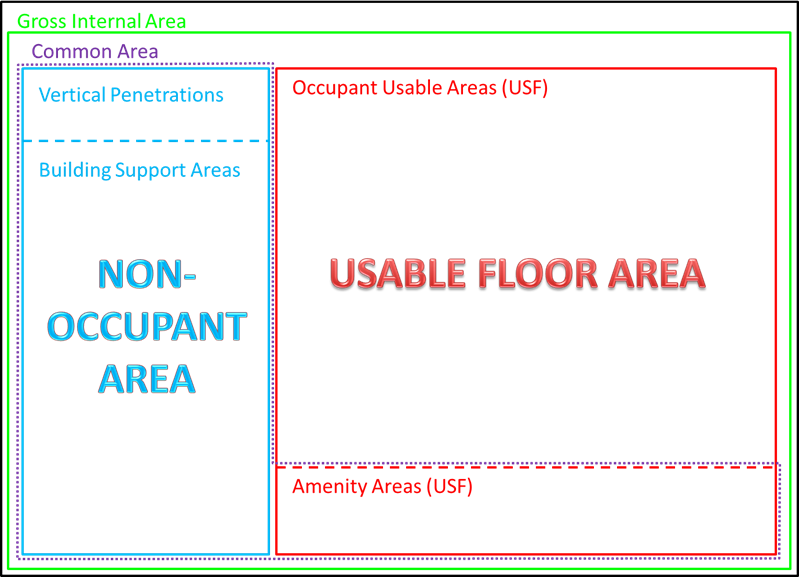
| FMMS 03 - 04, and 11 |
| Commonwealth Building Energy Information (CBEI) | (Formerly named the Enterprise Energy Management System or EEMS) A metering system installed at several state facilities that allows Facility Managers to view energy performance on a real-time basis. | FMMS 10 |
| Commonwealth Facilities | Buildings owned by the Commonwealth and under the supervision and control of a specific state agency. | FMMS 01, 03 - 13, and 15 - 17 |
| Commonwealth of Massachusetts Comprehensive Emergency Management Plan (CEMP) | The plan that describes the system that will be used by the Commonwealth to prevent, prepare for, respond to, and recover from an emergency or disaster. The CEMP is an all hazards plan and was drafted in accordance with relevant federal and state laws and conforms to federal guidance. Specific requirements and responsibilities can be reasonably varied by each User Agency for specific facility needs. | FMMS 09 |
| Computerized Maintenance Management System (CMMS) | An application that maintains a computer database of information about an organization’s maintenance operations to assist facility maintenance staff in maximizing their effectiveness. A CMMS achieves this goal by tracking work orders, monitoring system reliability and repair/maintenance costs, and providing Preventive Maintenance schedules. | FMMS 06 |
| Confined Space | An area whose configuration hinders activities of any employees who must enter into, perform work in, and exit from it. Confined Spaces have limited or restricted means of access, are large enough to permit access for the performance of necessary work, and are not designed for continuous occupancy. | FMMS 08 |
| Construction Operations Building Information Exchange (COBie) | A format through which data reported/exported from a BIM may be read/imported into a system such as CAMIS. COBie is recognized as a part of the National BIM Standard (NBIMS). | FMMS 13 |
| Contracted Maintenance | Maintenance that is typically performed by outside contractors or by Facility Staff. | FMMS 06 |
| Controlling Agency | A state agency with the “legal control or jurisdiction” of the property as provided by M.G.L. Chapter 7C, Section 41, which carries with it the right to “occupy, or make expenditure for the maintenance of, any land, buildings or other state-owned or state-occupied facilities.” The Controlling Agency is usually a User Agency as well. Control and jurisdiction does not mean that a state agency is the owner of the property since the Commonwealth owns all state property. | FMMS 01 - 04, 06, 10 - 11, 13, and 15 - 16 |
| Custodial Maintenance | The cleaning and upkeep of the facility, including the routine (daily, monthly, and semi-annual) tasks and purchases for cleaning equipment and supplies). | FMMS 05 and 06 |
| Decommissioning | The process of closing down and mothballing a facility. | FMMS 13 |
| Demand Response (DR) | A voluntary temporary reduction, or shift, in a facility’s electricity use, in response to a request from the utility company to reduce electrical use during periods when the electrical grid experiences peak demand (e.g. hot summer days). This shift in energy usage is accomplished by several means including switching to on-site emergency generators and load curtailment (temporarily turning off non-essential equipment). | FMMS 10 |
| Department of Homeland Security (DHS) | The federal agency responsible for protecting the United States and its territories (including protectorates) from and responding to terrorist attacks, man-made accidents, and natural disasters. | FMMS 01 |
| DHS Office of Infrastructure Protection (IP) | The office responsible for leading the national effort to protect critical infrastructure from all hazards by managing risk and enhancing resilience through collaboration with the critical infrastructure community. The office conducts and facilitates vulnerability and consequence assessments to help critical infrastructure owners and operators and state, local, tribal, and territorial partners understand and address risks. IP provides information on emerging threats and hazards so that appropriate actions can be taken. The office also offers tools and training to partners to help them manage the risks to their assets, systems, and networks. | FMMS 01 |
| DHS Science and Technology Directorate (ST) | The primary research and development arm of DHS which manages science and technology research from development through transition for the Department's operational components and first responders. | FMMS 01 |
| Director of Property Operations | The person responsible for overseeing the facility’s operations, budgets, and Occupant needs in Commonwealth Facilities. | FMMS 06 |
| Disability | Defined by the ADA as “a physical or mental impairment that substantially limits a major life activity, a history or record of such impairment, or being regarded as having such an impairment”. | FMMS 15 |
| Disaster/Emergency Management | An ongoing process to mitigate, prepare for, respond to, and maintain continuity during and recover from an incident that threatens life, property, operations, or the environment. Emergency Management, in order to lessen the impact, must be comprehensive, progressive, risk-driven, integrated, collaborative, coordinated, flexible, and professional. | FMMS 09 |
| Emergency Maintenance | Consists of situations requiring immediate attention due to a failure in or around the facility that can cause significant damage to the building, building systems, and/or equipment. Such emergencies can create unmanageable situations and/or unsafe physical conditions which require immediate attention. | FMMS 05 and 06 |
| Emergency Management Institute (EMI) | A component of FEMA that directly supports the implementation of NIMS, the National Response Framework (NRF), the National Disaster Recovery Framework (NDRF), and the National Preparedness Goal (NPG) by conveying necessary knowledge and skills to improve the nation’s capability. | FMMS 09 |
| Emergency Management Plan (EMP) | A document that defines the goals and objectives for emergency Response, identifies the roles and the Response team during an emergency, and lists relevant regulatory or legal requirements. | FMMS 09 |
| Energy Efficiency and Sustainability Group (“E-Team”) | The business unit in DCAMM’s Office of Facilities Management and Maintenance charged with reducing energy consumption, utility costs, and greenhouse gas emissions. The team also works to ensure that new construction and major renovation projects meet energy and water efficiency targets. | FMMS 10 |
| Energy Master Plan (EMP) | A document that establishes a long-term plan for a building or facility’s energy systems that steadily moves them toward a sustainable, high performance future (i.e. less energy use, more use of renewable energy, etc.). | FMMS 10 |
| ENERGY STAR | A U.S. Environmental Protection Agency voluntary program that helps businesses and individuals save money and protect the environment through superior energy efficiency. | FMMS 10 |
| ENERGY STAR Portfolio Manager | A free online tool that Facility Managers can use to measure and track energy and water consumption as well as greenhouse gas emissions. It is used to benchmark the performance of one building or a whole portfolio of buildings. | FMMS 10 |
| Environmentally Preferable Product (EPP) | Products or services that have a reduced effect on human health and the environment when compared with competing products or services that serve the same purpose. EPPs include practices that minimize waste, conserve energy or water, reduce the amount of toxins either disposed or consumed, and products with recycled content. | FMMS 02 - 06 and 10 |
| Existing Building Commissioning (EBCx) | A comprehensive process of reviewing and adjusting building systems to perform interactively to meet the current facility requirements. | FMMS 06, 10 and 13 |
| Facility Information Management | An integration of process and technology to enable the efficient life-cycle management of facilities. A key ingredient of Facility Information Management is the use of BIM. | FMMS 13 |
| Facility Life Cycle | The view of a facility over the course of its entire life taking into account the design, construction, Cx, operation, EBCx, and Decommissioning phases. | FMMS 13 |
| Facility Manager | The person responsible for the maintenance and operation of a facility, under the control and jurisdiction of the Controlling Agency, which includes oversight of all internal Facility Staff and external contract Service Providers. | FMMS 01 - 13 and 15 - 17 |
| Facility Operations and Maintenance Plan (FOMP) | A document that provides the facility users, operators, and Occupants with detailed information on the building systems and operations as well as a foundation for training and system analysis. The FOMP also provides a means to reduce operating costs through a comprehensive maintenance assessment and implementation plan that looks at all maintenance at a facility and identifies best practices to save time and money, while increasing efficiency and the productive life of equipment. | FMMS 06 |
| Facility Security Assessment (FSA) | A written document that is based on the collection of background information, an on-scene survey, and on an analysis of that information. | FMMS 01 |
| Facility Staff | Internal Service Providers reporting to the Facility Manager for maintenance and operation of a facility. | FMMS 01 – 13 and 15 - 17 |
| Facility Systems Analysis | Measurement of how a facility’s performance compares to the design model predictions to ensure that the facility is operating to specified design and sustainable standards. It typically focuses on how a facility’s mechanical system operates and how much energy a facility uses. | FMMS 13 |
| Federal Emergency Management Agency (FEMA) | As part of the U. S. Department of Homeland Security, the organization that coordinates the federal government's role in preparing for, preventing, mitigating the effects of, responding to, and recovering from all federal disasters, whether natural or man-made, including acts of terror. FEMA provides expertise and resources to support local and regional governments in emergency planning, preparation, Response and Recovery. | FMMS 09 |
| Finish Surface | The wall or ceiling surface, excluding the thickness of special finishes applied by the Occupant. | FMMS 11 |
| Fire Prevention Policy (FPP) | Enumeration of procedures and requirements to reduce fire hazards. | FMMS 16 |
| Fire Risk Assessment | An annual building audit to identify potential fire risks and mitigation strategies. | FMMS 16 |
| Fire Safety Code | 527 CMR § 1.00 et. seq., Board of Fire Prevention Regulations, is a model code adopted by the state and enforced by fire prevention officers within municipal fire departments. It is a set of rules prescribing minimum requirements to prevent fire and explosion hazards arising from storage, handling, or use of dangerous materials, or from other specific hazardous conditions. It complements the building code. The fire code is aimed primarily at preventing fires, ensuring that necessary training and equipment will be on hand, and that the original design basis of the building, including the basic plan set out by the architect, is not compromised. The fire code also addresses inspection and maintenance requirements for various types of fire protection equipment in order to maintain optimal active fire protection and passive fire protection measures. | FMMS 16 |
| Fire Safety Coordinator | The person responsible for facility/building personnel training and fire drills. The Fire Safety Coordinator will usually be a member of the Incident Management Team (IMT) (for emergency management). | FMMS 16 |
| Fire Safety Plan (FSP) | A document that specifies a set of facility/building-specific safety measures and action items in the event of fire. The plan includes key contact information, the location of utility services, access issues, the locations of dangerous stored materials, the locations of people with special needs, the locations for sprinkler system connections, a layout/drawing/site plan of the facility/building, maintenance schedules for all life safety systems, and personnel training/fire drill procedures. A current approved FSP is required in all Commonwealth Facilities, and is to be made available to the Local Fire Authority. | FMMS 16 |
| FSADA Coordinator | The ADA requires that entities of state and local government designate ADA Coordinators to ensure compliance with all Disability rights-related federal and Massachusetts laws, regulations, policies and procedures, including, but not limited to, the ADA, ADAAA 2008, the Federal Rehabilitation Act (1973), as amended, Executive Order 526, the Governor’s Model Employer Program, and Administration and Finance Administrative Bulletin ANF 19. This designated individual advises the agency head on promoting access and equal opportunity for people with disabilities in programs, activities and services of state government, including employment, and is responsible for overseeing compliance-related actions and assisting with Disability-based discrimination complaints at the agency and its facilities. | FMMS 15 |
| Geographic Information Systems (GIS) | The collection, management, and use of facility digital data accurately referenced to a precise location on the earth’s surface. BIM data can be integrated with GIS to create a seamless re-use and re-purposing of facility data. GIS tools enable users to access and manipulate GIS data. | FMMS 13 |
| Green Cleaning | The use of cleaning products and practices that have lower environmental impacts than conventional products and practices. | FMMS 03 |
| Green Grounds and Landscape Maintenance | A planned and organized approach to grounds and landscape maintenance that uses products and processes to reduce negative impacts on human health and the environment. | FMMS 02 |
| Green Seal | A non-profit organization that develops life cycle-based sustainability standards for products, services, and companies in addition to offering third-party certifications. | FMMS 03 |
| Gross External Area [IPMS 1] (GSF) | The sum of the areas of each floor level of a building, measured to the outer perimeter of external construction, as described in detail by the International Property Measurement Standards: Office Buildings, IPMS 1 [www.ipmsc.org]. This includes balconies, covered galleries, rooftop terraces, basements, interior parking garages and enclosed mechanical penthouses. It excludes open light wells or covered light atriums at upper levels (floor voids), patios and decks at ground level and external (unenclosed) fire stairs. 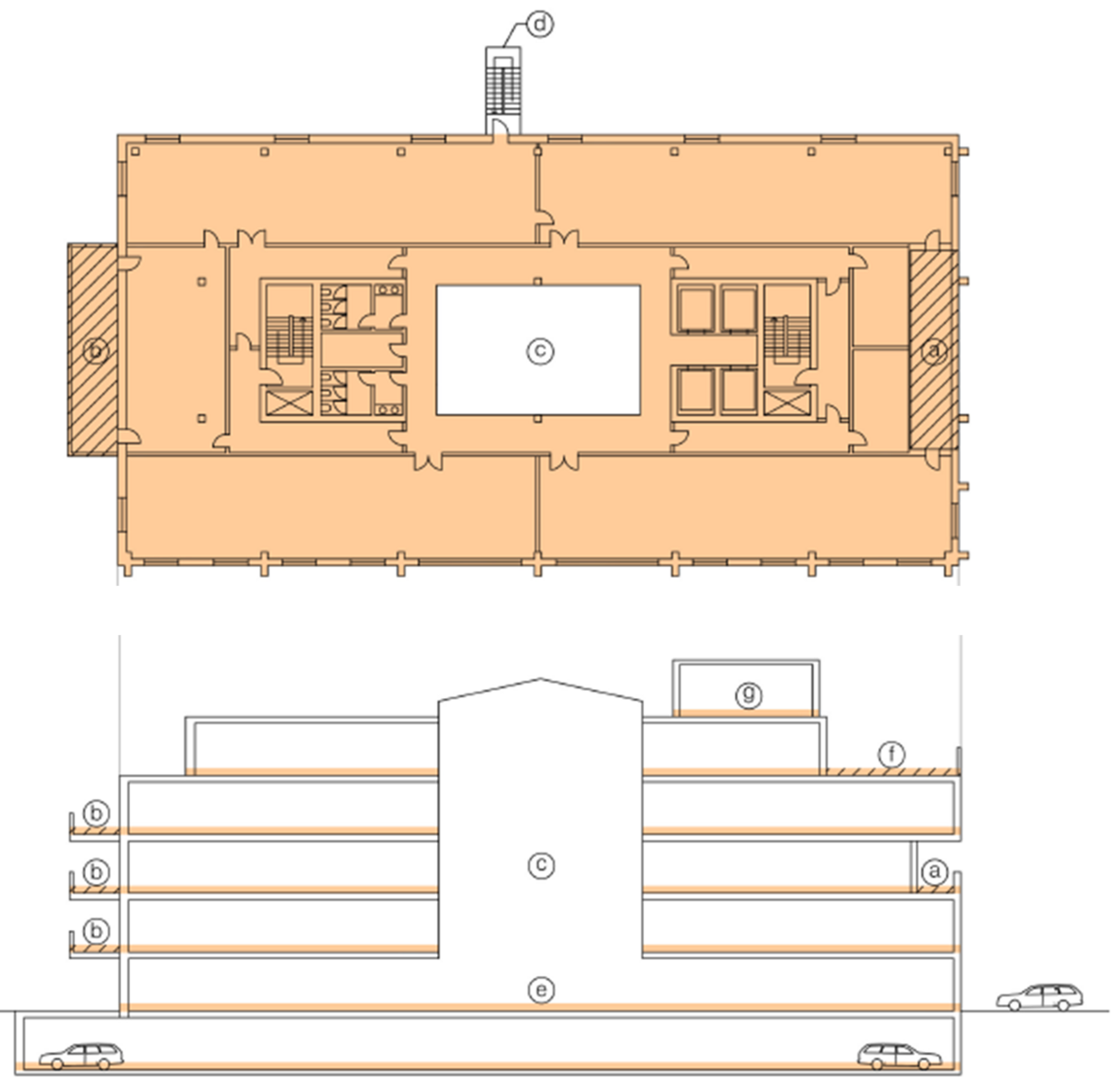
a) covered galleries Gross External Area [IPMS 1] (GS) - The sum of the areas of each floor level of a building measured to the outer perimeter of external construciotn. Includes:
Excludes:
| FMMS 11 |
| Gross Internal Area [IPMS 2] or Boundary Area [BOMA] | The sum of the areas of each floor level of a building measured to the internal dominant face [IPMS 2] or dominant portion [BOMA], which is typically the inside face of glass OR the inside face of the exterior wall, whichever is more than 50% of the height of the wall. It excludes atriums at upper levels (floor voids). Gross Internal Area = Non-Occupant Area + Usable Floor Area Gross Internal Area [IPMS 2] Excludes:
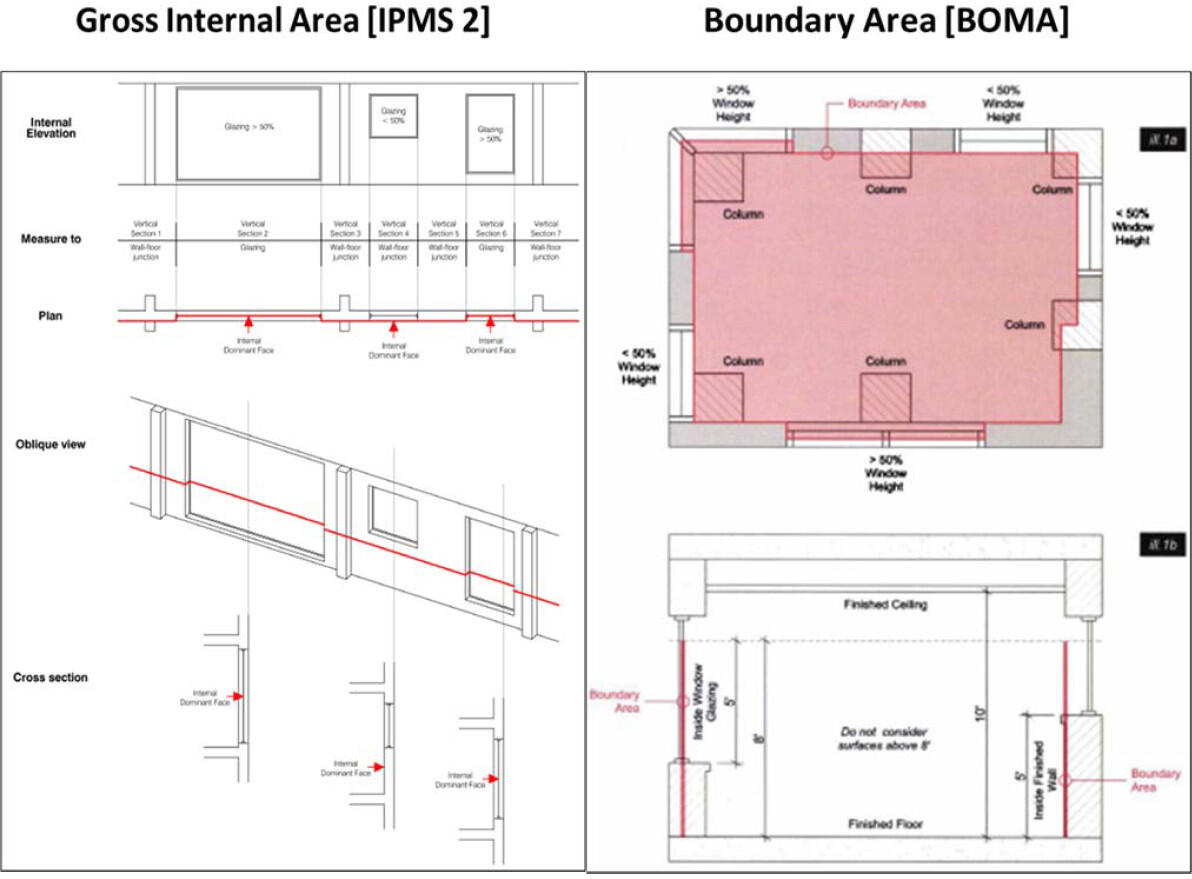
Gross Internal Area [IPMS2] or Boundary Area [BOMA] is the sum of the following 4 component areas: 1. Usable Floor Area:
2. Amenity Areas (USF)
| FMMS 11 |
| Non-Occupant Area | Areas of the building that are not available to be used for business purposes or amenities, but are necessary to support the Occupants’ use of the building and the operation and management of the building. Non-Occupant Area = Building Support Areas + Vertical Penetrations. | FMMS 11 |
| Hazard Communication Standard (HCS) | The Hazard Communication Standard (HCS), which applies to all Executive Branch Agencies, provides a common and coherent approach to classifying chemicals and communicating hazard information on labels and Safety Data Sheets. All employers with hazardous chemicals in their workplaces must have labels and Safety Data Sheets for their exposed workers, and train them to handle the chemicals appropriately. | FMMS 08 |
| Hazardous Materials | Substances that workers may be exposed to during building maintenance/repair; these materials include, but are not limited to, sewerage, sewer gases, radiation, Asbestos, lead, fibrous glass (e.g. insulation), pesticides, or polychlorinated biphenyl (PCB) containing materials. Other hazards include chemicals used in cleaning products. | FMMS 08 |
| Health and Safety Policy | Programs and procedures that enable employers to provide a safe and healthy workplace for employees and visitors. | FMMS 08 |
| IAQ Building Education and Assessment Model (I-BEAM) | A U.S. Environmental Protection Agency guidance tool designed for use by building professionals and others interested in maximizing Indoor Air Quality in facilities/buildings. Implement I-BEAM with assistance from the Massachusetts Department of Public Health/IAQ-Program. | FMMS 08 |
| Impervious Surfaces | Paved, developed, or naturally occurring surfaces that do not allow precipitation (rainwater, storm water, hose water, etc.) to pass through to subsequent soil layers. Examples of Impervious Surfaces include roofs, paved roads, parking areas, sidewalks, and some hard soils that have been compacted either by design or by use. | FMMS 02 |
| Incident Management Team (IMT) | A group of representatives working in a Unified Command Structure (UCS) from public safety departments, including the Facility Manager and the Life Safety and Security Manager, that manages the logistical, fiscal, planning, operational, safety, and community issues related to an incident, emergency or other event and is trained to serve in command and general staff positions during the initial hours following an emergency. An IMT can respond to a wide range of emergencies, including fires, floods, earthquakes, hurricanes, tornadoes, tsunamis, riots, spilling of hazardous materials, and other natural or human-caused incidents. | FMMS 09 and 16 |
| Indoor Air Quality (IAQ) | Air quality within and around buildings and structures, especially as it relates to the health and comfort of building Occupants. IAQ can be affected by indoor environmental contaminants, quantity and quality of fresh air, temperature, and relative humidity. Source control, filtration and use of ventilation to dilute contaminants are examples of methods for improving Indoor Air Quality in buildings. | FMMS 08 |
| Integrated Pest Management (IPM) | A process for achieving long term, environmentally sound pest control using a wide variety of management practices. An IPM program should include a combination of pest monitoring, good sanitation practices, education, appropriate solid waste management, building maintenance, cultural pest control measures, mechanical pest control measures, and biological pest controls. Chemical pesticides should be used only when the use of these measures is warranted and when used as part of an integrated pest management plan (IPM Plan). | FMMS 07 |
| Interagency Security Committee (ISC) | The federal committee created under U.S. Executive Order 12977 to address continuing government-wide security for federal facilities. The ISC’s mandate is to enhance the quality and effectiveness of Physical Security in, and the protection of buildings and nonmilitary federal facilities in the United States. The ISC standards apply to all nonmilitary federal facilities in the United States - whether government-owned, leased or managed; to be constructed or modernized; or to be purchased. | FMMS 01 |
| International Sanitary Supply Association’s (ISSA) Cleaning Industry Management Standard-Green Building (CIMS-GB) | Procedures and principles cleaning organizations shall follow to deliver efficient, quality service management and environmentally preferable cleaning programs. CIMS and CIMS-GB certification demonstrates an organization is prepared to deliver quality, customer-focused services and ensures an organization is capable of delivering a comprehensive Green Cleaning program based on LEED: EB O&M green-cleaning criteria. | FMMS 03 |
| Invasive (Non-Native) Plant Species | Plants that grow in an environment outside their natural habitat range by being introduced (planted) to the area either deliberately or accidentally. Invasive plants can thrive in areas beyond their natural range of dispersal. These plants are characteristically adaptable, aggressive, and have a high reproductive capacity. Their vigor combined with a lack of natural predators in introduced habitats often lead to outbreak populations. | FMMS 02 |
| Landfills | Waste Disposal sites for solid Waste from human activities. | FMMS 04 |
| Landscape Maintenance | Upkeep of landscape, flower beds, trees and shrubs, water gardens and hardscape areas such as parks, parking lots, and walkways around the building. This not only includes the maintenance of the landscape and hardscape areas, but also seasonal tasks such as snow removal, leaf clean-up and removal, and winter preparation of the landscape and water gardens. | FMMS 05 and 06 |
| Leadership in Energy and Environmental Design for Existing Buildings (LEED): Operations and Maintenance (LEED EB: O+M) | A rating system established through the U.S. Green Building Council (USGBC) that encourages owners and operators of existing buildings to implement sustainable practices and reduce the environmental impacts of their buildings, while addressing the major aspects of ongoing building operations. | FMMS 02, 03, 05 and 10 |
| Leadership in Energy and Environmental Design for Interior Design and Construction (LEED ID+C) | A rating system established through the U.S. Green Building Council (USGBC) for certifying high-performance Occupant spaces that are healthy, productive places to work; are less costly to operate and maintain, and have a reduced negative environmental footprint. | FMMS 10 |
| Leading by Example (LBE) | A state program established via Executive Order 484 that includes energy reduction and renewable energy use targets. | FMMS 10 |
| Level of Protection (LOP) | A set of protective measures that may be customized to address site-specific threat conditions. | FMMS 01 |
| Licensee | Individual or entity that is not a state agency or state employee but occupies the space of a User Agency as part of a service contract or other arrangement with the User Agency to further the User Agency’s mission. For example, a private consulting firm hired by an agency might be provided with offices inside the agency’s space. The consulting firm would be a Licensee. | FMMS 01, 03, 04, 15 and 16 |
| Life Cycle Cost Analysis (LCCA) | The process of estimating the true cost of a building or its components over its anticipated lifetime. LCCA includes not only the initial capital cost, but also reflects any available (utility) rebates in addition to operation and maintenance costs calculated in present value. | FMMS 10 |
| Life Safety and Security Manager | The person responsible for implementing safety policies and procedures at a Commonwealth Facility and for leading the Controlling Agency’s response to emergencies. The Life Safety and Security Manager works in close coordination with the Facility Manager. | FMMS 01, 09, and 16 |
| Life Safety Code | The National Fire Protection Association (NFPA) Code 101 is the most widely used source for strategies to protect people based on building construction, protection, and occupancy features that minimize the effects of fire and related hazards. It applies to existing structures as well as new structures. NFPA is a reference standard that may assist with determining a solution to an issue, but is not a CMR. | FMMS 16 |
| Limited English Proficiency (LEP) | A person who is not able to speak, read, write, or understand the English language at a level that allows him/her to interact effectively with agency staff. Consistent with Federal Executive Order 13166 and ANF Administrative Bulletin #16, as may be amended from time to time, state and local government agencies and recipients of federal funds must take reasonable steps to ensure meaningful access to their programs and activities by LEP persons. | FMMS 17 |
| Local Fire Authority | The chief Fire Official (or authority having jurisdiction), or their designated representative, for the city/town in which the facility/building is physically located. | FMMS 16 |
| Maintenance History | The documentation of all actions (work orders, routine, replacement and preventive maintenance) and observations relevant to the operation and performance of an asset. This history is maintained in the CAMIS application. | FMMS 13 |
| Massachusetts Architectural Access Board Rules and Regulations (521 CMR 1.00 et seq.) | The regulations promulgated by the MAAB pursuant to M.G.L. Chapter 22, Section 13(a), which is the statute of the Commonwealth that requires public buildings and facilities to be accessible to, functional for, and safe for use by persons with disabilities. It is the intent of these state regulations to provide persons with disabilities full, free, and safe use of all buildings and facilities so that all such persons may have the educational, living, and recreational opportunities necessary to be as self-sufficient as possible and to assume full responsibilities as citizens. | FMMS 15 |
| Massachusetts Architectural Access Board (MAAB) | The regulatory agency within the Massachusetts Executive Office of Public Safety that develops and enforces regulations designed to make public facilities accessible, functional, and safe for use by persons with disabilities. MAAB regulations are found in Section 521 of the Code of Massachusetts Regulations. The Board receives and adjudicates complaints of non-compliance, provides advisory opinions on its regulations, and may grant variances if compliance can be demonstrated: 1) to be technologically unfeasible or, 2) to result in excessive and unreasonable costs without any substantial benefit to persons with disabilities. | FMMS 15 |
| Massachusetts Department of Energy Recourses (DOER) | The Commonwealth’s energy policy office which oversees efforts to ensure deployment of cost-effective energy efficiency measures including the development of clean energy resources, the ensurance of reliable energy supplies, and the minimization of clean energy relative costs, in addition to supporting Massachusetts’ clean energy initiatives. The DOER LBE Program works with DCAMM and many other agencies to develop strategies and programs to support clean energy and sustainability efforts across state government. | FMMS 10 |
| Massachusetts Emergency Management Agency (MEMA) | The state agency charged with ensuring that the state is prepared to withstand, respond to, and recover from all types of emergencies and disasters. MEMA ensures the Commonwealth’s ability to rapidly recover from disasters by assessing and mitigating hazards, enhancing preparedness, ensuring effective response, and building the capacity to recover. | FMMS 01 and 09 |
| Massachusetts Department of Environmental Protection (MassDEP) | The Department responsible for ensuring clean air and water, the safe management of toxics and hazards, the recycling of solid and hazardous wastes, the timely cleanup of hazardous waste sites and spills, and the preservation of wetlands and coastal resources throughout the Commonwealth. Through its participation in the Clean Energy Results Program, MassDEP advances environmental protection by promoting the development of renewable energy and energy efficiency projects in Massachusetts through its efforts to reduce barriers to clean and energy efficient development across the state. | FMMS 10 |
| Massachusetts Facilities Managers Association (MAFMA) | A network of state Facilities Managers that meets periodically to discuss specific topics of interest, disseminates information on training opportunities and new technologies, informs facilities personnel of proposed regulatory or statutory changes, and maintains working committees to address issues of interest to facilities operators and managers. | FMMS 05 and 06 |
| Massachusetts LEED Plus | Part of the standards included in Executive Order 484 which applies to all new construction and major renovation projects over 20,000 square feet. This standard includes:
| FMMS 10 |
| Massachusetts Office on Disability (MOD) | The agency within the Executive Branch designated as its ADA Coordinator to oversee and administer the Commonwealth's compliance with the ADA. MOD’s mission is to ensure the full and equal participation of all people with disabilities in all aspects of life by working to advance legal rights, maximum opportunities, supportive services, accommodations and Accessibility in a manner that fosters dignity and self-determination. | FMMS 15 |
| Massachusetts Right-to-Know Law | M.G.L. Chapter 111F, which applies to municipalities, counties and non-Executive Branch agencies, regulates how information about workplace chemical hazards is communicated to Occupants, employees and visitors. | FMMS 08 |
| Massachusetts State Building Code | 780 CMR § 1.00 et. seq., the Massachusetts State Building Code is a set of rules that specify the minimum acceptable level of safety for constructed objects such as buildings and non-building structures. The main purpose of building codes is to establish the minimum requirements to safeguard the public health, safety and general welfare through structural strength, means of egress facilities, stability, sanitation, adequate light and ventilation, energy conservation, and safety to life and property from fire and other hazards attributed to the built environment, and to provide safety to fire fighters and emergency responders during emergency operations. | FMMS 16 |
| MassSave® Incentive Program | An initiative sponsored by Massachusetts’ gas and electric utilities and energy efficiency Service Providers. The sponsors of Mass Save work closely with DOER to provide a wide range of services, incentives, trainings, and information promoting energy efficiency. | FMMS 10 |
| Mitigation | Structural and non-structural actions taken to lessen the impact of a hazard to a building through the review of possible risks. | FMMS 09 |
| Monitoring Based Commissioning (Persistent Commissioning) | The use of technology to mine savings from building management system data. | FMMS 10 |
| National Incident Management System (NIMS) | The system administered by the U.S. Department of Homeland Security and referenced in FEMA Publication P-501, or the most current updated publication. This publication provides a consistent nationwide template to enable federal, state, tribal, and local governments, nongovernmental organizations (NGOs), and the private sector to work together to prevent, protect against, respond to, recover from, and mitigate the effects of incidents, regardless of cause, size, location, or complexity. NIMS specifies standardized terminology, Unified Command Structures (UCS), consolidated action plans, uniform standards for personnel qualification, planning and training, comprehensive resource management, and designated incident facilities during emergencies or disasters. | FMMS 09 |
| Native Plant Species | Plant types that grow naturally in a particular region, ecosystem, or habitat without direct or indirect human actions (Federal Native Plant Conservation Committee, 1994). Existing plant species growing prior to European settlement in eastern North America are considered native to the eastern United States. | FMMS 02 |
| NFPA Code 13 | The standard for the installation of automatic sprinkler systems. NFPA 25 is the baseline for inspection, testing, and maintenance of water-based fire protection systems. Compliance helps maximize system integrity to avoid failure and ensure fast, effective response in a fire emergency. | FMMS 16 |
| NFPA Code 72 | Provides the latest safety provisions to meet society's changing fire detection, signaling, and emergency communications demands. In addition to the core focus on fire alarm systems, the Code includes requirements for mass notification systems used for weather emergencies; terrorist events; biological, chemical, and nuclear emergencies; and other threats. | FMMS 16 |
| Occupancy Payment | Occupant’s proportionate share, based on the Agency Allocation Area, of costs and expenses to operate, maintain and repair a facility, including but not limited to, minor repairs necessary to keep the facility in good working order. | FMMS 11 |
| Occupant(s) | The individuals or entities that occupy space in a Commonwealth Facility by virtue of their status as a Controlling Agency and/or User Agency including their employees, or because they are permitted to use the space as a Licensee of a User Agency. | FMMS 01 - 04, 06 - 11, 13, and 15 - 17 |
| Occupant Usable Areas | The areas of a building designated for exclusive use by an Occupant (typically a User Agency) for business purposes that houses personnel, equipment, fixtures, furniture, and supplies. It is measured to the inside face of the Occupant area demising walls and the limit of the floor area at exterior walls. It is commonly referred to as ‘carpetable area.’ | FMMS 01, 03 - 04, 07 – 11, and 15 - 17 |
| Occupant Emergency Plan (OEP) | Process and procedures to guide building Occupants through various incidents. The purpose of the OEP is to create a healthy and safe environment for building Occupants and visitors in a coordinated response for all emergencies. | FMMS 01 and 16 |
| Occupational Safety and Health Administration (OSHA) | The organization established by the Occupational Safety and Health Act of 1970 (OSHA Act) to prevent workers from being killed or seriously harmed at work. OSHA sets and enforces protective workplace safety and health standards. OSHA also provides information, training, and assistance to employers and workers. Under OSHA, employers have the responsibility to provide a safe workplace. | FMMS 02 - 06, and 08 |
| Office Buildings: Standard Methods of Measurement (ANSI/BOMA Z65.1-2017) | Guidelines for measuring usable space in both existing and new sites by taking a building wide approach to floor area measurement. It identifies and assists in measuring both Occupant space as well as the space that benefits all Occupants. | FMMS 11 |
| OmniClass | A classification table that is used to name building spaces on floor plan documentation. | FMMS 11 |
| OmniClass Construction Classification System (OCCS) | A means of organizing and retrieving information specifically designed for the construction industry. It is designed to provide a standardized basis for classifying information created and used by the North American architectural, engineering and construction (AEC) industry, throughout the Facility Life- Cycle from conception to demolition or reuse. | FMMS 13 |
| Ongoing Commissioning | The application of commissioning related activities on a continuous basis to ensure that the current facility requirements are being met and to support the continuous improvement of system performance. | FMMS 06 and 10 |
| Operational Efficiency | The life-cycle, cost-effective mix of preventive, predictive, and reliability-centered maintenance technologies, coupled with equipment calibration, tracking, and computerized maintenance management capabilities all targeting reliability, safety, Occupant comfort, and system efficiency. | FMMS 05 and 06 |
| Operational Security | A component of the facility/building security program/plan focused on people. This includes the provision of staff to support the security protocol, education, and training of employees, and the procedures for managing contractors, vendors, and visitors. | FMMS 01 |
| Owner’s Project Requirements | A written document that details the functional requirements of a project and the expectations of how it will be used and operated. These include project goals, measurable performance criteria, cost considerations, benchmarks, success criteria, and supporting information. | FMMS 10 |
| Personal Protective Equipment (PPE) | Equipment worn to minimize exposure to hazards that cause serious workplace injuries and illnesses. These injuries and illnesses may result from contact with chemical, radiological, physical, electrical, mechanical, or other workplace hazards. PPE may include items such as gloves, safety glasses and shoes, earplugs or muffs, hard hats, respirators, or coveralls, vests and full body suits based on the specific facility and work needed. | FMMS 08 |
| Physical Security | The type of security that addresses actions one can take to protect buildings, property, and assets against intruders. When designing a Physical Security program, the three levels one needs to protect are the outer perimeter, the inner perimeter, and the interior. Examples of Physical Security measures include barriers, fences, gates, walls, outside perimeter lighting, signage, locks, and access control points. | FMMS 01 |
| Pictogram | A symbol that represents an object or concept, e.g. a picture of an envelope used to represent an e-mail message. Pictograms are common in everyday life, e.g., signs in public places or roads, whereas the term “icon" is specific to interfaces on computers or other electronic devices. | FMMS 17 |
| Polychlorinated Biphenyls (PCBs) | Widely used as dielectric and coolant fluids in transformers, capacitors, and electric motors. They were also used in construction materials like caulking as a plasticizer to improve a product’s resistance to degradation. They are known to cause cancer in animals and thought to do so in humans. They were banned from new construction or renovations, but may still be present in older facilities. PCB management is regulated under the Toxic Substance Control Act (TSCA). | FMMS 08 |
| Portfolio | A financial term for a collection of investments. | FMMS 11 |
| Preparedness | Ongoing activities, tasks, and systems to develop, implement, and maintain program capabilities. This is completed by a cycle of planning, organizing, training, equipping, exercising, evaluating, and improving. | FMMS 09 |
| Prevention | Preventing hazards to humans, primarily from potential natural disasters, accidents, or human acts of violence. | FMMS 09 |
| Preventive Maintenance | Work performed by various facilities personnel based on scheduled inspections, scheduled testing, and minor element replacements for the purpose of improving equipment life, avoiding any unplanned maintenance activity, and minimizing equipment breakdowns. | FMMS 05-07 and 13 |
| Preventive Maintenance Plan (PMP) | A plan containing Preventive Maintenance task descriptions and schedules, troubleshooting, replacement parts, Service Providers, operating quantity and unique storage requirements for spare parts. The Plan also lays out a regularly scheduled inspection of building interior and exterior equipment and systems for signs of wear and tear that will require routine and/or corrective maintenance. The inspection process is usually performed by building facilities staff independently or in collaboration with contracted Service Providers. | FMMS 06 |
| Program Accessibility | A public entity may not deny the benefits of its programs, activities, and services to individuals with disabilities because its facilities are inaccessible. A public entity's services, programs, or activities, when viewed in their entirety, must be readily accessible to and usable by individuals with disabilities in a time-frame and setting equivalent to people without disabilities. This standard applies to all existing facilities owned or occupied by the Commonwealth. Public entities, however, are not necessarily required to make each of their existing facilities accessible if Program Accessibility can be achieved through administrative and operational, non-structural solutions, such as scheduling a program in a comparable, accessible space, as long as the alternative is of the same quality as the original. Government entities are not required to take actions that would result in a fundamental alteration to the nature of the service, program, or activity in question or that would result in undue financial or an administrative burden. This determination can only be made by the head of the public entity and must be accompanied by a written statement of the reasons for reaching that conclusion. The determination that undue burden would result must be based on all resources available for use in a program. If an action would result in such an alteration or such burdens, the entity must take any other action that it can to ensure that people with disabilities receive the benefits and services of the program or activity. | FMMS 15 |
| Programming | Identification of the spatial, functional, and operational requirements for a facility (uses, areas, required adjacencies, etc.) to meet the projected needs and goals of the facility or partial facility. Program validation assesses the accuracy, efficiency and effectiveness of a design in meeting those requirements. | FMMS 13 |
| Radon | An invisible, radioactive gas that results from the decay of radium, which may be found in rock formations beneath buildings or in certain building materials themselves. | FMMS 08 |
| Reactive (Corrective) Maintenance | Unplanned repair or adjustment of equipment or components. | FMMS 05 |
| Record Model | An accurate digital representation of the physical conditions, environment, and assets of a facility BIM model. | FMMS 13 |
| Recovery | The process of bringing the affected building and its operations back to Business Continuity and some degree of normalcy. | FMMS 09 |
| Recycling | The collection, reprocessing, marketing and use of materials that were diverted or recovered from the solid Waste stream. | FMMS 04 |
| Recycling Collection Area | An area located in regularly occupied space in a building for the collection of Occupants’ recyclables. A building may have numerous collection areas from which recyclable materials are typically removed to a central collection and storage area. | FMMS 04 |
| Response | The effort to mitigate the impact of an incident on the public and the environment. | FMMS 09 |
| Retro-Commissioning (RCx) | The application of the Commissioning process to an existing building that was not previously commissioned or was not properly commissioned. The process is similar to re-commissioning, but the building has generally been in use longer. Retro-commissioning often identifies no/low cost energy and water savings opportunities as well as capital improvements with energy and water saving implications. | FMMS 06 and 10 |
| Reuse | Return of materials to active use in the same or a related capacity as their original use, thus extending the lifetime of materials that would otherwise be discarded. | FMMS 04 |
| Revit | Software specifically built for BIM, empowering design and construction professionals to bring ideas from concept to construction with a coordinated and consistent model-based approach. Revit® is a single application that includes features for architectural design, MEP and structural engineering, and construction. | FMMS 11 |
| Routine Maintenance | Simple small-scale activities and specific work-order requests associated with general upkeep and continued operation of a building, site, equipment, machine, plant, or system against normal wear and tear. Typically, Routine Maintenance includes activities that are completed by the Facility Staff and regularly contracted facility Service Providers, rather than specialized professionals. Routine Maintenance is done within a specific period of time e.g. daily, weekly, monthly, etc. | FMMS 05 and 13 |
| Routine Maintenance Plan | A plan that documents how an asset should be maintained to delay or prevent the failure of critical building systems and equipment. | FMMS 05 |
| Safety Data Sheets (SDS) | Documents that provide information regarding the product, manufacturer contact information, chemical ingredients, physical and health hazards associated with the chemical(s), protective equipment, and safe work practices, (29 CFR § 1910.1200) or Hazardous Substance Disclosure by Employers (Massachusetts Right-to-Know Law, M.G.L. Chapter 111F). | FMMS 05 - 08 |
| Security Staff | In-house security presence that performs a range of security roles, and may be cross-trained for duties such as control center monitoring, incident investigation, and emergency preparedness support. | FMMS 01 |
| Security Technology Standards | Series of technology specifications for equipment installed at Commonwealth Facilities. These specifications identify acceptable security equipment and technology to be used to provide the LOP specified from the Facility Security Assessment. The Security Technology Standards include information on access control software, cards and readers, video cameras, storage systems, management software, screening equipment and turnstiles, site protection systems (bollards, fencing, gates), and other related systems. | FMMS 01 |
| Service Providers | The parties responsible for completing the maintenance and management activities at Commonwealth Facilities. Service Providers at the facility may be internal Facility Staff, external contract providers, or both. | FMMS 01 - 11, 13, and 15 - 17 |
| Signage | The visual, tactile, and verbal communication component of Wayfinding. Where a building layout is not obvious and intuitive, Signage is required to communicate what the architecture cannot. Too much or too little Signage causes confusion. For effective Wayfinding, Signage must provide the correct information at the correct time. | FMMS 17 |
| Source Reduction | Reduction of the amount of unnecessary material brought into a building. One example is purchasing products with less packaging. | FMMS 04 |
| Space Information Management | Spatial information taken directly from drawings or BIM models. | FMMS 11 |
| Space Management | A comprehensive system for centralizing and storing real-time information about building(s), space under management, and Occupants. | FMMS 11 |
| Space Management Plan | A facility space inventory that assists in the analysis of capital outlay budget requests for new construction, renovation, and other space-related factors. | FMMS 11 |
| Subcontracted Maintenance | Maintenance that is typically performed by outside contractors or by Facility Staff outside of their usual job description. | FMMS 05 |
| Sustainable Sites Initiative (SITES™) | A program to promote sustainable land development and management practices that can apply to sites with and without buildings. The SITES program will provide tools for those who influence land development and management practices and can address increasingly urgent global concerns such as climate change, loss of biodiversity, and resource depletion. | FMMS 02 |
| Tactile Signage | Incorporates raised text, Braille, or symbols to enable touch reading by people who are blind and touch enhancement of visual perception for people who are vision impaired. Tactile elements cannot be sharp to the touch and need to be located within reach ranges. | FMMS 17 |
| Technological Security | A component of the facility security program that involves the management of technical data and systems, alarm systems for intrusion detection, video monitoring systems, building automation systems that control HVAC and lighting, fire alarm systems, communication systems such as radios and emergency call boxes, and access control of spaces. | FMMS 01 |
| Tipping Fees | Fees charged by a Landfill for the disposal of Waste, typically quoted per ton. | FMMS 04 |
| Unified Command Structure (UCS) | An authority structure in which the role of incident commander is shared by two or more individuals, each having authority in a different responding agency. | FMMS 09 |
| Universal Design (UD) | A conceptual framework for the design of places, products, information, communication, and policy to be usable by the widest range of people operating in the widest range of situations without special or separate design. Most simply, UD is human-centered design of everything with everyone in mind. | FMMS 15 |
| Usable Floor Area | The total space in a building that can be used by Occupants for business purposes. Usable Floor Area = Occupant Usable Areas + Amenity Areas. | FMMS 04 and 11 |
| User Agency or Agencies | A state agency or agencies that have the legal right to use and occupy all or a portion of any building, facility, improvement, or property owned by the Commonwealth for its agency mission and purposes. A User Agency may have the exclusive use of an entire building, or in a multi-occupancy facility, it may have the exclusive use of part of the building (the User Agency’s Occupant Usable Area) and the right to use Common Area which is shared with other users. A User Agency is also an “Occupant” as defined herein. | FMMS 01, 03 - 04, 07 - 11, and 15 - 17 |
| Vertical Penetrations | Non-Occupant areas that create vertical zones in the building. Examples are stairs, elevators, shafts and atriums and floor voids. | FMMS 03 - 04 and 11 |
| Volatile Organic Compounds (VOCs) | Organic chemicals that have a high vapor pressure at ordinary, room-temperature conditions. Common VOCs such as formaldehyde and other hydrocarbons create Indoor Air Quality hazards and/or are potential groundwater contaminants. | FMMS 08 |
| Waste | Comprises all materials that flow from the building to final disposal. Examples include paper, grass trimmings, food scraps, and plastics. Waste refers to all materials that are capable of being diverted from the building’s Waste Stream through Waste Reduction. | FMMS 04 |
| Waste Disposal | Eliminates Waste by means of burial in a Landfill, combustion in an incinerator, or any other way that is not Recycling or Reuse. | FMMS 04 |
| Waste Diversion | A management activity that disposes of Waste other than through incineration or the use of Landfills. Examples include Reuse and Recycling. | FMMS 04 |
| Waste Reduction | Includes both Source Reduction and Waste Diversion through Reuse or Recycling. | FMMS 04 |
| Waste Stream | The overall flow of Waste from the building to a Landfill, incinerator, or other disposal site. | FMMS 04 |
| Water Best Management Practices | Practices implemented by Facility Staff to reduce interior and exterior water consumption. These include, but are not limited to: landscaping with native (and/or drought resistant) plants, capturing rainwater, using soil amendments, encouraging use of water filling stations, aerators on sinks, and dual flush valves. | FMMS 10 |
| Wayfinding | A dynamic strategy that allows people to find where to go and how to get there and back. Wayfinding is not a synonym for Signage. Along with a variety of exterior and interior environmental elements and features such as paths, routes, landmarks, canopies, thresholds, sightlines, finishes, color, acoustics, lighting, maps, electronic devices, space naming and numbering and websites, Signage is used as a tool for clarifying and communicating information further. | FMMS 17 |
| Work Order | Written (or electronic) request for a task or project to be completed. The order can be sent from an Occupant to a Facility Manager, from a customer to a contractor, or internally from one department to another. Work Orders can range in scope from small (i.e. fixing a leak), to large (i.e. replacing old plumbing). | FMMS 05 and 06 |
Appendix B - FMMS Tools and Resources
The following table provides a list of the tools and resources referenced and/or used in the preparation of the FMMS Standards.
| FMMS Standard | Tools and Resources |
|---|---|
| FMMS 01: Security | N/A |
| FMMS 02: Grounds and Landscape Maintenance |
|
| FMMS 03: Cleaning |
|
| FMMS 04: Solid Waste Management |
|
| FMMS 05: Routine Maintenance |
|
| FMMS 06: Preventive Maintenance |
|
| FMMS 07: Integrated Pest Management |
|
| FMMS 08: Health and Safety |
|
| FMMS 09: Resilience and Emergency Management |
|
| FMMS 10: Energy Management and Sustainability |
|
| FMMS 11: Space Management |
|
| FMMS 13: Facility Information Management |
|
| FMMS 15: Accessibility |
|
| FMMS 16: Fire Safety |
|
| FMMS 17: Wayfinding |
|