

Building a safer and more reliable T
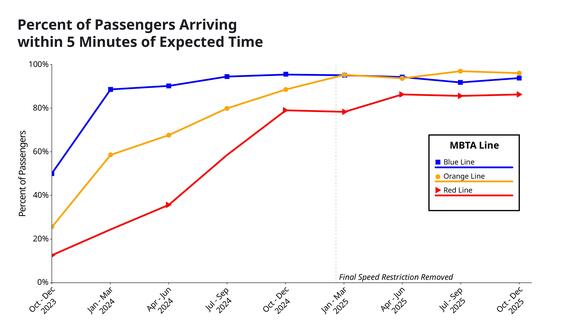
Note: Excess Trip Time (the T's metric for reliability) is not currently measured on the Green Line. The MBTA is working to start measuring reliability of Green Line journeys.
Stabilizing the MBTA has been a priority throughout Fair Share’s three-year history. In total, $1.5B of Fair Share operating funding and $1.45M of Fair Share-backed capital funding enabled projects to improve safety and reliability for riders in all 177 communities served by the T, Commuter rail, ferry and bus networks. These investments are improving the rider experience, with faster journeys, fewer delays and shorter waits between trains.
Safe and reliable T journeys allow riders to plan their day with confidence. Rail improvement projects supported by Fair Share have helped more riders get to their destination within 5 minutes of their expected arrival time. With improved reliability, riders can trust the T to get them where they need to go, on time.
Impact Spotlight: the MBTA’s Track Improvement Program
In November 2023, the MBTA embarked on its Track Improvement Program – a bold and ambitious plan to eliminate all speed restrictions on the T by tackling decades of deferred maintenance in just 14 months. With Fair Share Support, the MBTA delivered on its promise.
By the end of 2024, the MBTA had removed more than 220 speed restrictions and replaced 250,000 feet of rail across the system, saving riders 2.4 million minutes every weekday and generating nearly $1 million in economic benefit every day.
Video: MBTA Track Improvement Program
Skip this video MBTA Track Improvement Program.Making the T more accessible
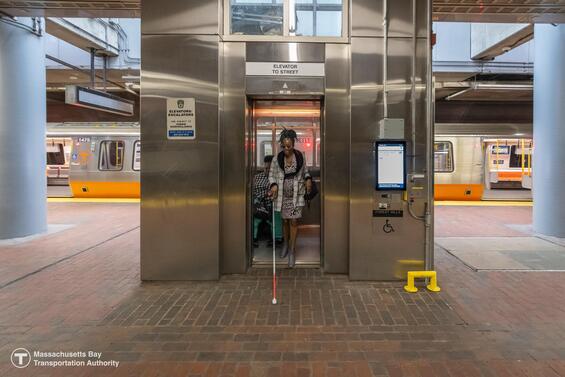
$70M was allocated to accessibility improvements to make stations easier to navigate for all T riders. Projects include:
- Installing new elevators/escalators.
- Repairing existing elevators/escalators.
- Adding ramps on platforms to allow wheelchair users to board trains.
These improvements will benefit a variety of riders, including people with disabilities, parents with strollers, and those carrying luggage.
Making public transit more affordable in Greater Boston and beyond
Fair Share supports affordability programs at the MBTA and the 15 Regional Transit Authorities.
- $45M funded the MBTA's Income-Eligible Reduced Fares Program to cut the costs of transit in half for low-income riders.
- $80M funded fare-free transit services run by the Regional Transit Authorities (RTAs) that deliver public transit services across the state.
Improving public transit service for riders across Massachusetts
Regional Transit Authorities received $375M for public transit improvements in 5 categories:
- Fare-Free: offering some or all services free of charge.
- Connectivity Enhancements: improving connections between RTA services and other modes of transit.
- Operational Improvements: expanding operating hours, improving routes, and other operational improvements.
- Innovation: developing new delivery models and upgrading infrastructure.
- Community Transit: supporting older adults, people with disabilities and low-income transit users.
As of January 2026, $288M of the planned $375M has been distributed to the RTAs.
Explore the map below to find out how investment was shared between the RTAs
Note: the MBTA is funded differently from other transit systems. For data on improvements to the MBTA, see the above section on building a safer and more reliable MBTA.
Impact Spotlight: better bus services in the Merrimack Valley
Merrimack Valley Regional Transit Authority (MeVa) received $23M in Fair Share funding, over 3 years, to improve services. The impact of this investment goes beyond the number of rides provided, as demonstrated by the findings of a study conducted by Stantec:
- Improved access to key services: Fare-free services allow riders to more easily access critical services like education and medical care. In the first year of MeVa’s fare-free program, riders made thousands of new trips to Lawrence High and RISE Academy, helping to reduce absenteeism.
- Better health and nutrition: Money saved on fares is money available for other priorities. The average MeVa bus rider saves $230 per year with fare-free services and riders are using those savings to afford healthier and fresher food options.
- Shorter commutes and access to opportunity: MeVa now runs more buses on transit Routes 1 and 24, connecting the Gateway Cities of Lawrence, Lowell, and Haverhill. More frequent buses mean less waiting – saving riders time on their commute to work. As a result, people traveling from Lawrence now have access to 3,500 more jobs within a one-hour commute timer, according to a separate study by the Merrimack Valley Planning Commission.
| Last updated: | February 5, 2026 |
|---|