

Overview
The Salmon Brook Dam Removal Project was completed in November 2025, restoring the natural flow of Salmon Brook within the Quaboag Wildlife Management Area (WMA) in Brookfield.
Aging infrastructure that no longer served its original purpose was removed to restore stream connectivity and to improve aquatic habitat, water quality, and long-term ecological health. The completed project also reduces future maintenance costs and potential public safety risks associated with the old dam.
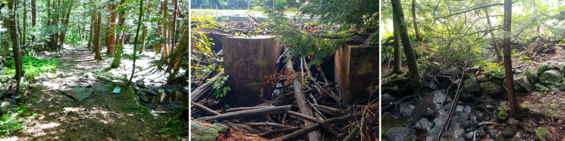
The project removed the Salmon Brook Dam, a downstream rock dam, and a stone culvert. Construction also restored the stream channel and stabilized the site to support the brook's natural flow and long-term health.
Funding
The project was completed in partnership with multiple state and federal agencies. The project was funded by $200,000 from the In-Lieu Fee Program, as well as funds from the American Rescue Plan Act (ARPA).
Outcomes
The completed project restores stream connectivity, improves habitat for fish and other aquatic species, and reestablishes more natural stream processes. The project also reduced future maintenance needs and addressed public safety concerns associated with the aging dam.
The completed project restored the natural stream channel and created wetlands within the former impoundment area. Salmon Brook, now reconnected to the Quaboag River, provides improved habitat for fish and other aquatic species. This section of the Quaboag River supports 18 species of fish and 4 species of freshwater mussels, including 8 fish and 2 mussels designated as Species of Greatest Conservation Need in the Massachusetts Wildlife Action Plan. Restoring stream connectivity benefited migratory species such as American eel and white sucker, which rely on access to different parts of the river during their life cycles. The restored flowing stream also provides habitat for species including fallfish, tessellated darter, longnose dace, creek chubsucker, and blacknose dace.
The bigger picture
The project complements nearby high-quality upland habitat by restoring aquatic and wetland ecosystems, strengthening ecological connectivity across the broader landscape.
The area downstream of the dam lies within the 1,800-acre Quaboag Wildlife Management Area. The greater Quaboag River Valley is one of the largest and most ecologically important marshland areas in Massachusetts. It supports many species of marsh birds, including the largest population of American bittern in southern New England. Quaboag WMA is home to the world’s largest population of the endangered plant Long’s bulrush, along with other types of globally-rare plants that require occasional disturbance, such as fire.
More about dam removal
There are more than 3,000 dams in Massachusetts. Few of them still serve their original purpose, and many are in poor condition. Dams artificially hold back water and change the way rivers function. They trap sediment and create stagnant conditions with warmer water and lower dissolved oxygen than the rest of the river system. Dams also block the movement of fish and invertebrates that need to access different areas of the watershed and different habitats during their life cycle. There is a growing movement throughout the state to remove aging dams that have outlived their original purpose. MassWildlife completed several dam removal projects, including Salmon Brook, in 2025 and 2026. The agency continues to prioritize stream restoration as an important part of our habitat work.