
Introduction
The Water-Smart Pilot Program for Public Water Suppliers (PWS) gives systems the opportunity to begin fulfilling the upcoming Schools and Childcare lead testing requirements under EPA’s Lead and Copper Rule Improvements (LCRI), which become effective in November 2027. Under the LCRI, all PWS must offer free lead testing to every elementary school and licensed childcare facility they serve, and sample 20% of facilities that accept the offer each year through 2032, until 100% of facilities have either been tested, refused testing, or were non-responsive after two documented separate outreach attempts. PWS will also be required to test secondary schools, upon request. The PWS requirements include developing and maintaining a list of relevant schools and childcare facilities, making the offer to all schools and childcare facilities, coordinating sample collection when a facility accepts the offer to participate, and ensuring the testing is provided at no cost to the facility. PWS must collect 5 Samples at schools and 2 samples at childcare facilities that accept the offer of free lead testing. For more information on LCRI lead sampling requirements see: EPA's Final Lead and Copper Rule Improvements Technical Fact Sheet: Lead in Schools and Child Care Facilities
Nationally each year the LCRI is estimated to protect up to 900,000 infants from low birthweight, prevent up to 2,600 children from experiencing Attention Deficit Hyperactivity Disorder (ADHD), reduce up to 1,500 cases of premature death from heart disease, and prevent up to 200,000 IQ points lost in children. EPA estimates national annual benefits of the rule will be up to 13 times greater than its estimated annual costs and result in LCRI benefits up to $25 billion per year. These benefits come from improved public health, generating good-paying local union jobs to remediate lead and public health protection for millions of people across the country from exposure to lead in drinking water. For more information on the benefits and cost of the LCRI visit: EPA's Final Lead and Copper Rule Improvements Technical Fact Sheet: Summary of Benefits and Costs.
This pilot program enables PWS to meet, and in some cases, exceed the LCRI federal requirements early by leveraging the pre-existing Water-Smart program infrastructure. Throughout this program, MassDEP will assist the PWS in fulfilling the lead sampling offer requirements of the LCRI because MassDEP Drinking Water Program has partnered with the University of Massachusetts Amherst to run a comprehensive lead testing program for schools and childcare facilities throughout Massachusetts. Since 2020 MassDEP Drinking Water Program has sampled over 1000 schools and childcare facilities throughout the state and assisted with lead mitigation and remediation strategies.
Why Join the Pilot?
This program provides many benefits both to the PWS, Schools and Childcare providers, Students and to the Commonwealth.
Benefits for a PWS on joining the pilot include the following:
- The Water-Smart Pilot Program for PWS is designed to help PWSs and expedite sampling offering requirements of the LCRI before the Nov 1, 2027, implementation date
- PWS will receive a basic list of registered schools and childcare facilities in their town. These lists should be reviewed for accuracy to ensure all schools and childcares served by your PWS are included.
- PWS will receive email outreach templates from MassDEP/DWP and its partner UMass Amherst—in English and Spanish (translated)—to support the required LCRI outreach offer to schools and childcare facilities. PWS may also use known internet media translators for additional translations. (e.g. Google translator)
- MassDEP/DWP and UMass provided Technical Assistance Providers (TAPs), coordinate directly with your PWS and can assist with scheduling and logistics, as well as disseminating results and uploading them to the EEA data portal.
- MassDEP and UMass partners cover all sampling and laboratory costs, enabling PWS to satisfy the “free testing” requirement without incurring additional expenses.
- At the end of the pilot, a participating PWS may receive a waiver or partial waiver from the upcoming LCRI, meaning they will not have to re-offer sampling under the LCRI to any facility that they already offered sampling to during the pilot period.
Facilities that accept either round of documented formal outreach from their PWS, as a part of the Water-Smart Pilot Program for PWS, will have their testing count towards the LCRI sampling requirements, and the PWS will not have to make another LCRI required testing offer.
Facilities that decline or do not respond to either round of documented formal outreach from their PWS, as a part of the Water-Smart Pilot Program for PWS, will have their response/non-response count towards the LCRI sampling requirements, and the PWS will not have to make another LCRI required testing offer.
Facilities that do not receive two documented rounds of formal outreach from their PWS during the Water-Smart Pilot Program will/must still receive another formal lead sampling offer from their local PWS before the LCRI takes effect on November 1st, 2027.
By enrolling now, PWS can complete or make substantial progress toward their upcoming federal obligations before the official LCRI implementation date.
Please Note: Other PWS requirements of the LCRI, including providing public education to its consumers about the dangers of lead will not be waived by participating in this program.
Benefits for local schools and childcare facilities on joining the pilot program include the following:
- Local schools and childcare facilities that participate in the Pilot will receive the public health benefit of getting free lead sampling and remediation technical assistance.
- Local schools and childcare facilities that participate in the pilot will have access to free sampling, sampling coordination and remediation technical assistance on lead in drinking water.
- Local schools and childcare facilities that participate in the Pilot will have their lead sampling results added to the statewide EEA Data Portal online showing lead levels and remediation actions taken by facilities in Massachusetts.
- Schools and childcare facilities that participate in the Water-Smart Pilot Program and find lead in drinking water fountains, coolers or bottle fill stations will become eligible for the Clean Water-Trust's School Water Improvement Grants Program (SWIG) linked in the additional resources section below.
Newly registered schools and childcare facilities that were built, or have not had full plumbing replacements, before June 1st, 2014, that did not receive prior outreach from their PWS about this program must receive outreach offering free lead testing from their PWS prior to the LCRI implementation date of November 1st, 2027.
Schools and childcare facilities that have previously tested through MassDEP’s Water-Smart program become eligible to test again when a PWS signs up for the Water-Smart Pilot Program for PWS as long as they have not tested within the last 3 years.
Benefits to the community including students, faculty and other consumers by testing through the pilot program for PWS include the following:
- Supports local and statewide childhood lead prevention programs.
- Protects the health of students, faculty, and staff by identifying potential lead in drinking water.
- Promotes a safe and healthy learning and working environment through proactive, science-based testing.
- Provides assurance regarding drinking water quality and identifies concerns early.
- Helps reduce long-term health risks associated with lead exposure.
- Offered at no cost, with testing coordination, technical assistance, and follow-up support provided by the program.
- Designed to minimize disruption to classrooms and daily operations.
Benefits for the Commonwealth by having your PWS join the Water-Smart Pilot Program include the following:
- Expands statewide data on lead occurrence and remediation in school and childcare drinking water to inform policy and program decisions.
- Supports proactive implementation of Lead and Copper Rule Improvements (LCRI) and future regulatory requirements.
- Strengthens partnerships with public water systems, schools, and childcare facilities across the Commonwealth.
- Promotes early identification of potential lead issues, reducing long-term public health and compliance risks.
- Advances environmental justice and equity by prioritizing outreach to high-risk and underserved communities.
- Demonstrates the Commonwealth’s commitment to protecting public health through preventive, no-cost testing programs.
- EPA estimates that the benefits of the LCRI are up to 13 times more than the costs including job creation and improving public health, and estimate benefits of up to $25 Billion per year.
Eligibility and Who Should Join
All PWS that are MassDEP/DWP registered Community Water Systems (CWS) are eligible to join this program. If a CWS does not serve any schools and/or licensed childcare facilities, they will not have any LCRI school and childcare lead offering requirements, and as such should not apply for this program. We recommend all CWS systems apply for the program as this program may not be available come the LCRI start date. CWS that serve towns that are considered at high risk for childhood lead poisoning as identified by the Department of Public Health (DPH) are particularly recommended.
Pilot Program Steps and Responsibilities
The table below summarizes the steps of the Pilot Program and identifies the responsible party for each task.
| Step Number | Steps | Responsible Party |
|---|---|---|
| 1 | Apply to the Pilot Program through the online application | PWS |
| 2 | Compile school and EECF contact lists and provide communication templates (English and Spanish) for the PWS | MassDEP/UMass |
| 3 | Review and confirm the provided contact list is accurate and up to date | PWS |
| 4 | Conduct primary and secondary outreach to facilities using contact info and templates provided by MassDEP | PWS |
| 5 | Create and/or update facility sampling plans provided by MassDEP/UMass | MassDEP/UMass/School and Childcare Facility Officials |
| 6a | Collect samples from schools and ship/deliver to laboratories for analysis, as needed (laboratory costs covered by MassDEP) | PWS with MassDEP/UMass Guidance |
| 6b | Collect samples from Childcare facilities and ship/deliver to laboratories for analysis, as needed (laboratory costs covered by MassDEP) | MassDEP/UMass and Childcare Facility Officials |
| 7 | Review, interpret, and discuss results and follow-up actions with the facilities | MassDEP/UMass |
| 8 | Manage posting of results on the state website | MassDEP/UMass |
| 9 | Complete and submit the LCRI waiver form application certifying completion of all Pilot Program requirements | PWS |
| 10 | Remediate facilities with elevated lead results | School/Childcare Facility Officials |
Apply Now
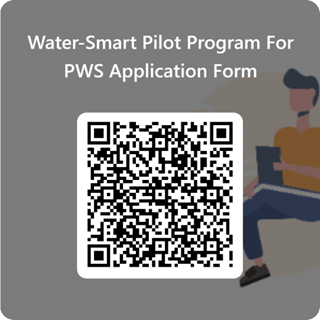
Use the Following Link or Scan the QR Code Below – Pilot Program for PWS Application
Additional Resources
Disclaimer
This MassDEP/DWP with UMass support voluntary pilot program is intended to assist PWS, Schools and Childcare facilities to ensure that they are ready to comply with the upcoming LCRI. The official USEPA compliance date for the LCRI is November 1st, 2027.