- Division of Fisheries and Wildlife
Media Contact
Media Contact, MassWildlife
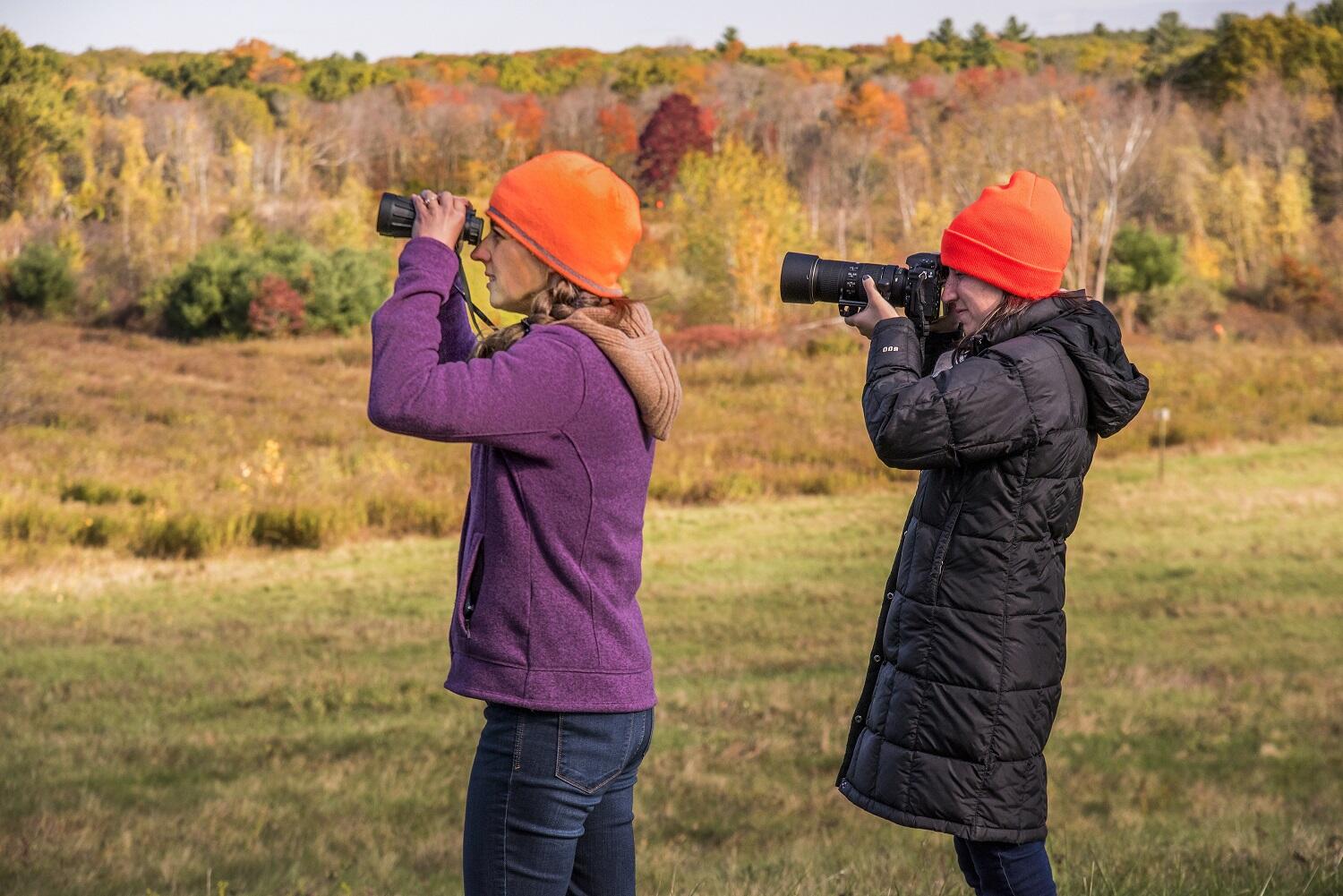
Hunting is one of the safest forms of outdoor recreation, and decades of hunter education and blaze orange requirements have helped make it safer. Whether you’re hunting, hiking, walking the dog, or enjoying the woods in another way, a few simple precautions can help everyone share the outdoors safely during hunting season.
Watch the short video above to see just how effective blaze orange can be at helping people stand out in the woods.
Tips for non-hunters
- Know when and where hunting is allowed. Review Massachusetts hunting season dates. Hunting on Sunday is not permitted in Massachusetts. MassWildlife lands, including Wildlife Management Areas and Wildlife Conservation Easements are open to hunting. Most state parks and forests are open to hunting, and many towns allow hunting on municipal lands. Learn about lands open to hunting in Massachusetts. Research the property you plan to visit beforehand to learn if hunting is allowed. If being in the woods during hunting season makes you uneasy, find a location where hunting is not allowed or plan your outing for a Sunday or another day outside of hunting season.
- Keep pets leashed and visible. Place a blaze orange vest or bandana on your pet to keep it visible.
- Make your presence known. Talk loudly or whistle to identify yourself as a person. You may also consider wearing a bell. If you see someone hunting or hear shots, call out to them to identify your location.
- Be courteous. Once you've made your presence known, don't make unnecessary noise to disturb wildlife or hunting. Hunter harassment is against state law. Avoid confrontations with hunters. If you think you've witnessed a fish or wildlife violation, report it to the Massachusetts Environmental Police at 1-800-632-8075.
Tips for hunters
Hunting is among the safest of all recreational activities. You can help keep it that way by following the 10 basic rules of firearms safety and wearing blaze orange when required.
- All hunters during shotgun deer season and deer hunters during the primitive firearms season must wear at least 500 square inches of blaze orange on their chest, back, and head. (Exception: coastal waterfowl hunters in a blind or boat.)
- All hunters on Wildlife Management Areas during the pheasant or quail season on WMAs where pheasant or quail are stocked must wear a blaze orange cap or hat. (Exception: waterfowl hunters in a blind or boat, and raccoon and opossum hunters at night.)
Note: Game animals like deer can’t detect the fluorescent orange color, allowing hunters to wear it without sacrificing camouflage.
Why blaze orange?
Blaze orange is now a familiar sight in the woods during hunting season, but its use as a safety tool has an interesting Massachusetts connection.
A Long, Colorful History of Safety
The way people hunt today is not the same way people hunted generations ago. The International Hunter Education Association reports that hunting-related injury rates have decreased dramatically over the last 50 years with the widespread adoption of hunter education and blaze-orange requirements. Interestingly, research by MassWildlife played an important role in the history of blaze-orange as a safety innovation.
In 1959, Jack Woolner, an information officer with MassWildlife (known then as the Massachusetts Division of Fisheries and Game), spearheaded a study at Fort Devens to test which colors were most visible in the woods under various light and weather conditions. Greens and yellows blended into vegetation, while blues, reds, and purples appeared black in low light. Blaze orange (a highly specific, daylight-fluorescent color officially defined by its dominant wavelength of 595 to 605 nanometers) was found to be the most visible under a variety of terrain and lighting conditions. Additionally, game animals like deer can’t detect the fluorescent orange color, allowing hunters to wear it without sacrificing camouflage.
The concept of blaze orange circulated widely through the hunting community when Jack’s brother Frank Woolner published an article entitled “Hunter Orange—Your Shield For Safety” in Field & Stream magazine in 1960. Soon after, Massachusetts became the first state to require hunters to wear blaze orange. Today, Massachusetts law requires hunters to wear blaze orange during certain hunting seasons, including the popular shotgun deer season. Nationwide, over 40 states now have some blaze-orange requirements for hunters. Additionally, non-hunters and their companion animals are also encouraged to wear blaze orange for enhanced visibility during hunting seasons.
While the widespread adoption of blaze orange has made hunting safer, wearing an orange hat or vest is not a replacement for following safe hunting practices. Blaze orange cannot identify a target or judge if the shot is safe. But it helps to give hunters and other outdoor users a much better chance of seeing one another. Hunter education is a similar, preventative tool. It cannot make decisions for hunters once they are alone in the field, but it helps build good habits and reduce the chance of accidents.