- Governor Maura Healey and Lt. Governor Kim Driscoll
Media Contact
Karissa Hand, Press Secretary
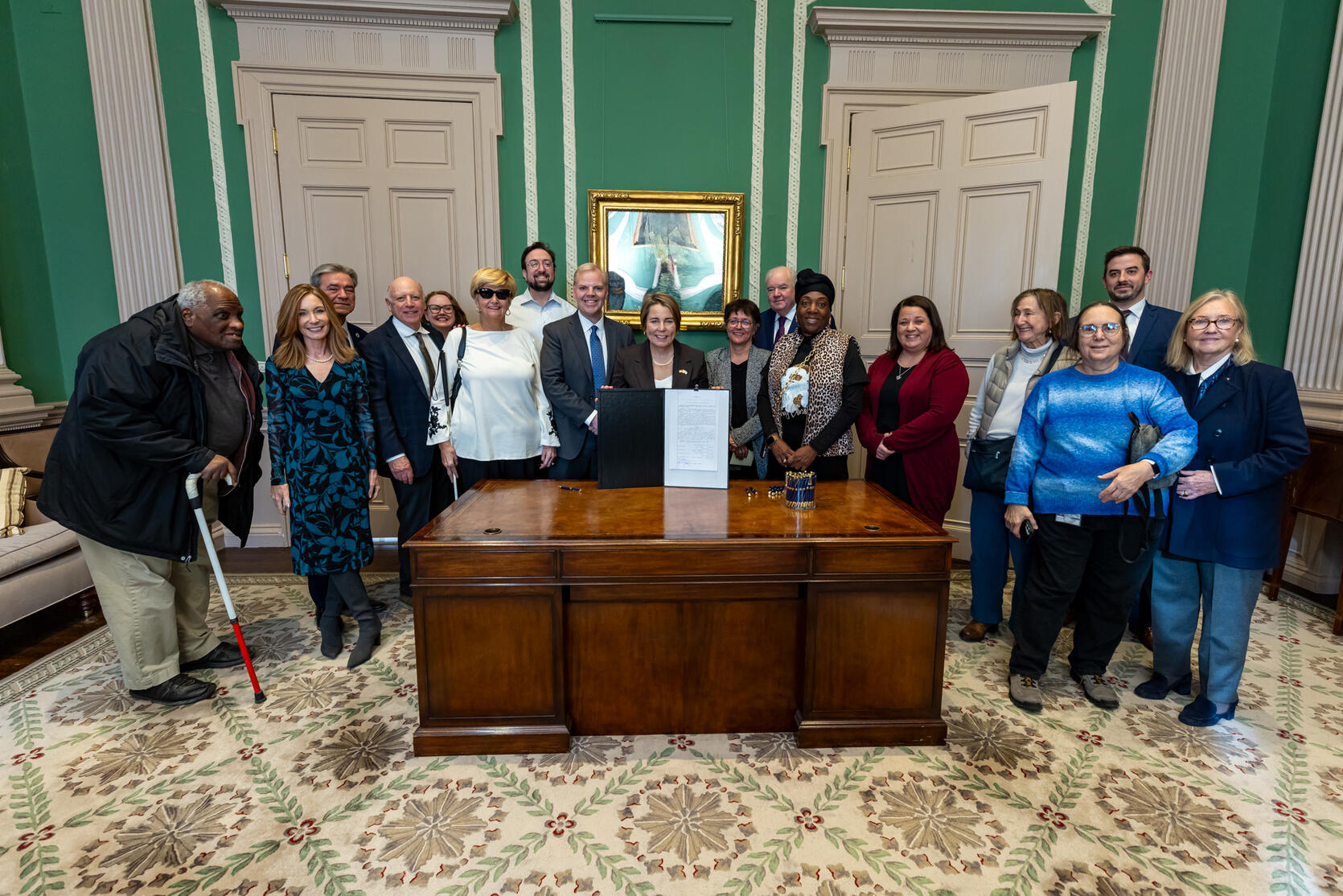
Boston — Today, Governor Maura Healey celebrated a new law that makes state institutional records that are over 75 years old public. Governor Healey proposed this language to make it easier for family members to access records about their loved ones who were at these institutions and signed it into law on November 25. The provision aligns with recommendations from the Special Commission on State Institutions and had strong support from Senator Michael Barrett, Representative Sean Garballey and Representative Mindy Domb.
“It's crucial that family members have access to the records of their loved ones from their time in state institutions,” said Governor Healey. “Not only will it help inform them of their own family history, but this provision will allow our researchers and scholars to tell the full story of the many people who were impacted by these institutions. While we can’t change what occurred in the past, we’re doing what we can today to provide family members with the dignity that they deserve. Thank you to those who have long advocated for this change and shared their personal stories, and to Senator Barrett, Representative Garballey, Representative Domb and the Legislature for their partnership and strong support.”
“Families should be able to access the records of their loved ones with the dignity and respect that they deserve,” said Lieutenant Governor Kim Driscoll. “We’re thankful for the advocacy of Senator Barrett, Representative Garballey and Representative Domb as they were instrumental in supporting for these changes, and for the recommendations of the Special Commission on State Institutions that helped inform this new policy.”
This legislation adopts Governor Healey's proposal to open the door for families and scholars to access archived patient records from state institutions for people with intellectual or developmental disabilities, if the records are at least 75 years old or if 50 years have passed since the patient’s death. The policy change applies to records from more than 25 institutions—many of them now closed.
“For the families who had a loved one in a state institution, I hope this law’s new access to information provides both knowledge and closure,” said Senate President Karen E. Spilka (D-Ashland). “This legislation shines a much-needed light on a dark chapter in Massachusetts’ history of developmental health and behavioral treatment. I am deeply grateful to Senator Barrett for his advocacy and to the Healey-Driscoll Administration for implementing this important measure.”
“The Special Commission on State Institutions opened a long-neglected inquiry into the troubling history of these facilities. Its excellent report helped advance this measure, which will enable relatives and researchers to excavate the hidden stories of former patients and residents," said State Senator Mike Barrett, who spearheaded the effort in the Senate. "Massachusetts prides itself on sharing its rich history with the world. But not all of our stories are so uplifting. In the interests of paying a debt to history and learning from our mistakes, we should hesitate before picking and choosing only the nicest stories to tell. The past can be a guide, but only if we truly know it."
“I am grateful to Speaker Mariano, Chairman Michlewitz, and my colleagues in the House for their support of this civil rights bill and for their overarching support for individuals with disabilities this session,” said State Representative Sean Garballey. “I believe that this small piece of text is crucial to further restoring the stories and identities of the deceased, some of whom lived through severe mistreatment. Along with our partners including Governor Healey, my co-filer, Chairwoman Mindy Domb of Amherst, Senator Michael Barrett, Chairman Antonio Cabral of New Bedford, advocate Alex Green, members of the Special Commission on State Institutions, and other advocates across the Commonwealth, we are leading the charge to continue to give these lives the same recognition that we afford everyone else.”
“This legislation includes crucial steps to bring accountability to state-provided care and treatment of individuals with intellectual or developmental disabilities and individuals with mental health conditions. This provision -- which requires state institution’s records from over 75 years ago to be made public -- allows stories that were previously silenced to be heard, and provides a fuller understanding of our residents’ histories and of the Commonwealth’s actions. In revealing and understanding our history, we are able to acknowledge harm, promote healing, and move Massachusetts forward,” said State Representative Mindy Domb. “I am grateful to Representative Garballey, who has been a tremendous leader and legislative partner on this issue, and to the individuals in the disability community, whose compelling testimony and persistent advocacy steered this bill into becoming law.”
###