- Executive Office of Education
- Department of Elementary and Secondary Education
- Department of Early Education and Care
Media Contact
Jason Law, Press Secretary and Events Coordinator
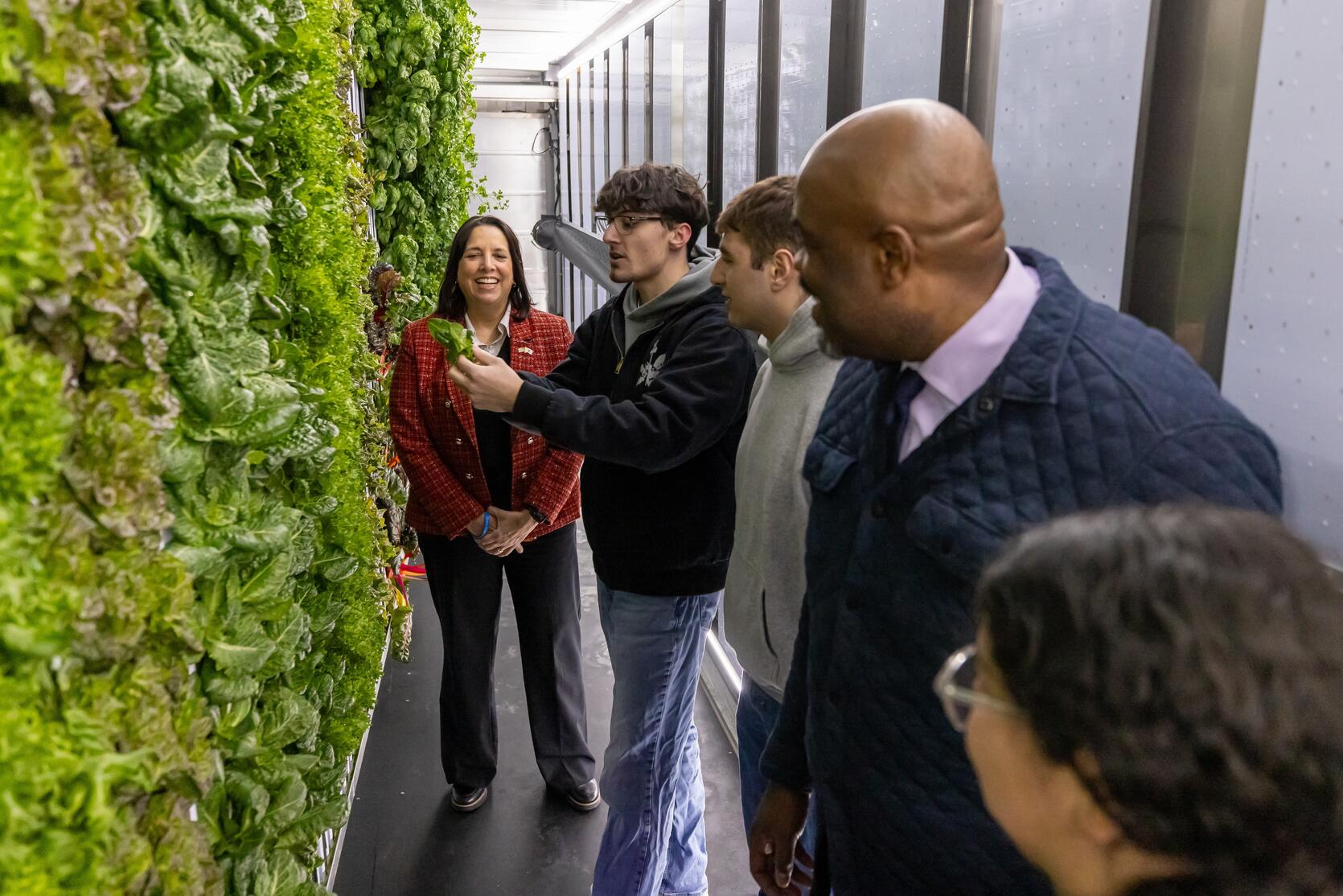
WATERTOWN — Members of the Healey-Driscoll Administration today visited Watertown Public Schools to celebrate $1.2 million in grants and see examples of investments in access to locally grown food for children. In December, the administration announced $1.2 million in state- and federally-funded grants to 24 school districts and 10 early education and care programs to help them grow or procure local food and educate students, teachers, school nutrition professionals and staff about the local food system.
As part of today’s visit, officials saw Watertown High School’s Freight Farm, a 40-foot shipping container outfitted to grow food year-round, providing food for cafeterias in Watertown’s five school buildings. The farm produces about 1,000 heads of lettuce per week, helping to feed both students in Watertown’s school cafeterias, as well as families in need in Watertown through donations to the Watertown Community Fridge, a shared food resource at the Watertown Free Public Library. Officials also visited the J.R. Lowell Elementary School, which has an outdoor school garden during the growing season.
“Every student in Massachusetts deserves access to healthy, nutritious school meals,” said Governor Maura Healey. “Our administration has made significant investments to ensure students can rely on school meals every day, and through programs like MA FRESH, we’re a deepening that commitment by connecting classrooms to local farms, strengthening our food system, and helping kids build healthy habits for life.”
“At a time when we’ve seen reductions in food benefits and farm-to-school funds, it’s so important that Massachusetts is doing the opposite,” said Lt. Governor Kim Driscoll. “This program will shape students' health and habits in the future.”
“I was blown away by our visit to the Freight Farm today, which is helping Watertown provide high-quality school meals every day,” said Education Secretary Dr. Patrick Tutwiler. “We’re proud to support the work of school nutrition staff and educators, and we’re proud to encourage collaboration with local growers.”
“MA FRESH improves access to year-round, locally grown food so our kids get the nourishment they need,” said Energy and Environmental Affairs Secretary Rebecca Tepper. “As we grapple with federal threats to our anti-hunger initiatives and to our farmers, we are preparing the next generation of farmers, nutritionists, environmental stewards, and leaders in sustainable food systems.”
Funding for this work is through the latest round of Massachusetts Farming Reinforces Education and Student Health (MA FRESH) and MA FRESH with Coordination and Optimization of Resources and Partnerships (CORP) grants. The MA FRESH grant program is administered by the Department of Elementary and Secondary Education in collaboration with the Department of Early Education and Care. Eligible applicants include early education programs that offer meals through the Child and Adult Care Feeding Program (CACFP) and K–12 schools that offer meals through the National School Lunch Program (NSLP).
“We want students to have access to local, healthy food during the school day,” said Elementary and Secondary Education Commissioner Pedro Martinez. “Watertown’s gardens and related lessons are just one example of how FRESH grants support creative and sustainable efforts to connect students with local food.”
“MA FRESH helps ensure young children have reliable access to fresh, local foods where they learn and play,” said Early Education and Care Commissioner Amy Kershaw. “By supporting early education and out-of-school time programs with resources to purchase local foods, these grants expand access to nutritious meals and snacks, strengthen connections to local farms and communities, and support children’s healthy development from the very start.”
“Giving students access to healthy, locally grown food at a young age helps them gain a deep appreciation for our farms which will lead them to make healthier choices as they mature into young adults,” said Massachusetts Department of Agricultural Resources Commissioner Ashley Randle. “We’re proud of the continued partnership with our colleagues at EOE and DESE through these grants that provide Massachusetts grown produce to our school children while supporting our farmers.”
Watertown received a MA FRESH CORP grant of almost $83,000 this year.
“The Watertown Public Schools Freight Farm is officially in full bloom, and we could not be more excited to harvest crops of red sails and oak leaf lettuce, kale, radishes, herbs and more,” said Superintendent Dr. Dede Galdston. “This innovative program brings high-tech, sustainable agriculture directly to our students, and we are excited to launch our Hi-Tech Farming course at Watertown High School."
"Watertown schools are leading the way in showing kids how healthy and delicious locally grown food is,” said Senator Will Brownsberger (D-Belmont), who represents the community. “I will continue to support our MA FRESH grants that make the program possible."
“I’m grateful for the opportunity to highlight the work the Watertown is doing here to educate our students on preparing and growing food locally,” said Representative Steven Owens (D-Watertown). “Watertown is a community that cares deeply about sustainability, and that includes our local food system. Thanks to the Healey/Driscoll Administration for this grant.”
Statewide, recipients are using the money for school gardens, indoor hydroponic growing systems and culinary classes. The grants also support professional development for nutrition professionals and educators to enhance school meal offerings. Increasing access to healthy, locally-sourced school and child care meals is a focus of Governor Maura Healey's Anti-Hunger Task Force’s work to mitigate President Trump’s cuts to the Supplemental Nutrition Assistance Program (SNAP) and adopt long-term solutions to hunger.
“We are excited to see a diversity of programs and communities receive funding to further food education opportunities, enhance school meals with local foods, and establish food literacy programs in schools and early education centers,” said Lisa Damon, co-director of Massachusetts Farm to School. “We are thankful to our Massachusetts legislators for making these funds available to schools and early education programs across the Commonwealth to do this important work for the past four years.”
###