- Division of Fisheries and Wildlife
Media Contact
Media Contact, MassWildlife
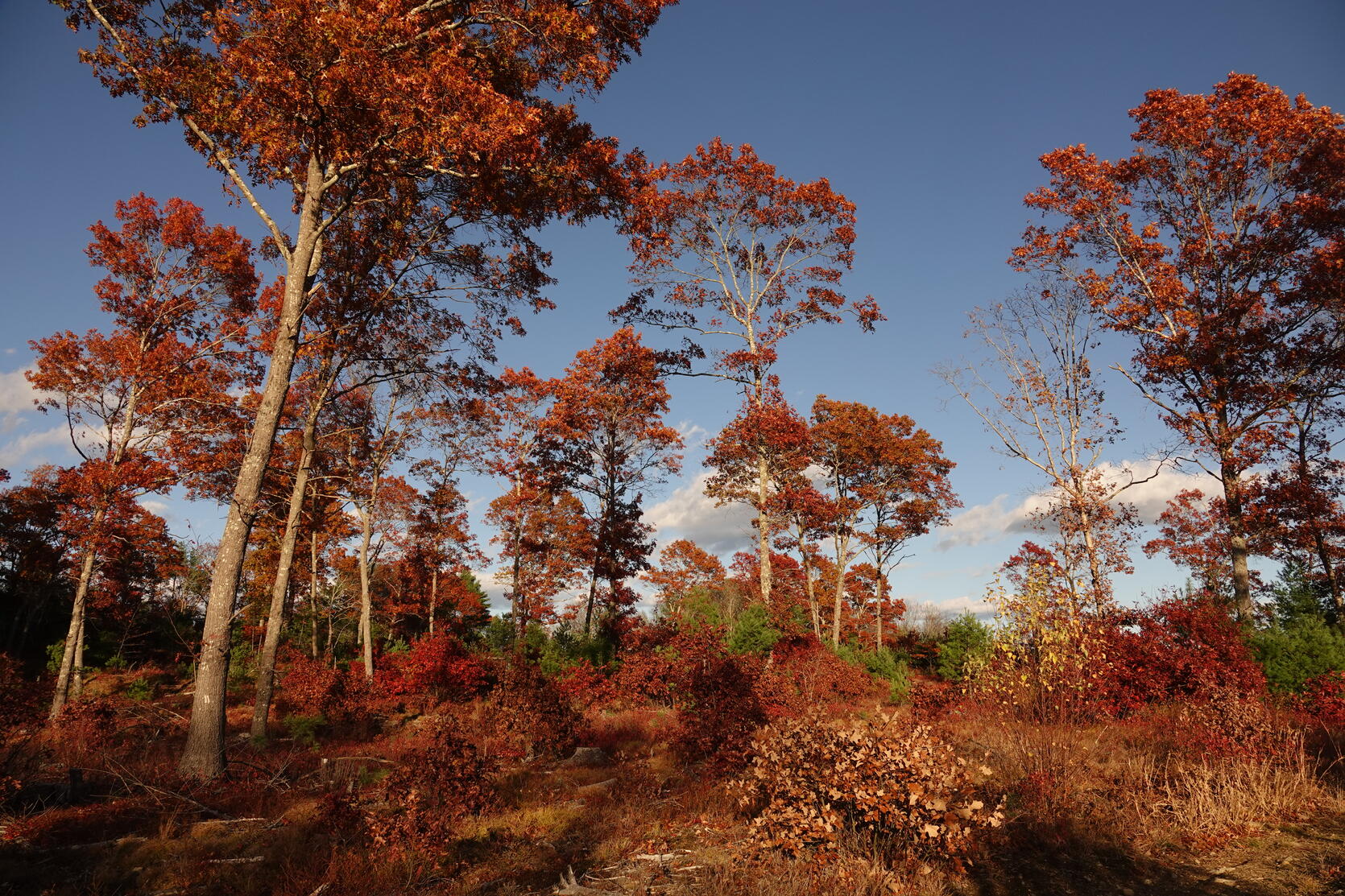
Over the past year, MassWildlife implemented restoration work on ~2,700 acres of habitat within Wildlife Management Areas across the Commonwealth. When habitats are restored, everything starts to thrive—from the smallest wildflower to the local economy; even you can benefit from a healthy habitat.
At first glance, habitat restoration might look a little messy—selective tree cuts, controlled burns, herbicide treatments—but these actions are carefully planned by MassWildlife Biologists to bring about specific habitat conditions. Think of it like a house renovation. Walls are torn down, fixtures are removed, and the house is rebuilt to be stronger, safer, and more functional. Sometimes habitats need a reset to let natural processes become established and allow native plants to flourish.
Wildlife wins
Healthy habitats mean healthier plants and animals. Restored ecosystems provided cleaner air and water, as well as crucial shelter and food sources. Over time, this invites more species back, including both common and rare species that depend on specific native plants or landscape features to survive. These places are then better positioned to adapt to the changing climate and withstand other stressors. Research backs this up: biodiversity increases over time in restored areas.
Foragers rejoice
Think about the flavor of the land: blueberries , beach plums, wild raspberries, elderberries, and mushrooms, like hen-of-the-woods, thrive in properly managed habitats. In Massachusetts, chicken-of-the-woods often appears in woodlands after prescribed fire has been conducted. These wild foods can be bountiful in restored ecosystems, inviting everyone from backyard foragers to local chefs to enjoy.
Hunters, anglers, and outdoor enthusiasts
Forest management activities can boost hunting opportunities. Young forest habitats support ruffed grouse, woodcock, and wild turkey at various stages of their life cycle. In particular, edge habitat—the intersection of open and forested areas—attracts deer and black bears.
In the same manner, restored rivers and streams benefit anglers. Removing dams and resizing culverts open pathways for migratory fish, like trout and herring. With healthier fish populations upstream, new places may pop up as the ‘best local fishing spot’.
A feast for the eyes and ears
Birdwatchers will tell you: you can hear a healthy habitat. Restored habitats often attract a more diverse collection of bird species singing in forests and grasslands. Hikers and wildlife photographers benefit too, with access to landscapes full of life, color, and diversity. With restored areas often come new views that were previously blocked by overgrowth.
Jobs and local economies
Restoration isn’t just good for wildlife, it’s good for people’s livelihoods too! Farmers benefit from ecological services like more pollinators, natural pest control, and cleaner water. Foresters benefit from healthier, more sustainable woodlands. Restored habitats encourage eco-tourism which puts dollars back into local communities.
And yes, everyone else too
Even if you never leave the city, restoration helps you. Forests and wetlands filter drinking water, store carbon, and reduce air pollution. In urban areas, green spaces cool down overheated neighborhoods and protect against flooding. Healthier habitats reduce erosion, buffer storm surges, and even raise nearby property values.
So, who benefits from habitat restoration?
Birds, berries, bears—and you.