
Board of Review
100 Cambridge Street, Suite 400
Boston, MA 02114
Phone: (617) 626-6400
Fax: (617) 727-5874
Issue ID: 352-N3FJ-95MH
Board of Review Decision
Introduction and Procedural History of this Appeal
The employer appeals a decision by a review examiner of the Department of Unemployment Assistance (DUA), which concluded that services performed by the claimant for the employing unit constituted employment within the meaning of G.L. c. 151A, § 2. We review, pursuant to our authority under G.L. c. 151A, § 41, and reverse.
On September 4, 2025, the DUA’s Revenue Audit Division issued a determination that the services performed by the claimant constituted employment. The employing unit appealed the determination to the DUA hearings department. Following a hearing on the merits, attended by both parties, the review examiner affirmed the agency’s initial determination in a decision rendered on January 20, 2026. We accepted the employing unit’s application for review.
The review examiner concluded that the employing unit had not carried its burden with respect to G.L. c. 151A, § 2(c), and, thus, the services performed by the claimant constituted employment. After considering the recorded testimony and evidence from the hearing, the review examiner’s decision, and the employer’s appeal, we afforded the parties an opportunity to submit written reasons for agreeing or disagreeing with the decision. Neither party responded. Our decision is based upon our review of the entire record.
The issue before the Board is whether the review examiner’s decision, which concluded that the employing unit did not carry its burden under G.L. c. 151A, § 2, to show that the claimant’s courier services did not constitute employment, is supported by substantial and credible evidence and is free from error of law.
Findings of Fact
The review examiner’s findings of fact are set forth below in their entirety:
- The employer's appeal is from a Status determination which found the services provided to the employer by the claimant to be "employment" subject to Mass. General Laws, Chapter 151A in accordance with Section 2.
- The employing unit was organized for the primary purpose of performing courier services.
- The claimant was engaged as a courier from 2/20/18 through 4/25/25.
- The claimant does not maintain a courier business outside of the work he was performing for the employer. He worked as a screen printer when he was not working for the employer.
- The claimant performed courier work using his own vehicle 3 ½ to 4 hours a day, Monday through Friday, earning $125 a day.
- The claimant would receive his route for any particular day from the Vice President of Operations through the employer’s app. The claimant determined how he would make the stops.
- The claimant would start his day from his home. He never needed to go into [sic] employer’s location. The claimant would check in with the employer before his first stop and after his last stop of the day. On occasion, the claimant would be asked to do an extra stop.
- The claimant would have to request time off with the Vice President of Operations. He was never denied requested time off.
- The claimant was not entitled to benefits including worker’s compensation through the employer. He was not issued any business cards, nor did he have any signage on his vehicle.
- The parties did sign an independent contract agreement. The claimant is issued a 1099 at the end of the year for tax purposes.
Ruling of the Board
In accordance with our statutory obligation, we review the record and the decision made by the review examiner to determine: (1) whether the findings are supported by substantial and credible evidence; and (2) whether the review examiner’s conclusion is free from error of law. After such review, the Board adopts the review examiner’s findings of fact except as follows. We reject Finding of Fact 7 as inconsistent with the evidence in the record. However, as discussed more fully below, we reject the review examiner’s legal conclusion that the employer has failed to meet its burden under G.L. c. 151A, § 2.
Employment is defined in G.L. c. 151A, § 2, which states, in relevant part, as follows:
Service performed by an individual . . . shall be deemed to be employment subject to this chapter . . . unless and until it is shown to the satisfaction of the commissioner that—
- such individual has been and will continue to be free from control and direction in connection with the performance of such services, both under his contract for the performance of service and in fact; and
- such service is performed either outside the usual course of the business for which the service is performed or is performed outside of all the places of business of the enterprise for which the service is performed; and
- such individual is customarily engaged in an independently established trade, occupation, profession or business of the same nature as that involved in the service performed.
Under this statutory provision, the burden of proof is on the employing unit and the test is conjunctive. Thus, the employing unit must meet all three prongs of this “ABC” test. Should it fail to meet any one of the prongs, the relationship will be deemed to be employment. Coverall North America, Inc. v. Comm’r of Division of Unemployment Assistance, 447 Mass. 852, 857 (2006).
Prong (a)
We analyze prong (a) under common law principles of master-servant relationships, including whether the worker is free from supervision “not only as to the result to be accomplished but also as to the means and methods that are to be utilized in the performance of the work.” Athol Daily News v. Board of Review of Division of Employment and Training, 439 Mass. 171, 177 (2003), quoting Maniscalco v. Dir. of Division of Employment Security, 327 Mass. 211, 212 (1951). “The essence of the distinction under common law has always been the right to control the details of the performance,” but “the test is not so narrow as to require that a worker be entirely free from direction and control from outside forces.” Athol Daily News, 439 Mass. at 177–178.
In the present case, the review examiner concluded that the employing unit had met its burden under prong (a) because the claimant determined how he would complete his assigned route. Because the claimant chose the means and methods by which he performed his duties as a courier for the employing unit, we agree. See Findings of Fact 5 and 6.
Prong (b)
Under prong (b), the employing unit may satisfy its burden by proving either that the services performed were outside the usual course of the employing unit’s business, or that they were performed outside of all the places of business of the employing unit’s enterprise. See Athol Daily News, 439 Mass. at 179. Although the review examiner correctly observed that the claimant’s duties as a courier were within the scope of the employing unit’s course of business, there was no dispute that he was never required to report to the employing unit’s office to perform his duties. See Findings of Fact 2, 3, and 7. We are, therefore, satisfied that the employing unit meets the latter test under prong (b).
Prong (c)
As to prong (c), the test “asks whether the worker is ‘customarily engaged in an independently established trade, occupation, profession or business of the same nature as that involved in the service performed.’” Athol Daily News, 439 Mass. at 179. To determine whether the employing unit has carried its burden under prong (c), we “consider whether the services in question could be viewed as an independent trade or business because the worker is capable of performing the services [for] anyone wishing to avail themselves of the services or, conversely, whether the nature of the business compels the worker to depend on a single employer for the continuation of the services.” Coverall, 447 Mass. at 858.
The review examiner found that the employing unit had not met its burden under prong (c) because the claimant had only performed courier services for the employing unit. This was in error.
The appropriate analysis under prong (c) is whether the claimant was capable of performing courier services for anyone wishing to avail themselves of such services. See Coverall, 447 Mass. at 858. The mere fact that the claimant only performed courier services for instant employing unit is not dispositive evidence that he was unable to perform the same or similar courier services for any other employing unit. See Finding of Fact 4.
In this case, the claimant used his own vehicle to perform deliveries for the instant employer. Finding of Fact 5. He was, therefore, able to work as a courier for any other employing unit using his personal vehicle. Further, the claimant’s contract with the instant employing unit did not impose any restrictions on the claimant’s ability to accept courier work with any other employing unit. Because the claimant was capable of performing the same services for anyone wishing to avail themselves of the services, the employing unit has satisfied prong (c).
We, therefore, conclude as a matter of law that the employing unit has met its burden to show that the claimant’s courier services did not constitute employment under G.L. c. 151A, § 2(a), (b), and (c).
The review examiner’s decision is reversed. The services performed by the claimant were not employment, and the employing unit is not required to make contributions based on those services.
Boston, Massachusetts Date of Decision – April 29, 2026
- The employer’s testimony in this regard, although not explicitly incorporated into the review examiner’s findings of fact, is part of the unchallenged evidence introduced at the hearing and placed in the record, and it is thus properly referred to in our decision today. SeeBleich v. Maimonides School, 447 Mass. 38, 40 (2006); Allen of Michigan, Inc. v. Deputy Dir. of Department of Employment and Training, 64 Mass. App. Ct. 370, 371 (2005).
Boston, Massachusetts Date of Decision - May 12, 2026

Charlene A Stawicki, Esquire
Member
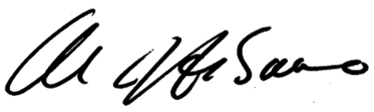
Michael J. Albano
Member
Any further appeal would further appeal further appeal would be to a Massachusetts State District Court.
(See Section 42, Chapter 151A, General Laws, Enclosed)
The last day to appeal this decision to a Massachusetts District Court is thirty days from the mail date on the first page of this decision. If that thirtieth day falls on a Saturday, Sunday, or legal holiday, the last day to appeal this decision is the business day next following the thirtieth day.
Visit this page to locate the nearest Massachusetts District Court.
Please be advised that fees for services rendered by an attorney or agent to a claimant in connection with an appeal to the Board of Review are not payable unless submitted to the Board of Review for approval, under G.L. c. 151A, § 37.
LSW/rh