
Description
Crow Hills Pond is a 16-acre impoundment of Flag Brook, located off of Fitchburg Rd. (Route 31) roughly 5 miles from Princeton Center. The pond is separated into an upper and lower basin by a small dike. The average depth of Crow Hills Pond is 7 feet and the maximum depth is 11 feet and the waters are tea colored with limited visibility. The entire pond lies within Leominster State Forest and its shores are undeveloped except for a Department of Conservation and Recreation (DCR) swimming beach on the upper basin.
Recreational access
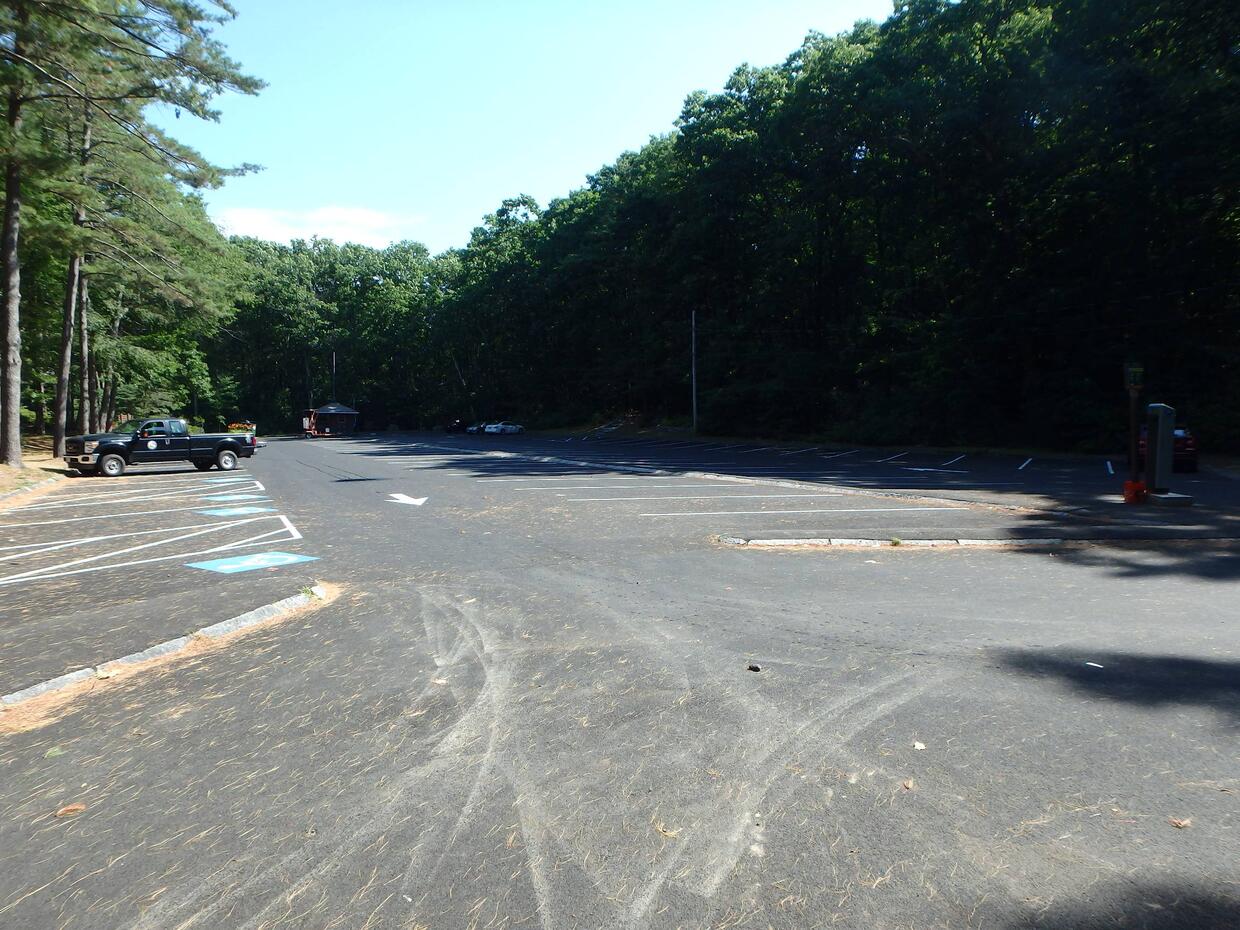
While no boats are permitted on Crow Hills Pond due to its small size, the entirety of the shoreline is accessible via trails and recreation areas in Leominster State Forest. Two large parking paved parking areas, one of which serves the DCR swimming beach (get directions) and the other a recreation area with picnic tables and grill tops (get directions) are located off of Route 31. During the swimming season a parking fee may apply. Parking roadside on Route 31 is also possible at several locations. Please contact DCR offices of Leominster State Forest for additional information, fee structure, and/or restrictions pertaining to public access of the Crow Hills Pond.

Fish populations
The following fish species were found during MassWildlife surveys:
- largemouth bass
- chain pickerel
- pumpkinseed
- yellow perch
- brown bullhead
- golden shiner
- white sucker
Upper Crow Hills Pond is stocked with trout each spring
Fishing
Crow Hills Pond is a popular trout fishing destination in spring due to its abundant access. There are several good shore fishing locations a short walk from Route 31. Fishing for largemouth bass and yellow perch are popular during summer and fall. The state forest provides a tranquil and peaceful setting for your fishing and or hiking trip. Crow Hills Pond has produced brook trout that meet minimum size for recognition by the Freshwater Sportfishing Awards Program.
More fishing resources:
Stop aquatic hitchhikers
Prevent the transport of nuisance species; clean all recreational equipment. Visit ProtectYourWaters.net to learn more.