

“Mo recognized the importance of making a child feel seen and valued for who they are, while honoring the routine and care practices familiar to them. ”
Braiding bonds
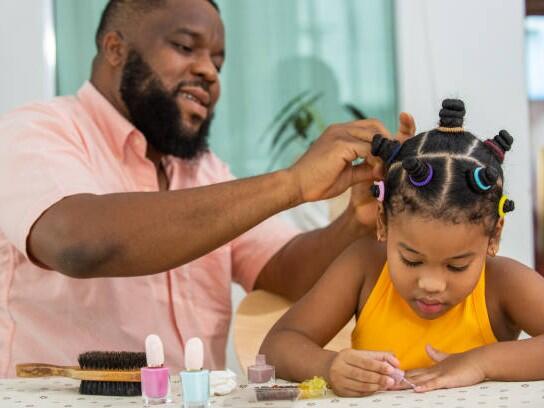
When Mo and his husband, Jose, decided to become foster parents, they understood this new journey would require patience, humility and a willingness to learn. Through their foster parent training, they came to understand that children come with various experiences and needs. Reflecting on his own experiences, Mo recognized the importance of making a child feel seen and valued for who they are, while honoring the routine and care practices that were familiar to them.
Tia, a shy, seven-year-old African American girl, was temporarily placed with Mo and Jose while her social worker explored possible kinship placements. Sandra, Tia’s social worker, informed Mo and Jose that Tia had class pictures that week and would need her hair done by Friday. “We’ll speak with Tia on what she would like to do,” said Jose.
During dinner, Mo asked Tia, “Tia, how do you like your hair done?” She thought for a moment, twirling one of her curls, and shyly responded, “My mom makes little braids. I really like those.”
Mo felt the weight of wanting to get it right. He had read the haircare guide provided by his own social worker and attended a support group to understand the importance of hair care in nurturing a child’s identity. Although he had never braided before, he was open to learning. Mo promised himself that he would be open-minded and recognize that supporting Tia meant honoring her uniqueness and embracing what felt familiar and comfortable to her.
That evening, after Tia went to bed, Mo and Jose sat at the kitchen table, talking about the best way to support her. They watched some tutorials about the basics of managing naturally curly or textured hair. But they still weren’t confident.
The next morning, Mo called Tia’s social worker and asked about contacting Tia’s mother about her hair care. The social worker reached out to Tia’s mom who agreed to speak with Mo. Within a day, they connected by phone. Mo told Tia’s mom, “I’d really love to learn how to take care of Tia’s hair while she is with us. Could you share with me what products you use and routines you have for Tia?” Tia’s mother’s voice softened on the other end of the line. “I always use a little extra virgin coconut oil before braiding,” she explained. As she continued to walk Mo through her hair care routine for Tia, Mo took notes. He thanked her for agreeing to speak with him and reassured her that Tia was okay.
Still not feeling confident and wanting the best for Tia, Mo asked his social worker if there were other resources. They connected Mo to a licensed professional stylist who walked Mo through a step-by-step process of how to detangle curls, moisturize the hair and protect Tia’s hair overnight to preserve the style and maintain hair health. Feeling much more confident, Mo headed home ready to do Tia’s hair.
As Tia sat on a stool in the kitchen, Mo began carefully separating sections of hair. “Your Mom told me about the coconut oil,” he said as he applied it to Tia’s curls. Tia grinned and happily replied, “That’s what she always uses!”
Over the next few weeks, hair time turned into moments of connection and joy. Tia shared stories about her family and school while Mo braided her hair. On their last Sunday morning together, Mo asked, “Should we add the beads your mom sent after your last visit?” “Yes!” Tia said. “They’re like the ones my cousin wears. She is going to be so excited to see them when I go to live with her and Auntie Anna tomorrow!”
When they were done, Tia turned to the mirror and touched her braids with pride. Mo smiled and felt proud as well. With one big hug, Mo knew he’d built trust and made a lasting connection with Tia through honoring the way her family cared for her hair.
If you ever considered opening your home to make a meaningful difference in a child’s life and discover new ways to uplift them, let this be your sign. Becoming a foster parent could change a child’s life, and yours too. Contact us to learn more about becoming a foster parent.