
The Challenge
Heat is the number one weather-related cause of death in the US, ahead of hurricanes, floods, and tornadoes. Per the 2022 Massachusetts Climate Assessment, the projection for extreme heat is close to 30 days above 90°F per year by 2050. Increasing shade across DCR’s parks is the agency’s direct response to this climate hazard and the best next step DCR can take to protect our visitors and staff, and to ensure the well-being of all. This priority is in line with DCR’s mission, capabilities, the agency’s climate adaptation goals, and the Commonwealth’s resiliency goals.
Project Alignment with ResilientMass Plan Priority Actions
This project addresses 2023 ResilientMass Plan and 2022 MA Climate Assessment Priority Impact: Health and Cognitive Effects from Extreme Heat in the Human Health and Safety sector. Action 1c: Inventory and categorize shade shelters on DCR sites, and strategically improve shading and cooling structures in parks, prioritizing those located in environmental justice communities. The project aligns with the following 2023 ResilientMass Plan goals:
- Science-based and Informed Decision-Making
- Implement Adaptation Actions for Communities and Ecosystems
- Resilient and Equitable Infrastructure, Ecosystems, and Communities
Climate Resilience Project Scope
Project Shade is DCR’s initiative to enhance the resilience of Massachusetts State Parks through installation of shade structures and maintaining and expanding native tree canopy to mitigate impacts of extreme heat on vulnerable populations that visit the parks as well as park staff.
This work is a continuation of the FY24 project which inventoried DCR’s existing shade structures, identified DCR’s most suitable parks for additional shade, and created DCR Project Shade Kit of Parts & Design Guidelines to design sustainable shade interventions that fit their cultural and natural resources context.
In FY25, the project focused on design, permitting and public outreach for seven of the pilot sites identified in FY24, including Pope John Paul II Park, Constitution Beach State Park, Cochituate State Park, Quinsigamond State Park, Lawrence Riverfront State Park, Lake Wyola State Park, and Chicopee Memorial State Park.
Metrics and Results
FY25 Project Shade activities and results include:
Project Shade Pilot Projects:
- Design, permitting and public outreach for Pope John Paul II Park: Schematic design was completed in FY25, informed by public meetings and on-site intercept surveys. The final design includes construction of a large pavilion at the existing playground, spectator shelters along the athletic fields, accessible walkways to the new shelters, and native tree plantings to increase the tree canopy and shady groves in the park. A MEPA advisory opinion is expected in August 2025. Permitting and construction bid packages are anticipated for FY26. Construction completion is anticipated during spring of FY27.
- Design, permitting and public outreach for Constitution Beach State Park: Schematic design was completed in FY25, informed by public meetings and on-site intercept surveys. The project includes a large shade pavilion (to match existing), accessible path to new shelter, roof and paving improvements to the existing shade pavilion, new native canopy trees and hammock posts to allow visitors to hang their hammocks—to protect existing mature trees and their root zones. Tree plantings have been done in phases in partnership with TreeEastie, a Boston nonprofit focused on increasing tree canopy in East Boston. In FY25 (fall 2024), 26 trees were planted, and 50 are anticipated for FY26 (fall 2025). In addition, the project proposes a 10’-wide meadow strip along the parking lot to cool the expanse of bituminous concrete. Co-benefits will include creating pollinator habitat, protecting sidewalk trees from mowing damage and screening the view of cars from the beach. The project received an Order of Conditions from the Boston Conservation Commission. Full permitting and construction bid packages are anticipated for FY26. Construction completion is anticipated for FY26.
- Design, permitting and public outreach for Cochituate State Park: Design was completed in FY25, informed by public meetings and on-site intercept surveys. The proposed work—two bid packages—includes a new large shade pavilion, next generation canopy tree plantings to create a new picnic grove and hammock posts to allow visitors to hang their hammocks—to protect existing mature trees and their root zones. The pavilion project was awarded an Order of Conditions and the tree planting project was issued a Negative Determination of Applicability by Natick Conservation Commission and an unlikely to affect determination from MassHistoric. Construction completion for both construction projects is anticipated during FY26.
- Design, permitting and public outreach for Quinsigamond State Park- Lake Park: Construction documentation was completed in FY25, informed by public meetings and on-site intercept surveys. The project includes new spectator/team shade canopy with accessible path, cantilever shade shelters for spectators along existing bleachers, and native canopy tree plantings. The project was
issued a Negative Determination of Applicability by the Worcester Conservation Commission and an unlikely to affect determination from MassHistoric. This project bid is anticipated during FY26 with construction completion anticipated during spring of 2026. - Design, permitting and public outreach for Lawrence Riverfront State Park: Schematic design was completed in FY25, informed by public meetings and on-site intercept surveys. The program includes a new pavilion adjacent to the existing playground, bench shelters along the perimeter of the central lawn area, and native canopy tree plantings. Tree planting locations are being coordinated with Groundworks Lawrence. This project is still in the permitting phase, with bid phase anticipated in late FY26.
- Design, permitting and public outreach for Lake Wyola State Park: Schematic design was completed in FY25. The program includes a large shade pavilion and three smaller lakefront pavilions, new native canopy trees, meadow areas, and hammock posts to allow visitors to hang their hammocks—to protect existing mature trees and their root zones. Architectural details for a rustic pavilion—to be constructed with locally sourced wood—are currently in development. Soils investigation in an area of ponding has been permitted and is expected to be complete in September 2025. DCR anticipates completing permitting and design during FY26.
- Design and public outreach for Chicopee Memorial State Park: Schematic design was completed in FY25. The program includes a large shade pavilion and two bench shelters, and new native canopy trees. Similar to Constitution Beach, a 10’-wide meadow strip will be planted along the parking lot to cool the expanse of bituminous concrete. Co-benefits will include creating pollinator habitat, protecting sidewalk trees from mowing damage and screening the view of cars from the lawn. Architectural details for a rustic pavilion—to be constructed with locally sourced wood—are currently in development. DCR anticipates completing design and permitting phases during FY26.
Pavilions and Pavilion Improvements
Project Shade supported the installation of shade pavilions at Georges Island, Boston Harbor Islands, Myles Standish State Forest, Carver, and Wompatuck State Park, Hingham, and shade canopies in Chelsea. We were also able to coordinate with DCR’s PSO to support substantial repairs to our existing shade structures, including Kelley Field, Hyde Park, Fort Phoenix, Fairhaven, and Constitution Beach in Boston.
Best Practices and Lessons Learned
Collaboration with technical experts within DCR—including Operations, Cultural Resources, Natural Resources, Waterways, Forestry, Universal Accessibility, Environmental Justice—has made this project a success. Interdisciplinary design has enabled the DCR team to problem-solve and anticipate resource protection and operational needs that will make these designs both popular and durable for years to come.
Further Action
With projected climate impacts, the need for shade and tree canopy in DCR Parks will only grow. The pilot project design, permitting and public outreach phases have been instrumental in establishing processes for future projects. We will have developed standard site furnishing details for the hammock posts, motion detection lighting, bottle fillers as well as standard pavilion designs. We are establishing the work plan and resources for DCR locally-sourced wood initiative for pavilions and benches. We have also developed DCR Project Shade website, lawn signs, QR code and intercept survey to help inform our visitors about the projects and gain their feedback. These outreach materials are currently being updated for language accessibility. Our public outreach as well as our design guidelines will enable us to continuously improve our designs to meet our mission. DCR received further support for this project in FY26 from REsilientMass. We will continue to advance projects into construction and further design of additional shade structures and tree plantings.
Additional Information and Resources
A lot of the abovementioned pavilions have just completed their design this fiscal year, and have therefore not yet been build. Those pictures will be shared in the years to come as these projects move into permitting and construction.
Below are pictures of the George’s Island large pavilion that was completed this year. Picture 1 shows site prep. Picture 2 shows the pavilion almost fully completed. The pavilion has been completed, but George’s Island has been without ferry service all summer. It is open to private boaters at the moment until ferry services resume next season.
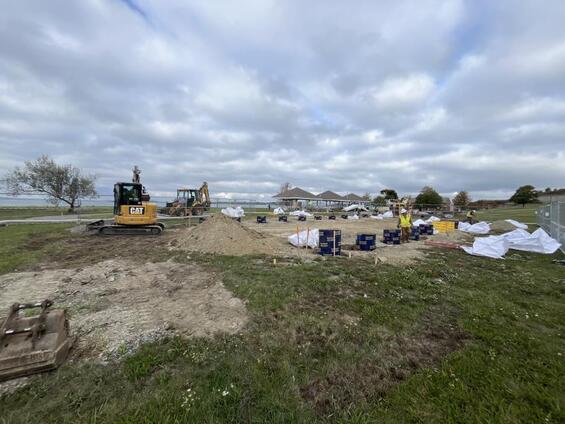
Image 1: George's Island Pavilion site prep
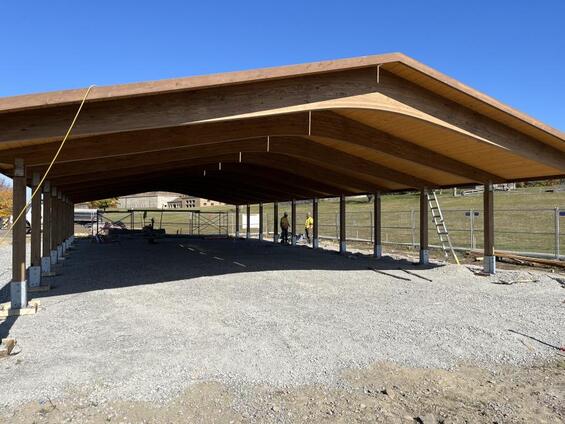
Image 2: George's Island pavilion almost fully completed.