
Overview
Asthma is a significant public health problem in the United States (US) and in Massachusetts (MA). In 2022, over 26.7 million people in the US reported having asthma (8.2% of all Americans), including an estimated 4.5 million children and 22.3 million adults.2 MA, along with other New England states, had among the highest reported prevalence of asthma in the US. 3 In MA, an estimated 11.3% of adults and 8.9% of children had asthma in 2022.1
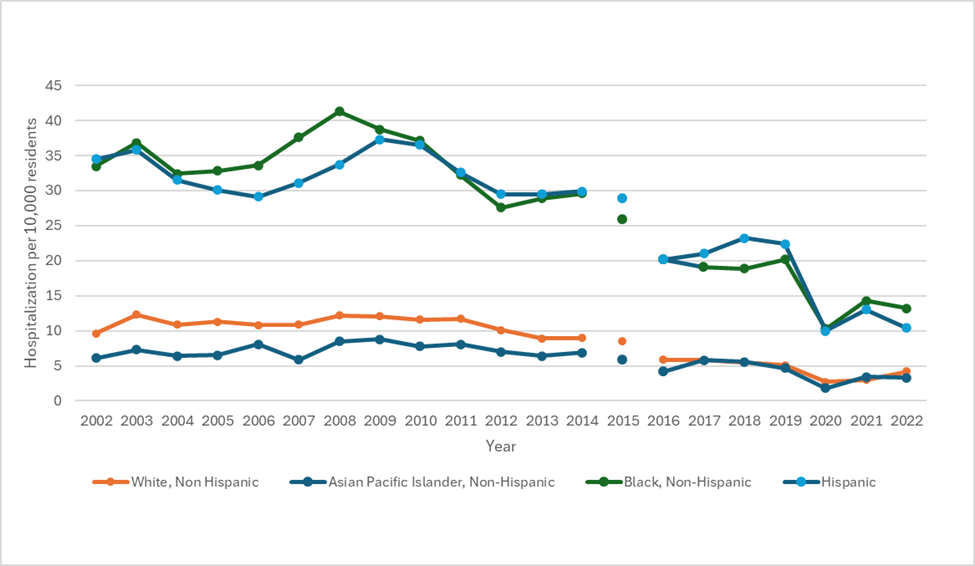
Among people living with asthma in MA, disparities exist in rates ofasthma-related hospitalizations and asthma-related emergency department visits. During 2002-2022, Black, non-Hispanic and Hispanic residents consistently had at least 2 to 3 times higher age-adjusted rates of asthma-related ED visits and asthma-related hospitalizations than White, non-Hispanic residents.11
When asthma is not well-controlled or very poorly controlled, people experience frequent symptoms that can interfere with their lives.
During 2019-2021 in MA, most adults (52.8 %) and many children (39.4%) with asthma had not well controlled or very poorly controlled asthma.4 Almost half (47.8 %) of children with asthma were unable to go to school or daycare for at least one day during the past twelve months due to their asthma.5 Older adults (70 and older) were more likely to be hospitalized for asthma, compared to all other adult age groups.6
Asthma prevalence is high in MA (2023).
- The prevalence of asthma among adults was higher in MA (11.9 %) than the US median value (10.2 %).7
- Lifetime asthma among adults was higher in MA (17.4%) than the US median value (15.7%).7
Within MA, asthma prevalence was higher among certain groups (2023)
- The prevalence of asthma was higher among adult females (14.9%) compared to adult males (8.5%)
- The prevalence of asthma was higher among adults in households with lower incomes (household income < $25,000) (19.7%) compared to all other incomes (household income > $25,000) (9.5% - 14.5%)
- The prevalence of asthma was higher among adults who have a disability (20.0%) compared to adults without a disability (9.2%)
- The prevalence of asthma was higher among Lesbian, Gay, Bisexual or Transgender adults (LGBT) (18.2%) as compared to straight/cisgender (11.2%) adults
Note on the higher prevalence of asthma in MA among members of specific groups: It is not completely clear why some people develop asthma, while others do not. However, researchers have learned that many factors in a person’s environment, in combination with their genes, can cause asthma. For example, communities that have had a long-term lack of public and private investment can experience exposure to poor air quality and various barriers to care which could increase their risk of asthma.
Asthma seriously affects the lives of people
Adults in MA (2020-2022)8
- 57.4% of adults living with asthma had not well controlled or very poorly controlled asthma.8
- 25.4% of adults with very poorly controlled asthma reported that cost was a barrier to care. 8
- This represents a meaningful decline in the proportion of adults in 2006-2010 with very poorly controlled asthma who reported cost as a barrier to care (40.7%).9
- 23.4% of adults living with asthma were unable to work for at least one day during the past twelve months due to their asthma.8
Children in MA (2019-2021)5
- 39.35% of children living with asthma had not well controlled or very poorly controlled asthma.5
- Almost half (47.8%) of children with asthma were unable to go to school or daycare for at least one day during the past twelve months due to their asthma.5
Figure 1. Asthma Control Levels among MA Children with Asthma, 2019-20215
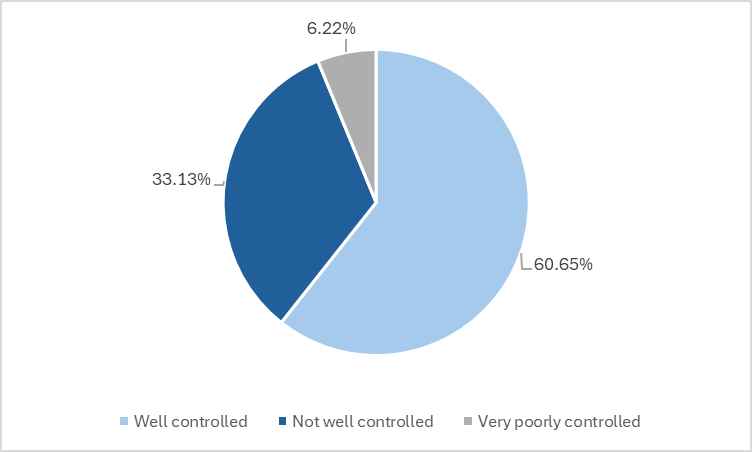
The percentage of MA children reporting well controlled asthma increased from 33.8% in 2006-2010 to 60.61% during the 2019-2021 time period.10,5
Disparities exist in rates of asthma-related hospitalizations and asthma-related emergency department visits by age, gender and race/ethnicity (2020-2022).
Race/Ethnicity (2002-2022)
- In MA: Black, non-Hispanic and Hispanic residents consistently had higher age-adjusted rates of asthma-related ED visits and asthma-related hospitalizations that were at least 2 to 3 times higher than the rates for White, non-Hispanic residents.11
Figure 2. Age-Adjusted Rates of Asthma-related Emergency Department (ED) Visits by Race/Ethnicity, MA Residents, 2002-202212
Data source: CY2002- 2022 Massachusetts Emergency Department Discharge Databases, Massachusetts Center for Health Information and Analysis
Note: The break in trendline in 2015 indicates the ICD-9 to ICD-10 shift.
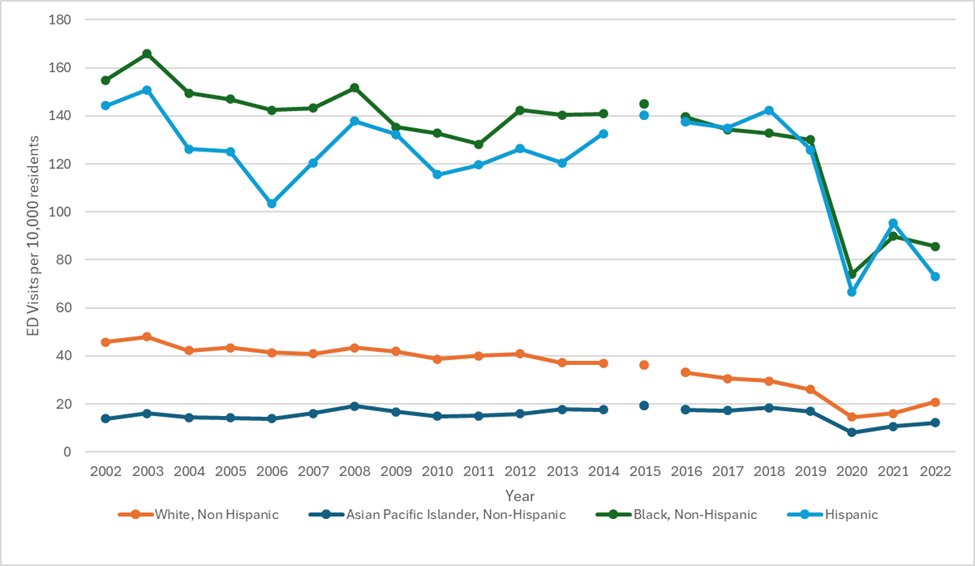
Figure 3. Age-Adjusted Rates of Asthma-related Hospitalizations by Race/Ethnicity, MA Residents, 2002-202213
Data source: CY2002-2022 Massachusetts Hospitalization Discharge Databases, Massachusetts Center for Health Information and Analysis
Note: The break in trendline in 2015 indicates the ICD-9 to ICD-10 shift.
In MA, disparities in asthma rates exist across age and gender groups (2020-2022)
- The age-adjusted rates of both asthma-related hospitalizations and ED visits were higher among females than males.14
- Children aged 0-4 years had the highest rates of asthma-related ED visits and hospitalizations.14
- Older adults (70+) were more likely to be hospitalized for asthma, compared to all other adult age groups.15
Asthma is costly.
- In MA: The average cost of asthma-related hospitalizations continued to increase over time, from 2016 to 2022. The average charge from 2016 was about $13,000. In 2022 the average charge was $21,000. (See Figure 4) 16
- In 2022, public healthcare programs (including Free Care, Health Safety Net, Medicare, and Medicaid) were the payer for 59.0% of asthma-related hospitalizations.17
Figure 4. Total Average Charges for Asthma-related Hospitalizations, MA Residents, 2002-202216
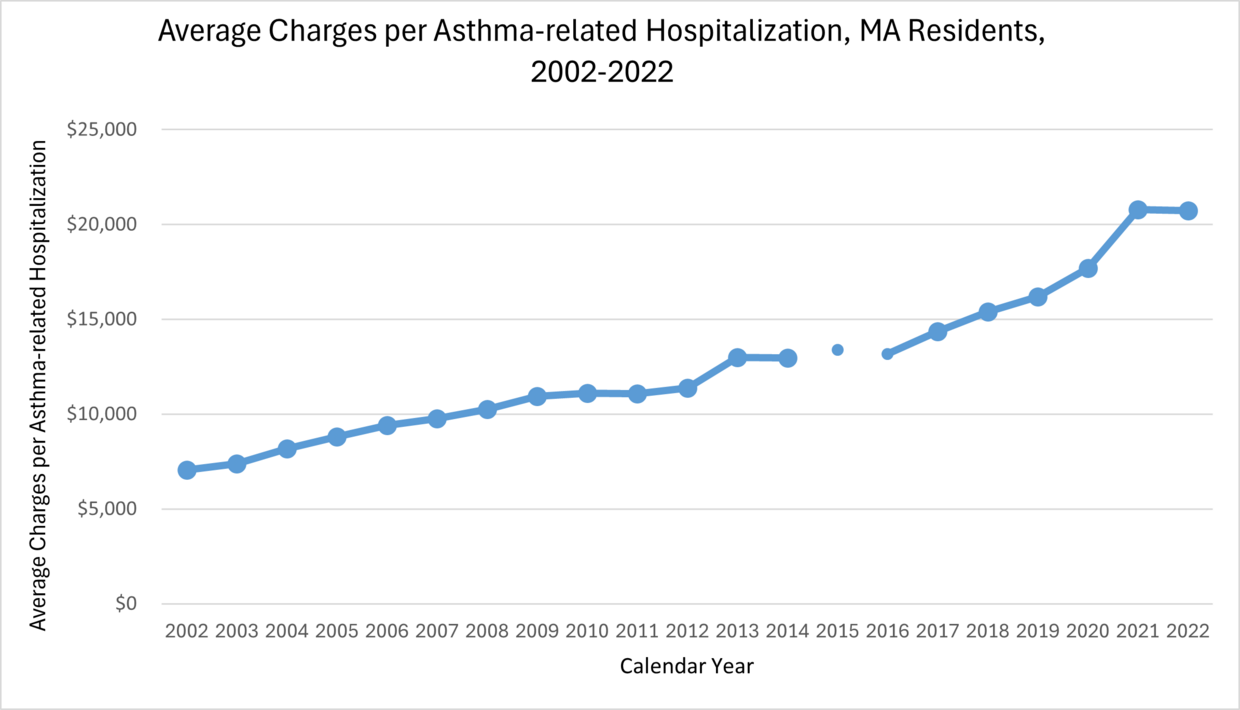
Data source: CY2002-2022 Massachusetts Hospitalization Discharge Database, Massachusetts Center for Health Information and Analysis
Note: In the figure above, estimates based on ICD-9-CM and ICD-10-CM are separated by no connecting line. Due to the use of the new ICD-CM codes, data from 2015 cannot be aggregated with years prior to 2015 for analysis. Results from 2020 were affected by the COVID-19 pandemic and we are still working to understand the full impact of the pandemic on these results. More information on the transition from ICD-9-CM to ICD-10-CDM can be found here: ICD-10 | CMS
Glossary
Age-adjusted rates:
Age-adjusted rates are the weighted average of the age-specific proportions. Age-adjustment is done to be able to compare population subgroups with potentially different age structures (e.g., Hispanic vs. White non-Hispanic)
Asthma control levels:
Asthma control levels are a way to categorize a person's asthma into "well-controlled," "not well-controlled," or "very poorly controlled." These levels are based on self-reported BRFSS data on a range of factors, including the frequency of symptoms and the level of interference with normal life. This definition was informed by the EPR-3 guidelines. For more details on the guidelines, please visit this website: Guidelines for the Diagnosis and Management of Asthma 2007 (EPR-3) | NHLBI, NIH
Asthma-related hospitalizations:
Hospitalizations with a primary discharge diagnosis of asthma
Asthma-related emergency department visits:
An emergency department visit with a primary discharge diagnosis of asthma
Current asthma:
Persons who answered “yes” to the questions “Have you EVER been told by a doctor or other health professional that you had asthma?” and “Do you still have asthma?”2
Expert Panel Report 3 (EPR-3): Guidelines for the Diagnosis and Management of Asthma:
set of national guidelines for asthma diagnosis and management developed by an expert panel commissioned by the National Asthma Education and Prevention Program (NAEPP) Coordinating Committee (CC), coordinated by the National Heart, Lung, and Blood Institute (NHLBI) of the National Institutes of Health that were created and published in 2007. For more details on the guidelines, please visit this website: Guidelines for the Diagnosis and Management of Asthma 2007 (EPR-3) | NHLBI, NIH
Free Care:
MA state fund that provides free or partially-covered healthcare services to low-income residents that are uninsured or underinsured (also known as the uncompensated care pool), which eventually became part of the Health Safety Net Program. For more details on the Health Safety Net, please visit this website: Health Safety Net | Mass.gov
ICD-9-CM:
The International Classification of Diseases, Ninth Revision, Clinical Modification—was the primary system used to code and classify medical diagnoses prior to the introduction of the ICD-10-CM codes in October 2015
ICD-10-CM:
The International Classification of Diseases, Tenth Revision, Clinical Modification—is used to code and classify medical diagnoses. For more details on ICD-10-CM, please visit this website: ICD-10-CM | Classification of Diseases, Functioning, and Disability | CDC
Lifetime asthma:
Persons who answered “yes” to the question “Have you EVER been told by a doctor or other health professional that you had asthma?”2
Not well-controlled asthma:
The classification of this asthma control level was informed by the EPR-3 guidelines. This classification is based on the frequency of symptoms and interference with normal life.
Prevalence:
The proportion of individuals in a population who have asthma at a point in time or during a given time period
Public healthcare programs:
An initiative or program that aims to provide healthcare services to individuals and is at least partially funded through public sources
Very poorly controlled asthma:
The classification of this asthma control level was informed by the EPR-3 guidelines. This classification is based on the frequency of symptoms and interference with normal life and represents a lower level of asthma control than not well-controlled asthma.
References
- 2022 MA Behavioral Risk Factor Surveillance System (BRFSS).
- 2022 BRFSS.
- 2021 BRFSS.
- MA BRFSS 2019-2021 Asthma Call-back Survey (Adults and Children)
- MA BRFSS 2019-2021 Child Asthma Call-back Survey
- CY2020–2022 Massachusetts Hospitalization Discharge Database, Massachusetts Center for Health Information and Analysis
- 2023 MA BRFSS
- MA BRFSS 2020-2022 Adult Asthma Call-back Survey
- MA BRFSS 2006-2010 Adult Asthma Call-back Survey
- MA BRFSS 2006-2010 Child Asthma Call-back Survey
- CY2002–2022 Massachusetts Hospitalization and Emergency Department Discharge Databases, Massachusetts Center for Health Information and Analysis
- CY2002–2022 Massachusetts Emergency Department Discharge Database, Massachusetts Center for Health Information and Analysis
- CY2002–2022 Massachusetts Hospitalization Discharge Database, Massachusetts Center for Health Information and Analysis
- CY2020-2022 Massachusetts Hospitalization and Emergency Department Discharge Databases, Massachusetts Center for Health Information and Analysis
- CY2020–2022 Massachusetts Hospitalization Discharge Database, Massachusetts Center for Health Information and Analysis
- CY2002–2022 Massachusetts Hospitalization Discharge Database, Massachusetts Center for Health Information and Analysis
- CY2022 Massachusetts Hospitalization Discharge Database, Massachusetts Center for Health Information and Analysis