
The Challenge
Governor Healey is encouraging schools to reach at least 60 percent participation in school breakfast programs by making breakfast more accessible and appealing to students. Strategies include offering breakfast at main school entrances, providing students with a second opportunity to eat breakfast during the school day, and promoting these options to students and families. Schools are also encouraged to incorporate locally grown fruits, grains and proteins, expand scratch cooking, and develop menus that reflect student preferences and feedback.
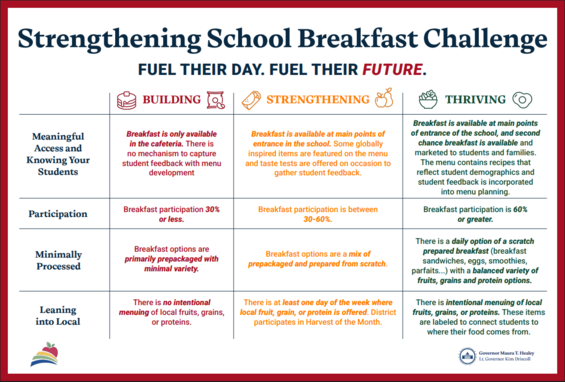
School Breakfast Challenge Poster
-
School Breakfast Challenge Poster, Open PNG file, 295.4 KB (English, PNG 295.4 KB)
Resources & Support for Schools
The administration is collaborating with Project Bread, New England Dairy and the Eos Foundation to provide schools with resources, technical assistance and funding opportunities to strengthen their breakfast programs.
Project Bread provides free resources and services to school meal providers, including one-on-one technical assistance, outreach strategies, promotional materials, tools to evaluate changes to breakfast menus and service models, and information about grant opportunities. These resources help schools identify barriers to breakfast participation and develop strategies to reach more students.
New England Dairy offers tools and resources to help Massachusetts schools enhance their breakfast programs. From lower-added sugar breakfast recipes to breakfast promotion toolkits, and funding, schools will find options to help build awareness, expand breakfast program offerings, and increase student participation.
The Eos Foundation offers grants of up to $20,000 per school and hands-on technical assistance to help districts launch or expand Breakfast in the Classroom programs. Funding supports equipment, operational expenses and incentives to make breakfast part of the school day, with the goal of reaching at least 80 percent of students each morning.
School Breakfast Program
When Massachusetts made universal free school meals permanent, it required all schools participating in the federal National School Lunch Program to also provide breakfast for their students.
Under state law, schools where at least 60 percent of students are eligible for free or reduced-price meals must offer breakfast after the start of the instructional day. Schools can meet this requirement through a variety of models, including breakfast in the classroom, grab-and-go options and second-chance breakfast in the cafeteria. The administration continues to work with districts to identify approaches that best meet the needs of their students.