
Description
West Monponsett Pond is a 310-acre Great Pond located off of Rt. 58 in Halifax. West Monponsett Pond is connected to East Monponsett Pond via a navigable culvert under Rt. 58. Collectively these waterbodies are known as the Monponsett Ponds Complex. West Monponsett Pond has an average depth of 7 feet, a maximum depth of 13 feet, and the waters are typically transparent to about 6 feet. The bottom of West Monponsett Pond is a mix of sand and rubble and drains into Stump Brook which is a tributary of the Satucket River. The eastern and southern shores are developed with residences while the western shore is largely wooded except for a few cranberry bogs.
Recreational access
The town of Halifax manages a concrete ramp, fishing pier, and parking area located off of Rt. 58 (Monponsett Street) on the eastern shore (get directions). Parking is available at the ramp for approximately 20 vehicles. Access into East Monponsett Pond is permitted by a culvert under Rt. 58 which fits most craft. Shoreline access is limited to areas adjacent to the ramp. However, fishing is prohibited within 50 feet of the ramp. Please contact the offices of the town of Halifax for additional information and/or restrictions to public access of West Monponsett Pond.
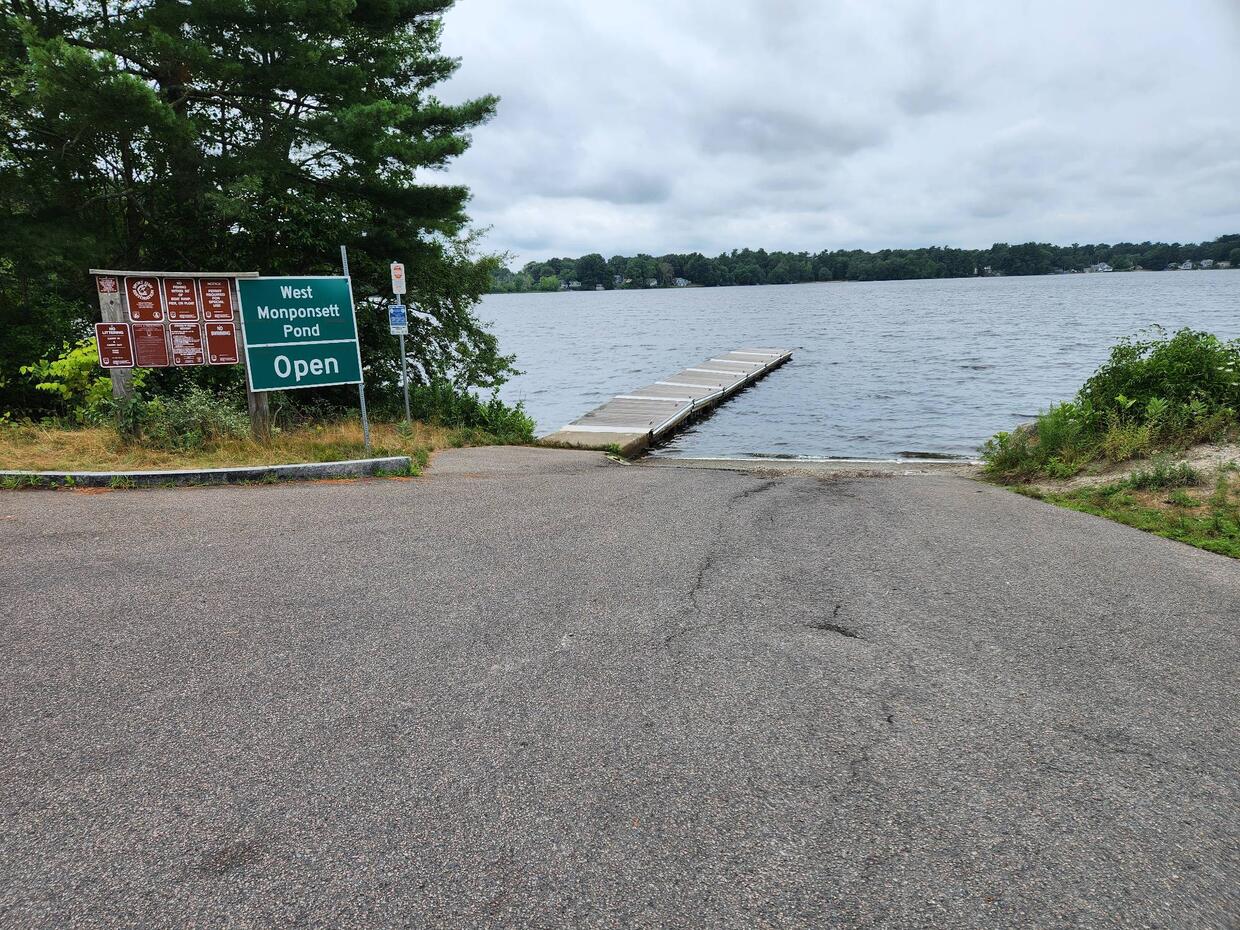
Boat ramp and dock for West Monponsett Pond.
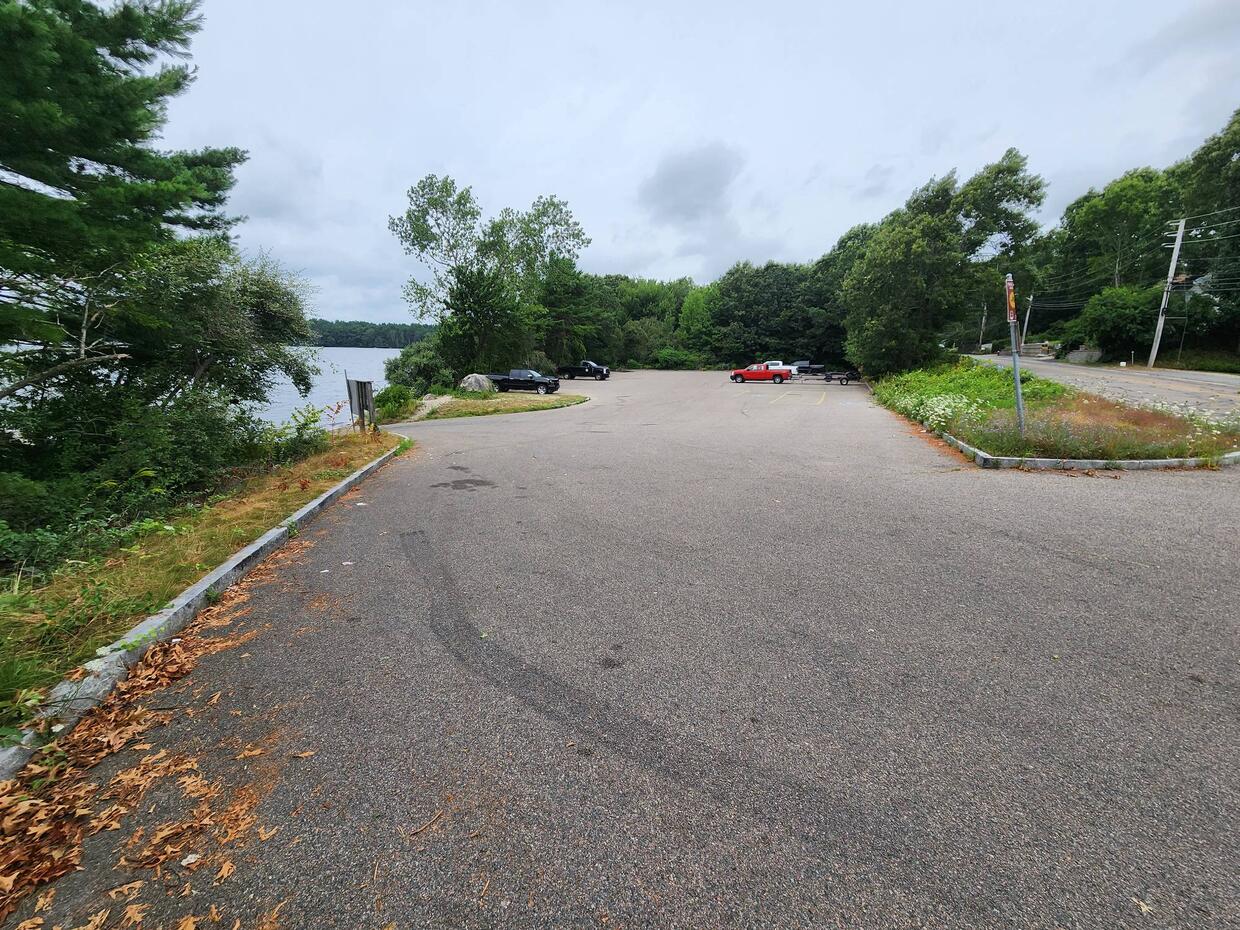
Parking for West Monponsett Pond off of Route 58.
Fish populations
The following fish species were found during MassWildlife surveys:
- largemouth bass
- chain pickerel
- yellow perch
- white perch
- black crappie
- pumpkinseed
- brown bullhead
- golden shiner
- American eel
Fishing
West Monponsett Pond offers good to excellent fishing for largemouth bass and is a popular site for bass tournaments. Panfishing for white perch and sunfish is also good. West Monponsett Pond has produced largemouth bass, chain pickerel, yellow perch, white perch, and black crappie that meet the minimum size for recognition by the Freshwater Sportfishing Awards Program.
More fishing resources:
Stop aquatic hitchhikers
Prevent the transport of nuisance species; clean all recreational equipment. Visit ProtectYourWaters.net to learn more.