- Division of Fisheries and Wildlife
- MassWildlife's Natural Heritage & Endangered Species Program
Media Contact
Media Contact, MassWildlife
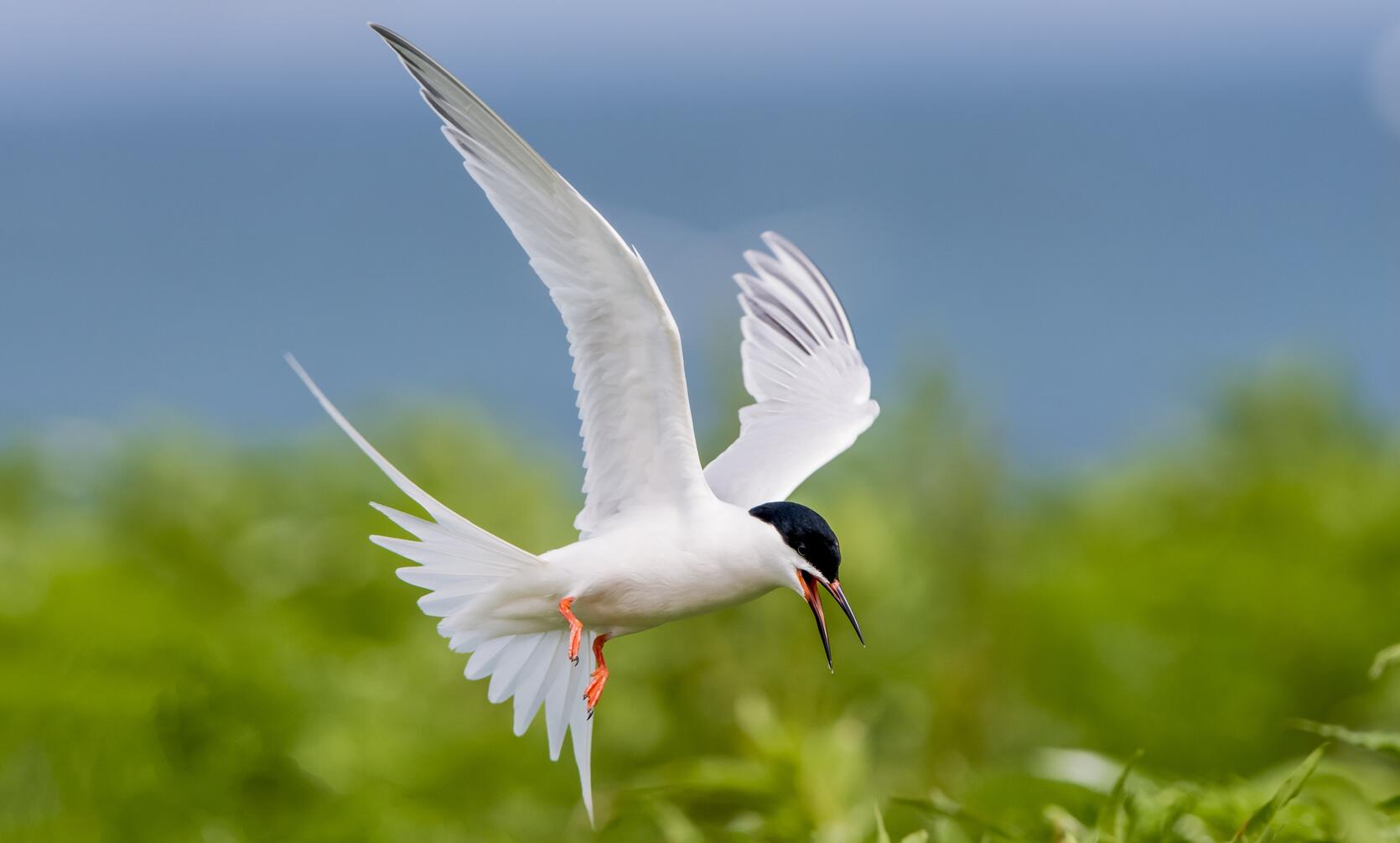
The roseate tern is Massachusetts’s most iconic—and only endangered— seabird, relying mainly on two offshore islands in the Bay State for breeding. Listed as endangered at both the federal and state levels, the species faces ongoing challenges from habitat loss and climate change, and its highly specialized diet increases its vulnerability. Decades of intensive protection and habitat management by MassWildlife and partners have led to a major conservation milestone. In 2025, roseate terns reached a record-high 4,010 nesting pairs in Massachusetts, a remarkable rebound from historic lows.
The roseate tern (Sterna dougallii) is a slender bird with a wingspan of about 30 inches. Its breeding range is mainly in tropical and subtropical oceans with a few scattered populations in temperate waters. Massachusetts supports the majority of the North American population. The roseate tern is a symbol of the state’s coastal biodiversity and even appears on one of the state’s conservation license plates alongside the North Atlantic right whale.
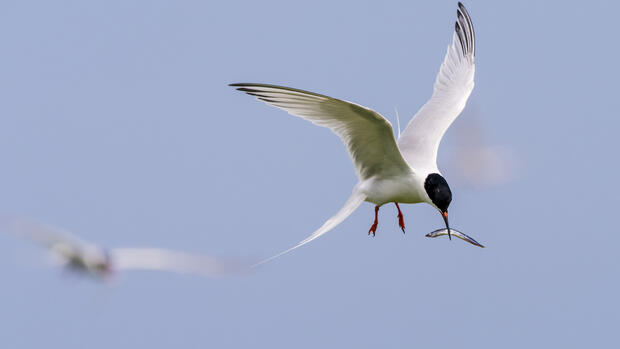
Although terns are often referred to as shorebirds and do nest along the shore, they are part of the seabird group because they rely primarily on the sea for food. Roseate terns flutter high above schools of fish, then plunge head-first, submerging to nab prey to eat on the spot or carry back to hungry chicks at nesting colonies miles away. Feeding flocks of roseate terns and common terns (Sterna hirundo), sometimes numbering in the hundreds, are commonly seen in Massachusetts waters from April through September. The small fish hunted by terns are often pushed to the surface by larger, predatory fish which are targeted by people. For this reason, these highly animated tern flocks serve as beacons to fishing boats.
Specialists in a shifting world
The roseate tern has the most specialized diet of any of the four species of tern that nest in Massachusetts. It favors sand lance (Ammodytes species), an eel-shaped fish that burrows in sandy ocean bottoms. Sand lance play a crucial role in marine ecosystems in the Northeast and are relied upon by whales, seals, and large fish such as cod and tuna. As the climate changes and marine species shift in response, persistence of the roseate tern and other sand lance-dependent species in Massachusetts may be determined in part by their ability to broaden their diets.
Roseate terns are also highly selective about where they nest. They are migratory birds, returning each spring to nesting grounds from New York to Atlantic Canada after a winter spent on the north and east coasts of South America. Roseate terns nest primarily on offshore islands, concentrating at just a few long-established sites. Two tiny, low-lying islets—Bird Island, owned by the town of Marion, and Ram Island, a MassWildlife-owned Wildlife Sanctuary in Mattapoisett—typically support over 95% of Massachusetts’ nesting roseate terns. With a combined area of only about 5 acres, these islets are two of the three largest roseate tern colonies in North America, supporting nearly 60% of the endangered population.
Turning the tide for roseate terns
Massachusetts’ outsized role in roseate tern conservation underscores the importance of continued action. Over the past three decades, MassWildlife and partners have worked to protect roseate and common terns on Bird and Ram islands. Each year, staff and volunteers install signs and fencing, build and deploy roseate tern nest boxes, remove nuisance vegetation, census the populations, and monitor nesting success. A major stabilization project at Bird Island from 2015 to 2018 addressed climate-change impacts by rebuilding and raising the surrounding stone revetment and adding sand and gravel to nesting areas, effectively doubling available nesting habitat.
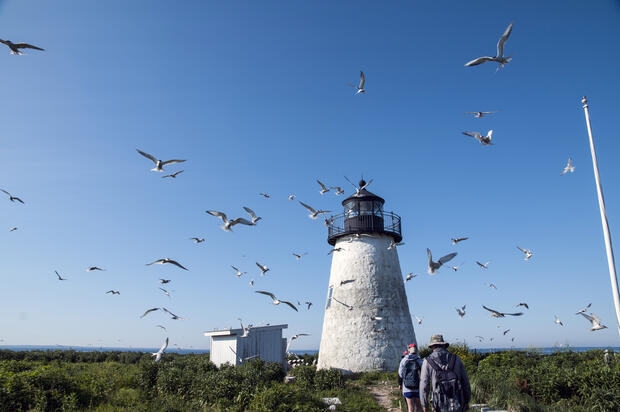
Persistence has paid off. In 2025, a record high 4,010 pairs of roseate terns nested at Bird and Ram—an astounding tripling of the population since 2013, when numbers were as low as when the species was listed as endangered. Preliminary data from other North American colonies indicate that the Bird Island colony was the largest at 2,807 pairs. Additionally, roseate terns outnumbered common terns at Bird Island for the first time since 1987.
Restoring rapidly-shrinking Ram Island is critical to keep the North American roseate population stable. MassWildlife, partners, and engineers are currently designing a project to expand nesting habitat and keep Ram Island above water for as long as possible.
How you can help
Large-scale restoration is critical for tern recovery, but simple actions by Bay State beach visitors are also vital for seabird and shorebird conservation. Like most wildlife, roseate terns need space. During the nesting season, never enter or bring pets to the colonies, where camouflaged eggs and chicks are on the ground. When terns fly up, leaving eggs and chicks exposed to the elements and predators, it is a signal that you are too close.
After the nesting season, from July through September, magnificent flocks of up to tens of thousands of roseate and common terns frequent Massachusetts shorelines, especially around Cape Cod, Martha’s Vineyard, and Nantucket. These birds originate from colonies all over the Northeast. They spend weeks feeding offshore to prepare for fall migration, occasionally returning to land to rest and feed still-dependent young. During this time, it is important for people to give tern flocks lots of room and ensure that dogs are leashed. This allows birds to reserve energy for migration and stay with their families instead of spending it fleeing from disturbance. This will increase the birds’ chances of surviving to alight on Massachusetts shores again in the spring.