- Division of Marine Fisheries
In 1925, a national typhoid epidemic caused by the consumption of contaminated oysters led to the closure of almost all of Boston Harbor to shellfishing. Since then, only specially licensed harvesters have been permitted into certain areas to access moderately contaminated softshell clams destined for a shellfish purification facility. This is about to change.
Thanks largely to the multi-billion-dollar clean-up of Boston Harbor, water quality has improved enough to reclassify certain areas of the harbor to Conditionally Approved, allowing shellfishing for direct human consumption. These areas include some of the most productive shellfish habitats in the Commonwealth in parts of Winthrop, Hingham, and Hull. This will allow both commercial and recreational shellfishers to harvest shellfish for their personal use or direct sale into commerce for the first time in a century. Not only will this be a tremendous boon to residents of the three towns, but also to other Massachusetts residents interested in recreational shellfishing.
Although some of these areas have been harvested over the years on a limited basis, the product (soft-shelled clams) was required to be sent to DMF’s shellfish depuration plant in Newburyport, where the clams were purified before they could go to market. While the depuration process makes shellfish safe to eat, it is expensive, labor intensive, and is limited to a few specially trained and certified commercial harvesters. As such, most residents of the Commonwealth could not benefit from this fishery. Reclassification in Boston Harbor will eliminate the need for this highly regulated and controlled process and allow this bountiful public resource to benefit the general public.
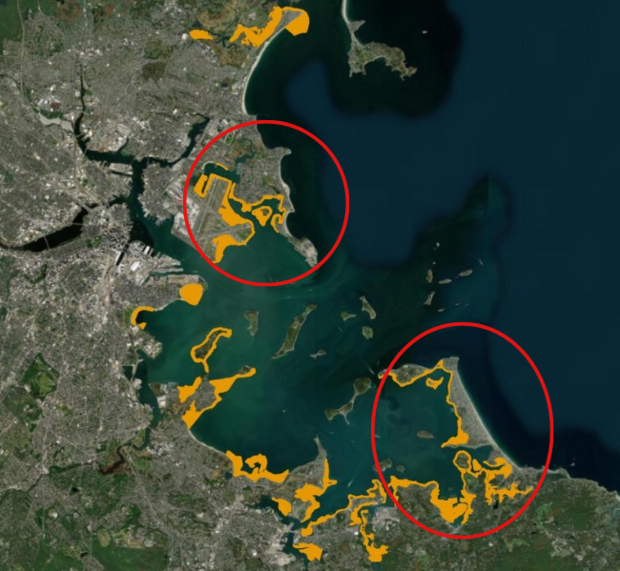
While DMF has completed its analysis demonstrating that large areas of the Outer Harbor are clean enough to be reclassified for direct harvest, the actual timing of the re-opening requires additional collaboration with the municipalities. As a home-rule state, Massachusetts is one of only two in the country that cedes management of shellfishing in clean waters to the local cities and towns. Because Winthrop, Hingham, and Hull have no history of managing shellfisheries, some additional steps are required before they can allow shellfishing in their communities.
First, a local management plan must be developed to specify how the fishery will be managed sustainably. Second, enforceable rules and regulations, as well as a local permitting system, need to be established. Third, a local Shellfish Constable must be hired and trained to oversee all aspects of the fishery, including enforcement. Additionally, in this case where the areas will be subject to routine closures following rainfall, sewage spills, and other unforeseen events that can negatively affect water quality, the towns will need to collaboratively develop a Conditional Area Management Plan (CAMP) with DMF. CAMPs specify when potentially harmful conditions exist, how temporary closures will be implemented, and who will be responsible for enforcement.
To assist the towns in developing these new procedures, DMF Shellfish Program staff have already met with officials from Winthrop, Hingham, and Hull, each of whom have initiated these time-consuming processes. We can expect these areas to begin opening in 2026 as these requirements are put in place.
As filter feeders, shellfish have the unique ability to accumulate any contaminants found in the surrounding water. Because of this biology, shellfishing for direct human consumption can only be allowed in areas with the highest water quality designation due to the risk to public health. As such, re-opening these areas to shellfishing is one of the strongest indicators yet that the decades-long Boston Harbor clean-up was a success. We hope this trend continues and we can re-open additional areas of Greater Boston Harbor in the future.
By Wayne Castonguay, Gloucester Regional Shellfish Supervisor