- Division of Fisheries and Wildlife
Media Contact
Media Contact, MassWildlife
With towering snowbanks and bone-chilling winds sweeping across the state, this winter is the snowiest and coldest since 2015. In some areas, February temperatures have dipped 6.8 below the average, making it difficult to image the benefits of such a blistering winter. Hardy New England wildlife are well adapted to survive the winter, and here at MassWildlife, our staff have found some unexpected benefits to the cold season!
Habitat
Prolonged cold can deliver surprising benefits to our forests and habitats. Several invasive species in Massachusetts are vulnerable to sustained cold temperatures. The southern pine beetle has become one of the most destructive forest pests in the Northeast. Their populations have been increasing in Cape Cod and the Islands for the past decade. This winter, temperatures remained cold enough for long enough to kill the majority of the overwintering population. Hemlock woolly adelgid—an aphid-like insect that attacks eastern hemlock trees—also saw a considerable decrease in population this winter. Despite being present in Massachusetts since the 1980s, New England winters have caused periodic adelgid population crashes and allowed hemlocks to persist in our forests.
MassWildlife conducts habitat management activities year-round, including during the winter. Many of our projects require selective tree removal to improve healthy open habitats that are home to declining wildlife. Tree removal work is carefully timed to minimize negative impacts to wildlife; we avoid bird and bat breeding seasons as well as locations with wet soils. A long, cold winter extends the amount of time available for projects that use heavy machinery because the ground remains frozen for longer.
Wildlife Research
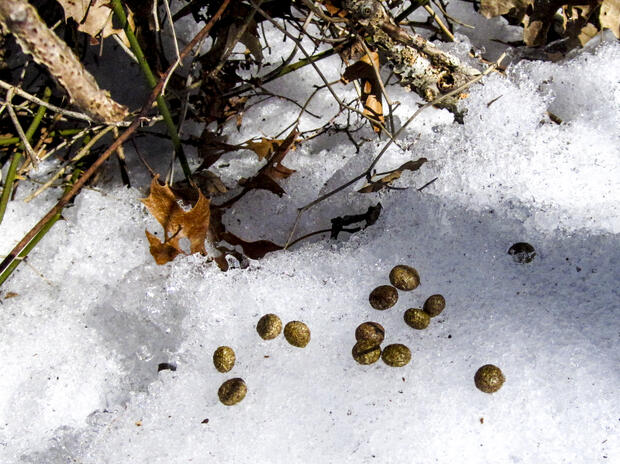
Every winter, biologists conduct pellet surveys for Massachusetts’ only native rabbit, the New England cottontail. By analyzing DNA found in fecal pellets, biologists can determine whether the droppings were left by a New England cottontail or a non-native eastern cottontail. This information gives us insight into the presence and abundance of New England cottontails within their habitat in southeastern Massachusetts and southern Berkshire County. When temperatures are low, DNA in the pellets remains intact longer, making testing more reliable. Additionally, fresh snow on the ground makes it easier to spot these small brown pellets among the dense young forests and shrublands where the cottontails live.
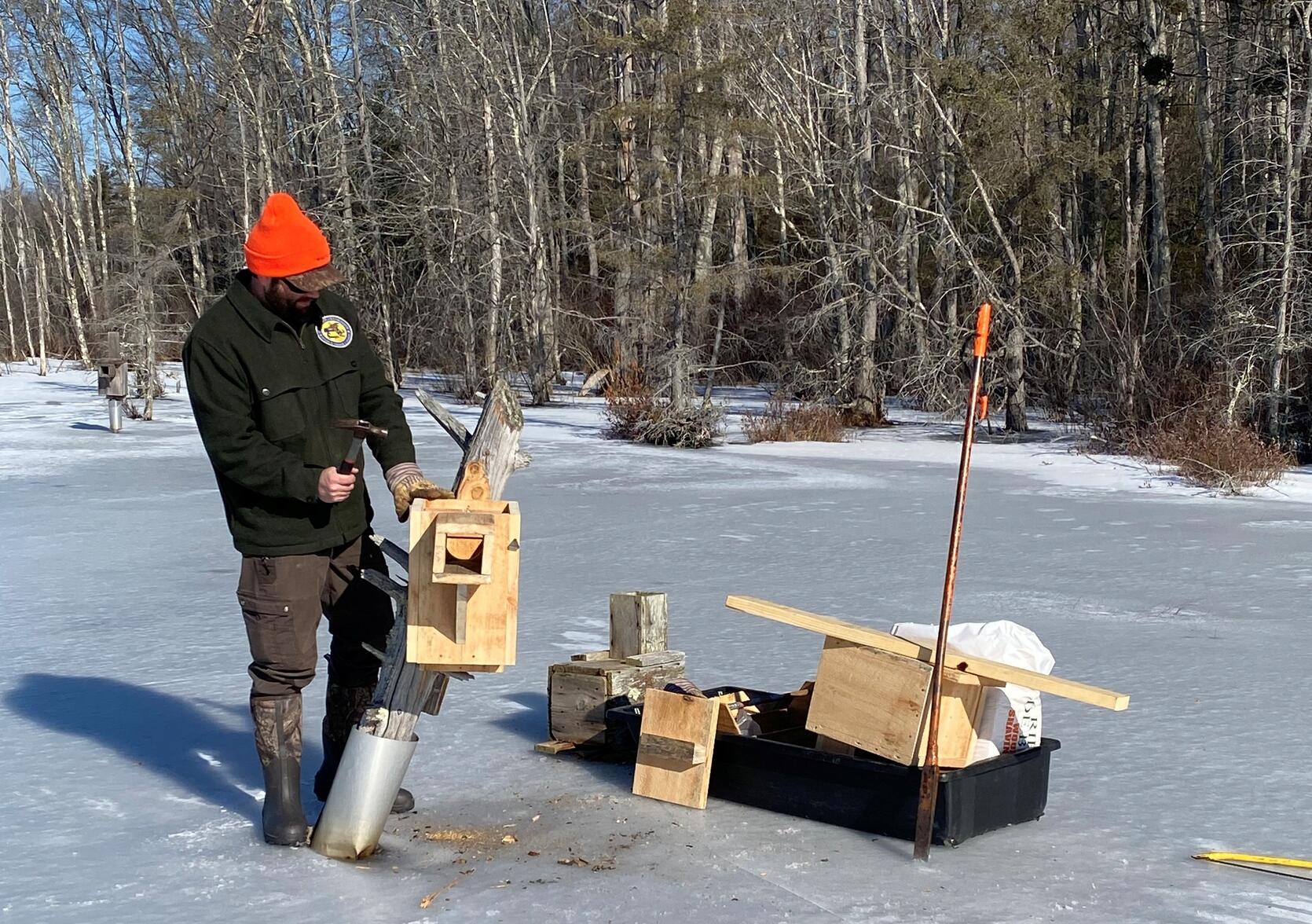
MassWildlife biologists also take advantage of the winter months to inspect wood duck nest boxes, which are installed near ponds and wetlands to offer supplemental nest sites for cavity-nesting waterfowl. By checking these boxes in winter, staff can tell whether they were used by wood ducks or another species, like hooded mergansers, the previous spring to lay their eggs. The thickness and condition of eggshell fragments in the box can reveal whether the eggs hatched successfully or if they were lost to predators before fully developing. Widespread ice cover on ponds and wetlands allowed staff to safely collect this important data more efficiently.
Outdoor Recreation
Strap on your boots and put on your best gloves because there is plenty for you to do outside during the winter too! Snow cover is a great tool for deer scouting. Exploring potential deer hunting areas a few days after snowfall allows for tracks and other signs of wildlife to build up. Bedding areas are also easier to find; if you find an impression in snow, especially if it has completely melted, the contrast of the brown ground will stand out against the snow and be even more visible.
Ice fishing is also a rewarding activity during colder winters. On a body of frozen water, the deeper parts are the warmest, and typically where fish spend their time. As winter progresses, deeper areas become depleted of oxygen, and fish start to rise and move towards inlets, where there is more oxygen and food.
Sustained snow cover also gives us opportunities to travel on the landscape in ways that we can’t during the warmer months. MassWildlife WMAs are a great place to snowshoe, cross country ski, and ice skate. It’s a great opportunity to heighten yourbird watching skills and identify tracks of a variety of species active during the winter. Before exploring, make sure you have a map and are up to date on ice safety!