
What is an experience, research, and design team?
An experience, design, and research (XDR) team has staff skilled in designing, evaluating, and improving constituent experiences. They focus both on digital applications and end-to-end services. XDR teams help government organizations deliver better outcomes for constituents. They also help produce more efficient business processes.
XDR teams are guided by a few principles:
- Design for constituents: Learn about people’s experiences using your services. Use what you learn to solve real problems and improve outcomes.
- Test, learn, and iterate: Test your ideas with people, and make changes based on what you learn. Deliver continuous, valuable improvements.
- Focus on the end-to-end experience: Understand and improve the full constituent journey, from the first “I need help” moment to the end result. Make improvements across channels and touchpoints.
- Work cross-functionally: Work across teams with diverse perspectives to solve problems. Deliver practical, high-impact solutions.
Many organizations already have staff who do some experience design and research work, or they bring in vendors when needed. But that’s not enough. A dedicated XDR team helps you work across your organization and focus on the most important constituent experience problems. You'll also build stronger people-centered design and development skills across staff and teams.
Why build an XDR team?
Building an XDR team can help you:
- Understand constituents’ needs and pain points so decisions are based on real insights (and that knowledge stays in-house)
- Regularly assess whether services work, where they break down, and why
- Design, test, learn, and improve in small cycles to reduce risk and speed up delivery
- Improve the quality and impact of key constituent-facing initiatives and programs
- Make services work smoothly from start to finish across online, phone, and in-person channels, including for the staff who deliver services
- Choose and manage vendors more effectively and get better value from service and technology partners
- Build lasting capacity to deliver and continuously improve people-centered services over time. Design skills spread across teams, not just designers.
Most XDR work fits into two foundational capabilities:
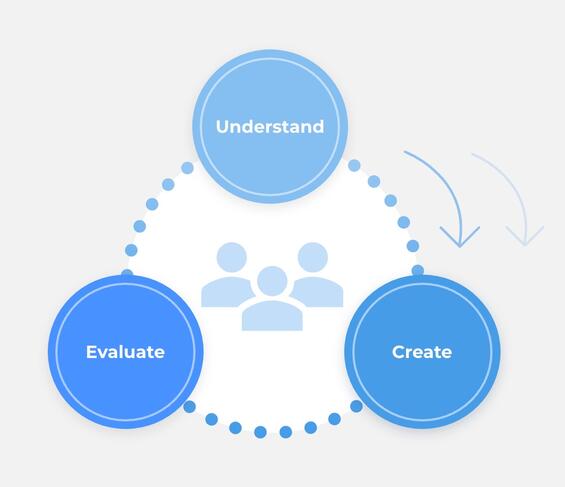
- Experience Research: Learn about constituents’ needs and goals. Evaluate how well services and solutions work for the people who use them.
- Experience Design: Create end-to-end experiences across channels (digital and non-digital) that work for everyone. It’s how we design solutions, interactions, information, and more.
XDR teams are most successful when they use an iterative people-centered approach. You understand, create, evaluate, improve, and then repeat the cycle. You want to “nail it before you scale it.”
Core roles to consider
The right team depends on your organization’s size and goals. Many teams start with a few core roles and grow from there.
- XDR lead: Plans the work, coaches the team, and helps integrate XDR and people-centered practices across the organization.
- Experience researcher: Conducts research that helps you understand and build for constituents. Learns from constituents and tests whether solutions work.
- Service designer: Maps the end-to-end service and finds friction points and opportunities to improve. Plans and organizes how the different parts of a service work together.
- Interaction designer: Designs user-friendly digital interactions (like task flows, page layouts, and prototypes). Creates products that helps people easily achieve their goals.
- Content strategist: Creates and organizes content so it’s easier to find, understand, and use across channels.
Some organizations also benefit from experience owner roles (for example, “the parent experience” or “the renter experience”) to help coordinate improvements across programs and channels.
How to get started
A common “getting started” model is to integrate 2-3 XDR professionals with foundational skills (experience research + service design + experience strategy) onto one strategic initiative so the team can demonstrate value quickly.
Choose a strategic, constituent-facing initiative where:
- People struggle to complete a task, or staff struggle to deliver it reliably
- There’s uncertainty about what to build, how to improve, or what matters most
- Leaders are open to learning and changing course based on evidence
The goal early on is to break the ice on constituent research and model a practical, iterative way of working.
- Start doing research, modeling journeys, and testing ideas
- Bring key partners “on the journey” so the approach spreads
The XDR team should focus on demonstrating the value of a people-centered approach for this project. Small, tactical successes should generate the trust to try more ambitious things.
Maturing your practice
Growing stronger
As your XDR team grows, you’ll add skills, expand support across teams, and build a shared knowledge base.
Add team members who provide the skills you need like interaction design and content strategy. As the team matures, it will expand the number of projects and teams it works with.
As you expand, you may:
- Build an experience strategy for the organization
- Help plan, lead, and execute iterative people-centered experience workstreams
- Grow your constituent experience research and measurement program and knowledge base
Getting integrated
Finally, you want to make XDR part of how you work, not a special project. You want to grow, organize, and integrate your XDR team to support the diverse groups of people and experiences your organization serves.
Consider hiring or assigning experience owners for key service or constituent experiences (the renter experience, the parent experience) to further integrate a people-centered approach into your service or initiative teams.
At this stage, mature teams often:
- Organize sub-teams to support different constituent experiences
- Create shared assets (like an experience research knowledge base, design patterns, and templates etc.)
- Help teams across the org adopt an iterative, people-centered approach
A maturing XDR team can begin to help you change the way your organization works. For example, it can influence program owners to move from expensive, inefficient designs to rapid iteration and improvement. It can ensure that teams rely on real data about their constituents to make decisions. It can help you develop strategic initiatives in a way that delivers more value for your constituents.
Pro tips for growing an effective XDR capability
- Focus XDR on a small number of prioritized initiatives (don’t spread the team too thin)
- Integrate continuous experience research and testing into decisions and delivery
- Measure experience quality and outcomes so you know what’s working and why
- Empower XDR to work end-to-end and across organizational boundaries
Guidance and resources
You don’t have to do this alone. The Constituent Experience Center of Excellence (CX COE) partners with organizations that want to build skills in experience design and research (XDR) and improve constituent experiences.
Depending on your needs, you can:
- Request hands-on enablement support for a constituent-facing initiative
- Explore the CX COE resource library
- Join communities of practice to learn and share with other state staff
- Get help hiring and growing a dedicated XDR team