
How Trees Ease Needs
MassEnviroScreen, Tree Equity Score, and the Vibrant Cities Lab
What do you think of when you hear about community needs? The answers you would hear from others would be as varied as the community members themselves. There are the traditional needs that have endured for millennia such as shelter, food and water. There are also needs that come with our more modern lifestyles such as electricity, internet and shopping. As communities transitioned from self-sustaining economies to global economies, their needs have changed and increased over time.
Societies have been organized to help humans meet their needs. With increasing work specialization, each person can acquire money to select the items that matter most to them. Beyond an individual’s efforts to satisfy needs, people also rely on governments to supply public benefits (such as clean water and air) especially in urban areas where these items can be in short supply. Due to the unequal distribution of green infrastructure such as trees and parks, some communities feel environmental burdens more than others.
To help identify communities in need, the Massachusetts Executive Office of Energy and Environmental Affairs (EEA) with their Office of Environmental Justice and Equity (OEJE) recently announced the release of the GIS-based mapping tool MassEnviroScreen to identify Burdened Areas. MassEnviroScreen is a series of tools and interactive maps that identify and prioritize communities facing the greatest environmental burdens in Massachusetts. It combines data on pollution exposure, climate risk, and population vulnerability, along with income-based criteria, to produce a cumulative burden score for each census block group within the state. The tool is designed to complement the Commonwealth’s Environmental Justice Population definition and support more equitable decision-making.
Burdened Areas are communities (i.e., census block groups) that meet one or more of the following criteria: has a MassEnviroScreen score of 75 or greater, or the annual median household income is 65 percent or less of the statewide annual median household income. This tool brings together 30+ data layers on environmental, climate, health, and socioeconomic data to help identify communities that experience higher environmental burdens and social vulnerabilities.
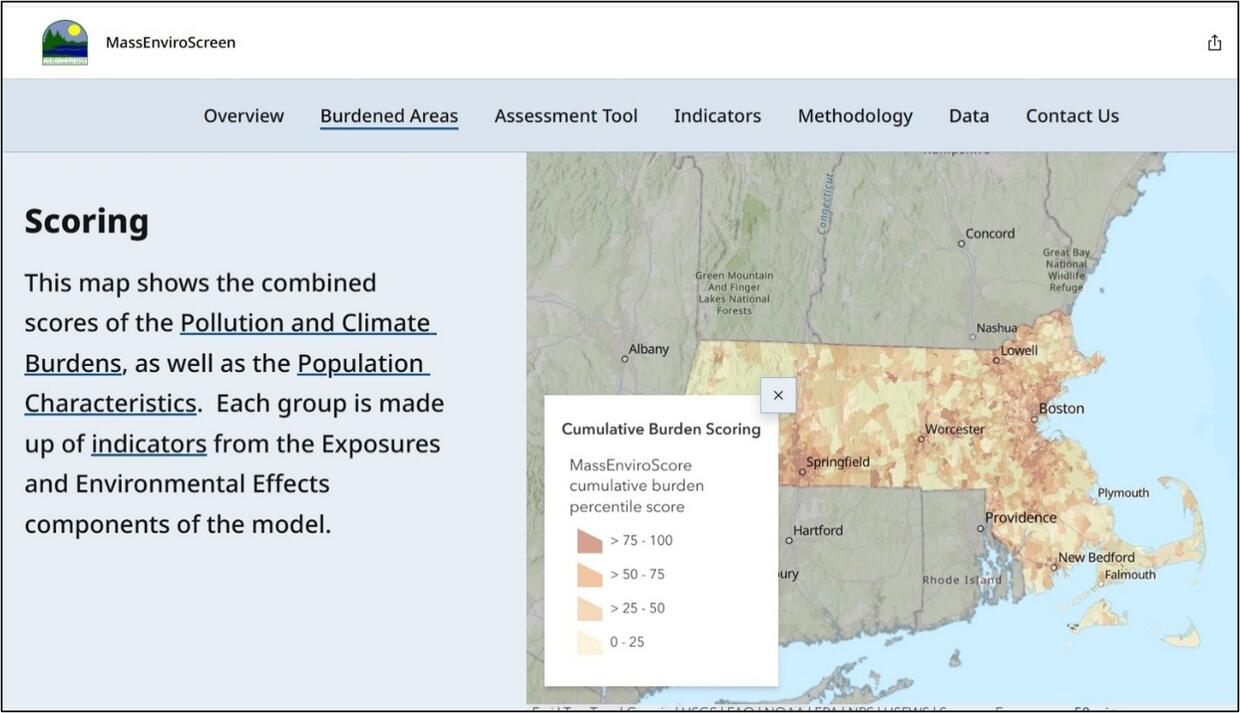
These data sets can be viewed individually or combined into a final MassEnviroScreen score that allows users to understand how communities experience burdens relative to others. These results are depicted in the form of maps so that different communities can be compared to one another. Percentile scores for MassEnviroScreen indicators allow for comparisons across census block groups but are not absolute values.
The MassEnviroScreen Assessment Tool allows you to go beyond viewing maps and dive deeper into analysis. Users can customize map layers, filter indicators, and create tailored outputs to meet their specific needs. With the tool, you can:
- Search by address, municipality, or census block group ID to retrieve detailed profiles
- Upload shapefiles or other compatible spatial data to analyze specific geographic areas
- Compare multiple areas side-by-side
- Export data tables and map visuals for presentations or reports
- Generate consolidated reports for multiple census block groups within a selected neighborhood, project area, or region
- Generate downloadable reports summarizing indicator values, cumulative scores, and key findings
The tool is designed to support cumulative impact analysis reports, grant applications, environmental reviews, and community engagement efforts. By identifying issues and organizing stakeholders, communities can advocate for more funding for green infrastructure to address these issues. Trees and open spaces should be included in urban planning efforts, as cities and towns address public works projects in their jurisdictions.
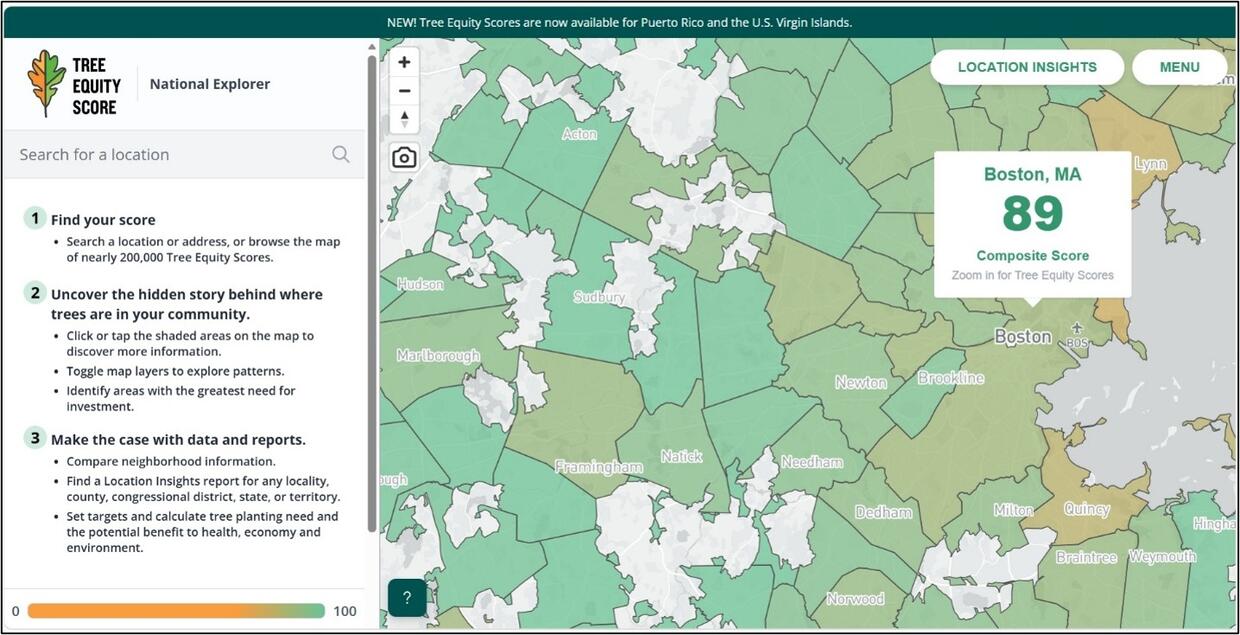
On a national level, the non-profit organization American Forests is also supplying communities with location information to align tree planting efforts with maximum benefits. Through their Tree Equity program, they are looking to ensure communities hit hardest by extreme heat and pollution are able to enjoy the benefits of urban trees including cleaner air and cooler streets. American Forests states, “Tree Equity means ensuring that every person, regardless of race or income, has access to the life-saving benefits that trees provide. With climate change accelerating and causing extreme heat to intensify, these benefits have never been more critical. Yet, the harsh reality in cities across the U.S. is that not everyone experiences the impact of heat equally.” Maps of tree cover disparities in U.S. cities are too often maps of income and race. Trees are often sparse in neighborhoods with more low-income families and people of color. Studies show that the neighborhoods that were redlined have fewer trees, preventing the people living there from reaping the benefits trees provide. Simply put, the Tree Equity program is about ensuring there are enough trees in every part of every city. To assist with this planning, they have developed a web-based tool, the Tree Equity Score. This score was created to help address damaging environmental inequities by prioritizing human-centered investment in areas with the greatest need. Anyone can use the Tree Equity Score to chart a course of action and join the movement to advance Tree Equity in urban communities nationwide and contribute to creating greener, safer and more resilient cities.
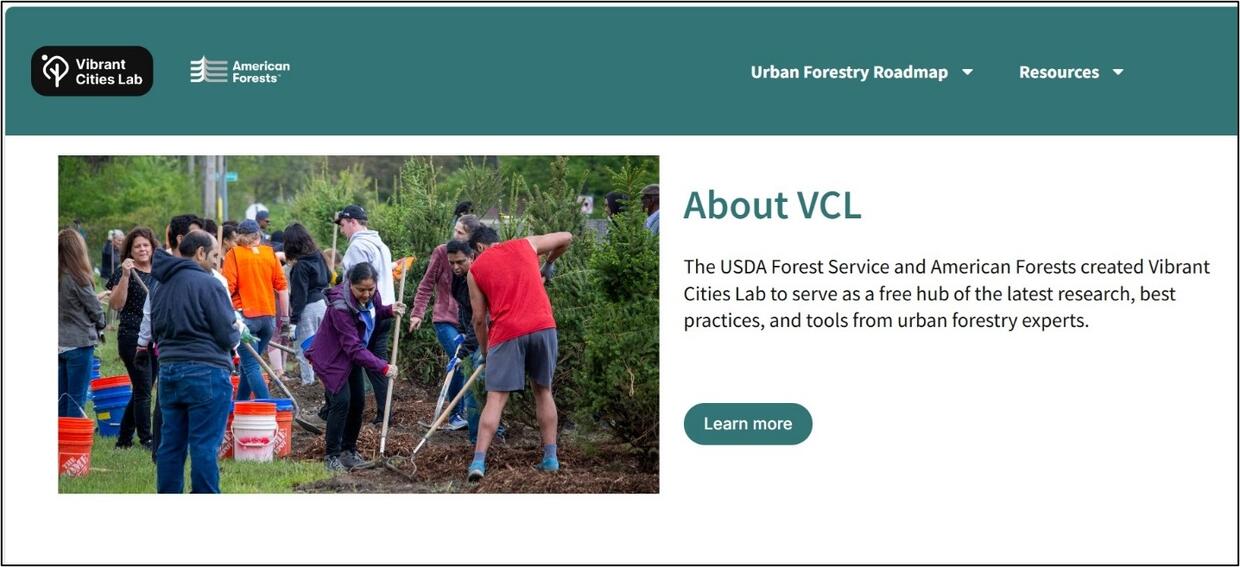
Making the case for improved urban forestry in your community can seem daunting. That’s why American Forests has also consolidated research and case studies into one easy to reach location, the Vibrant Cities Lab. The website can provide a starting point and guide to move toward a vibrant urban forest that will enrich your city for generations. There are sections such as “Building an Inclusive Coalition,” which discusses successful programs which weave together the different needs, opportunities, perspectives and preferences of many different stakeholders from residents, business, city agencies and institutions. Other sections focus on funding, stating that for most cities, the bulk of funding for urban forestry flows from municipal budgets. Depending on circumstances, city funding may not be consistent or predictable and that nearly all tree equity programs require supplemental funding.
With advancing online tools, governments and community groups are helping to identify where trees and greenspaces can deliver the most benefits. Combined with proper planning and the allocation of financial resources, cities and towns can use trees to help ease environmental burdens in the places where people live, work and play.
References:
Forester Focus
Arbor Day Poster Contest
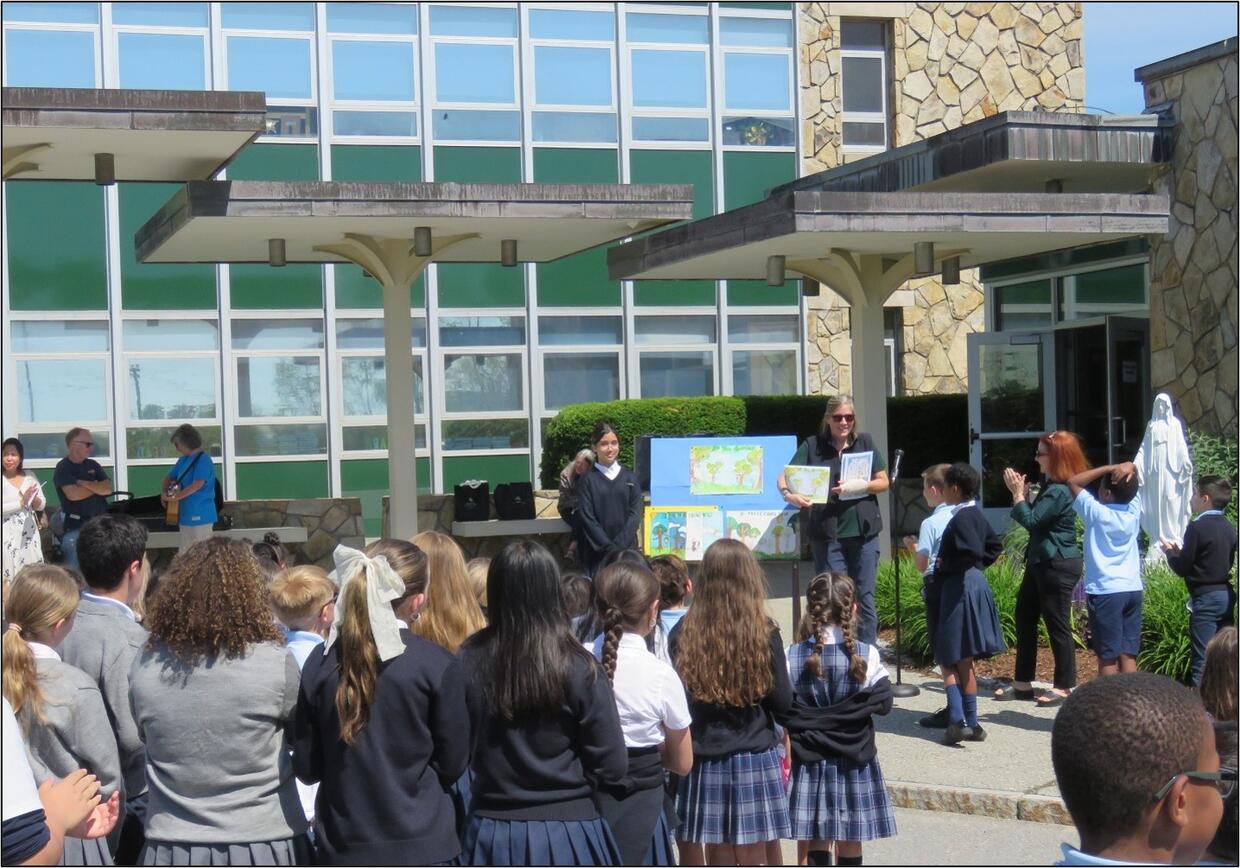
The Arbor Day Poster Contest is an annual student art awards program. The contest is a partnership with the DCR, the US Forest Service, and the Massachusetts Tree Wardens’ & Foresters’ Association. This year there was another wonderful round of artwork submitted by 3rd, 4th and 5th graders from around the state. This year’s theme was “If Trees Could Talk.”
Prizes were awarded for first place in each grade, with one student also selected as the grand prize contest winner.
- Rylee B. of St. Bernard's Elementary School in Fitchburg won Overall Contest 1st Place and 1st Place for 5th graders.
- Juliet M. of Joseph G. Luther Elementary School in Swansea won 1st Place for 4th graders.
- Zoe L. of Petersham Center School in Petersham won 1st Place for 3rd graders.
Each school holds its own poster contest and submits their winning poster to the DCR. Prizes include art supplies and a tree is planted at the winner’s school. Every year there is a theme to encourage students to think about trees in new ways and help them understand their relationship with the urban forest.
Poster Contest Rules:
- All entries must be the original artwork created by a student who is currently in the 3rd, 4th or 5th grade. A student may enter the contest only once.
- The poster must be related to the contest theme in some way. The current theme must be on the poster. All words must be spelled correctly and be written clearly.
- Entries must be no smaller than 8.5 x 11” and no larger than 14 x 18.”
- Entries must be done on paper that will allow for duplication, display, and framing.
Submit your school’s entry to DCR’s Urban and Community Forestry Coordinator, Julie Coop, as described on the “School Winner Report Form” on page six of the application.
For more information, visit Annual Arbor Day Poster Contest | Mass.gov
Climate Resiliency
Healey-Driscoll Administration Awards More Than $2.2 Million for Landscape Conservation Projects Across Massachusetts
Funding supports projects in Wareham, Worthington, and Colrain
Boston — The Healey-Driscoll Administration announced over $2.2 million to protect forests, drinking water supplies, and critical natural landscapes across Massachusetts. Through the Executive Office of Energy and Environmental Affairs' Landscape Partnership Grant Program, three projects in Franklin, Hampshire and Plymouth counties will conserve more than 1,600 acres of land, improve access to outdoor recreation, strengthen climate resilience and protect wildlife habitat.
The program also supports the Healey-Driscoll Administration’s "Forests as Climate Solutions Initiative", which aims to protect critically important forests. These initiatives are key components of the administration’s Mass Ready Act, demonstrating the Healey-Driscoll Administration’s commitment to promoting a clean environment that benefits residents. Land conservation is one of several strategies the state is advancing to reduce pollution, help cool communities, and prevent the loss of plant and animal species across Massachusetts.
“Conserving our natural lands and forests promotes clean air and healthier communities for generations to come,” said EEA Secretary Rebecca Tepper. “These thriving ecosystems are also beautiful places to get outside and enjoy all our state has to offer. This funding will ensure that counties in Western and Southeastern Massachusetts have the resources they need to continue to protect waterways and forests into the future.”
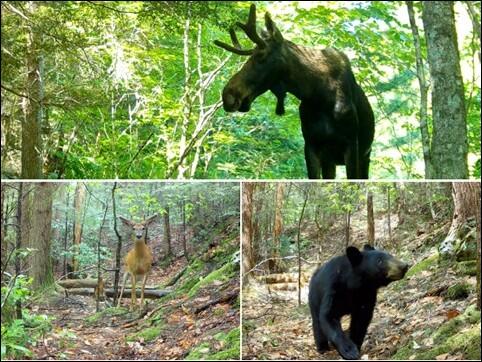
Established in 2011, the Landscape Partnership Grant Program supports large-scale, multi-partner projects that sustain ecological integrity, promote local economies that depend upon natural resources, and expand public outdoor recreational opportunities. This year’s awards will conserve over 1,631 acres and are part of the administration’s efforts to build climate change resilience and protect critical natural landscapes.
“The projects in Worthington, Colrain and Heath are a great investment in the communities and natural resources that make Western Massachusetts such a special place to live,” said State Senator Paul Mark (D-Becket). “By protecting forests, clean water, and public open space today, we’re ensuring future generations can enjoy them while strengthening our environment and local economy.”
"Our open spaces and waterways are an important part of what makes Wareham unique," said State Senator Kelly A. Dooner (R-Third Bristol and Plymouth). "Investments like this help ensure these places are protected and cared for years to come, and I'm grateful to everyone whose partnership helped make this project possible.”
"Protecting our forests and waterways is an investment in the health, resilience, and future of our communities,” said State Representative Lindsay Sabadosa (D-1st Hampshire). “This funding for the Jackson Brook Conservation Project will help protect wildlife, safeguard clean water, and expand access to the natural spaces that make Worthington and the Hilltowns so special. I'm grateful to the Healey-Driscoll Administration, Hilltown Land Trust, and all of the partners whose collaboration is helping ensure these landscapes are protected for generations to come.”
Species Spotlight
Amur maackia, Maackia amurensis
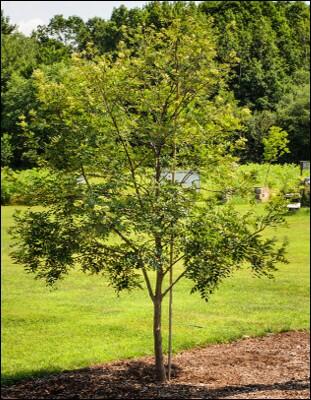
Native to China, Japan, Korea, and far-eastern Russia, Amur maackia is a member of the pea family (Fabaceae) that is often planted for its mid-to-late-summer flowering and for its toughness. In its native range, Amur maackia grows in a variety of conditions, including along stream banks in sandy soils that are sometimes flooded and sometimes dry. It has been observed growing taller in the wild than we typically see in cultivation, where the tree reaches about 20 to 30 feet tall. Its form is small and rounded, with arching branches. It is hardy in USDA Zones 4 to 7.
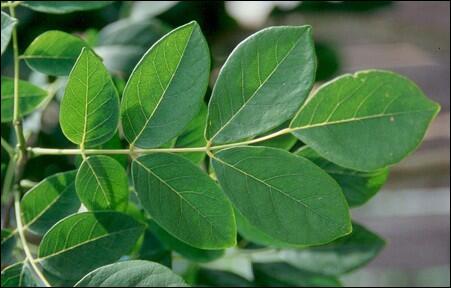
Amur maackia is alternate, with pinnately compound leaves—typically 7 to 11 leaflets that are opposite, with a terminal leaflet at the end. The leaflets are oblong, with a rounded base and have a blunt point at the apex. As the leaves emerge, they are gray-green and turn dark green. There is no fall color for the leaves. They typically drop off the tree after the first frost, while they are still green.
Buds have two scales and are 1/4-inch tall and dark brown. Twigs are stout and gray-brown to black. They have prominent, diamond-shaped lenticels. The mildly exfoliating, brown to copper-colored bark is another distinctive feature of this tree, though this characteristic can be quite variable.
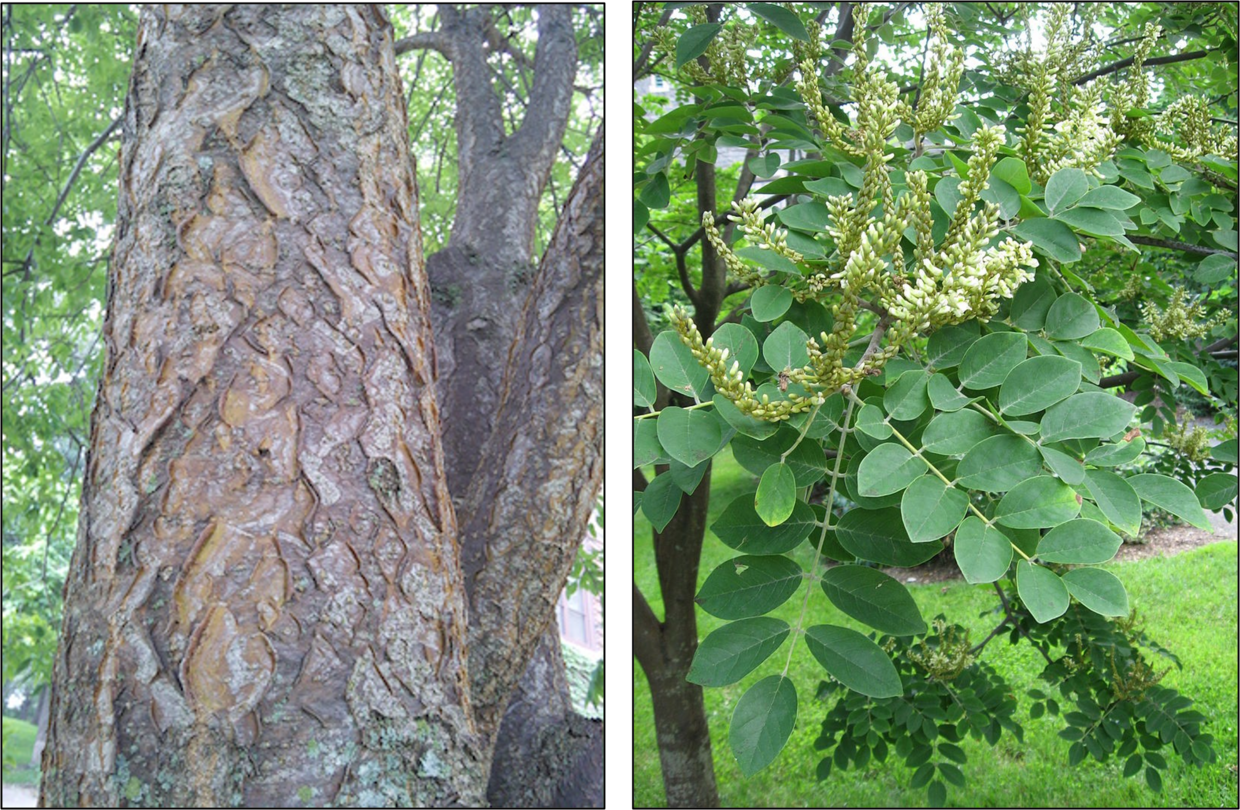
In June and July, the flowers of Amur maackia bloom in upright, racemes, 4-6 inches tall. The flowers themselves are about a half-inch long and are creamy-white. American horticulturist, Michael Dirr describes the flower color as “dull white”. They are not particularly showy, but they come into bloom at a time when few other trees are in flower. Fruits are flat, brown pods, two-to-three inches long.
Amur maackia does not have any significant pests or diseases in the U.S. and foliage often looks great throughout the growing season. Quite adaptable to different pH levels and easily transplantable, Amur maackia grows best in well-drained soils in sunny locations, though it tolerates a variety of conditions. As a member of the pea family, it also fixes nitrogen. Paul W. Meyer, writing in Arnoldia, states, “Maackia amurensis is outstanding in its promise as a tough and useful urban tree.”
Photos: UConn Plant Database, Missouri Botanical Garden, DCR
Tree City USA Event
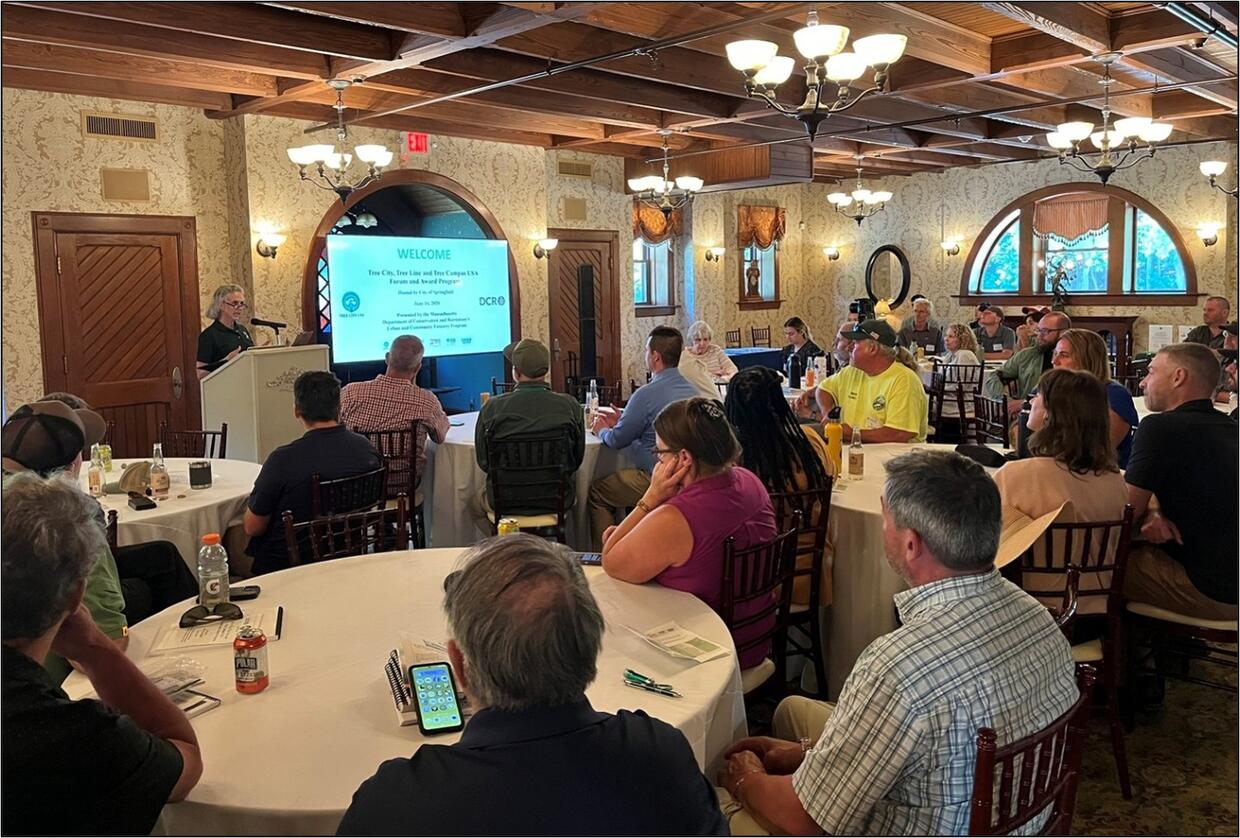
This summer, DCR invited Massachusetts’ Tree City, Tree Line, and Tree Campus award winners to historic Forest Park in Springfield to recognize and celebrate their achievements and commitments to planting and caring for trees.
The Tree City USA (TCUSA) Program is administered by the state of Massachusetts on behalf of the National Arbor Day Foundation and this year we recognized 81 Tree Cities, 7 Tree Campuses, and 2 Tree Lines for participating in this program. It was a milestone year for the TCUSA program, which was celebrating its 50th Anniversary! While we did not have any communities in MA celebrating 50 years, the Town of Wellesley celebrated 43 years, and the Towns of Millis and Stockbridge celebrated their first years as award winners!
Educational workshops for the event included an update on the City of Springfield’s Forestry Program by Alex Sherman, the History of Forest Park by Joeseph Carvalho and Non-Profit Tree Planting Partnerships with ReGreen Springfield by Dave Bloniarz. A hearty thank you to all of our presenters and congratulations to all of the award winners!
Clark University HERO Program Results
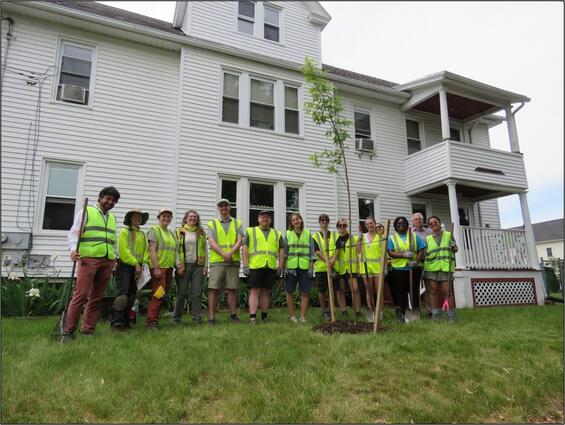
Clark University HERO students and staff planting trees with DCR in Chicopee.
This summer the Clark University Human-Environment Regional Observatory (HERO) program once again sent a group of well trained and energetic undergraduate students out into the field to measure trees planted by UCF’s Greening the Gateway Cities (GGC) program. This year’s measurements centered on the Cities of Chicopee and Lawrence, where there has been active planting for about 10 years. Tree survivorship remains high where there is active stewardship, and surviving trees are 80% likely to be in the highest vigor category that is measured. Students measured a variety of factors that could contribute to tree decline, including distance to impervious material and location relative to buildings. Maples, elms and linden had some of the highest vigor by species whereas some of the lower vigor trees were tupelo, dogwood and fir. DCR tree planting density was shown to provide more cooling effects as density increased, across study areas. Overall, DCR tree survivorship remains above the national average. A big thank you to the staff and students at Clark! We look forward to working together again next year.
News
Tiny forests are a growing trend in Mass. and beyond
In Cambridge, city officials have installed three Miyawaki forests and said they’re pleased with the investment. A pocket forest in Danehy Park grows atop a former landfill where crews once dumped debris from the MBTA’s Red Line extension. Detailed story information can be accessed here.
Why the state’s planting trees in people’s yards in Gateway Cities
The state’s Department of Conservation and Recreation has planted over 50,000 trees in these midsize cities from New Bedford to Pittsfield. A lack of green space can make those urban areas unusually hot in summers. The trees clean the air and, indirectly, lower utility costs for homeowners. Detailed story information can be accessed here.
Prune, Remove, or Lose Homeowners Policy?
Growing tree-related demands by insurance companies, and the critical role urban foresters and arborists play in effectively pushing back. Detailed story information can be accessed here.
On The Horizon
September 3 @ 12:00pm (Webinar) Yale Forest Forum speaker series
Explore the opportunities, challenges, and pathways that exist and are emerging in forestry innovation. This series will highlight speakers across a wide variety of forest research institutions, practitioner settings, and geographies.
September 10 @ 12:00pm (Webinar) Urban Forestry Today
Planning for Roots: Optimal Spacing, Minimum Thresholds, and Workarounds, with Andrew Koeser, PhD, Univ of Florida. Competition for space can be a key limiting factor for urban trees. Join Dr. Andrew Koeser, as he discusses spacing requirements as well as techniques that may be implemented to foster healthy tree root development.
September 22-24 (Event) Trees and Utilities Conference
Location: Oregon Convention Center in Portland, Oregon
This conference provides unparalleled opportunities to learn, connect, and innovate in the fields of vegetation management, sustainability, and urban forestry. Discover cutting-edge solutions, build lasting partnerships, and shape the future of utility and environmental collaboration.
October to December (Event) UMass Extension's Green School 2026
UMass Extension’s Green School is a comprehensive 60+ hour certificate short course that offers fundamental horticultural training in a compact time frame. Both experienced professionals as well as those new to the industry will benefit from this course. This is an entirely online course taught by UMass Extension specialists, UMass faculty, and distinguished guest instructors.
November 18-19 (Event) Partners in Community Forestry
Location: St. Louis, Missouri
This gathering unites passionate individuals, communities, organizations, and leaders to explore innovative solutions, share insights, and collaborate on the future of urban forestry. Join leaders across the industry as we focus on strengthening the bonds between people and trees, fostering sustainable practices, and creating green, thriving urban landscapes.