
Upgrading our roads and bridges
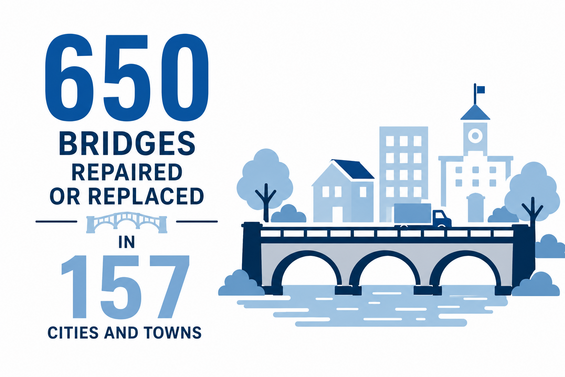
Strong transportation infrastructure plays a critical role in meeting the needs of residents, businesses, and visitors alike. The Healey-Driscoll administration has prioritized fixing and improving roads and bridges to keep traffic moving and ensure safety and reliability for everyone.
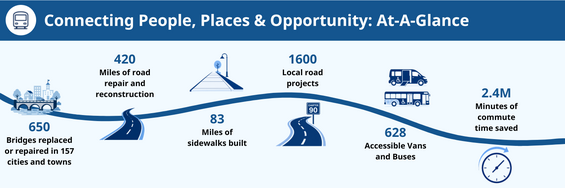
Massachusetts is home to thousands of bridges, many of which are aging and in need of repair or replacement. Along with federal funding, the administration’s capital investments have supported repair and replacement of bridges across the state. Notably, the state has committed up to $700 million in state funding to support the construction of the new Cape Cod bridges, the Sagamore and Bourne bridges. Because of the state’s commitment, MassDOT has secured $993 million in Bridge Investment Program funds and $372 million in Mega funds, (both federal grant programs administered by USDOT). MassDOT also has a $350 million commitment from the U.S. Army Corps of Engineers (USACE) for replacement of the Sagamore Bridge.
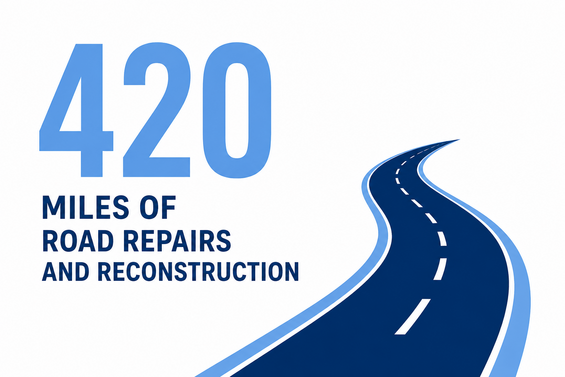
The administration has also prioritized keeping our roads in good condition. State programs such as the Roadway Improvements program (over $150 million in funding through the administration’s capital plan since Fiscal Year 2024) and the Roadway Reconstruction program (over $280 million in funding through the administration’s capital plan since Fiscal Year 2024) have combined with funding from the federal government to support modernizing and upgrading major corridors and interchanges across Massachusetts.
Providing healthy transportation options and reducing carbon emissions
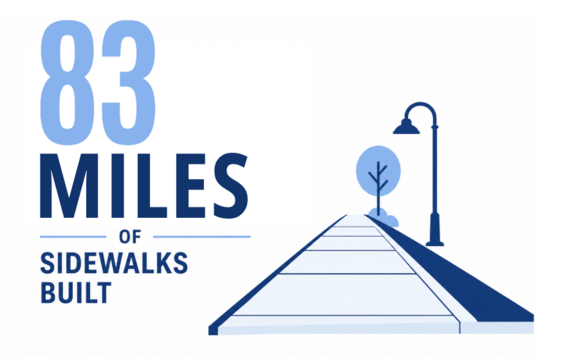
The administration’s capital investments support improved bicycle and pedestrian infrastructure so that all residents have safe, comfortable, and convenient travel options. Programs like the Bicycle and Pedestrian Program have built 83 miles of sidewalks in 140 cities and towns and 44 miles of shared use paths across 25 projects in 28 communities.
Supporting cities and towns in improving local transportation
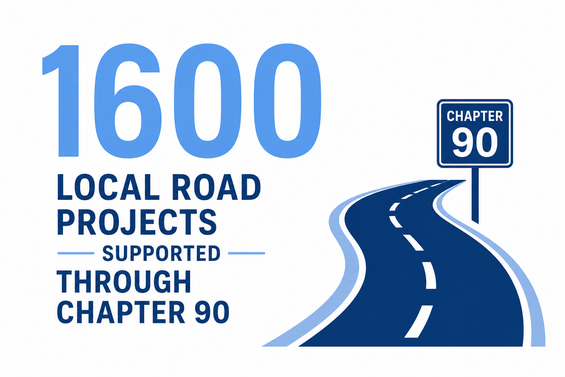
Chapter 90 supports local transportation capital improvement projects such as roadway construction and preservation projects. In 2025 and 2026, the Healey-Driscoll administration, in partnership with the Legislature, raised Chapter 90 funding to a historic $300 million each year, including $100 million in annual funding allocated by road miles to provide added benefit to rural and small communities.
Upgrading and improving public transportation infrastructure
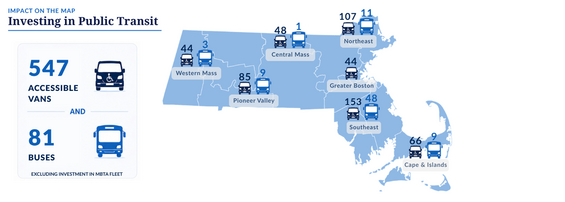
On the Map: Regional and Local Transit Investments in Buses and Accessible Vans
The Healey-Driscoll administration’s investments in non-MBTA public transit have improved service coverage and reliability across the state through investments in the state’s 15 Regional Transit Authorities (RTAs) and the Community Transit Grant Program. Modern and functional public transit is vital for both urban and rural communities, providing access to important economic, healthcare, and recreational opportunities for residents and visitors to the state. Through a combination of federal and state funding, 628 new vehicles have been put on the road to serve Massachusetts communities.
Investing in the MBTA
After decades of underinvestment, the administration has put the MBTA back on track, addressing long overdue maintenance needs, modernizing infrastructure, and creating a more reliable experience for riders across the 177 communities served by the MBTA.
Capital investments in track infrastructure have helped the MBTA fundamentally transform system reliability. Through the Track Improvement Program, the MBTA replaced over 250,000 feet of rail and eliminated over 220 speed restrictions, becoming completely restriction-free in December 2024 and effectively resolving 40 years of repairs in just 14 months.
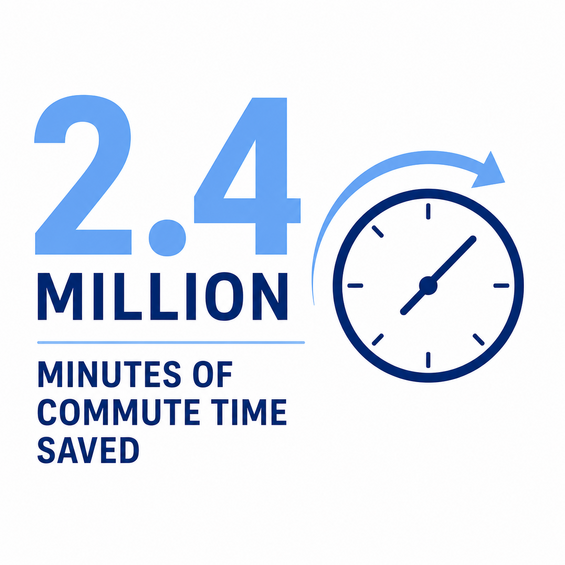
State of Good Repair investments translate directly into shorter trips and restored public confidence, saving riders 2.4 million minutes every weekday and generating nearly $1 million in economic benefit every day.
Modernizing the MBTA passenger fleet
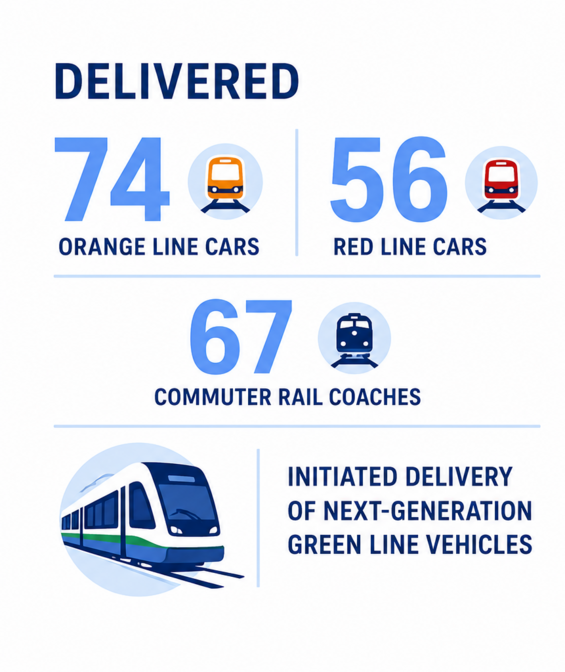
The MBTA continues to invest in modernized rail and bus fleets to replace vehicles that are nearing the end of their service life. New vehicles on the Red Line, Orange Line, Commuter Rail, and bus system are expanding capacity and enhancing accessibility. The MBTA is also procuring new Green Line light rail vehicles that will be safer, more accessible, and have upgraded technology for riders to get live information about their trip. To address the state's decarbonization goals, the MBTA has delivered its first 35 battery-electric buses and is investing in an initial fleet of seven battery electric multiple units (BEMUs) to support Commuter Rail service.
Together, these investments are improving safety, reliability, accessibility, and the rider experience across the MBTA system.
Expanding public transportation networks
The Healey-Driscoll administration has prioritized providing Massachusetts residents with more affordable, reliable, and convenient ways to get around the state.
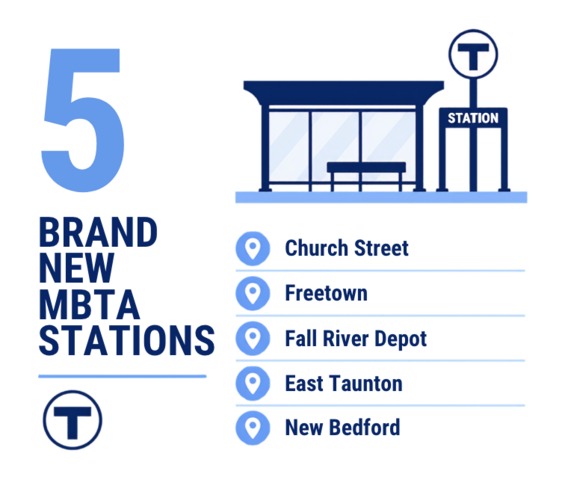
By expanding Commuter Rail service, the administration has improved access to jobs, housing, and other vital connections. The South Coast Rail project, completed in 2025, and extends Commuter Rail service to Taunton, New Bedford, and Fall River on the Fall River/New Bedford Line (formerly the Middleborough/Lakeville line). Six new, fully-accessible stations (five funded by Massachusetts state capital investments) were built along with many critical infrastructure upgrades. This expansion brings passenger rail service to the South Coast for the first time in 65 years.
West-East Rail Progress
The Healey-Driscoll administration has committed to better connecting Western and Eastern Massachusetts by implementing West-East Rail, and MassDOT has achieved major milestones towards that goal. The implementation strategy includes aggressively competing for federal grants while advancing vital projects with state funds, including enabling work for the following:
- Inland Route – two daily passenger rail round trips between Boston, Springfield, and New Haven, CT – by 2030
- Service Development Plan to expand service west from Boston to Albany via Pittsfield
- Design of the Springfield Area Track Reconfiguration Project
- Design for rail corridor capacity projects in the Pittsfield area
- Planning and design study for a Palmer Station
| Last updated: | June 26, 2026 |
|---|