
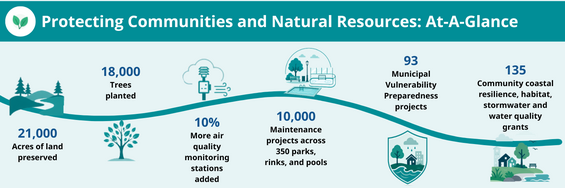
Preserving nature and improving public health
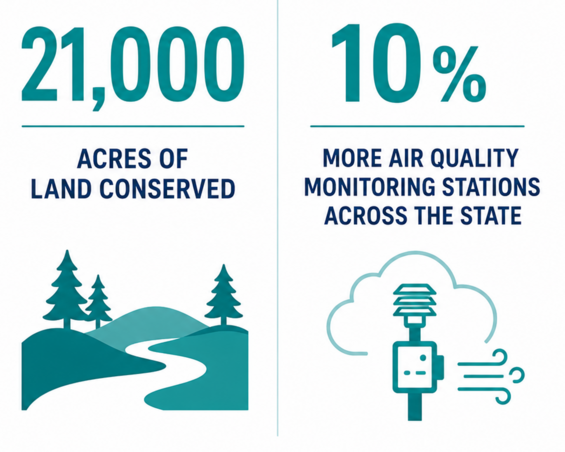
Caring for Massachusetts’ natural resources is vital for creating spaces where people can enjoy nature and stay healthy. The Healey-Driscoll administration’s capital investments have:
- Protected water and air
- Helped to cool neighborhoods
- Improved quality of life
- Prepared communities to adapt to the impacts of climate change
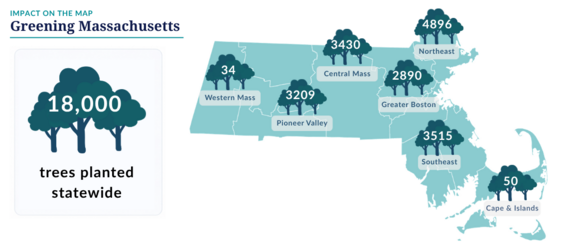
Healthy forests and tree canopy—particularly in urban and developed areas—provide important environmental, public health, and climate benefits across Massachusetts. Trees help improve air and water quality, reduce flooding and extreme heat, store carbon, and enhance quality of life. Investments in tree planting and stewardship are helping create greener, healthier, and more resilient communities throughout the state.
Keeping public outdoor spaces safe and well-maintained
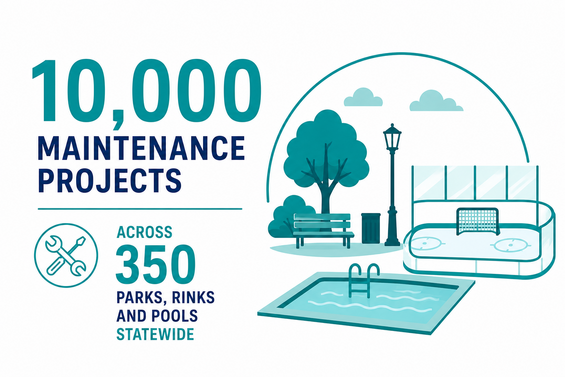
Massachusetts is home to a diverse group of public lands, including forests, parks, trails, ice rinks, pools, playgrounds and parkways. The Department of Conservation and Recreation (DCR) manages 450,000 acres of public spaces, providing residents with recreational opportunities and access to the outdoors.
Investing in the maintenance of our beautiful landscapes and accessible recreational facilities helps strengthen our communities and drive our economy. Capital investments are helping to build a healthier, more resilient Massachusetts where all residents and visitors can relax, reflect and feel a sense of belonging in our open spaces and public lands.
Impact Spotlight: Constitution Beach Playground Becomes More Accessible and Resilient
The Department of Conservation and Recreation (DCR) completed a $1.1 million reconstruction of the Constitution Beach playground, creating a modern, accessible destination for East Boston families. The project replaced outdated equipment with durable, coastal-ready play structures, added accessible parking, and installed an ADA-compliant play surface. By relocating the playground farther from the shoreline, the project also created space for a new coastal dune that helps protect the beach from erosion and strengthens long-term climate resilience.
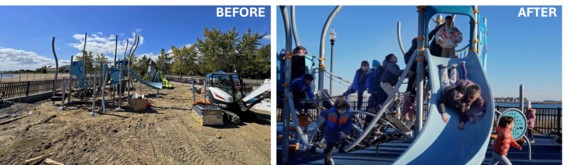
Photo credit: Department of Conservation and Recreation (DCR)
Protecting communities from climate impacts
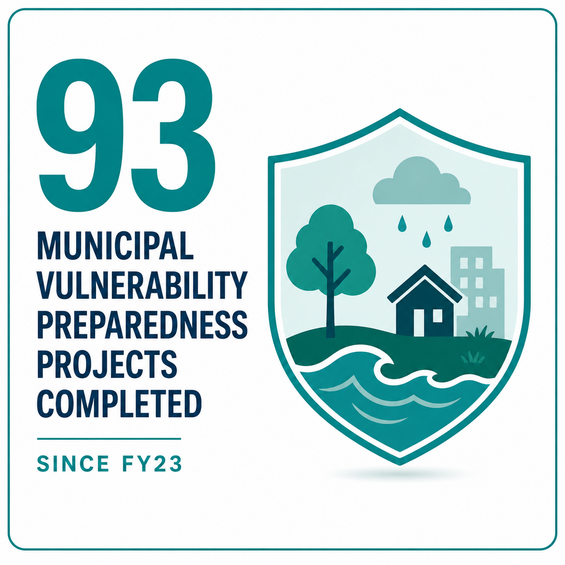
The Municipal Vulnerability Preparedness (MVP) Program helps communities protect against climate impacts such as flooding, extreme heat, drought, and severe storms. Since taking office, the Healey-Driscoll Administration has provided approximately $151.6 million (over $142.2 million for action grants and over $9.4 million for planning) for the program. Through the MVP program, municipalities and Tribal Governments receive funding to assess climate risks and implement resilience projects. Communities that complete the MVP planning process earn an MVP Community designation and become eligible for MVP Action Grant funding.
These investments support on-the-ground improvements across the state, including:
- Creating shaded public spaces to help residents stay safe during heat waves
- Restoring wetlands that reduce neighborhood flooding
- Advancing safer, more affordable housing in less vulnerable areas
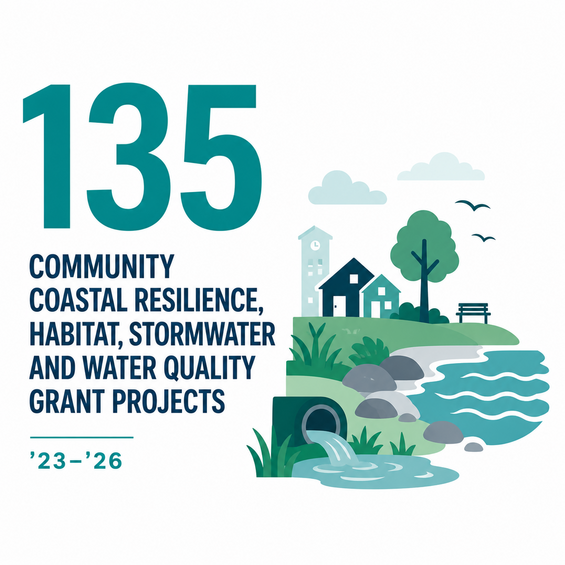
The Healey-Driscoll Administration is investing in projects that strengthen Massachusetts’ coastlines and reduce flood risks through Coastal Zone Management’s Coastal Resilience, Coastal Habitat and Water Quality, and Regional Coastal Resilience Grant Programs. These investments support:
- Marsh and dune restoration
- Living shorelines
- Stormwater improvements
- Nature-based solutions that protect homes, infrastructure, and natural resources from flooding, erosion, and rising sea levels
Impact Spotlight: Framingham Strengthens Flood Protection and Community Access
With support from the MVP Program, the City of Framingham transformed a flood-prone wetland area into a stronger natural defense against extreme weather. The project removed an earthen berm that restricted water flow and restored surrounding wetlands, stream channels, and streambanks, allowing the landscape to better absorb and manage stormwater during heavy rain events.
The project also improved access for residents by replacing the berm with an elevated, ADA-accessible boardwalk that safely connects neighborhoods to community amenities. Located in an environmental justice neighborhood, the boardwalk creates new opportunities for recreation, education, and outdoor connection while helping protect nearby homes, roads, and infrastructure from flooding.
Video produced by MEDIABOSS and the City of Framingham
| Last updated: | June 26, 2026 |
|---|