
Quick facts
ILF Funding: $1,395,000
ILF Service Area: Coastal-North
Project Location: Rowley, MA (latitude: 42.771789, longitude: -70.874533)
Project summary
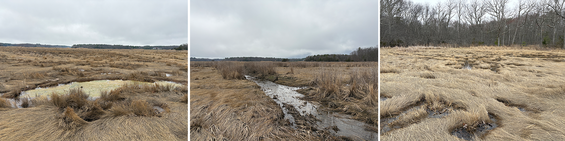
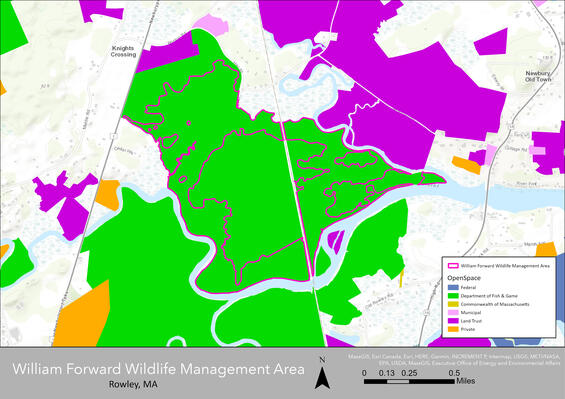
MassWildlife requested In-Lieu Fee funding to restore about 390 acres of salt marsh. The marsh is part of the William Forward Wildlife Management Area. This project is part of the Great Marsh Ecosystem Recovery Project. Farming and mosquito control have used ditches to move water out of marshes for many years. When the salt marsh dries out, it decomposes. Now, rising sea levels are increasing marsh flooding. Salt marsh plants are dying because of the flooding. MassWildlife will use a 4-tiered approach to restore this area. It focuses on managing water levels and improving nesting places for rare birds. Saltmarsh sparrows need dry areas to nest. MassWildlife will place cut grasses in ditches. The grasses trap sediments and raise the ground level. This will prevent the marsh from drying too much. In other places, MassWildlife will dig small, shallow channels to drain pools of water. Salt marsh plants will be able to grow and spread in these areas. Sediment from the channels will be used to build nesting mounds. These mounds will stay dry during high tides. It is a priority project to meet state goals to protect nature and wildlife.
Ecological attributes
- This site is an Area of Critical Environmental Concern.
- BioMap Priority Natural Communities and Aquatic Core Habitat.