
Overview
As part of our audit work relating to MSBA’s Green Schools Program, we reviewed 34 projects for their compliance with Leadership in Energy and Environmental Design (LEED) or Northeast Collaborative for High Performance Schools (NE-CHPS) certification requirements. Of these 34 projects, 30 pursued LEED certification, while 4 pursued NE-CHPS certification. Our audit provided insights into trends in sustainability performance across the projects and highlighted areas where additional guidance or incentives could help improve future outcomes.
LEED Certification
LEED-certified projects must meet certain prerequisites and achieve points across several categories, including Sustainable Sites, Water Efficiency, Energy and Atmosphere, Materials and Resources, and Indoor Environmental Quality. Each project’s total points determine its certification level: Certified, Silver, Gold, or Platinum.
We reviewed a total of 31 LEED scorecards, representing 30 unique projects. One project generated two scorecards because it included multiple buildings, each evaluated separately under LEED. Of the 31 scorecards, 10 were completed using Version 1 of the LEED form, and 21 used Version 2, reflecting updates to the rating system that revised the categories and scoring methods.
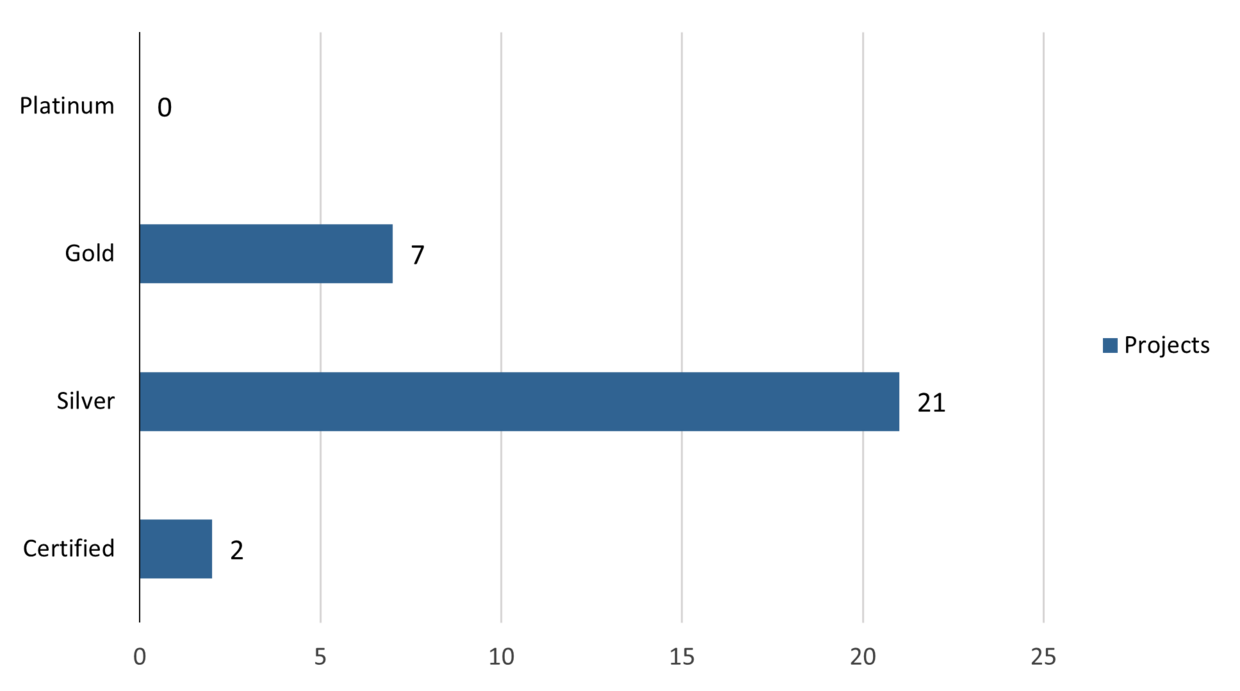
Of the 30 projects, 2 (6%) achieved LEED Certified, 21 (68%) achieved LEED Silver, 7 (26%) achieved LEED Gold, and no projects achieved LEED Platinum. The chart below illustrates the distribution of LEED certification levels across the 30 projects.
LEED Certification Levels
Across the 21 projects scored using Version 2 of the LEED scorecards, we identified the following trends in credit achievement:
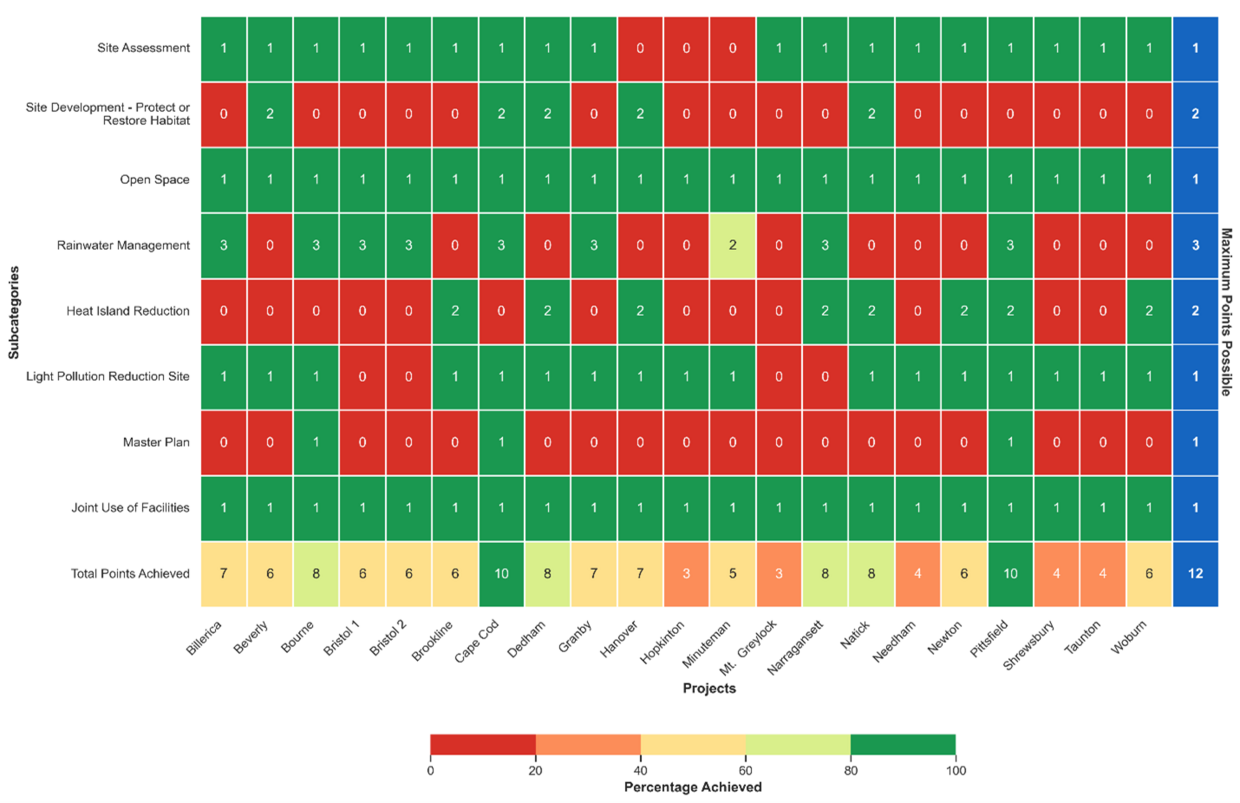
- Sustainable Sites: All projects earned credits for “Open Space” and “Joint Use of Facilities.” No projects achieved credits for “Neighborhood Development Location” because the credit does not generally apply to school sites.
- Water Efficiency: Most projects earned credits for “Outdoor Water Use Reduction” and “Water Metering.”
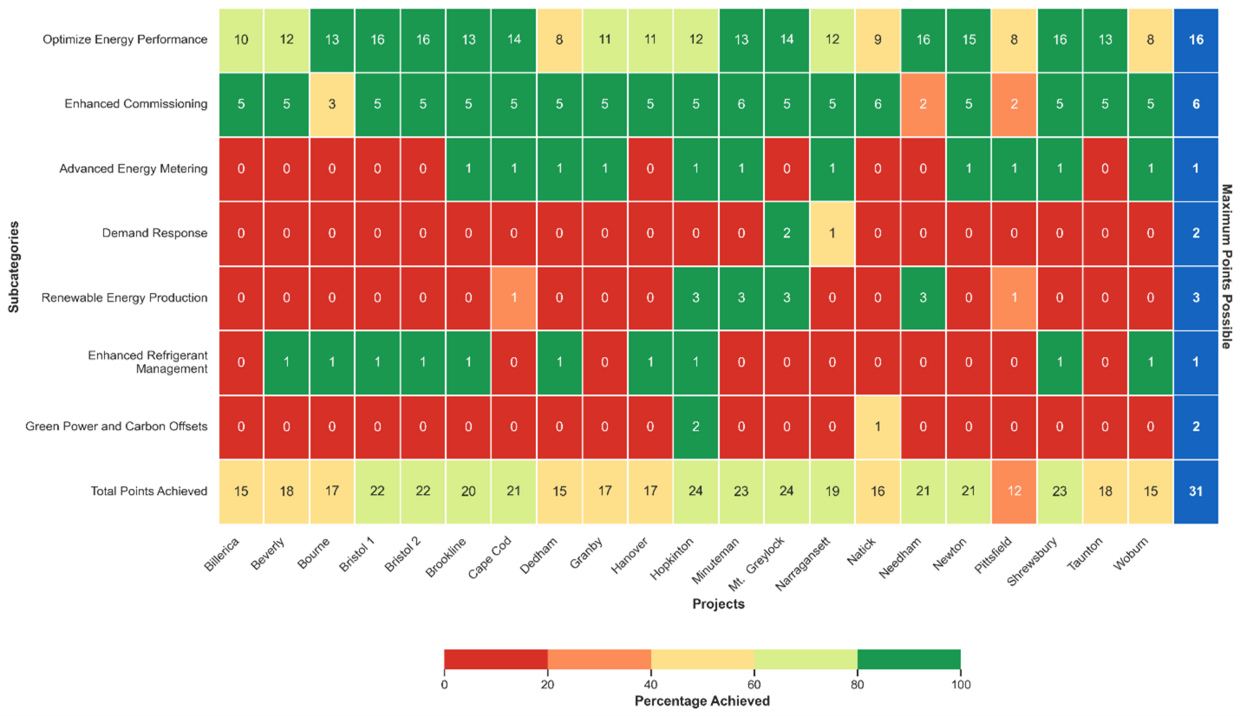
- Energy and Atmosphere: Most projects achieved “Enhanced Commissioning,” while few achieved credits for “Renewable Energy Production” and “Green Power and Carbon Offsets.”
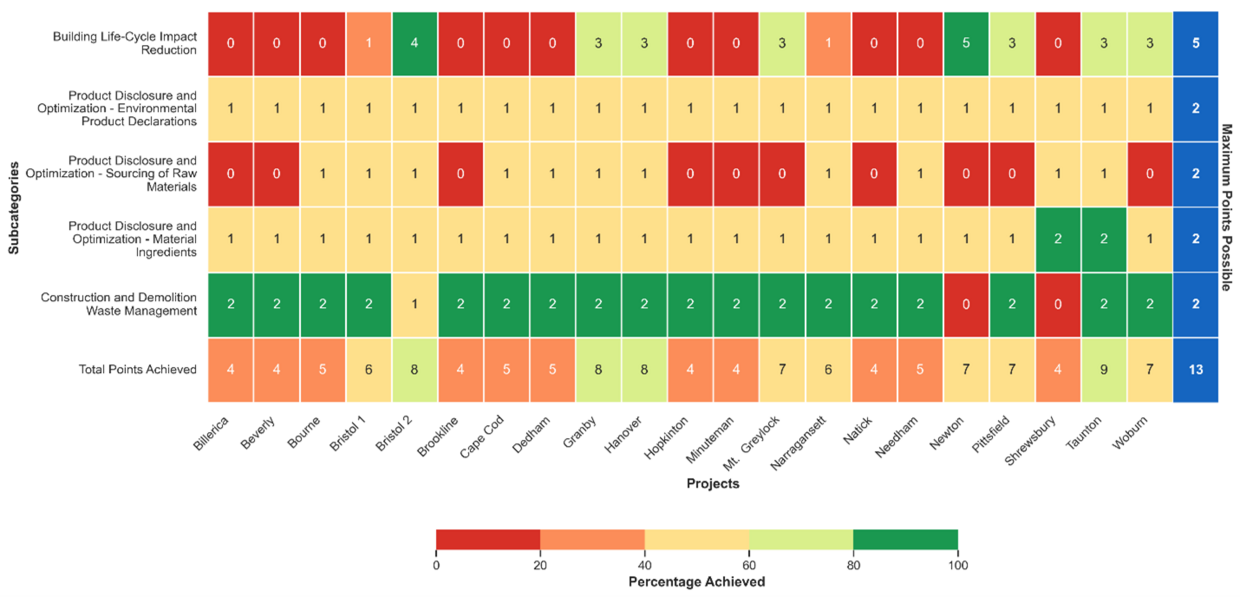
- Materials and Resources: Most projects achieved credits for “Construction and Demolition Waste Management,” while few achieved points for “Product Disclosure and Optimization.”
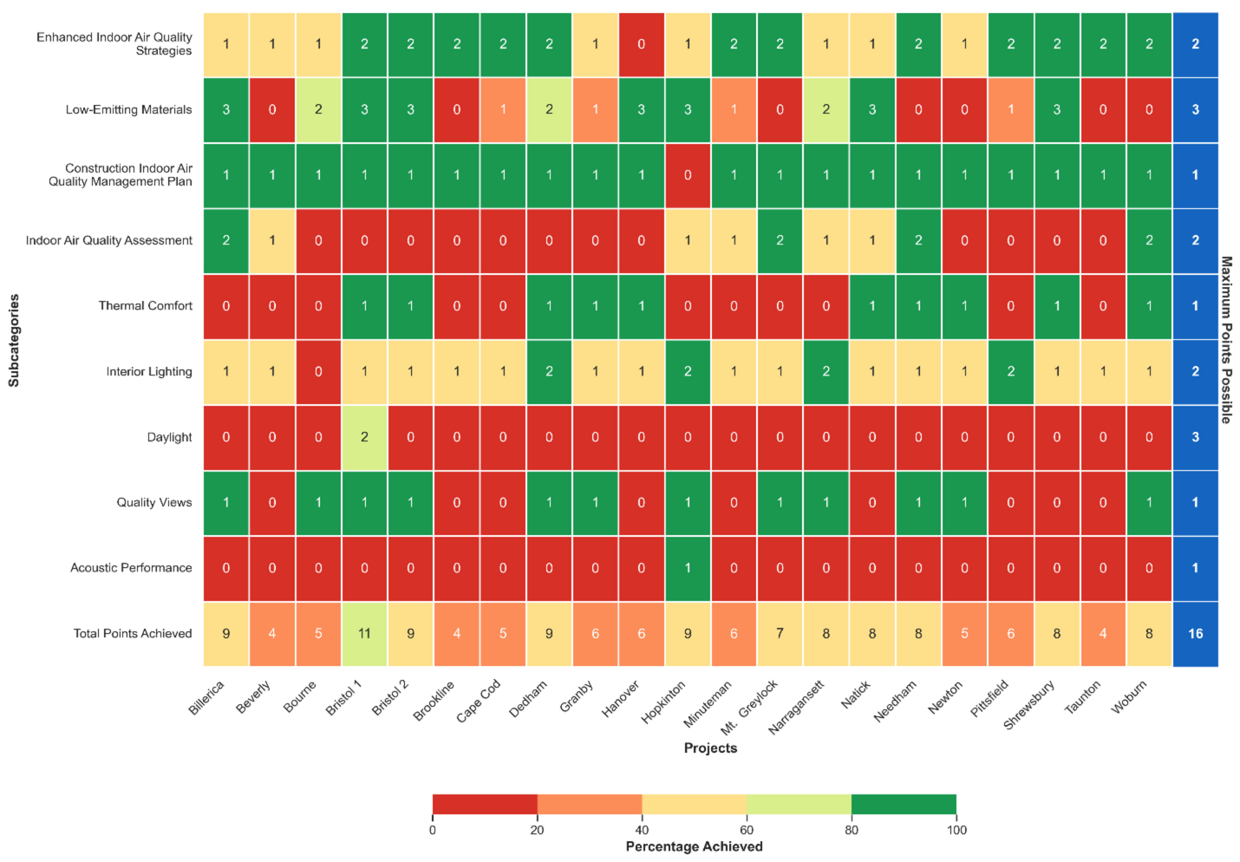
- Indoor Environmental Quality: Most projects achieved points for “Enhanced Indoor Air Quality Strategies,” while few achieved points for “Acoustic Performance,” “Daylight,” and “Quality Views.”
The visuals below show how different projects scored across various LEED subcategories, comparing the points they earned to the maximum number of points possible. These tables highlight differences in performance across projects, showing not just where points were earned but how many points each project achieved in each area. For more information on the categories and subcategories that are assessed for LEED certification, see the US Green Building Council’s website.
Category: Sustainable Sites
Category: Water Efficiency
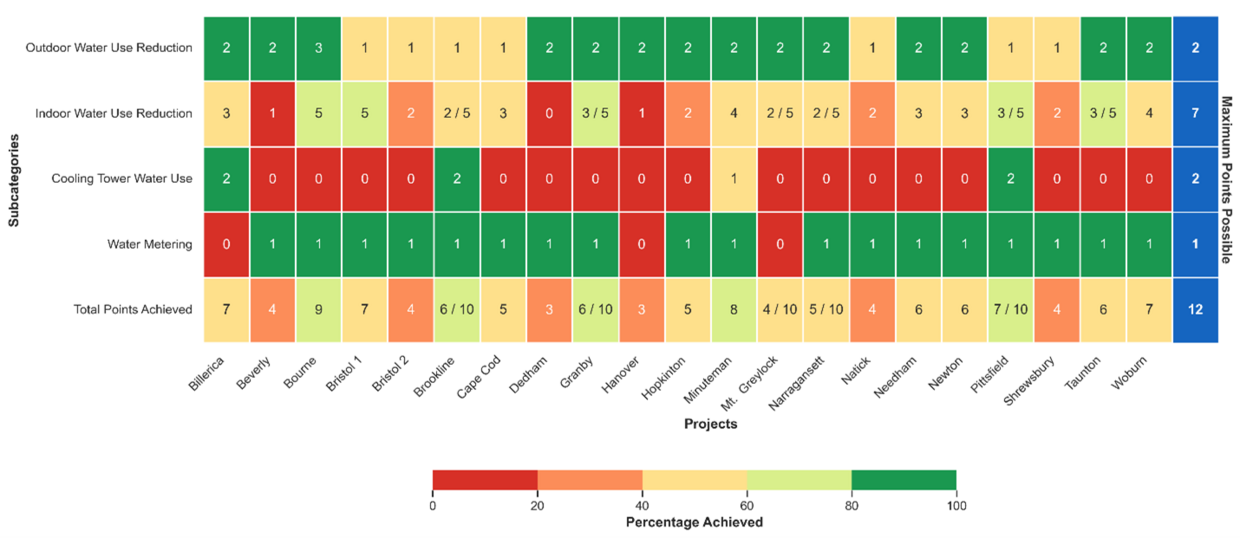
Note: The total scorecard points for LEED subcategories are subject to change. In instances where the maximum points possible for a project differed from the total on the table, the points achieved are represented by a fraction showing the number of points achieved out of the number of points available.
Category: Energy and Atmosphere
Category: Materials and Resources
Category: Indoor Environmental Quality
NE-CHPS Certification
NE-CHPS certification has two levels: CHPS Verified and CHPS Verified Leader, with the latter indicating performance that exceeds the minimum requirements. Like LEED certifications, projects must meet prerequisites and earn points across multiple sustainability categories for NE-CHPS certification.
The four NE-CHPS projects we reviewed received the following certifications:
- Three projects (75%) achieved CHPS Verified.
- One project (25%) achieved CHPS Verified Leader.
We reviewed the scorecards for the three projects that achieved CHPS Verified certification. Trends across these three NE-CHPS projects highlight the following areas of strong performance and opportunities for improvement:
- Integration and Innovation: Three projects earned credits for “Integrated Design,” “Educational Display,” and “Demonstration Area.” No projects earned credits for “Climate Change Action” or “Innovation.”
- Operations and Metrics: Three projects earned credits for “Facility Staff and Occupant Training,” “Performance Benchmarking,” and “Systems Maintenance Plan.” No projects earned credits for “High Performance Operations” and “Green Power.”
- Indoor Environmental Quality: Three projects earned credits for “HVAC Design,” “Acoustical Performance,” “Low Emitting Materials,” and “Thermal Comfort.” No projects earned credits for “Dedicated Outdoor Air Systems” and “Low Radon.”
- Energy: All projects earned credits for “Energy Performance” and “Commissioning,” though none reached “Zero Net Energy Capable.”
- Sites: Three projects earned credits for “Site Selection” and “Use of Native Plants,” but no projects earned credits for “Minimize Site Disturbance.”
- Materials and Waste Management: Three projects earned credits for “Recyclables” and “Waste Management,” but no projects earned credits for “Building Reuse” or “Health Product Reporting.”
Overall, our review highlighted consistent strengths in areas like open space, shared facilities, indoor air quality, and water and energy efficiency, while identifying opportunities for improvement in renewable energy, the amount of daylight a building lets in, and building reuse. These findings can inform future policy and guidance to further improve sustainability outcomes in school projects.
| Date published: | December 24, 2025 |
|---|