
Featured Women/Parks
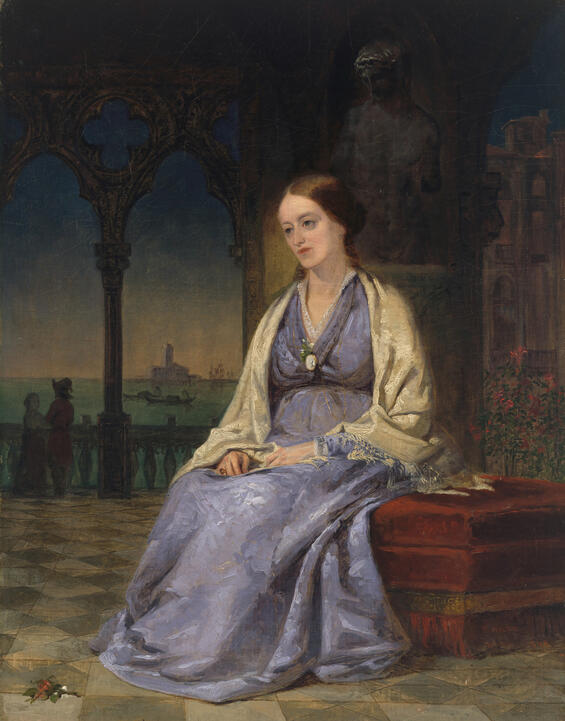
Portrait painting titled 'Margaret Fuller' by Thomas Hicks, 1848
Brook Farm Historic Site | West Roxbury, MA
Brook Farm is the site of the best-known cooperative community in American history. The Farm’s members and visitors included renowned authors and philosophers Nathaniel Hawthorne, Charles Dana, Ralph Waldo Emerson, and Margaret Fuller. As a leader in American cultural thought, Margaret Fuller (1810-1850) was one of the most prominent literary women of the 19th century and a trailblazing feminist and human rights advocate. In 1840, she became the first editor of The Dial, the foremost Transcendentalist journal of the time. Fuller never officially joined Brook Farm but remained a frequent visitor and friend. However, the site is a direct link to the Transcendentalist movement that reshaped American religious, philosophical and even political life in the 19th century. Founded in 1841, the Brook Farm Institute for Agriculture and Education was established as a cooperative experimental society of men, women and children who dreamed of leading a more wholesome and simple life.
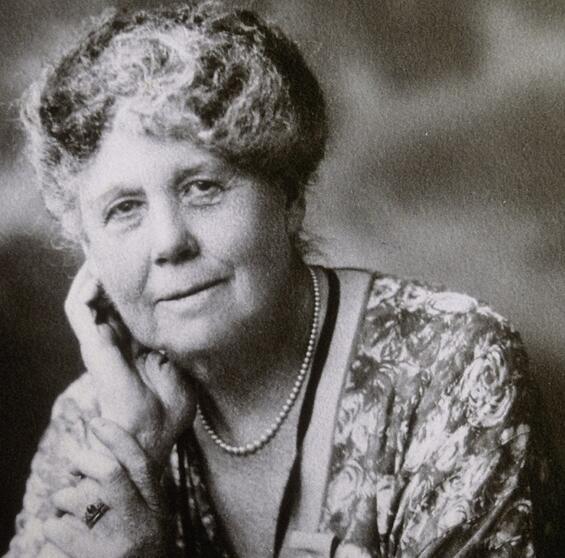
Martha Brookes Hutcheson
Maudslay State Park | Newburyport, MA
The formal Italian gardens at Maudslay State Park, the former estate of Frederick Strong Moseley, were designed by Martha Brookes Hutcheson, one of the first female landscape architects in the nation. Hutcheson studied landscape architecture for two years at the Massachusetts Institute of Technology, along with self-study at Arnold Arboretum and local nurseries. Afterwards, she traveled in Europe visiting gardens and estates in Italy, England and France to understand design in classic gardens and ornamental hedges. Upon her return, Hutcheson set up shop in Boston. In 1902, she was commissioned by Moseley to design site improvements on his property. Her most significant work there includes the Italian and Rose Gardens These were established as two outdoor “rooms” and the forecourt to the main house and is one of her most notable designs.
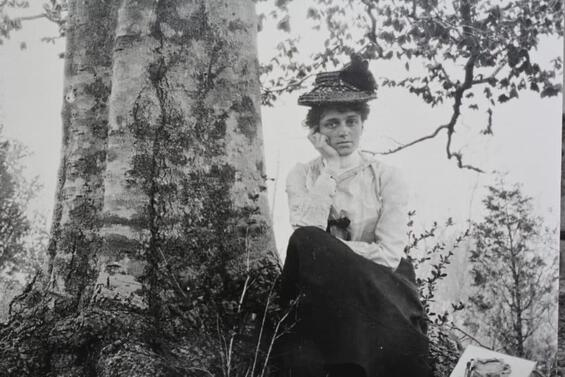
Blanche Ames Ames
Borderland State Park | North Easton, MA
Blanche Ames Ames was an artist, inventor, architect, author, suffragist, political cartoonist and botanical illustrator. Her works still hang in the estate she designed (now Borderland State Park) and at various museums. She and her brother spent two years creating and identifying over 5,000 different colors and invented the Ames Color Chart. She became a notable botanical illustrator and even created the emblem of the American Orchid Society. As a suffragist, Blanche fought for women’s equality - marching in parades, drawing political cartoons and mobilizing local women and men. In 1913, Blanche was appointed treasurer of the Massachusetts League of Women Suffragists. Using her artistic talents, she drew political suffrage cartoons printed in local and national publications. When the 19th amendment passed, Blanche celebrated by dancing in her library! Blanche went on to co-found the Birth Control League of Massachusetts and was President of New England Hospital for Women and Children.
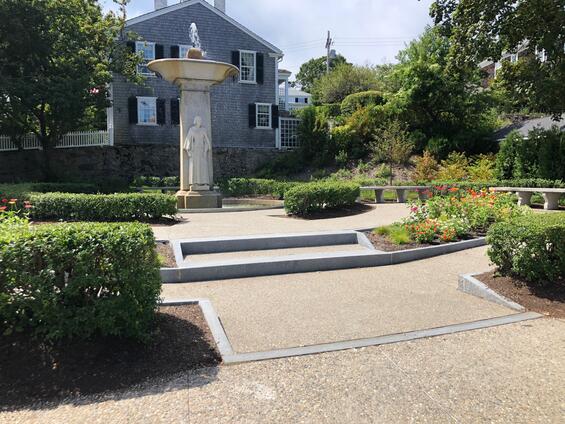
Pilgrim Mother Fountain
Pilgrim Memorial State Park | Plymouth, MA
The Women of the Mayflower
A unique quality of the 1620 Plymouth Colony was that one-third of the company was female. Most English planting companies sent only men; the merchants who sponsored the Pilgrims made unusual concessions. The congregation from Leiden envisioned a plantation where they could find both religion and profit, and that meant moving the whole church--wives and daughters included. We know little about the women and girls who came in 1620. Yet glimpses emerge of the toll the effort took on the female planters: Elizabeth Hopkins birthed a son at sea. Susannah White, widowed after giving birth to her son at Provincetown, was the first English bride in New England. Mary Allerton died shortly after delivering a stillborn son. Governor John Carver’s wife, Katherine, died weeks after her husband, as did their maidservant a year or two later. The Pilgrim Mother Fountain commemorates those women whose choice to come to New England was limited, but whose presence ensured the survival of the colony.
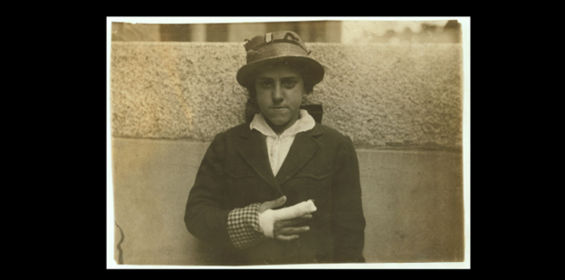
Textile worker Estelle Poiriere with her right hand heavily bandaged due to a work injury documented by photographer Lewis Hine
Fall River Heritage State Park | Fall River, MA
Women Textile Workers of the Fall River Mills
Fall River Heritage State Park interprets and celebrates the rich industrial and cultural history of the region. The site celebrates the dynamic women who have lived and worked in Fall River--the pioneers, factory workers, abolitionists, athletes, scientists and other professionals, mothers, sisters, and daughters who created Fall River and made it the leading textile manufacturer in the United States. The city’s 200 mills depended on the labor of Portuguese, Irish, French-Canadian, and English immigrants. Many of them were women. These hardy workers, along with their children, worked long shifts for low pay at looms in noisy factories. They worked as spinners, speed tenders, sweepers, cleaners, stitchers, weavers, scrub ladies, garment inspectors, bobbin girls, doffers, winders, warpers, spoolers, carders, and knot-tiers. In short, these women were the essence of the textile industry.
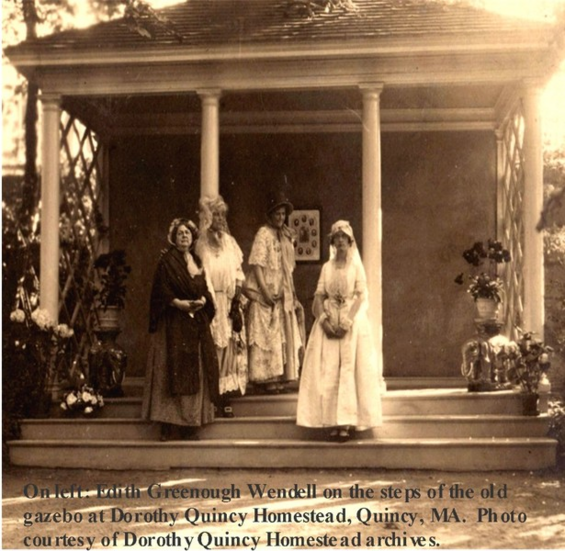
Edith Greenough Wendell on the steps of the old gazebo at the Dorothy Quincy Homestead
Visit The Dorothy Quincy Homestead In Quincy, MA - NSCDA
A passionate preservationist, Edith Greenough Wendell (1859-1938), was a member of The Massachusetts Colonial Dames (now The National Society of The Colonial Dames of America in The Commonwealth of Massachusetts) and its president (1903-1923). In 1904, urban development in the City of Quincy endangered the Dorothy Quincy Homestead. Under Edith’s leadership and with the help of many Quincy residents, the MA Society purchased the 1.8-acre property. Dedicated to restoring “historically and architecturally significant buildings,” the Dames transferred ownership of the Homestead to the Commonwealth which leased the house back to be furnished, interpreted and cared for by the Dames. A National Historic Landmark, the Homestead is significant for its architecture and its association with the Edmund Quincy Family whose members played a key role in the political and social life of the Commonwealth. Inspired by Edith’s preservation vision, NSCDA-MA members continue to embrace her mission.
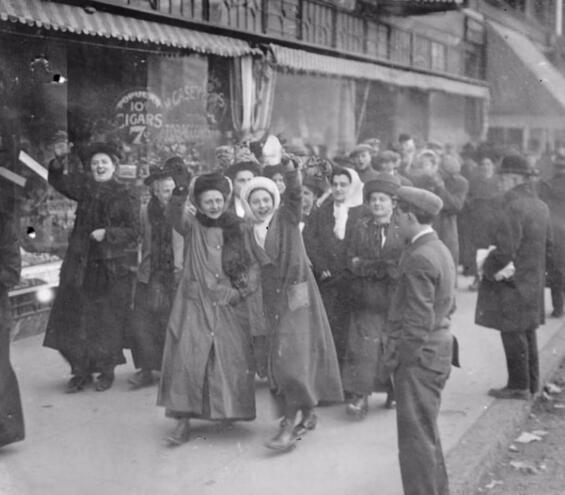
Bread & Roses Women Strikers
Lawrence Heritage State Park | Lawrence, MA
Bread & Roses Women Strikers
The Bread & Roses Strike of textile workers in Lawrence, Massachusetts is one of a handful of famous labor conflicts in US history, in which the workers won an improbable and inspiring victory. It is notable for many reasons, not least being the important role of women, a rarity at the time. Women composed a large portion of the mill workforce, and were very active in the strike, in both marches and meetings as well as in neighborhood networking and support. Some prominent women activists and supporters included Elizabeth Gurley Flynn, Margaret Sanger, and Helen Keller. But the rank-and-file of the women of the mills and immigrant neighborhoods of Lawrence were, as I.W.W. leader "Big" Bill Haywood acknowledged, crucially important to the success of the strike.
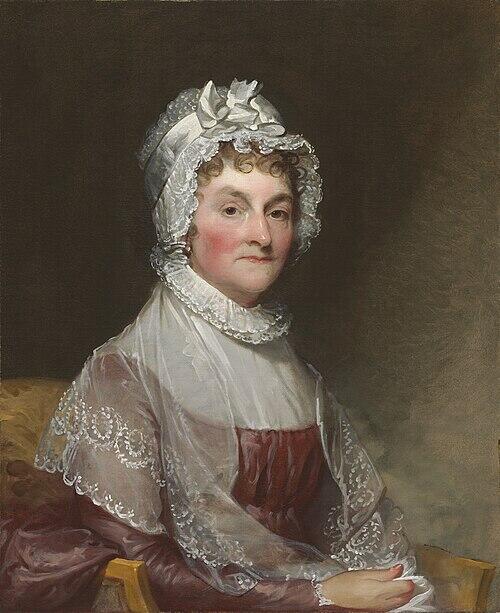
Painted portrait of Abigail Adams by artist Gilbert Stuart
Stodder's Neck & Abigail Adams Park | Hingham, MA
Abigail Smith, daughter of William Smith and Elizabeth (nee Quincy), was born in Weymouth, Massachusetts in 1744. At age 20, she married John Adams, a country lawyer from neighboring Braintree. Within 10 years, Mrs. Adams was raising her family and caring for the family homestead and farm as the Americans began their revolution against overseas British rule. She bravely and effectively "held the homefront" while her husband was involved in creating the new country. In 1784, she joined her husband in Paris as a diplomatic spouse, and in 1785, she moved to London, where her husband had been appointed the United States' first minister to England. In 1797, Adams was inaugurated as the 2nd President, and in 1800, Abigail became the first First Lady to live in the newly built White House in Washington, D.C. She died at her home in Quincy, Massachusetts in 1818 and is buried at the United First Parish Church in Quincy Center with her husband, son John Quincy, and daughter in law Louisa Adams.
Upcoming Women’s History Month Programming
259 Massapoag Avenue, North Easton, MA
Mansion Tour: The Ameses and Women’s Rights
Monday, March 9 & 16, at 2:00 pm
Wednesday, March 4 & 11, at 2:00 pm
Pre-registration is encouraged: at tinyurl.com/Bordtour.
On this first-floor tour of the historic Ames mansion, you will learn about the Ames family’s involvement in the women’s rights movement. Tours last 30 minutes. All tours meet at the Ames Mansion. Space is limited; register ahead to guarantee your spot. Walk-ins are welcome as space allows. For adults and older children. Daily parking fee of $5 per vehicle with MA plates and $20 per vehicle with out of state plates. For more information, please call (508) 238-6566.
Mount Holyoke Range State Park
1500 West Street, Amherst, MA
Herstory: Dinosaur Discoverer, Mignon Talbot!
Saturday, March 7, 12:30–1:30 pm
In celebration of Women’s History Month, join us for an indoor presentation with Mount Holyoke College geology professor Mark McMenamin. Learn the story of Mignon Talbot and her discovery of Podokesaurus, now the Massachusetts State Dinosaur. Free and open to all ages. No registration required. For more information, please call (413) 499-4262.