- Division of Fisheries and Wildlife
Media Contact
Media Contact, MassWildlife
PLYMOUTH — The Massachusetts Division of Fisheries and Wildlife (MassWildlife) and its partners have begun construction to restore Century Bog, a retired cranberry bog in Plymouth and Wareham. This project will transform the former Century Bog into a healthy network of streams, wetlands, and native uplands. The project marks the final major step in a years-long effort to restore the Red Brook watershed, creating lasting benefits for fish and wildlife, clean water, and the public.
"From the Berkshires to Cape Cod, Massachusetts is investing in restoration to bring nature back and sustain biodiversity, especially places like Red Brook which are important for helping migratory fish from the ocean reach freshwater to spawn, “said Department of Fish and Game (DFG) Commissioner Tom O'Shea. “We are proud to continue this transformational ecological restoration effort with partners for over two decades whose contributions make this large, watershed-scale restoration project possible."
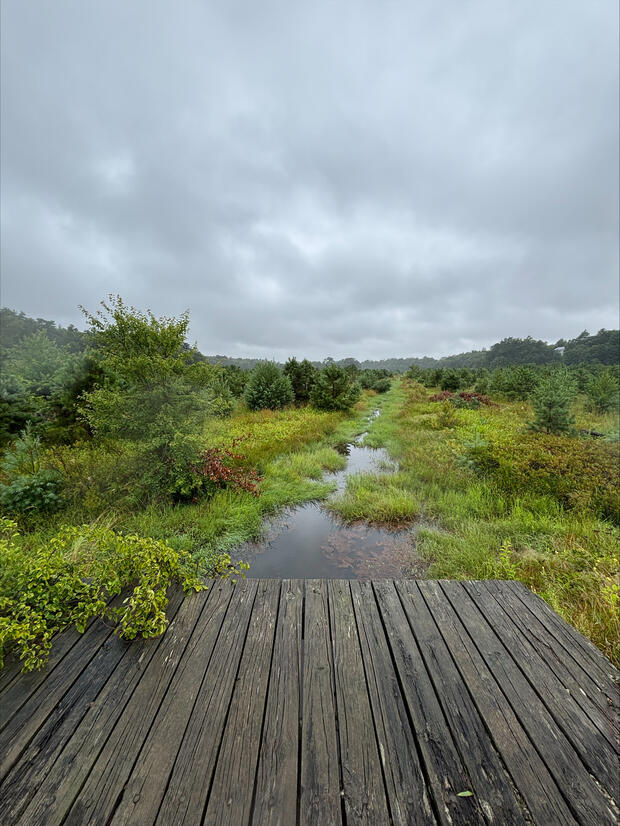
For more than 100 years, Red Brook flowed through a landscape shaped by cranberry farming. Wetlands were drained, streams were straightened, and water was carefully controlled to support one of southeastern Massachusetts' historic industries. Although cranberry farming ended on the site in 2015, decades of cultivation left a lasting imprint. Century Bog is now owned by MassWildlife as part of the 683-acre Red Brook Wildlife Management Area (WMA). Today, parts of the former bog support young pitch pines, shrubs, grasses, and sedges. While nature has begun reclaiming the site, much of the landscape still lacks the natural connections between streams, wetlands, and uplands that once defined this ecosystem. The project will reconnect Red Brook to its floodplain and groundwater, allowing the stream to flow more naturally while restoring the surrounding habitats.
“Red Brook is one of the region's most special places, providing habitat for sea-run brook trout, American eel, river herring, and other native species that depend on healthy streams to survive,” said Eve Schluter, MassWildlife Acting Director. “Over time, wetlands will once again provide clean water, native plants will flourish, fish will move more freely, and Red Brook will continue to become a healthier, more connected ecosystem. With thoughtful restoration, even landscapes shaped by generations of human activity can be given the opportunity to thrive once again.”
The project is expected to benefit at least 56 Species of Greatest Conservation Need identified in the Massachusetts State Wildlife Action Plan. From migratory fish to birds, amphibians, reptiles, pollinators, and plants, countless species stand to gain from the return of a more natural landscape. Over the course of the project, crews will:
- Restore approximately 72 acres of wetlands and 12,300 feet of Red Brook;
- Improve fish passage and in-stream habitat through the removal of culverts and berms and realignment of the stream channel;
- Restore about 47 acres of native upland habitat, including barrens shrubland, sandplain grassland, and pitch pine-oak woodland; and,
- Reconnect wetlands and uplands so water, plants, and wildlife can once again move naturally across the landscape.
To accomplish this, restoration teams will reshape portions of the former bogs, remove culverts, berms, and drainage ditches, and reconnect the land with groundwater. Native vegetation will be planted where needed, while other areas will be left to recover naturally. The restored stream itself will follow a more natural course, connecting with existing springs and incorporating boulders and large woody material that create habitat for fish and improve stream health for years to come.
“Healthy wetlands improve water quality, reduce flooding, store carbon, and create resilient natural systems that are able to adapt to climate change” said Beth Lambert, Director of the Massachusetts Division of Ecological Restoration (DER). “Restoring sites like Century Bog helps revitalize our rivers and wetlands while providing lasting benefits for surrounding communities.”
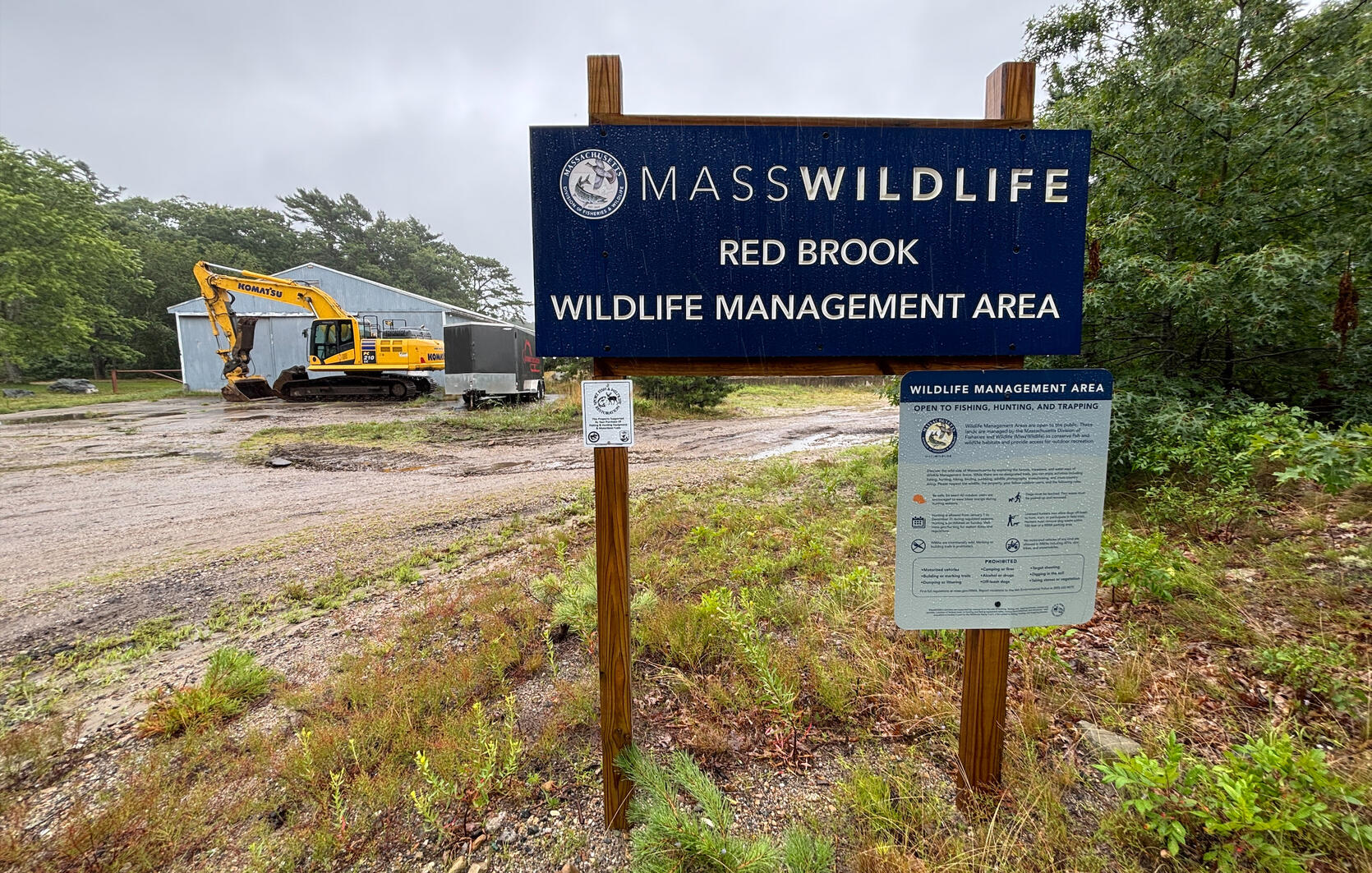
The Century Bog project is the culmination of more than a decade of partnership between MassWildlife, DFG, DER, Buzzards Bay Coalition, Division of Marine Fisheries, The Trustees, Mass Audubon, Trout Unlimited, the Mashpee Wampanoag Tribe, NOAA, and many others working to restore the Red Brook watershed. As construction gets underway, visitors may notice heavy equipment and significant changes to the site. Those short-term disruptions will help achieve the long-term vision of restoring the natural systems that sustained this landscape long before cranberry farming began.
The cranberry bog restoration is part of MassWildlife’s Southeastern Massachusetts Pine Barrens Landscape Restoration and Community Engagement Initiative, which will also restore pine barrens and coastal plain pondshores. The southeastern Massachusetts pine barrens is the largest remaining block of Atlantic Coastal Pine Barrens north of New Jersey and supports numerous animals and plants, including rare, at-risk species like the prairie warbler, frosted elfin butterfly, and barrens buckmoth.
The Initiative is supported by a $4.9 million America the Beautiful Challenge Grant awarded through the National Fish and Wildlife Foundation in 2022 with additional financial support provided by the MA DFG’s In-Lieu Fee Program, MA DER, the B-120 Trustee Council, MA DCR, and in-kind matching contributions from our grant partners.
Statements of Support
Sara Quintal, Senior Restoration Ecologist for Buzzards Bay Coalition:
“It has been a pleasure to assist MassWildlife with restoration of the headwaters of Red Brook at Century Bog, helping to bring it through final design and into construction. This is an exciting opportunity to complete the restoration of Red Brook from its confluence with Buzzards Bay all the way to White Island Pond. Between 2006 and 2009, there was extensive restoration of the lower part of Red Brook within the adjoining Lyman Reserve. Now, we are about to restore the upper part of this revered sea-run brook trout stream.”
Alex Hackman, Mass Audubon's Director of Ecological Restoration:
“We have a once-in-a-lifetime opportunity to restore wetlands in Southeastern Massachusetts as unproductive cranberry farms retire. Breaking ground on the Century Bog project is a major milestone. Kudos to MassWildlife for making this happen and inviting so many partners to help. Projects like this expand biodiversity, protect clean water, and create beautiful healthy places for people to enjoy. We are delighted to be a part of it.”
Sharl Heller, Coordinator of the Massachusetts Coastal Pine Barrens Partnership:
“Partnerships are clearly the best—if not the only—way to save an entire globally rare ecoregion such as the Massachusetts Coastal Pine Barens. You need the expertise and involvement of everyone including federal, state, municipal, and tribal officials, land trusts, universities, advocacy groups, citizen scientists, and professional ecologists, biologists, and foresters. Moreover, in conjunction with every aspect of the hard work and dedication that goes into all regional conservation projects, you need an equally strong and pervasive education and outreach program to celebrate the accomplishments and build community support. This America the Beautiful Challenge Grant project has it all, and the Massachusetts Coastal Pine Barrens Partnership is proud to be a part of this expansive project.”
Warren Winders of the Southeastern Massachusetts Chapter of Trout Unlimited:
“When Trout Unlimited first became involved with the Lyman family to protect and restore Red Brook back in the late 1980s, the idea of restoring the A.D. Makepeace owned Century Bog to what it once was, a complex marsh headwater of Red Brook, was something that we never dared to dream was possible. Yet, following the removal of the last two of the four dams removed from Red Brook in 2009, we (TU) and all of the partners involved, were surprised and overjoyed to learn in 2010 that the Department of Fish and Game had purchased the Century Bog property completing the protection of Red Brook in its entirety. After decades of effort by the Red Brook partners, the process that was begun by Theodore Lyman, when he first purchased land along Red Brook in 1870, is nearing completion. Thanks to MassWildlife, that which we never dared to dream is now about to happen.”
###