- Division of Fisheries and Wildlife
Media Contact
Media Contact, MassWildlife
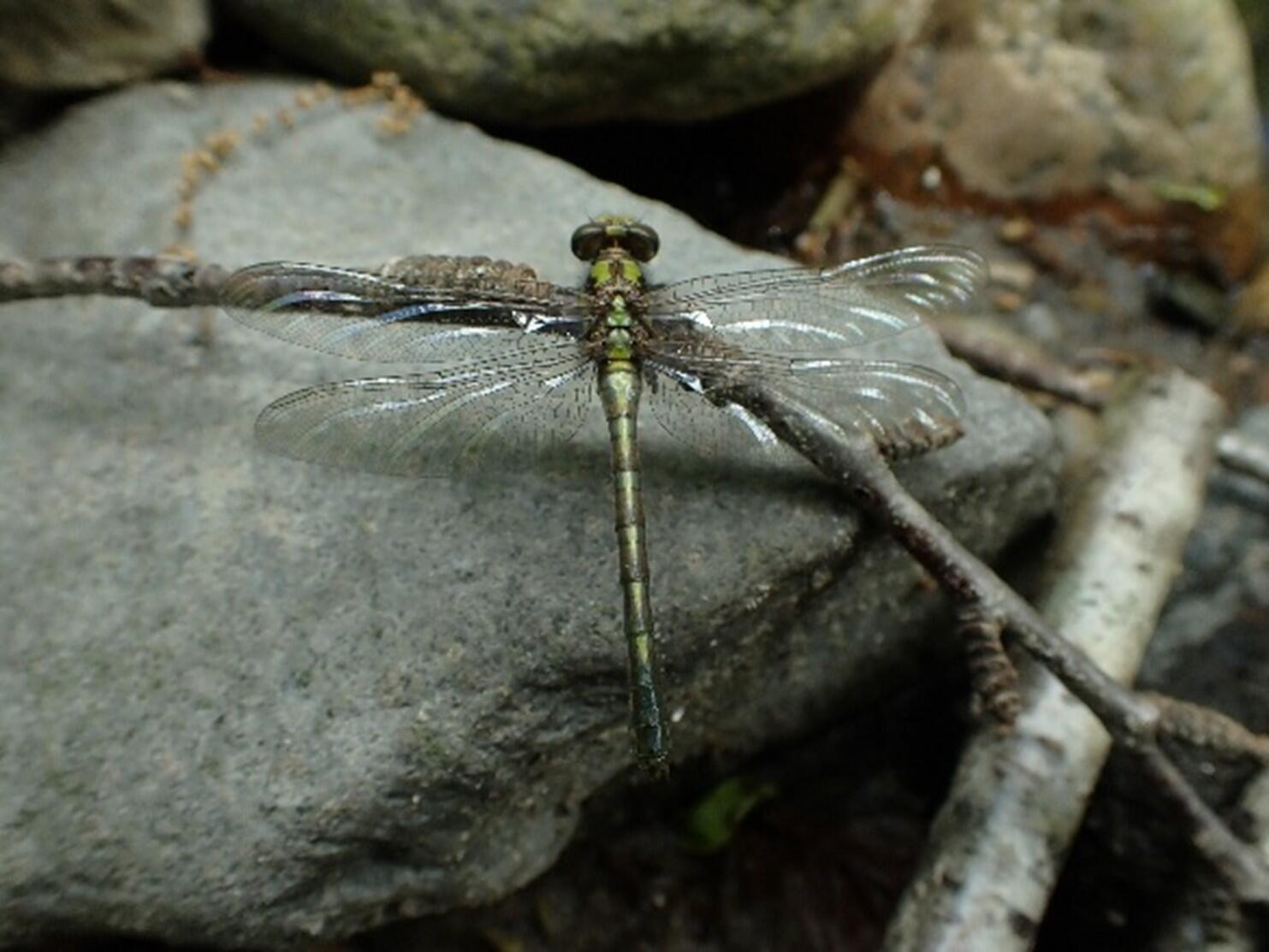
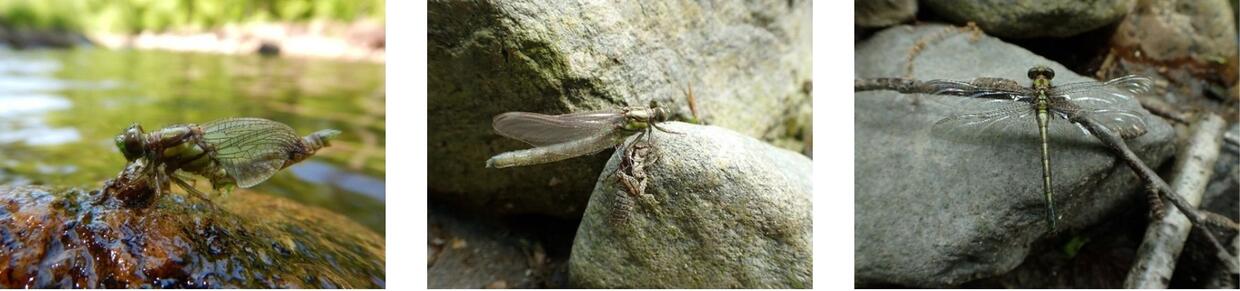
On spring and summer days, adult dragonflies can be easily found along shorelines or flying over the water, swooping down from nearby trees to catch prey, and seeking suitable basking spots with ample sun. But these large insects spend most of their lives underwater as aquatic nymphs before transforming into the winged adults we typically see.
Though dragonflies are most noticed around lakes and ponds, many species also depend on stream and river habitats, from small headwater creeks to large rivers like the Connecticut and Merrimack. Of the approximately 117 dragonfly species recorded in Massachusetts, there are 13 identified as Species of Greatest Conservation Need (SGCN) in Massachusetts that largely inhabit riverine systems, 9 of which are listed under the Massachusetts Endangered Species Act (MESA).
How do we survey dragonflies?
MassWildlife biologists survey dragonflies to learn about their population size and distribution across the state; however, identifying these species can be difficult. A trained eye aided by binoculars or a camera is usually required, and maybe a bug net to get a closer look if you have enough patience to swing and miss 50 times! Luckily, because of their unique life cycle, dragonflies leave behind clues that biologists can use to identify a particular species.
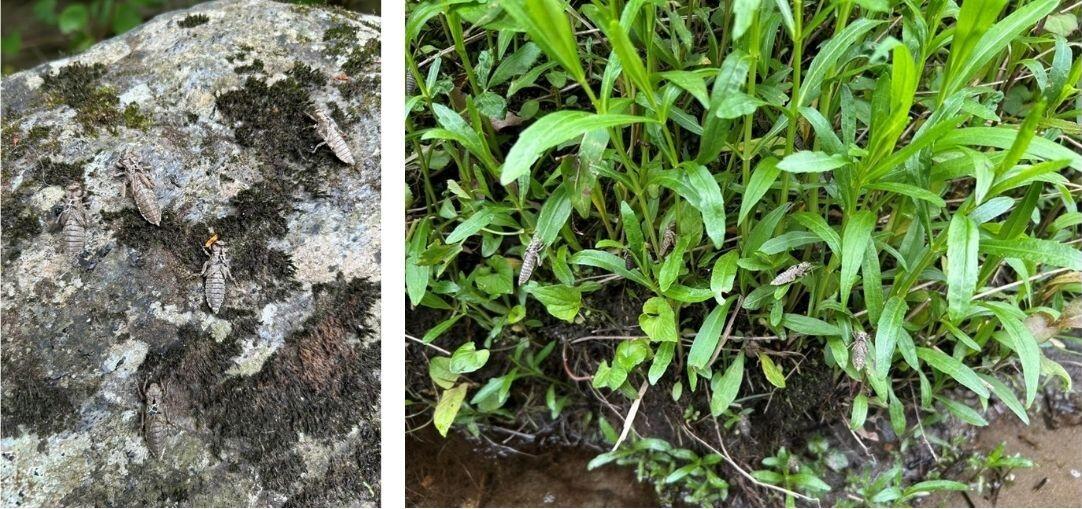
Starting in late spring and throughout the summer, riverine dragonflies transform from water-dwelling nymphs into flying adults by shedding their exoskeleton. The shed skins they leave behind, called exuviae (pronounced ex-zoo-vee), provide biologists with an effective way to monitor dragonflies—with a lot less net swinging! During surveys, exuviae are collected, dried, and later identified under a dissecting scope.
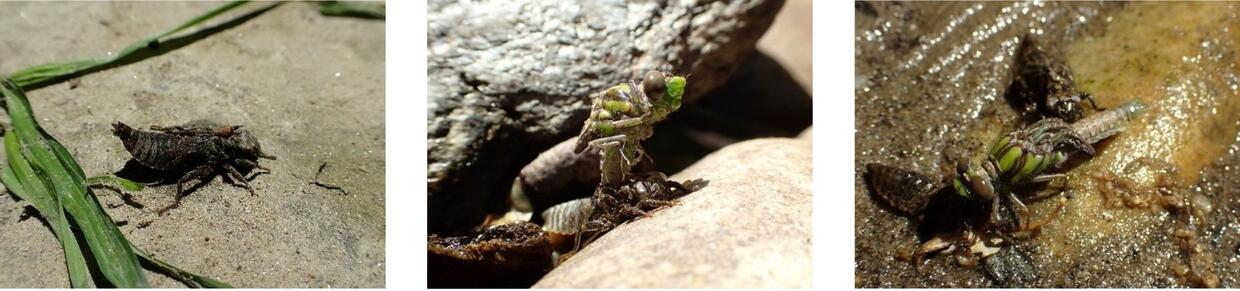
Surveying for riverine dragonfly exuviae is simple but tedious work. Field crews inch their way along pre-defined lengths of stream, examining sand and gravel bars, boulders, grasses, shrubs, tree trunks, and moss. Depending on the landscape, this can make exuviae searches simple or difficult, yielding zero to hundreds of exuviae.
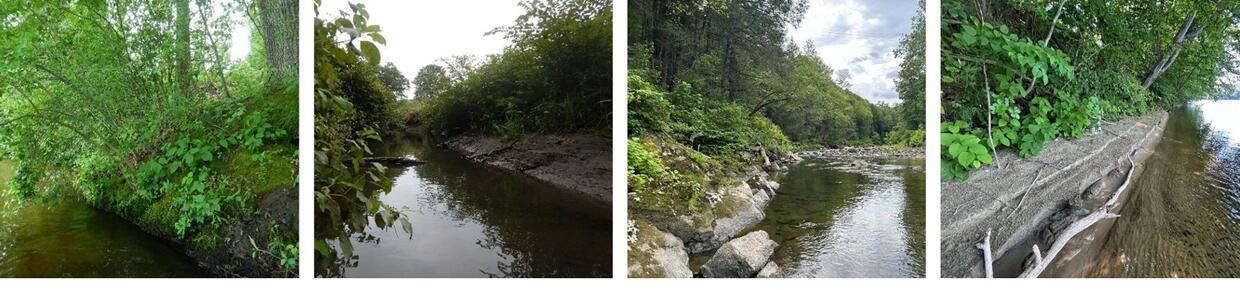
To increase the chances of finding exuviae of rare dragonfly species, timing is critical. Surveys are timed to capture exuviae during or just after nymphs emerge from the water. Many riverine dragonfly species emerge from mid-May to early June. For several species in the dragonfly family Gomphidae (generally known as Clubtails), emergence from streams occurs in synchrony. For example, on sunny days in mid-late May, Maine snaketails (Ophiogomphus mainensis) emerge by the thousands from larger rivers in central and western Massachusetts over a short period of time.
How exuviae surveys impact conservation
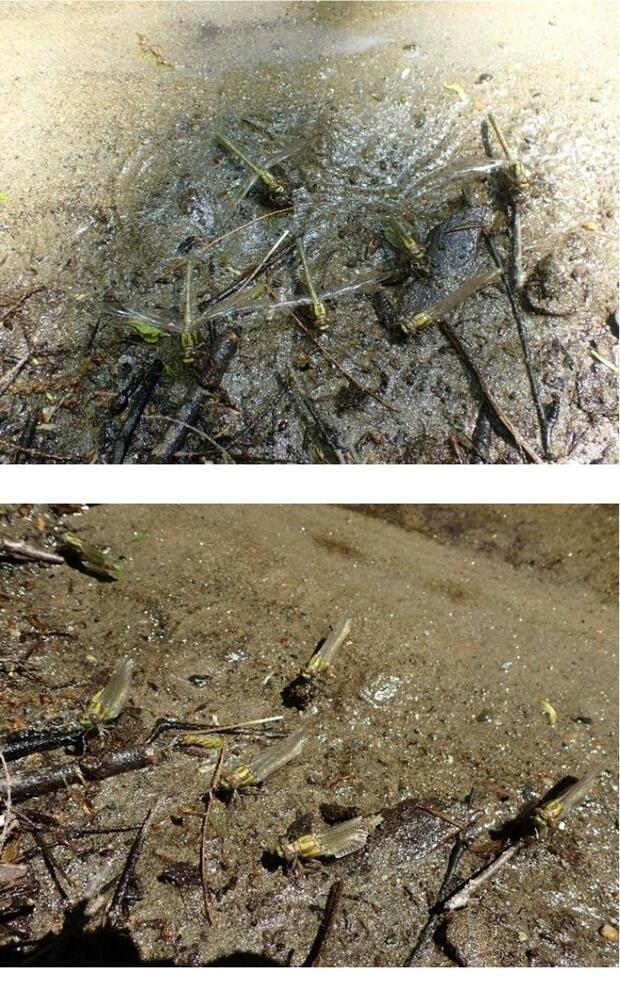
Even though exuviae surveys can be difficult, this approach is easier than trying to capture riverine adults, particularly for rare or elusive species. Over the past 20 years, exuviae surveys have drastically improved our understanding of the distribution and abundance of seemingly rare species. Shadowdragons (Neurocordulia obsoleta, N. yamaskanensis) were once thought to be rare in Massachusetts and were listed under MESA. It turns out that these well-camouflaged dragonflies, which are most active during dawn and dusk, were just evading detection. When exuviae surveys became standard practice, biologists discovered that shadowdragons had a wider distribution than previously known and led to their removal from the MESA list.
A further benefit of exuviae surveys is the valuable insight they provide into where dragonflies have spent the immature stages of their lives. Because these shed skins are left behind on the streambanks where nymphs emerge into adults, finding concentrations of exuviae in a particular area is strong evidence that the adjacent stream provides suitable habitat for the species to successfully complete its life cycle. These sites can therefore highlight high-quality aquatic habitats that may be especially important to conserve.
Interested in finding dragonfly exuviae yourself?
Late spring and early summer are great times to explore the shorelines of ponds and streams in search of shed dragonfly exuviae. Carefully walk along the water’s edge scanning sand, rocks, logs, and vegetation. Exuviae are often well camouflaged, blending in with bark, mud, and stone, so patience and a careful eye are key. Make sure not to collect any just in case you find a MESA-listed species. You can learn more about our SGCN species on our online interactive table.