- Department of Fish and Game
- Division of Ecological Restoration
Media Contact
Julia E. Hopkins, Communications Director
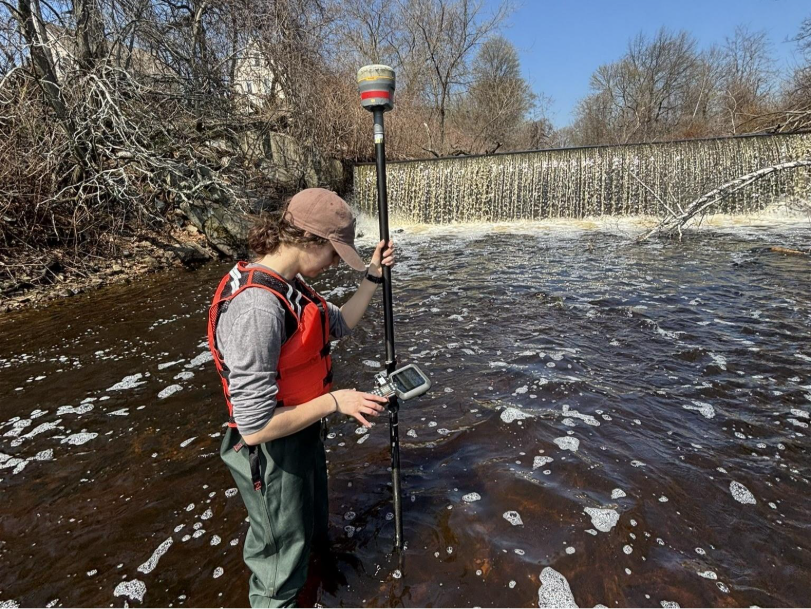
BOSTON — Today, the Healey-Driscoll Administration announced $350,000 for dam removal studies in seven municipalities to help communities prepare for climate change and improve habitat for fish and wildlife. These preliminary design studies, managed by the Department of Fish and Game’s (DFG) Division of Ecological Restoration (DER) and funded by ResilientMass, help dam owners assess risks and opportunities associated with potential dam removal projects.
“Dam removal is an important part of the Commonwealth’s ambitious, whole-of-government approach to conserve biodiversity,” said DFG Commissioner Tom O’Shea. “With every aging, unwanted dam removed, we help people and nature thrive together. Free-flowing, restored rivers are critical for fish and wildlife and make our communities safer, healthier, and better prepared for severe storms.”
There are over 3,000 dams in Massachusetts, most of which no longer serve their original purpose and many of which are in disrepair. Dams degrade water quality, block passage for fish and wildlife, and increase flood risks and public safety hazards for communities. Removing unwanted dams and restoring river health makes communities more resilient to extreme weather, eliminates maintenance costs and risks for dam owners, and boosts biodiversity. Preliminary design studies will support dam owners in gathering and synthesizing information for each dam to inform future projects.
“These communities are taking the first step toward improving climate resilience, public safety, and vital habitats for fish and wildlife,” said DER Director Beth Lambert. “DER is proud to support these endeavors and steward dam removal efforts throughout the state that benefit both people and nature.”
DER is supporting dam removal preliminary design studies at the following seven dams:
- Manhan River Dam, Easthampton
- The Manhan River Dam is a significant hazard dam in Easthampton. Removal of the dam would benefit migratory and coldwater fish species, important habitats, nearby infrastructure, and surrounding environmental justice communities.
- Mill Pond Dam, Littleton
- The removal of the Mill Pond Dam in Littleton would improve connectivity for aquatic species and protect critical nearby infrastructure.
- Adams Dam, Townsend
- The removal of the Adams Dam in Townsend would benefit coldwater and other priority aquatic habitats as well as surrounding environmental justice communities.
- Tremont Mill Pond Dam, Wareham
- The Tremont Mill Pond Dam is a significant hazard dam in poor condition in Wareham. As the first barrier upstream from Buzzards Bay, the removal of this dam would have many ecological and socioeconomic benefits.
- Bear Hole Reservoir Dam, West Springfield
- The Bear Hole Reservoir Dam is a significant hazard dam in West Springfield. Its removal would reduce risk to downstream infrastructure and also improve important coldwater and priority habitats as well as connectivity for aquatic species.
- Old Mill Pond Dam, West Tisbury
- The Old Mill Pond Dam is a significant hazard dam in West Tisbury. As the first barrier above head of tide at Tisbury Great Pond, a coastal salt pond and estuary, removal would provide many benefits to priority habitat and connectivity for coldwater and migratory fish species.
- Westfield Reservoir Dam, Westfield/Montgomery
- The Westfield Reservoir Dam is a high hazard dam in Montgomery. Its removal would protect downstream infrastructure and restore the health of a coldwater stream.
###