- Governor Maura Healey and Lt. Governor Kim Driscoll
- Executive Office of Education
Media Contact
Jacqueline Manning, Press Secretary
Worcester — The Healey-Driscoll Administration today announced the largest Early College expansion in state history with the approval of 29 new Early College partnerships, adding 1,692 additional seats this fall. This expansion followed a vote by the Early College Joint Committee of the Boards of Higher Education and Elementary and Secondary Education.
With this latest round of designations, UMass Amherst, Massachusetts Maritime Academy, Roxbury Community College and Regis College are entering into Early College partnerships for the very first time. Further, 23 high schools are launching their first Early College programs. In total, 101 high schools—one out of every four in Massachusetts—are partnering with 35 higher education institutions to support more than 12,000 Early College students in the upcoming 2026-27 school year.
“This is the largest expansion of Early College in Massachusetts history, and it reflects our commitment to creating more opportunity for students across our state,” said Governor Maura Healey. “We are bringing together high schools, colleges and employers to help students graduate with college credits, career experience and a strong foundation for the future at no cost them or families. This expansion will make higher education more affordable, strengthen our workforce pipeline and continue positioning Massachusetts as a national leader in education and economic opportunity.”
“Early College opens doors for students and strengthens our workforce and economy at the same time,” said Lieutenant Governor Kim Driscoll. “By bringing high schools and colleges together, we’re helping students gain real-world experience, and graduate with a head start on their education and careers.”
Early College programs are a key part of the administration’s Reimagining High Schoolinitiative, ensuring Massachusetts students are prepared for college or careers when they graduate. These programs allow high school students, especially those underrepresented in higher education, to earn college credits at no cost to them or their families while still in high school.
Earlier this year, Governor Healey announced the goal of enrolling 100,000 Early College students by 2036. The administration continues to invest in the program, adding 65 new partnerships in the last three years and increasing the number of Early College participants by 3,700 since 2023, a 59 percent jump.
“Every student should have access to opportunities that prepare them for success after high school, regardless of their income or where they live,” said Education Secretary Steve Zrike. “Early College is helping students earn college credits, save money, explore careers and build confidence for their future.”
“Early College is a key component of making sure that our high school graduates are college and career ready,” said Elementary and Secondary Education Commissioner Pedro Martinez. “We have seen success with Early College students persisting in their college work and we’re continually trying to reach students who otherwise may not see themselves in higher education.”
“Early College helps students see themselves in higher education, build academic self-esteem, and learn to navigate college while in high school,” said Higher Education Commissioner Noe Ortega. “This administration’s dedication to Early College expansion is growing opportunities for students across the Commonwealth.”
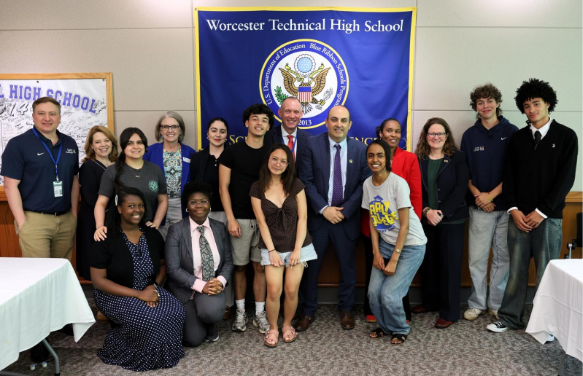
Secretary Zrike made the announcement this afternoon during a roundtable discussion with Early College students at Worcester Technical High School. All of Worcester Public School’s high schools participate in early college and partner with Quinsigamond Community College and Worcester State University. Students can participate in a variety of pathways, including computer and information technology; installation, maintenance and repair technology; education, engineering and health care.
“Worcester is proud to celebrate this historic expansion of Early College with the Healey-Driscoll Administration. By removing financial barriers to higher education, we are giving our students an incredible head start on their futures. We will continue working alongside our state and local partners to ensure every young person in Worcester has a cost-free pathway to college and career success,” said Worcester Mayor Joseph M. Petty.
“The Worcester Public Schools is proud to be a district with one of the largest Early College participation rates in the state, increasing from 714 students in 2023 to 1,362 students in 2026,” said Worcester Public Schools Superintendent Brian E. Allen. “Early College Worcester reflects everything we believe about what education should do for our students — open doors, build confidence, and create real pathways to opportunity.”
The administration previously released a data analysis that shows the state’s investment in Early College is paying off. Sixty-six percent of Early College graduates immediately enroll in higher education after high school, with the majority enrolling at a public college or university in Massachusetts. Once enrolled in higher education, former Early College are persisting - with 87 percent staying in college through a second term and 82 percent returning to college for a second year.
“The addition of these 29 new Early College partnerships marks a historic expansion of a proven, life-changing program that enhances educational equity across Massachusetts,” said Board of Elementary and Secondary Education Chair Katherine Craven. “By bringing Early College opportunities to more schools and communities, we are expanding access to challenging college coursework, helping students grow and build confidence and creating more pathways to success after high school.”
“The ongoing growth of Early College in Massachusetts expands opportunities for students, supports larger affordability efforts by reducing time to degree, and connects learners with careers,” said Board of Higher Education Chair Chris Gabrieli. “Governor Healey's commitment to expanding Early College reflects a recognition that this is not simply a successful program—it is a strategy for growing economic mobility and meeting workforce needs.”
Families can use the Massachusetts School Finder to search for schools near them that offer Early College. For more information on Early College programs, visit DESE’s website.
Statements of Support
UMass President Marty Meehan:
“I’m proud that UMass continues to make strong and consistent progress in expanding our early college programs, and grateful to the Healey-Driscoll Administration for their continued commitment to creating higher education opportunities for more students across the Commonwealth. Studies show early college doubles the likelihood students enroll in college and persist to graduation. During the 2025-26 academic year, these six newly designated partnerships served 627 students who earned more than 4,000 college credits. Many of these students will join our campuses this fall as first-year students, fully prepared to succeed after having already experienced a high-quality UMass education.”
Dr. Linda Thompson, Chair of the Massachusetts State Universities Council of Presidents and President of Westfield State University:
“Education has the power to transform lives, but only when opportunity is within reach. Early College helps students envision themselves as college graduates, strengthens pathways to success, and expands access to higher education. The Massachusetts State Universities are proud to support this historic expansion and the Commonwealth’s commitment to creating opportunity for all students.”
North Shore Community College President and Community College Council of Presidents Chair William Heineman:
"As pioneers in the Early College movement, the community colleges are pleased to see continued expansion of early college across the Commonwealth. We look forward to seeing the successes enjoyed by the students in these programs.”
Roxbury Community College President Dr. Jonathan K Jefferson: “Roxbury Community College is grateful to the Healey-Driscoll Administration for their investment in Early College, and the students served through RCC’s transformative program with Boston Public Schools. The stakes are real. Students who earn college credits in high school are more likely to persist, complete a degree, and achieve economic mobility. This designation from the state allows the College to offer the RCC promise to a new generation of Boston residents."
Regis College President Antoinette Hays, PhD, RN:
"Regis College is proud to join the Commonwealth's Early College initiative and help expand access to higher education for more students across Massachusetts. By earning college credit while still in high school, students can build confidence, possibly reduce the time and cost required to earn a degree, and develop the momentum needed to persist through graduation. We look forward to partnering with local school districts to create pathways that empower students to achieve their educational goals and graduate prepared for success."
Massachusetts Alliance for Early College (MA4EC) Executive Director Chessye Moseley:
"Few educational initiatives have demonstrated stronger results for low-income students and first-generation college students than Early College. Governor Healey's commitment to expand participation to 100,000 students—a tenfold increase over current enrollment—reflects the tremendous promise of this proven model. Today's announcement to substantially increase the number of designated Early College partnerships is exactly what is needed to build momentum for this next chapter of growth. We are grateful to the Healey-Driscoll Administration and the Legislature for their leadership and investment in making this expansion possible. Together, they are helping ensure that many more students across the Commonwealth have access to opportunities that increase college success, strengthen career pathways, and expand economic mobility.”
Massachusetts Association of School Superintendents (M.A.S.S.) Executive Director Mary Bourque:
“Massachusetts’ superintendents applaud the Healey-Driscoll Administration’s expansion of Early College opportunities across the Commonwealth. Early College programs help students earn college credits, strengthen college and career readiness, and expand access to future opportunities. We commend the Administration and its higher education partners for their continued commitment to student success.”
Governor's Advisory Council on Latino Empowerment Chair Josiane Martinez:
"Early College is one of the most powerful tools we have to expand opportunity for young people across Massachusetts. By allowing students to earn college credits while still in high school, we are helping families save money, reducing barriers to higher education, and creating clearer pathways to good-paying careers. This historic expansion means that thousands more students—including many first-generation college students, multilingual learners, and students from communities that have traditionally been underrepresented in higher education—will have access to opportunities that can change the trajectory of their lives. I applaud the Healey-Driscoll Administration for making this investment in our students and our future workforce."
Governor’s Advisory Council on Black Empowerment Chair Tanisha Sullivan:
“Expanding access to Early College programs is exactly the kind of bold, equity-centered investment our students deserve. When young people, especially those who have been historically underrepresented in higher education, can earn college credits at no cost while still in high school, we remove one of the most persistent barriers on the path to economic opportunity. This expansion is a powerful signal that Massachusetts is serious about closing gaps, not just talking about them. We applaud the Healey-Driscoll Administration and the state’s partners in higher education for making this commitment a reality.”
Latinos for Education Founder and CEO Amanda Fernandez:
"This expansion is a meaningful step in the right direction, and we are especially encouraged to see communities serving large Latino student populations, like Chelsea, Lawrence, and Revere, benefit from this investment. Expanding early college access strengthens the entire Commonwealth, and for Latino students it opens a particularly powerful gateway to academic, career, and economic opportunity. Latinos for Education applauds this commitment and will keep pushing until every student has access to early college pathways."
uAspire Massachusetts Policy Director Femi Stoltz:
“uAspire is thrilled to see Massachusetts deepen its commitment to the expansion of Early College with these 29 new designations. Early College is a proven, powerful tool for breaking down systemic barriers, and expanding this program means more underrepresented, first-generation, and low-income students will have an equitable pathway to earn college credits, reduce future student debt, and realize their postsecondary potential.”
Executive Director of OneGoal Amanda Seider:
“OneGoal is excited for this strong expansion of Early College programs across Massachusetts. We know that when students have access to rigorous coursework, strong connections to career, and high-quality advising supports, they are better prepared for a life of opportunity and choice.”
New Early College Partnerships:
- Bartlett-Webster High School and Worcester State University
- Boston International Newcomers Academy, Margarita Muniz Academy, Madison Park Technical Vocational High School and Roxbury Community College
- Bourne High School and Massachusetts Maritime Academy
- Burlington High School and Middlesex Community College
- Brockton High School and UMass Dartmouth
- Chelmsford High School and Middlesex Community College
- Chelsea High School and Salem State University, Bunker Hill Community College
- CityLab Innovation High School in Revere and Benjamin Franklin Institute of Technology
- Dighton-Rehobeth Regional High School and Bridgewater State University
- Dracut High School and UMass Lowell
- Greater Lawrence Technical School and Northern Essex Community College
- Greater Lowell Technical High School and UMass Lowell
- Holbrook Middle High School and Quincy College
- High School of Science & Technology in Springfield and Westfield State University
- Hudson High School and Worcester State University
- Mount Everett High School in Sheffield and UMass Amherst
- Neighborhood House Charter School in Boston and Benjamin Franklin Institute of Technology
- New Bedford High School and Bridgewater State University
- Northeast Metropolitan Regional Vocational Technical School in Wakefield and Middlesex Community College
- Oliver Ames High School in Easton and Quincy College
- Promise College and Career Academy in Brockton in Quincy College
- Randolph High School and Bridgewater State University
- Roger L. Putnam Vocational Technical Academy in Springfield and Westfield State University
- Taconic High School in Pittsfield and Berkshire Community College
- Taunton High School and UMass Dartmouth
- Waltham High School and Regis College
- West Springfield High School and Westfield State University
- Weymouth High School and Quincy College
- Woburn Memorial High School and UMass Lowell
###