- Executive Office of Energy and Environmental Affairs
- Department of Fish and Game
- Division of Marine Fisheries
- Massachusetts Environmental Police
Media Contact
Julia E. Hopkins, Communications Director
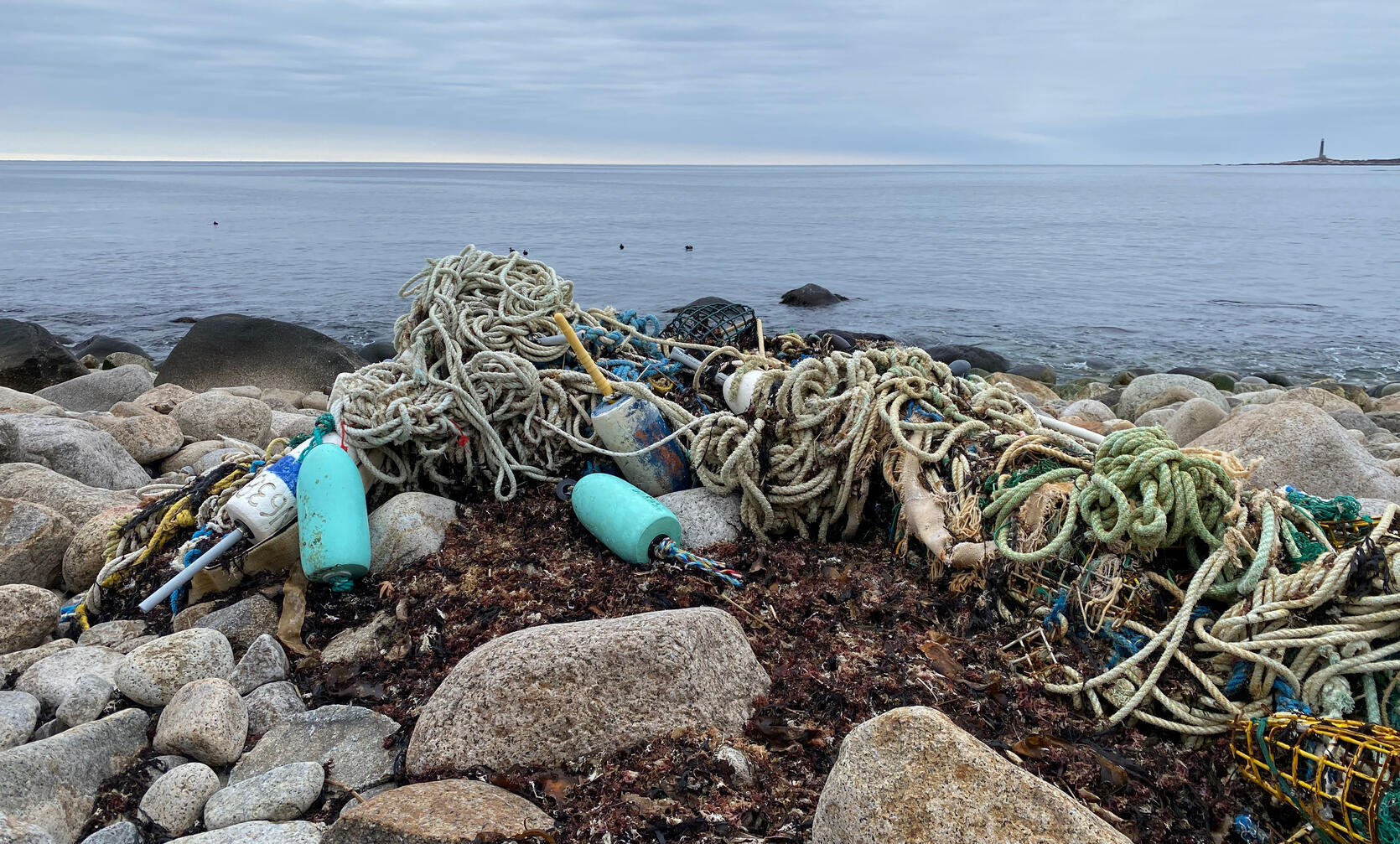
BOSTON — Today, the Healey-Driscoll Administration announced new state regulations to clean up fishing gear debris to protect marine biodiversity and public safety. Developed by the Massachusetts Division of Marine Fisheries (DMF), with input from the fishing industry, conservation organizations, law enforcement, and municipal leaders, the new regulations will streamline the timely and efficient removal of derelict fishing gear, while continuing to protect functional fishing gear and minimizing conflicts on the water. These regulations are set to take effect on January 30, 2026.
“Massachusetts is taking action to protect our environment, marine life, and public safety,” said Executive Office of Energy and Environmental Affairs Secretary Rebecca Tepper. “This is a win-win for our coastal communities—we look forward to continued partnership with the fishing industry and conservationists to tackle this challenge coastwide through creativity and collaboration.”
“This is a significant achievement—this will allow cleanup of ghost gear to make our coasts safer and healthier for marine life and mariners alike,” said Department of Fish & Game Commissioner Tom O’Shea. “We are grateful to all the champions in the legislature, across the industry, and the conservation community who came together to call for this much-needed change and look forward to continued partnership to host cleanups in each of our 78 coastal communities.”
Fishing gear debris—which is defined as gear that is not intact, does not function as intended, or is set during a closed season—harms marine life and creates safety hazards for fishers, boaters, and beachgoers. Lost or abandoned gear can ghost fish, or continue to catch and kill marine life, and pose entanglement risks for endangered marine mammals and sea turtles. Additionally, it creates significant hazards for mariners, commercial fishers, and beachgoers by impeding navigation, creating conflicts, and posing risks to public safety.
“Abandoned, lost, and derelict fishing gear has no place in our environment. Over 9% of fishing gear is lost or abandoned annually, but outdated state laws previously prevented our efforts to recover it,” said DMF Director Dan McKiernan. “We are grateful to the Legislature’s Coastal Caucus, lobster industry, and conservation community who all played an important role in advocating for this change to greatly enhance our capacity to clean up fishing gear debris with partners.”
“Fishing gear debris is a threat to marine life, a safety hazard for mariners, a persistent problem on our beaches, and a costly burden for municipalities to clean up. We look forward to this significant boost in our capacity to address this growing issue,” said Massachusetts Environmental Police Colonel John Monaghan.
Prior to changes, antiquated state law constrained the cleanup of fishing gear debris, as it afforded the gear property rights. This dated back to a time when much of the fishing gear used was salvageable and biodegradable wooden lathe traps. Today, most fishing gear debris consists of plastic-coated metal traps, which are not biodegradable and often not salvageable.
In 2022, DMF established the Derelict Gear Task Force comprised of government officials, fishing industry representatives, law enforcement, and conservation partners with experience researching and removing derelict gear. The Task Force produced a report outlining strategies to tackle this growing issue. In 2025, championed by the Massachusetts Coastal Caucus, state law was amended to enable cleanup efforts for the first time since 1940.
While DMF has always collaborated with Massachusetts Environmental Police (MEP) to clean up derelict gear and ensure compliance with fishing regulations, the new regulations will now allow DMF to permit local leaders, community organizations, and other partners to conduct coastal cleanups.
More work is needed to coordinate the disposal of fishing gear debris—DMF is committed to continued partnership with local leaders to expand these efforts. This includes working with municipalities and partners to expand capacity for safe disposal of fishing gear debris at ports and grow a network of partners to recycle, salvage, or upcycle fishing gear debris.
For more information about the new regulations, join DMF and Center for Coastal Studies for the seminar, Ghost Gear in New England, at Massachusetts Lobstermen’s Association Annual Weekend & Trade Show on Saturday, January 31, 2026, at 11:30 AM in Hyannis, MA.
Statements of Support:
“Left unchecked, abandoned fishing gear poses several threats to our marine environment and ecosystems,” said Senate Minority Leader and Coastal Caucus Co-Chair Bruce Tarr (R-Gloucester). “It ‘ghost fishes,’ increasing mortality without any harvest benefit, presents a major risk of entanglement for right whales and other marine species, clutters and pollutes the ocean floor, and creates ongoing problems for coastal communities when it washes ashore and must be collected and disposed of before it causes further damage. The passage of our legislation, with the support of DMF, set the stage for effective action to remove this environmental nemesis from our waters and coastlines. Now, these regulations provide the regulatory infrastructure to ensure that action can move forward with confidence, efficiency, and appropriate safeguards for those who depend on fishing gear to make a living.”
"This is a significant step toward cleaning our waters of abandoned and derelict gear that no longer benefits our fishing community and instead makes our waters less hospitable for marine life. These regulations demonstrate the progress we can achieve through common-sense solutions when the fishing and lobstering community, environmental groups, the Legislature, and the Executive Branch work together toward a shared goal," said State Representative and Coastal Caucus Co-Chair Kathleen LaNatra (D—Plymouth).
“Through working on DMF’s Derelict Gear Task Force, it became clear that fishing gear debris presented serious challenges on the waterfront. State law needed to be updated to encourage efforts to clean up fishing gear debris while still affording private property rights to fishing gear," said Marine Fisheries Advisory Commission Chair and Cape Cod Commercial Fishermen’s Alliance Outreach Coordinator Ray Kane. “I am proud of the work accomplished by DMF and the fishing industry to develop and implement this framework, which was strongly and unanimously approved by the Marine Fisheries Advisory Commission in December 2025. This will enhance our ability to clean up fishing gear debris to the betterment of our marine environment, fishery resources, and commercial fisheries.”
“It has been a long time coming, and we’re pleased that marine debris can legally be removed from our waters and shoreline in an efficient manner,” said Massachusetts Lobstermen’s Association Executive Director Beth Casoni. “We look forward to working with local communities that organize beach cleanups and fishermen to effectively remove marine debris from our ocean.”
“We have been privileged to participate in the collaborative development of the new state regulations for fishing gear debris,” said Center for Coastal Studies Marine Debris and Plastics Program Director Laura Ludwig. “Our ghost gear project in Massachusetts waters has removed over 100 tons of lost, abandoned or discarded fishing gear since 2013, and we're proud that our data could support this forward-thinking language change to facilitate future handling and disposal of marine debris."
“The New England Aquarium applauds Massachusetts’ new regulations to allow for the removal of abandoned and derelict fishing gear from Commonwealth waters,” said New England Aquarium Chief of Conservation and Stewardship Dr. Letise LaFeir. “Lost fishing gear poses ongoing risks to marine habitats and animals, including whales and sea turtles, and expanding the ability to remove this gear is an important step toward reducing those threats. We appreciate the Division of Marine Fisheries’ leadership and continued collaboration to protect marine life and support healthier ocean ecosystems.”
"We are grateful to the Coastal Caucus and to DMF for their leadership in tackling the long-standing challenge of ghost gear in Massachusetts waters and along our coast,” said Conservation Law Foundation Director of Ocean Policy Elizabeth Etrie. “Ghost gear keeps on fishing and fatally entangles marine life long after it is lost. DMF has worked for years to clean it up, and this new law finally gives them the clear authority to remove ghost gear and work with local communities to dispose of it safely. Removing ghost gear will make our ocean and shorelines cleaner and safer for marine life and community members."
"Removing abandoned fishing gear is a goal everyone can get behind. Once gear is lost or discarded, it keeps catching marine life and piling up on the ocean floor,” said The Nature Conservancy in Massachusetts State Director Kris Sarri. “I’m grateful to the legislators, conservation partners, fishermen, and the Division of Marine Fisheries staff who brought this from an idea to common sense regulations that protect the environment.”
###