- Executive Office of Education
- Department of Elementary and Secondary Education
- Department of Early Education and Care
Media Contact
Jason Law, Press Secretary and Events Coordinator
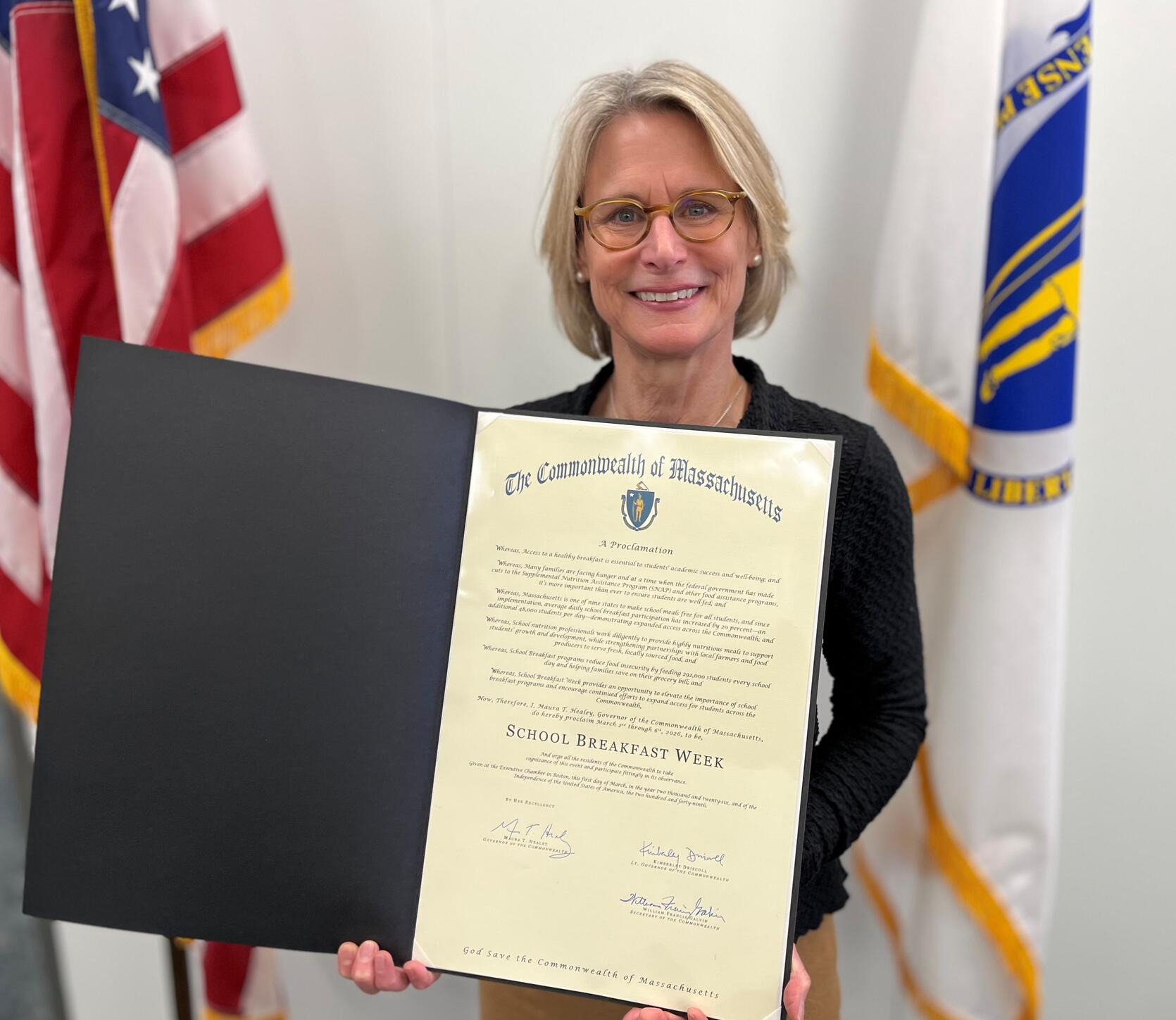
BOSTON — Governor Maura Healey has declared March 2-6, 2026 Massachusetts School Breakfast Week, recognizing the critical role school breakfast programs play in supporting student success, reducing food insecurity and grocery costs for families, and strengthening the local food system across Massachusetts.
Participation in school meals continues to grow after Governor Healey made state-supported universal free school meals permanent, making Massachusetts one of only nine states to provide school meals at no cost to all students. School breakfast programs now serve around 292,000 students each day, a 20 percent increase, representing an additional 48,000 students per day compared to the 2022-23 school year. Stable funding for universal free school meals has allowed school nutrition programs to plan ahead and invest in healthy meals that incorporate local produce.
“Every child deserves to start their school day nourished and ready to learn,” said Governor Maura Healey. “School Breakfast Week is a chance to celebrate the dedicated nutrition professionals and local partners who make this program possible and to recommit ourselves to supporting student success in and out of the classroom.”
“When students have access to a healthy breakfast, they are more focused, more engaged and better prepared to succeed,” said Lieutenant Governor Kim Driscoll. “Universal free school meals are making a real difference for working families, and we are proud to continue expanding access for students statewide.”
The administration is committed to increasing school breakfast participation to make sure students have the fuel they need to stay alert and focused throughout the school day. The effort is also part of Governor Maura Healey's Anti-Hunger Task Force’s work to mitigate President Trump’s cuts to the Supplemental Nutrition Assistance Program (SNAP) and adopt long-term solutions to hunger. While more students are eating school breakfast, the number of students who eat lunch each day is still about double the number who eat breakfast. In fall 2024, 292,000 students ate breakfast daily while 595,000 ate lunch.
“By making school meals free for all students, Massachusetts is removing stigma, reducing food insecurity and making it easier for families to put healthy, local and culturally appropriate food on the table,” said Acting Education Secretary Amy Kershaw. “School Breakfast Week provides an opportunity to elevate the importance of school breakfast programs and encourage continued efforts to expand access for students across the Commonwealth.”
“During this week, we emphasize the importance of breakfast and celebrate increased participation in school breakfast,” said Elementary and Secondary Education Commissioner Pedro Martinez. “We want students to know that breakfast is available to them and can help both their wellbeing and readiness to learn."
Research consistently shows that students who eat breakfast perform better academically, have improved attendance, and experience fewer behavioral and social-emotional challenges. School breakfast programs also improve food security and protect against obesity and other negative health outcomes.
When Massachusetts made universal free school meals permanent, it required all schools participating in the federal National School Lunch Program to also provide breakfast for their students. Under state law, schools where 60 percent or more of students are eligible for free or reduced-price meals under the National School Lunch Program must offer all students a school breakfast after the beginning of the instructional day. This can happen through a variety of models, including breakfast in the classroom, “grab and go” breakfast, and “second chance” breakfast in the cafeteria. The administration works with districts to help them find the model that works best for them.
“As President of the School Nutrition Association of Massachusetts, I am proud to celebrate the continued success of school breakfast programs across our Commonwealth. Universal school meals have transformed access for students, ensuring every child can start the day nourished, focused, and ready to learn. We commend the dedication of our school nutrition professionals who make this possible every day,” said Taylor Pirog, Food Service Director for Andover Public Schools and President of the School Nutrition Association of Massachusetts.
"Every morning, school nutrition teams across the Commonwealth show up early to ensure that our state’s future doctors, scientists, teachers, and leaders can start their day with a free, healthy meal. Because Massachusetts has made children’s health a priority, every student statewide can begin the school day with the nutrition they need to learn and grow," said Erin McAleer, CEO of Project Bread, the leading statewide food security nonprofit. "As we join the Healey-Driscoll administration and Secretary Kershaw in celebrating National School Breakfast Week, we are immensely proud of Massachusetts for leading by example, prioritizing and investing in feeding our children, and removing barriers to food access for every family statewide."
Governor Maura T. Healey proclaimed March 2-6, 2026, as School Breakfast Week in the Commonwealth, recognizing access to a healthy breakfast is essential to students’ academic achievement and overall well-being.
###