- Executive Office of Education
- Department of Elementary and Secondary Education
Media Contact
Jason Law, Press Secretary and Events Coordinator
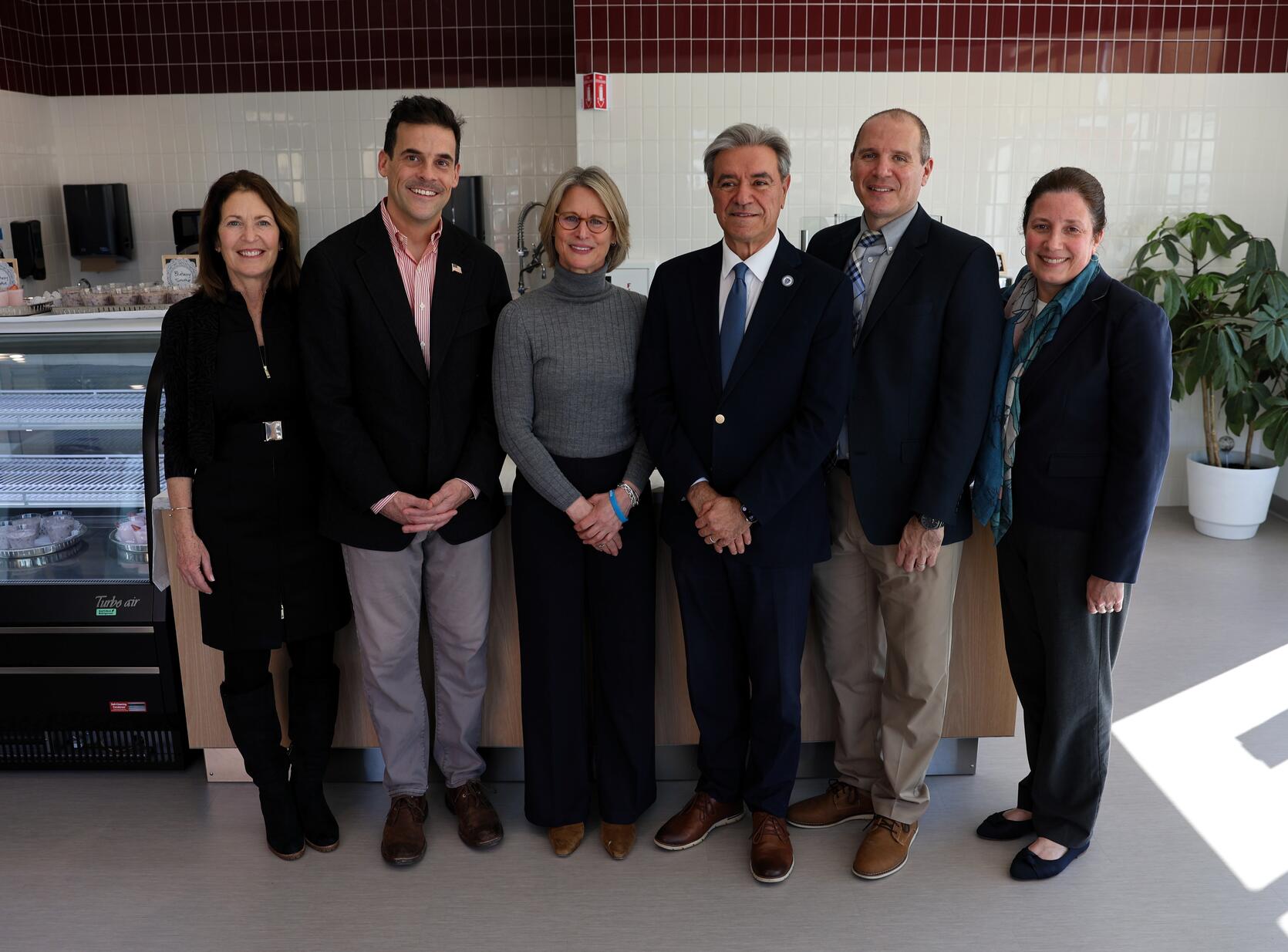
New Bedford — Following Governor Maura Healey’s Massachusetts School Breakfast Week proclamation, the Healey-Driscoll Administration visited New Bedford Public Schools today to lift up the critical role school breakfast programs play in supporting student success, reducing food insecurity and grocery costs for families, and strengthening the local food system across Massachusetts.
Acting Education Secretary Amy Kershaw, Department of Elementary and Secondary Education Food and Nutrition Programs Director Rob Leshin, Project Bread and state and local officials served “Grab and Go” breakfast at Taylor Elementary School and toured the district’s new Culinary and Nutrition Center, a 17,000 square foot facility that opened in July 2025. The state-of-the art center includes a refrigerated food preparation area, commercial walk-in cooler and freezer, blast cooler and freezer, storage areas and a commercial cook kitchen.
“A healthy breakfast allows students to start the day focused, engaged and ready to learn,” said Governor Healey. “School breakfast programs, such as New Bedford, not only prepare students to thrive in the classroom--they also help ease grocery costs for families. We’re excited to see more students taking advantage of these meals and grateful to our school nutrition professionals who make them possible every day.”
“New Bedford’s Culinary Center is a win, win, win model – helping students access healthy food, providing jobs and supporting the local economy and food system,” said Lieutenant Governor Kim Driscoll. “When kids have access to healthy food at school, they’re better prepared to reach their full potential. We’re proud to partner with districts across Massachusetts that are finding innovative ways to make breakfast accessible to more students.”
Participation in school meals continues to grow after Governor Healey made state-supported universal free school meals permanent, making Massachusetts one of only nine states to provide school meals at no cost to all students. School breakfast programs now serve around 292,000 students each day, a 20 percent increase, representing an additional 48,000 students per day compared to the 2022-23 school year. Stable funding for universal free school meals has allowed school nutrition programs to plan ahead and invest in healthy meals that incorporate local produce.
The administration is committed to increasing school breakfast participation to make sure students have the fuel they need to stay alert and focused throughout the school day. The effort is also part of Governor Maura Healey's Anti-Hunger Task Force’s work to mitigate President Trump’s cuts to the Supplemental Nutrition Assistance Program (SNAP) and adopt long-term solutions to hunger. While more students are eating school breakfast, the number of students who eat lunch each day is still about double the number who eat breakfast. In fall 2024, 292,000 students ate breakfast daily while 595,000 ate lunch.
“While the federal government continues to attack nutrition programs, in Massachusetts we remain committed to expanding food access. It was wonderful to visit New Bedford’s Culinary Center today and see what is possible when school communities come together with local food business to provide healthy and culturally appropriate meals to all students,” said Acting Education Secretary Amy Kershaw. “Expanding access to school breakfast helps reduce food insecurity, supporting working families and ensures students have the energy they need to succeed in class.”
“I am proud of Massachusetts' commitment to universal free school meals, including breakfast, which helps students be ready to learn,” said Elementary and Secondary Education Commissioner Pedro Martinez. "I'm grateful for the important and innovative work of school nutrition staff and hope students are taking advantage of the free meals available to them."
New Bedford Public Schools’ Food and Nutrition Services provided more than 1.2 million breakfasts throughout the 24-25 school year, as well as 1.9 million lunches, 65,000 afterschool meals and 519,000 pieces of produce as part of the USDA’s Fresh Fruit and Vegetable Program. The city says its new central kitchen allows the school district to deliver better meals to students more efficiently and consistently across the district. The center has also enabled the district to serve as the school food vendor for local charter and private schools, as well as include more local products in the meals, working with local farmers and fishers.
“I'm very grateful to New Bedford's food service team who have achieved record student participation in recent years and go above and beyond to ensure the highest standards in our breakfast and lunch programs all across the city,” said New Bedford Public Schools Superintendent Andrew O’Leary.
“School breakfast is critical not only for our children but also for the future of our city and the Commonwealth. The opening of the NBPS Central Kitchen in 2025 marked a new chapter for New Bedford’s students and families, and serves as a testament to what Gateway Cities can achieve when invested in,” said State Representative Antonio Cabral (D-New Bedford). “Thank you to Acting Secretary Kershaw and the Healey-Driscoll Administration for their partnership and for recognizing the incredible work happening right here in New Bedford.”
Research consistently shows that students who eat breakfast perform better academically, have improved attendance, and experience fewer behavioral and social-emotional challenges. School breakfast programs also improve food security and protect against obesity and other negative health outcomes.
"When we invest in school breakfast, we invest in our children’s health and our shared future. At Project Bread, we work to remove barriers between students and the food they need to succeed. One powerful example is Grab & Go breakfast, which makes free breakfast part of the school day instead of putting that responsibility on families,” said Sarah Cluggish, Chief Program Officer of Project Bread, the leading statewide food security nonprofit. “These programs save families time and money, support better classroom experiences for students and teachers, and help ensure every child has a fair chance to thrive. We’re proud to partner with districts like New Bedford through Breakfast After the Bell programs and to stand alongside the Healey-Driscoll administration in their commitment to ensuring every student in Massachusetts can access free school meals."
When Massachusetts made universal free school meals permanent, it required all schools participating in the federal National School Lunch Program to also provide breakfast for their students. Under state law, schools where 60 percent or more of students are eligible for free or reduced-price meals under the National School Lunch Program must offer all students a school breakfast after the beginning of the instructional day. This can happen through a variety of models, including breakfast in the classroom, “grab and go” breakfast, and “second chance” breakfast in the cafeteria. The administration works with districts to help them find the model that works best for them.
###