- Massachusetts Department of Environmental Protection
Media Contact
Lauren Moreschi, Director of Communications
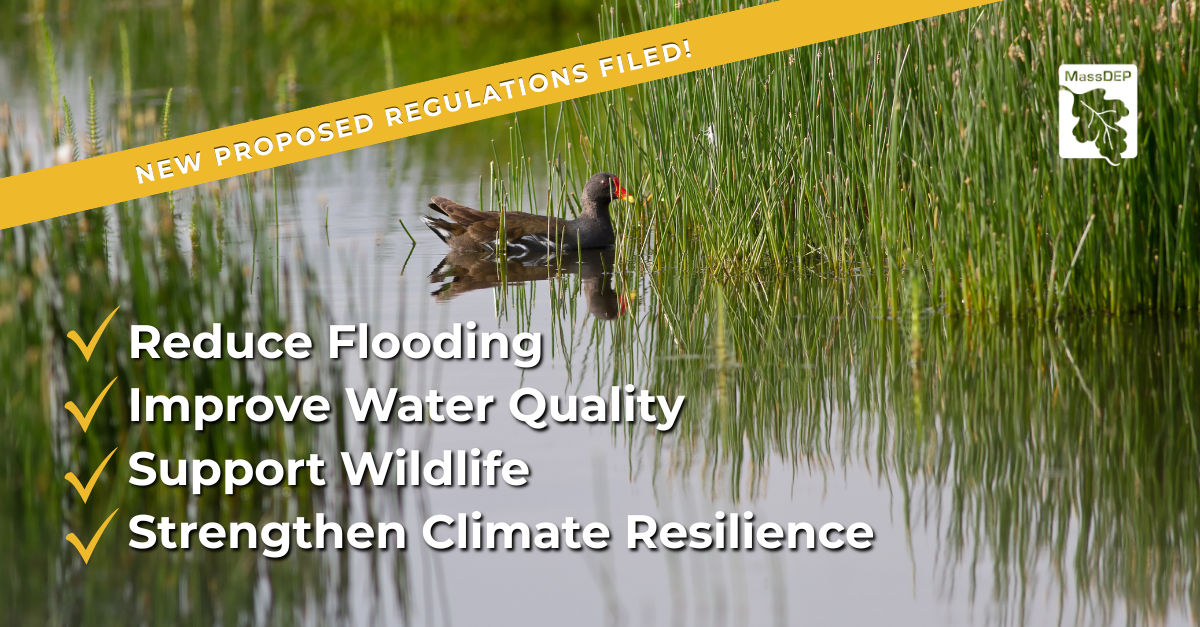
BOSTON — The Healey-Driscoll Administration filed draft regulations that will make it easier to restore wetlands across Massachusetts. The proposal supports strengthening the natural systems that reduce flooding, improve water quality, support wildlife, and help communities adapt to climate change.
Wetlands are critical to Massachusetts’ environment and economy. Restoring degraded wetlands is one of the most effective ways to preserve these benefits and prepare communities for future climate impacts.
“Flooding and storm damage are becoming more frequent and more expensive for families, businesses and communities across Massachusetts. Restoring our wetlands is one of the smartest investments we can make to reduce those costs and protect the natural landscapes that define Massachusetts," said Governor Maura Healey. “These draft regulations will help restore these areas so they can continue protecting communities, supporting wildlife and reducing the long-term costs of severe weather.”
“As a former mayor, I know communities want to move good projects forward, especially those that make neighborhoods safer and more resilient,” said Lieutenant Governor Kim Driscoll. “These updates will make it easier for municipalities to restore these important natural resources—protecting people, infrastructure, and ecosystems across Massachusetts.”
The proposed regulations from the Massachusetts Department of Environmental Protection (MassDEP) will accelerate ecological restoration projects and update wetland standards to reflect current science—helping restore wetlands more efficiently while maintaining strong environmental protections.
The draft regulations would:
- Expand streamlined permitting for four additional ecological restoration project types, including retired cranberry bog restoration, invasive plant management, and new techniques to restore degraded salt marshes.
- Support healthier wetlands and forests by allowing the removal of invasive plants and diseased or damaged trees in certain buffer zones and riverfront areas without requiring a filing under the Wetlands Protection Act.
- Improve access to nature by allowing routine construction and maintenance of unpaved trails in buffer zones and riverfront areas, supporting the Healey-Driscoll Administration’s Trails for All initiative.
- Incorporate the latest science by updating wetland boundary methods and plant lists used to identify bordering vegetated wetlands.
- Protect important wetland functions by strengthening standards for wetland replacement soils and recognizing the role of mature trees, forest canopy, and soil carbon in maintaining healthy wetlands.
These updates advance the Healey-Driscoll Administration’s efforts to expand nature-based climate solutions and achieve the state’s Biodiversity Goals by restoring ecosystems that protect both people and wildlife.
“Wetlands are one of the state’s most valuable natural resources in combating climate change, absorbing significant carbon from our atmosphere," said Energy and Environmental Affairs Secretary Rebecca Tepper. “Over the years, many areas of wetlands have become stagnant and unhealthy. It is critical we speed up the restoration of these lands so we can harness the full potential of our natural environment.”
“Restoring degraded marshes, bogs, and other wetlands can reverse decades of damage and help us build resiliency at the same time,” said MassDEP Commissioner Bonnie Heiple. “We’re excited to accelerate this work and appreciate the commitment of our many partner organizations to bring critical restoration projects to fruition.”
The public comment period ends August 20, 2026, at 5pm. A copy of the proposed regulations is available on MassDEP’s website.
Statements of Support:
State Senator Brendan Crighton (D-Lynn):
“As we continue to combat climate change and work to preserve our natural ecosystems, it is important that we seek out solutions that provide benefits for both our communities and our environment. By streamlining permitting for more ecological restoration projects, we are able to encourage the use of nature-based solutions that will achieve our conservation goals while maintaining critical environmental protections. Thank you to the Healey-Driscoll Administration for working to safeguard and promote climate resiliency in our communities.”
State Representative Dawne Shand (D-Newburyport):
“The streamlining of the salt marsh restoration permitting process has been a signature issue for me as a legislator. The Great Marsh is my district’s most important ecosystem and most important asset in the fight against a changing climate in which flooding will be a constant pressure. I’m thrilled by the Healey-Driscoll administration’s swift action.”
State Representative Kristin Kassner (D-Hamilton):
“Coastal ecosystem and marsh habitat restoration is one of our most effective defenses against sea level rise and climate change — but restoration can’t wait years for approvals. Streamlined permitting ensures that critical, science‑based projects move forward quickly to heal our environment, strengthen natural resilience, and protect the natural resources our communities depend on. I’m grateful to the Healey‑Driscoll Administration and the Department of Environmental Protection for creating a clearer, faster pathway for restoration and healing of our natural spaces.”
Massachusetts Department of Fish & Game Commissioner Tom O’Shea:
“Streamlining permitting processes to reduce costs and accelerate the pace of restoration is key to meeting the Commonwealth’s ambitious biodiversity goals. Restoring our wetlands and salt marshes will provide innumerable benefits for people and wildlife alike: cleaner water, thriving habitat, carbon storage, resilience to flooding and storms, and ultimately healthier, safer communities.”
Katie Theoharides, President and CEO, The Trustees of Reservations:
“At The Trustees, we know nature offers some of the best potential to build climate resilience to the growing threats of habitat loss, flooding, and storm damage. But the permitting to restore rivers, wetlands, and salt marshes has long been too costly and slow to address the urgent and ongoing impacts to our communities and ecosystems. We applaud the Healey-Driscoll administration for tackling this challenge and look forward to engaging in the review process.”
David O’Neill, President and CEO, Mass Audubon:
“It’s essential that we’re able to move quickly when the well-being and survival of our coastal and inland wetlands are at stake. Thanks to this effort by the Healey administration to expedite permitting for restoration projects, more wildlife and communities will be able to benefit from the flood protection, essential habitat, and other benefits that healthy and resilient wetlands provide. We look forward to even more progress in the future as recognition of the power of restoration and land protection grows.”
Patrick Herron, Executive Director, Mystic River Watershed Association:
“In the face of rising sea levels, we don't have the luxury of time. These proposed changes are a game-changer for climate resilience, turning regulatory red tape into rapid review and encouraging action to address the challenges. Right now, critical habitats like Belle Isle Marsh—Boston Harbor’s largest salt marsh—are threatened by rapid sea level rise. By streamlining approvals for vital restoration techniques, Massachusetts is empowering us to deploy nature-based solutions faster, protecting our coastal communities from flooding when and where we need it most.”
Kris Sarri, Massachusetts State Director, The Nature Conservancy:
“Our environment is changing rapidly, and we need common-sense approaches to restore the wetlands and natural systems we depend on. These regulations are a meaningful first step, and we need to continue promoting policies that keep pace with today's realities to protect people and nature in the future.”
Brad Campbell, President and CEO of Conservation Law Foundation:
“We applaud the Healey Administration for proposing these long-sought rules to refine standards and streamline permitting for projects that deploy nature’s services to protect both our environment and our communities against more extreme weather driven by climate change. Healthy wetlands and forests are among our most effective tools for climate resilience, and are priceless assets in providing flood protection, clean water, cleaner air, and safety amid fast-rising temperature. The increasing frequency, severity, and costs of extreme weather threats facing the Commonwealth make it urgent to adopt rules promptly after public comment is considered.”
###