- Division of Fisheries and Wildlife
Media Contact
Media Contact, MassWildlife
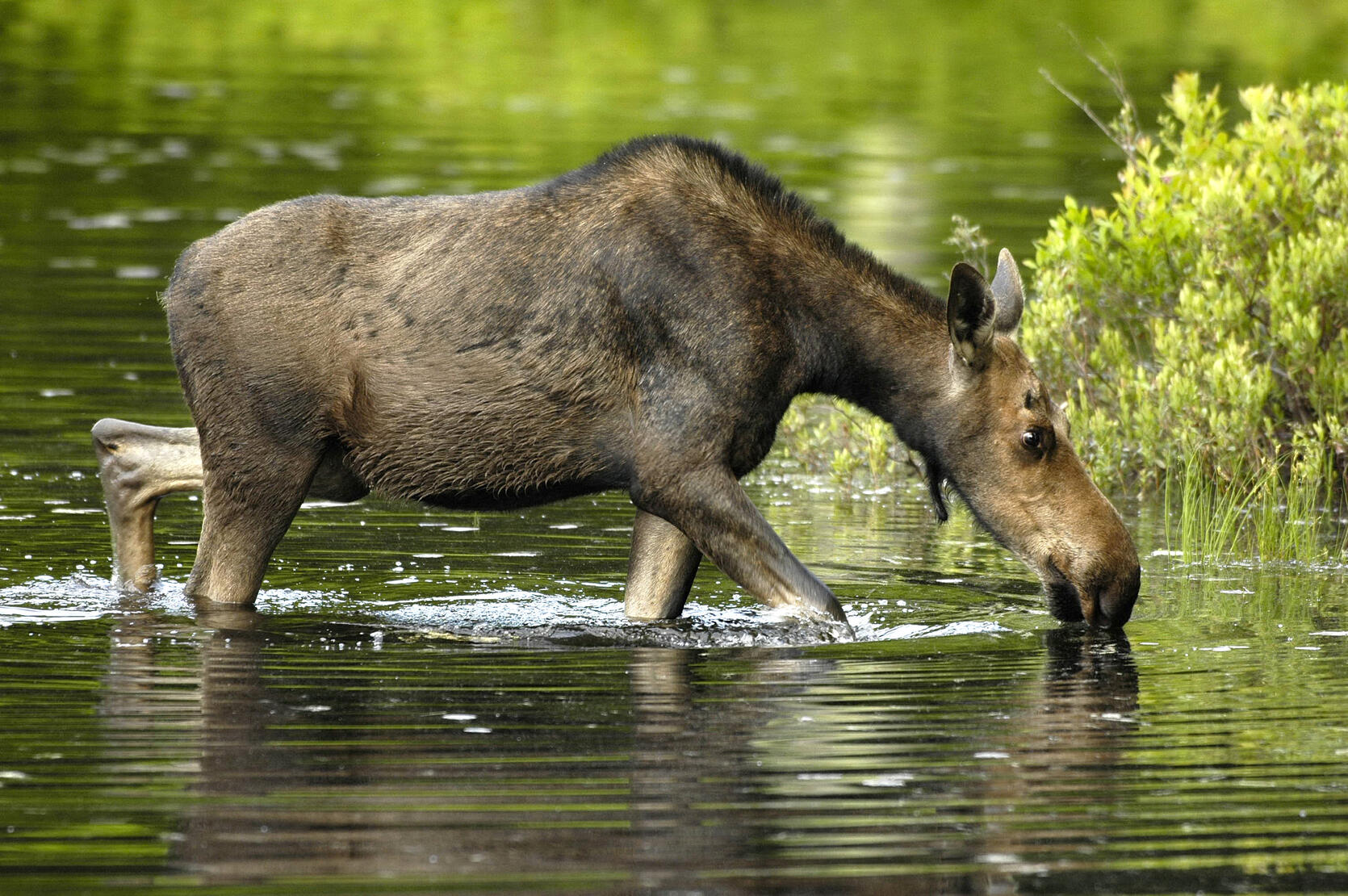
What do wild animals do when temperatures start to climb? Like any good New Englander, our local wildlife is built to survive all 4 seasons. From bizarre bodily functions to wardrobe changes, here’s how they’ll stay cool this summer.
Thermal panting and gular fluttering
You’ve likely seen a dog pant after laying in the sun. Wild animals do this too. Thermal panting increases the evaporation of liquid off their tongue and inside of their mouth, lowering their body temperature. Members of the canid (dog) and cervid (deer and moose) families are especially known for panting to thermoregulate. Certain birds, like owls and cormorants, use a similar strategy called gular fluttering—rapidly vibrating their throat to increase evaporation and cool themselves down.
Watch a video of a Massachusetts moose thermal panting on a warm day.
“Hot yoga” for birds
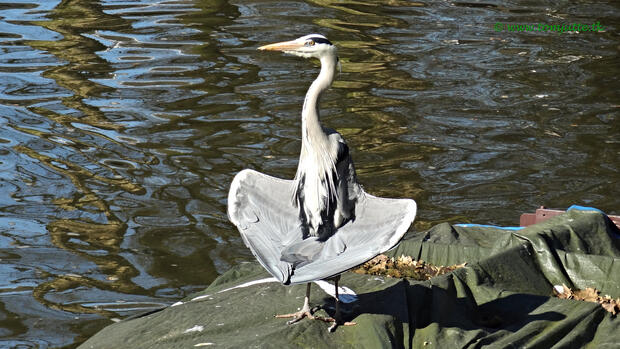
When it gets hot, great blue herons will spread their wings in a dramatic, statue-like pose. Although it may look like yoga, they are actually striking this pose to release heat from their body and allow a cool breeze to reach areas of skin with fewer feathers. Interestingly, they also do this in the morning sun to warm up their bodies after a cool night.
A messy solution
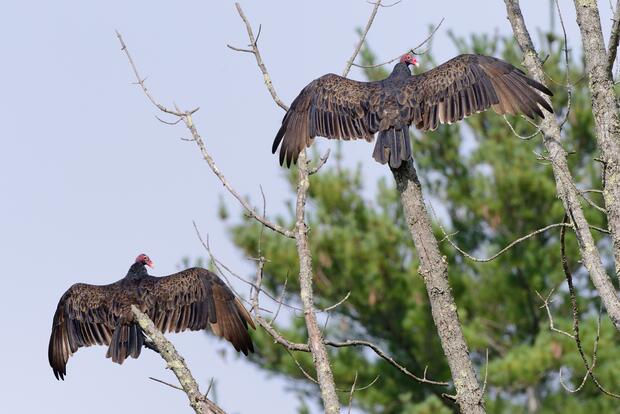
Turkey vultures and northern gannets use a unique, albeit gross, cooling strategy called urohidrosis (pronounced yoo-roh-hi-DROH-sis). These birds purposely defecate on their featherless legs to keep cool. The evaporation of the waste along the blood vessels results in a cooling effect. They’re not the only animals that do this. Harbor seals urinate on their hind flippers while sunbathing to regulate their body temperature too.
Shifting scenery and wardrobe
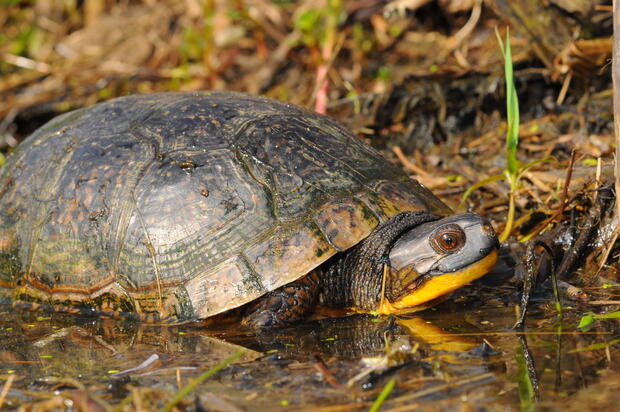
Sometimes survival just requires a change in routine. Some wildlife exhibit more nocturnal or crepuscular (dawn and dusk) activity so they can rest through the hottest part of the day. When it gets too warm, reptiles and amphibians move to cooler microclimates, underneath leaf litter and rotting logs, or submerge themselves in water. Black bears and moose will seek shelter in forested wetlands and use mud and shallow water to cool down. Occasionally, they come to artificial water sources, like swimming pools or water troughs. If you find wildlife cooling off, always keep your distance and wait for the animal to move on.
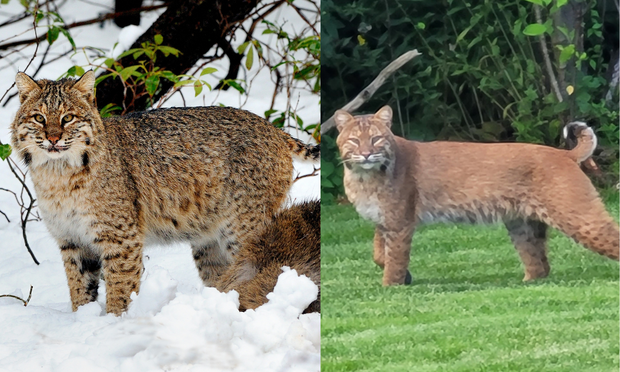
Many mammals, like coyote, deer, and fisher, also have thinner summer fur compared to their winter coats. Taking it a step further, bobcats not only have a thinner coat, they also tend to have less spots and more tawny, reddish fur to better camouflage with their summer habitats.
Want to help wildlife stay cool this summer?
Wild animals can care for themselves year-round and almost never need our help, even when it’s hot. However, you can make your yard a natural, cooling oasis for wildlife with these tips:
Note: If there are West Nile Virus or Eastern Equine Encephalitis (EEE) detections in your area, remove all standing water to avoid attracting mosquitoes.
- Grow native plants: For all wildlife, grow native plants, shrubs, and trees that offer natural sources of food and shelter from the sun.
- Bird bath 101: For songbirds, provide a shallow, clean bird bath with 1–2 inches of water. They are especially attracted to moving or dripping water. Be sure to replace the water weekly and regularly scrub the bird bath to remove build up. Learn more about creating a bird-friendly area.
- Be a rest stop for bugs: During droughts, or in areas far from natural water sources, create a water station in your garden for bees, butterflies, and other insects. Fill a shallow saucer with water and place items for bugs to perch on, like small rocks and twigs, in the saucer. Don’t add sugar, but a small pinch of salt can provide minerals that bees and butterflies need. Change the water at least weekly.
- Avoid causing harm when trying to help: Never intentionally feed wildlife. This can cause individuals to gather at the site, creating a place for disease to spread and for wildlife to become less cautious around people. This could further harm the animals you were trying to help.