- Massachusetts Probation Service
Media Contact
Coria Holland, Communications Director
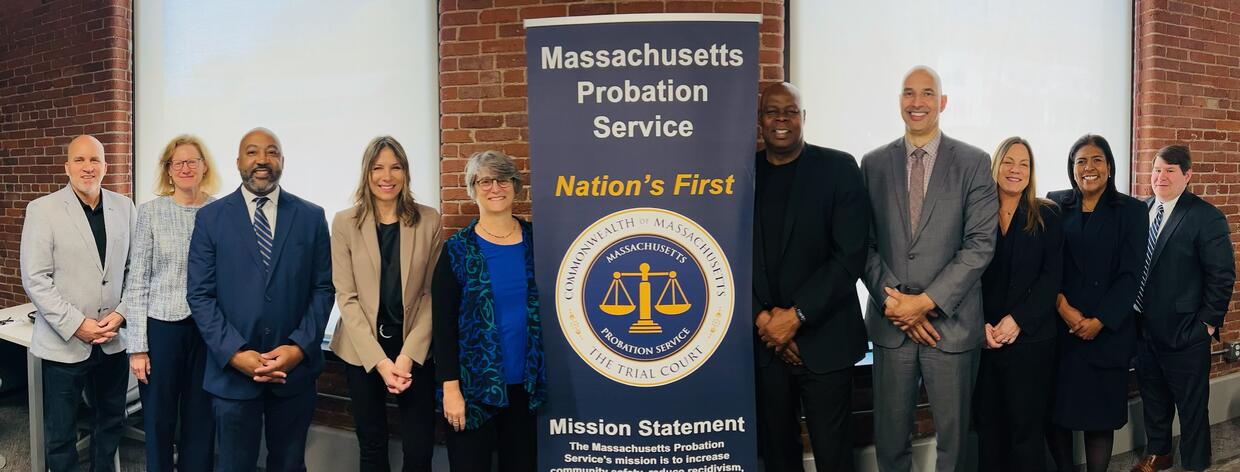
The Massachusetts Probation Service hosted a two-day Emerging Adult Justice training featuring leading experts and scholars in the field who discussed promising practices, strengthening youth in the community, connecting them with resources, and more.
This training took place at the Massachusetts Training and Operations Center (MTOC) in Clinton on April 27th and 28th.
Antonio Lima, Statewide Manager of Emerging Adult Services, oversees MPS’ program which is designed for young adults, ages 18-25, and is slated to be piloted in seven courts: Quincy District Court; Lynn District Court; Lowell District Court; Framingham District; Pittsfield District; New Bedford District; and Fitchburg District courts. Emerging adults represent “a distinct developmental stage,” according to Mr. Lima.
“Research indicates that individuals in this age group are more likely to struggle with impulse control in emotionally-charged situations, highly susceptible to peer influence, and often give less consideration to long-term consequences,” Mr. Lima said.
Probation Commissioner Pamerson Ifill spoke about Mr. Lima and his efforts to address the needs of emerging adults and said "This work is fundamental."
Commissioner Ifill cited data which shows that emerging adults represent 10% of the Massachusetts population, 29% of arrests and 23% of House of Corrections (HOC) populations. Within three years, approximately 76% were back before the courts on new charges. He said it is his goal “to have every Probation Officer in each court as a touch-point with a skill set and knowledge” of how to assist emerging adults.
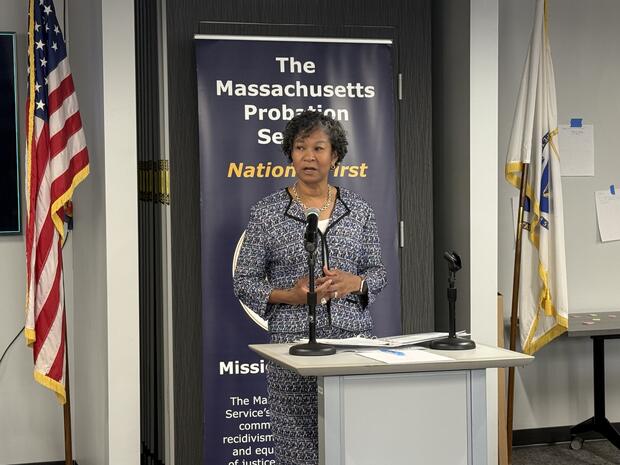
Honorable Kimberly Budd, Supreme Judicial Court Chief Justice, was among the speakers who addressed the audience of MPS staff, stakeholders, community partners, and judges. Chief Justice Budd said Probation Officers play a "critical role" and "build bridges between the justice system and community." Chief Justice Budd recalled the words of Chief Justice Ralph Gants who was committed to the work of helping emerging adults improve their lives. Chief Gants passed away in 2020.
Echoing his words, Chief Justice Budd said, "We must ask ourselves what can we do to help them get past their past." During the training, UTEC CEO Gregg Crouteau opened each day with a “Who’s in the Room” where attendees who were asked to identify themselves by years of service in Probation and length of time working with emerging adults.
Dr. Ronald P. Corbett, Jr., former acting Massachusetts Probation Commissioner, shared Information on incentives for emerging adults in “Ok, So Now What?: Tools for Implementation.” The two-day training also featured a presentation, “Promising Practices in Emerging Adult Justice,” by Leal Chester, Director of the Emerging Adult Justice Project affiliated with the Annie E. Casey Foundation.
Honorable Justice Jared R. Rice of New Rochelle City Court spoke about the work and impact of the Opportunity Youth Program he created. Former New York City Probation Commissioner Ana Bermudez discussed “Applying the Emerging Adult Lens Probation.” Dr. Gina Vincent, UMASS Chan Medical School Professor and Co-Director of the Law & Psychiatry Program, presented “How Should We Use Protective Factors?” Emily Cardy, an attorney for CPCS (Committee for Public Counsel provided state and federal statutes on emerging adults in “The Road to the Mattis Decision.”

There were two panel discussions, including, “Empowering Transitions: Connecting Adults to Community Resources,” which featured Patricia Horne, Deputy Director of the Office of Community Corrections which oversees the 18 statewide Community Justice Support Centers; Maegan DaSilva, Program Director of the BH-JI (Behavioral Health Supports for Justice-Involved Individuals) at Community Counseling of Bristol County, Inc.; Antonio Gutierrez, UTEC co-founder and executive director.
The two-day training culminated with a second panel, “The Path to Healing: Insights & Resilience from Lived Experience,” which featured participants of the UTEC Fellowship Program who spoke about their lives as former emerging adults, returning to the community, and work post-incarceration.