- Division of Fisheries and Wildlife
Media Contact
Media Contact, MassWildlife
In The Hobbit, Bilbo Baggins could have been talking about nature journaling when he said, “You step onto the road, and if you don't keep your feet, there's no knowing where you might be swept off to.”
Mindfulness techniques like meditation often get a lot of attention, but nature journaling offers another powerful way to cultivate presence and awareness. Nature journaling is the practice of observing the natural world and recording what you notice. It can include documenting plants, animals, weather, landscapes, and seasonal changes, focusing on careful observation rather than artistic perfection. Nature journaling allows you to slow down and notice patterns, colors, sounds, smells, and textures you might otherwise miss.
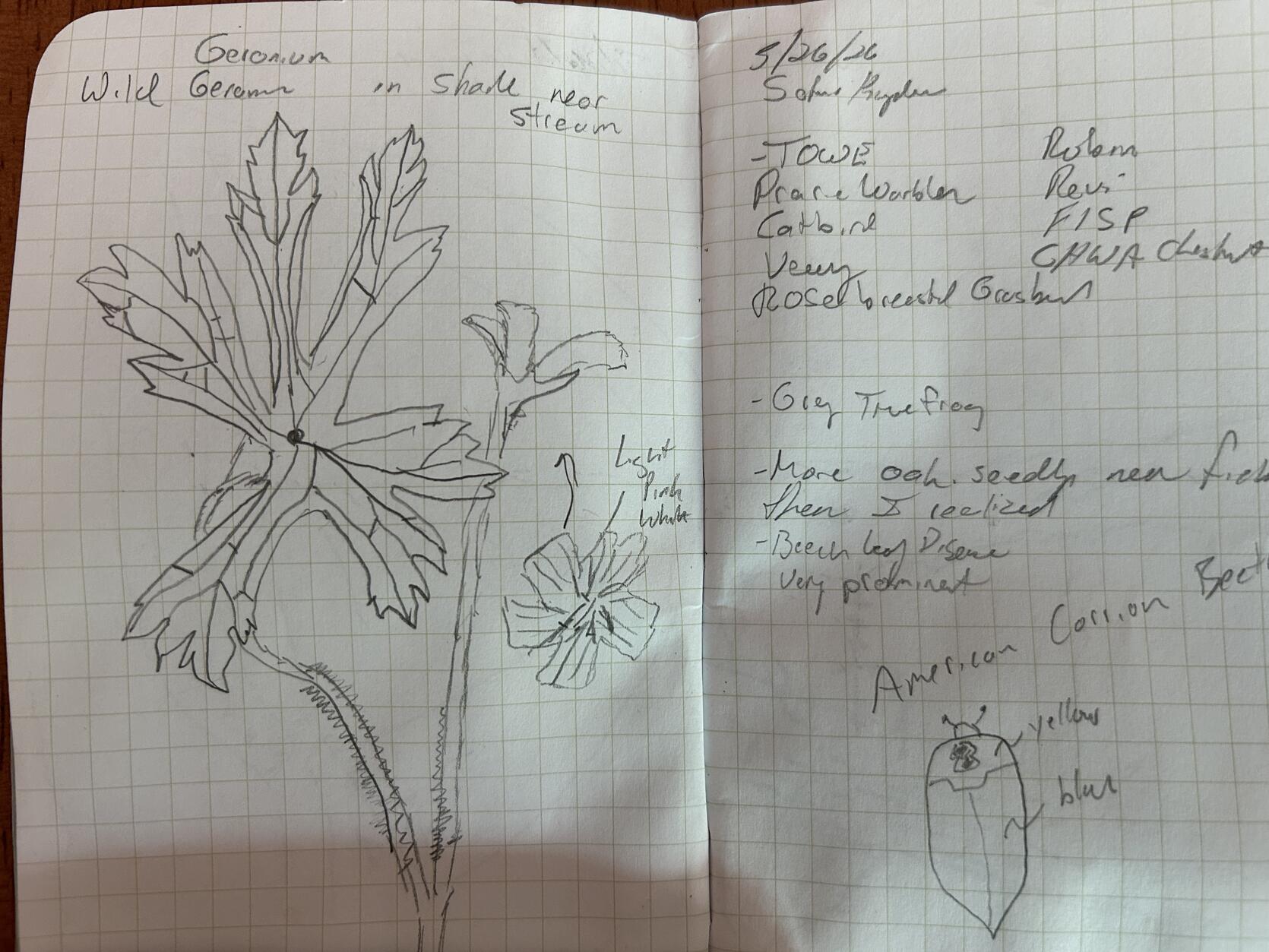
One of my first nature journaling sessions was inspired by a blooming patch of wild geraniums I noticed while hiking Satan’s Kingdom Wildlife Management Area in spring. As a beginner, I knew that starting with a stationary subject, like a plant, was a good move. With notepad and pencil in hand, I began to carefully observe the geraniums and sketch. What unfolded was the discovery of a world that amazed me. I noticed that the pattern of the leaf veins was unusual, a departure from the bilateral symmetry found in many other plants. The stem was covered with fine hairs, and the leaf lobes were sharp and pointed. I also noted that it was growing in the shade near a stream.
Prior to that moment, I had been completely unaware of the intricate beauty of a plant I had walked past hundreds of times. But the journaling didn't end with the geranium. While sketching, I noticed a fascinating beetle with inkblot-like markings on its yellow back. According to my iNaturalist App, it was an American carrion beetle, another incredible species that contributes to our region's biodiversity that I had remained unaware of for all 51 years of my life until embarking on this brief ten-minute journey.
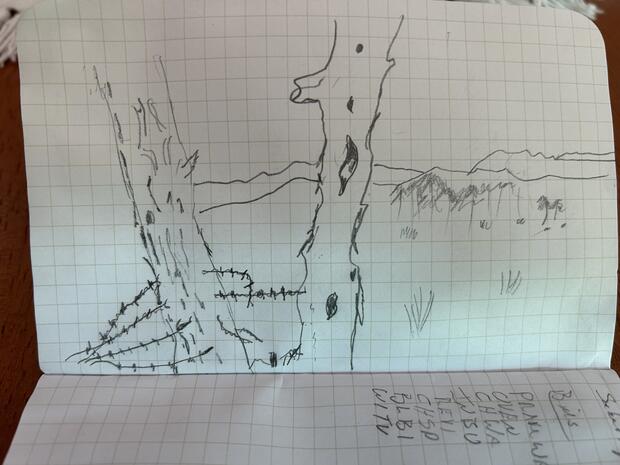
Nature journaling has no rules. Personally, I like to make notes and drawings about whatever captures my interest. If I hear bird calls, I write them down. Sometimes I sketch a landscape simply because I'm drawn to it—like this sketch of two hickories with old barbed-wire fence running through them.
What is especially wonderful about nature journaling is that it is for everyone, regardless of age or ability. Young people may prefer to scribble, doodle, and let their curiosity lead the way. Even those who can't yet hold a pencil can explore nature through their senses by being asked to talk about what they see, smell, hear, or feel. I am always amazed by how children experience the natural world without the self-imposed rules and filters that many adults accumulate over time. Those who have visual or hearing limitations can explore using other senses. Feel the bark of a tree or the surface of a leaf. Is it smooth, shaggy, or rough? What do you smell? Is the air musty in the fall or fragrant in the spring?
Nature journaling isn't really about the finished page. It doesn't matter if your sketches are difficult to recognize or if your handwriting is nearly impossible to read—as is often the case with mine. What matters is the transformative process that occurs when we open ourselves to the living world around us. By noticing smells, textures and other sensory details, we give our brains more ways to remember an experience. That’s why a single scent can pull us back in time—to Grandma’s apple pie or the roses outside a childhood home. Nature journaling strengthens those connections, deepening our relationship with the natural world. Instead of seeing an “oak tree,” we notice a red oak with rough bark and waxy leaves, standing in a forest scented with crisp autumn leaves.
Each of us possesses our own unique power of observation. When we allow ourselves to explore through nature journaling, we create stronger and more meaningful connections with the outdoors. Try it just once, and you may never “see” the world in quite the same way again.
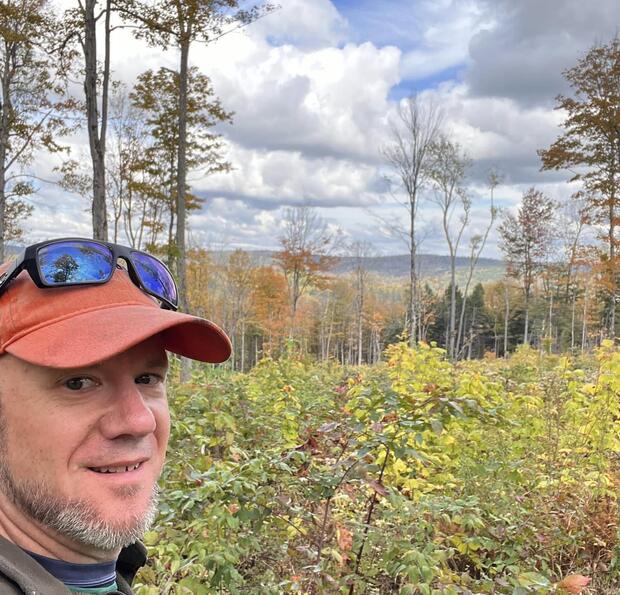
Tom Wansleben is a Habitat Biologist with MassWildlife who plans and implements habitat management projects across Massachusetts. While careful observation is central to his work, nature journaling has helped him slow down and experience the outdoors in a new way.