
Transforming Massachusetts’ only women’s correctional facility to strengthen health, opportunity, dignity, successful reentry and public safety.
- This page, Reimagining MCI-Framingham, is offered by
- Massachusetts Department of Correction
Reimagining MCI-Framingham
Project Information and Updates
This site is the central source for current information, project updates, stakeholder engagement and resources related to the transformation of MCI-Framingham.
Vision
Our vision is to create an MCI-Framingham where the physical environment, programming, healthcare, operations, and culture work together to strengthen dignity, safety, opportunity, connection, and successful reentry.
The initiative will create more supportive spaces for living, learning, healing, and preparing for release; expand opportunities for education, workforce development, and family connection; and strengthen the environment in which staff carry out their work. The goal is improved outcomes for women, staff, families, and communities—and a safer future for Massachusetts.
Transformation at a Glance
Reimagining MCI-Framingham requires a dual approach that transforms the physical campus while continuing investments in programming, health and wellbeing, staff support, operations, culture, and connection to families and communities.
Physical Environment

Modern, accessible, and more normalized spaces designed to strengthen privacy, safety, learning, care, and daily life.
Programming & Reentry

Expanded opportunities for education, vocational training, college-level learning, skill development, and preparation for successful reentry.
Health & Wellbeing

Trauma-informed medical and mental health environments that strengthen privacy, access to care, recovery, wellness, and outdoor connection.
Culture & Staff Support

Dignity-centered practice, staff wellbeing, professional development, and operational improvements that support a safer and more effective environment.
Family & Community Connection

Stronger opportunities for family connection, resident and staff engagement, community partnerships, and continued stakeholder input.
Operational Effectiveness

Streamlining essential services for the housed population and aligning operations with modern correctional practices.
What the Future Campus Will Make Possible
The future campus is being designed to create environments that strengthen dignity, health, learning, connection, and preparation for successful reentry.
More Supportive Living Environments
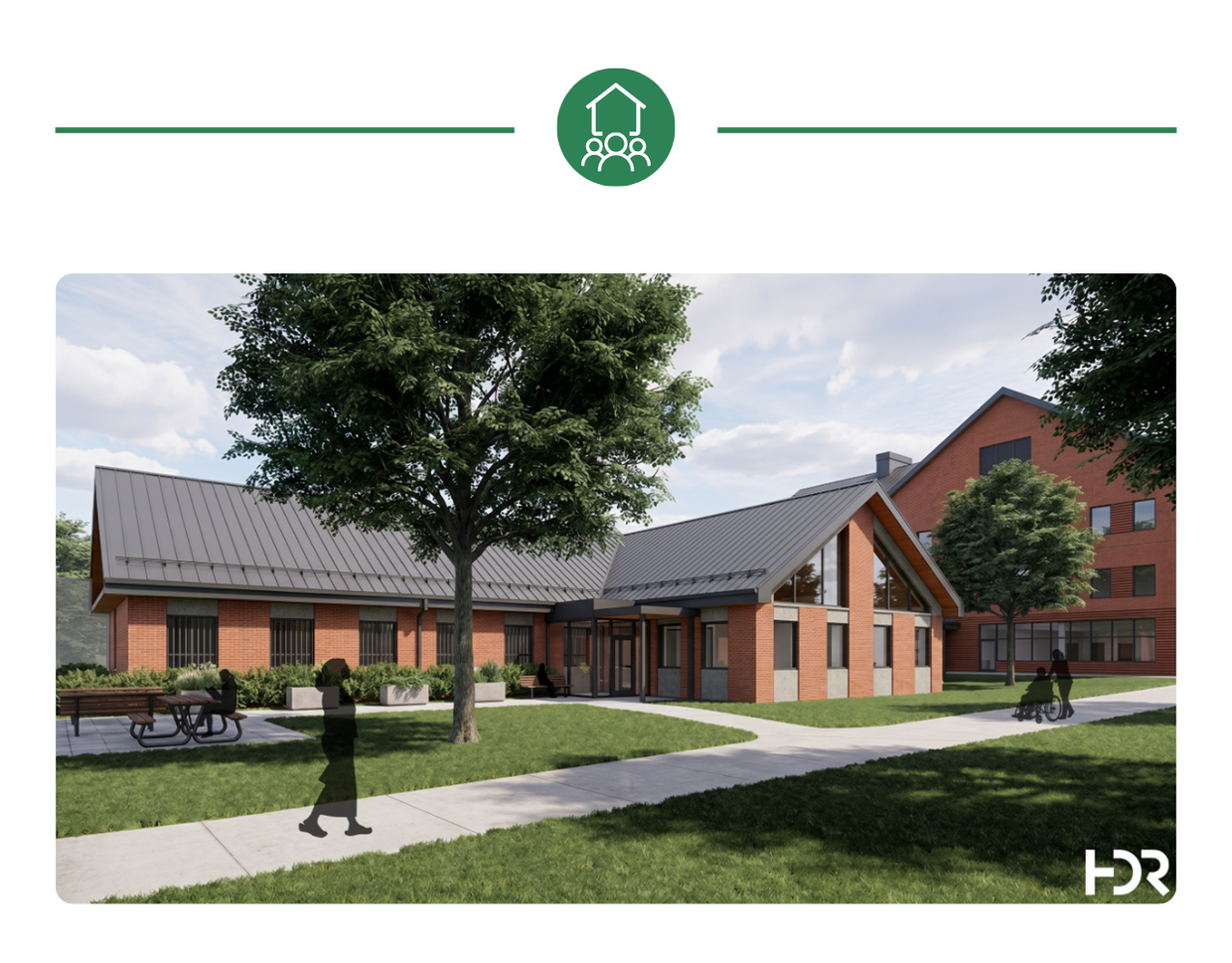
Renovated cottages will create smaller, more normalized living environments with greater privacy, improved communal space, enhanced accessibility, and settings that support community living and reentry preparation.
Modern, Trauma-Informed Care
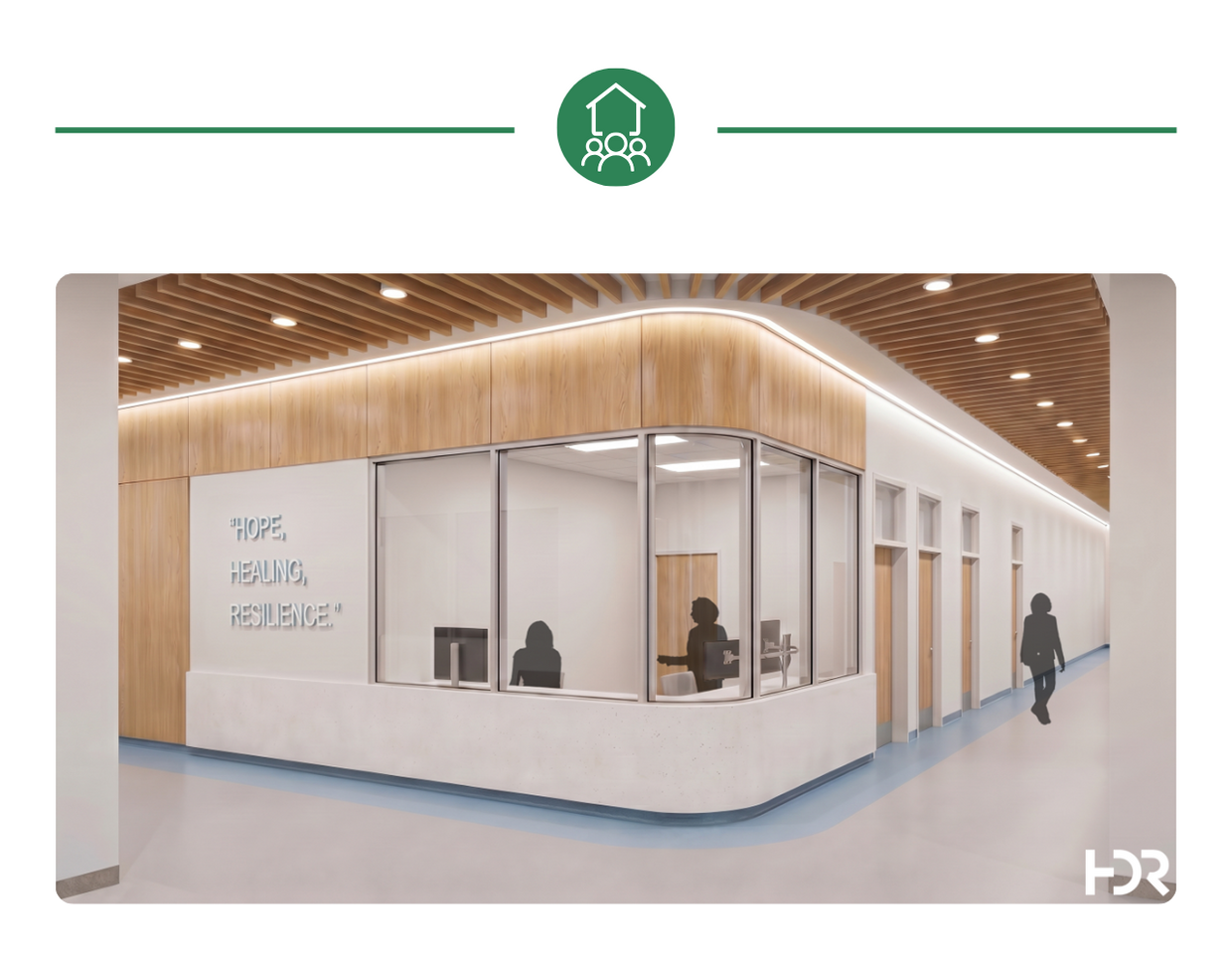
A new Healthcare Center will provide modern medical, mental health, and substance use treatment environments designed to strengthen privacy, dignity, recovery, and access to care.
Expanded Opportunities for Learning & Reentry
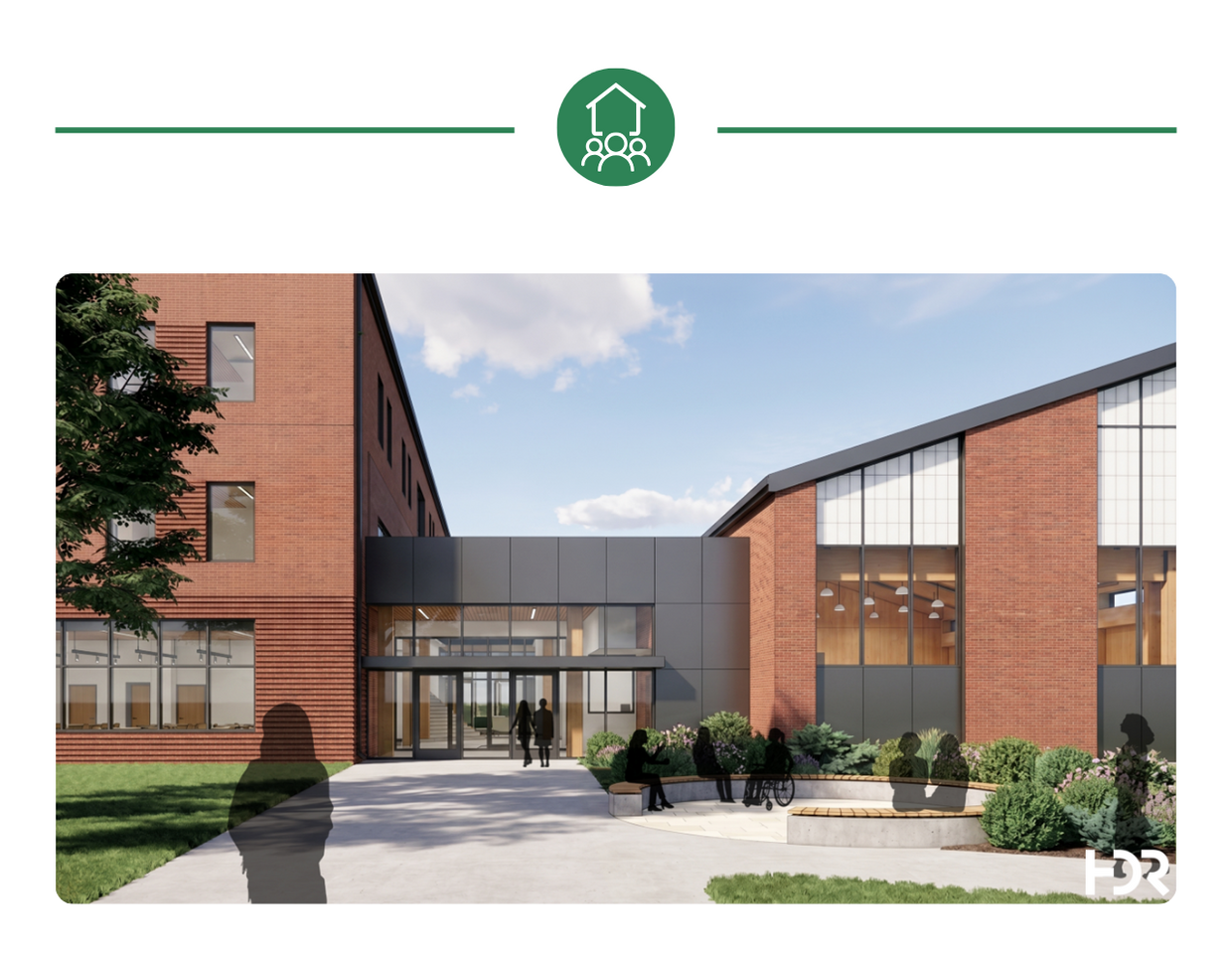
The Wellness and Learning Center will expand space for education, college programming, vocational training, technology, recreation, and practical skill development.
Explore the full project scope, buildings, and renovation details.
Project Snapshot
Key facts about the phased transformation of MCI-Framingham.
$360 Million Anticipated Project Investment

Estimated total investment for planning, design, renovation, modernization, and phased construction.
Schematic Design Current Project Phase

Design work is underway to verify scope, program, budget, schedule, and project goals.
Suffolk Construction Construction Manager

Supporting cost management, construction logistics, sequencing, and mitigation of impacts to women and staff.
Late 2027 Anticipated Phase 1 Construction

Enabling work for the first phase is expected to begin in late 2027.
Approximately 200,000 sq. ft. Future Campus Footprint

The redevelopment is expected to reduce the campus footprint from approximately 260,000 square feet.
All Electric Sustainability

The project will modernize aging infrastructure, eliminate reliance on steam, reuse existing buildings where possible, and reduce emissions.
Transformation Timeline
Reimagining MCI-Framingham is advancing through a series of capital, programmatic, operational, and stakeholder-engagement milestones.
2025: Initiative Advances
- Capital investment plan announced
- Early stakeholder outreach and project briefings begin
2026: Design and Engagement Expand
- Schematic design underway
- Suffolk Construction selected as Construction Manager
- Resident survey completed
- Staff and resident engagement continues
- Amend partnership informs culture and stakeholder strategy
- Reintegration House opens
- Education, reentry, and workforce programming continue to expand
Late 2026 - 2027: Project Moves Toward Construction
- Phase 1 study completion and certification anticipated
- Wellness and Learning Center phase advances
- Design development and construction documents continue
- Trade procurement begins
Late 2027: Phase 1 Construction Begins
- Enabling work and early construction activities begin
- Ongoing communication focuses on phasing, continuity of services, and construction impacts
2028 - 2033: Phased Campus Transformation
- Housing, healthcare, wellness and learning, infrastructure, and site improvements advance in phases
- Programming, culture, staff support, and stakeholder engagement continue alongside construction
Transformation in Action
Transformation is already underway. While the physical redevelopment of MCI-Framingham advances, DOC continues to expand programs and partnerships that strengthen education, skill development, reentry preparation, and opportunities for growth.
Stakeholder Engagement & Resident Perspectives
Reimagining MCI-Framingham is being shaped through ongoing engagement with incarcerated women, staff, families, community partners, elected officials, and other stakeholders. Feedback is helping inform planning, design, programming, and the broader transformation of the institution.
- Resident & Staff Engagement: Town halls, surveys, workshops, and ongoing discussions
- Community & Stakeholder Input: Advocates, local officials, legislators, and community partners
- Design Collaboration: Engagement with DOC, DCAMM, HDR, and project partners
- Amend Partnership: Stakeholder engagement, culture, leadership, and roadmap development
What Residents Are Telling Us
In April 2026, 51 residents—approximately 25% of the MCI-Framingham population—participated in a survey about priorities for the redesign and the future of the institution.
- Housing emerged as the clearest priority. When asked to identify the single most important redesign priority, 29% selected safe and calm housing. Residents emphasized greater privacy, reduced noise, natural light, ventilation, and more normalized living conditions.
- Residents want stronger education, job-training, and reentry opportunities. Eighty-two percent said they would use building-trades training space, and 73% expressed interest in computer labs.
- Family connection and outdoor space matter. Eighty percent supported improved indoor visiting spaces and 73% supported outdoor visiting areas, with residents also emphasizing space for exercise, quiet reflection, and fresh air.
- Healthcare environments are also a priority. Forty-five percent identified limited healthcare space as a barrier to rehabilitation, with residents calling for greater privacy, access, and more supportive care environments.
- Residents want to stay involved. Eighty-eight percent said they would like to participate in future discussions about the redesign.
Survey Results
These findings are helping inform ongoing design discussions, engagement priorities, and the broader transformation roadmap.
Help Us Improve Mass.gov with your feedback
Thank you for your website feedback! We will use this information to improve this page.
If you would like to continue helping us improve Mass.gov, join our user panel to test new features for the site.