
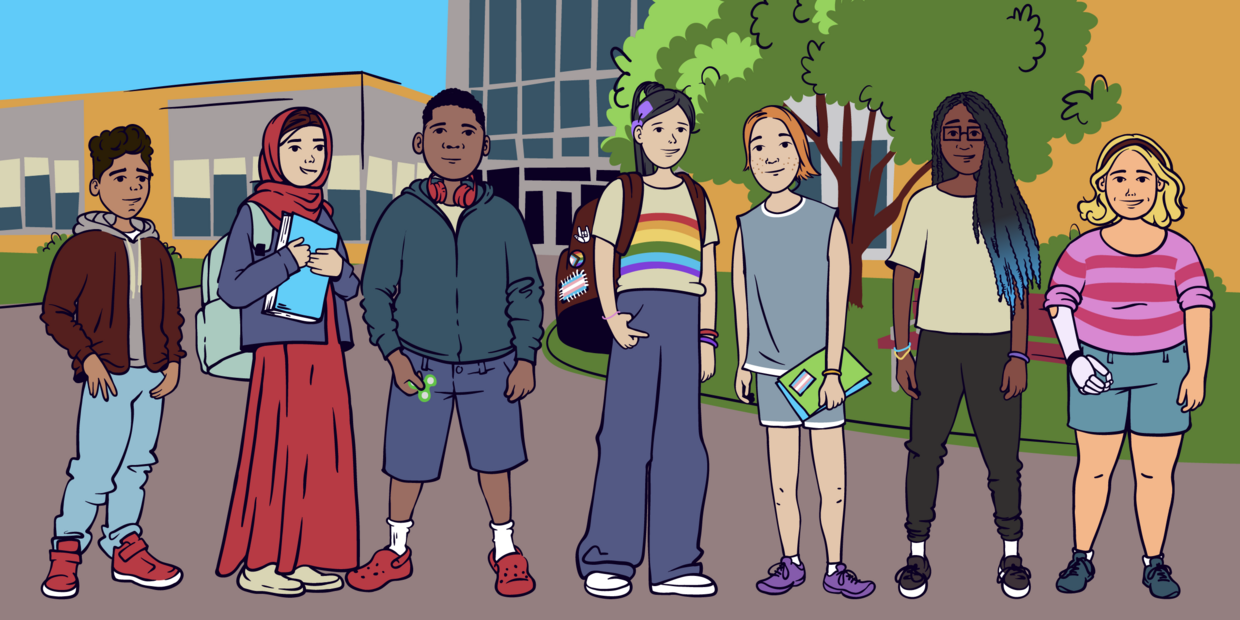
What is bullying?
Bullying can take many forms, including verbal, social, physical, sexual, and cyber (online). Bullying can happen to anyone, but it often affects people who feel left out.
Types of bullying
Verbal bullying
Saying or writing mean things. It can include:
- Teasing
- Name-calling
- Rude sexual comments
- Mocking or taunting
- Saying you’ll hurt someone
Social bullying
When someone tries to hurt another person’s relationships or make others not like them. This can include:
- Leaving someone out on purpose
- Telling other students not to be friends with someone
- Spreading lies or rumors about someone
- Embarrassing someone in front of others
Physical bullying
Hurting someone’s body or things. This can include:
- Hitting, kicking, or pinching
- Spitting
- Tripping or pushing
- Taking or breaking someone’s things
- Making mean or rude signs with their hands
Cyberbullying
Happens online through websites, texting, apps, social media, and games. It can include:
- Sending, posting, or sharing mean or untrue things about someone
- Sharing personal or private things about someone that could upset or embarrass them
Identity-based bullying
When someone is bullied because of who they are. It can be about a person’s:
- Race or ethnicity
- Religion
- Disabilities (such as physical, learning, emotional, sensory)
- Immigration or citizenship status
- Sexual orientation or gender identity (LGBTQIA+)
- Physical appearance
Sexual bullying
Can happen online or in person. It includes any unwanted or inappropriate behavior of a sexual nature such as:
- Sexual comments or actions
- Sexual jokes and name-calling
- Rude hand signs
- Spreading lies about someone’s private life
- Sharing sexual photos or videos
- Touching or grabbing someone without permission
How bullying hurts
Bullying can make people feel unsafe and hurt their ability to do well in school. It can also stop them from expressing who they really are. Kids and teens who are bullied are more likely to have mental health challenges that can be long-lasting. Bullying can cause anxiety, panic attacks, depression, and thoughts of suicide.
That’s why it’s important to think about what we say and how we act. Small actions, like leaving some out on purpose, or making a joke about their identity, can hurt them for a long time. The good news is, there is a lot you can do to prevent bullying at your school by making everyone feel included.
What you can do if another student is being bullied
- Report it. Share your experience with your school and ask about bullying and harassment policies. You may also choose to File a Civil Rights Complaint with the Civil Rights Division of the Attorney General’s Office.
- Speak Up. If you feel safe, speak up and say, “Stop, don’t bother me."
- Be a friend. If you see someone being bullied, try to be a friend. When it’s safe, help them leave the situation. Include the person being bullied in social activities with your friends.
If you or someone you know is struggling, there are ways to get help.
What you can say and do if someone is being bullied or left out
Just knowing that someone else cares and doesn't think what happened is OK can make a difference.
You can:
- Talk with them during class breaks, even just to say “hi"
- Invite them to sit with you at lunch
- Walk with them to class
- Invite them to do homework with you and a group of friends
- Ask them to play a video or card game during free time
- Show them a video or photo that could make them smile or laugh
- Be patient and respectful
You can say:
- “I’m here for you and I want to help.”
- “You didn’t deserve to be treated that way.”
- “You are a good person in a bad situation.”
- “It was wrong of that person to do that.”
- “Can I help you find an adult to talk to?”
If someone is struggling, there are ways to get help
988
If you (or someone you know) are having emotional distress or thoughts or suicide, reach out to the 988 Lifeline. To talk to someone now, call or text 988 or chat with 988 Lifeline Specialist online.
- For Spanish speakers, call 988 and then press 2 or text AYUDA to 988.
- For people who are deaf or hard of hearing
- Use your preferred relay service or dial 711 then 988.
- You can also use 988 Videophone
Trevor Lifeline for LGBTQ youth
You can also call the Trevor Lifeline for LGBTQ Youth: call 1 (866) 488-7386, text 678-678, or chat with a crisis counselor online.
Trans peer support
For trans peer support connect with the Trans Lifeline: call 1 (877) 565-8860.