
Always handle fish with care, especially if you plan to release it. Always wet your hands before handling a fish. This preserves the mucus coating that protects the fish from disease and allows them to move easily through the water. If you plan to release the fish, get them back into the water as quickly as possible.
Removing the hook can be tricky at first, but you'll get the hang of it with a little practice and patience. Many fish have spines and sharp gill plates. Learn how to handle different types of fish to protect yourself and the fish.
How to handle by species
- Sunfish all have spiny fins. Slide the palm of your hand over the head and back pushing the dorsal fin back and flat. Remove the hook with your hand or with pliers.
- Yellow perch and walleye have very sharp gill plates and dorsal spines. As with sunfish, slide your hand back over the head pushing the dorsal fin back with the palm of your hand. Take care to avoid the back edge of their gill covers. You can hold larger yellow perch by the lip, but don’t try this with walleye as they have sharper, more developed teeth.
- Bass can be handled in several ways. For smaller bass, you can use the same body grip as described for sunfish. For larger bass, firmly grip the mouth/lower jaw with your thumb and forefinger to lift them out of the water. Once the hook is removed, support larger fish with your other hand to pose for a picture; avoid holding them for long by only their lip.
- Trout do not have fin spines, but they do have more developed teeth than sunfish or bass. Wet your hands and grip the fish around the body behind the head and gills and remove the hook by hand or with a tool.
- Pickerel and northern pike have well developed, sharp teeth. When lifting them out of the water, slide your hand up under the gill cover, being careful not to touch the gills. This will get the fish to open its mouth and allow you to remove the hook.
- Catfish (channel catfish, white catfish, or bullhead) all have large spines on the dorsal fin and on each pectoral fin. Place your thumb and forefinger over the fish’s head in a V-shape, making sure the pectoral spines are straight out. Now, with the dorsal spine between your fingers and the fish’s head in the palm of your hand, you can remove the hook with your other hand.
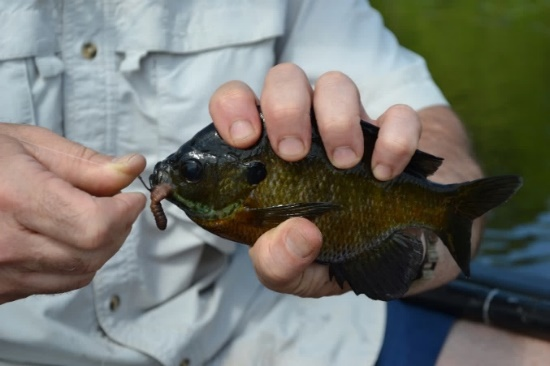
sunfish
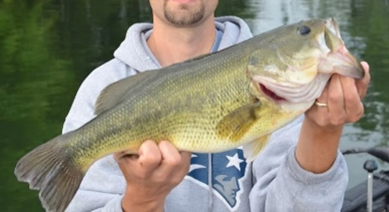
bass
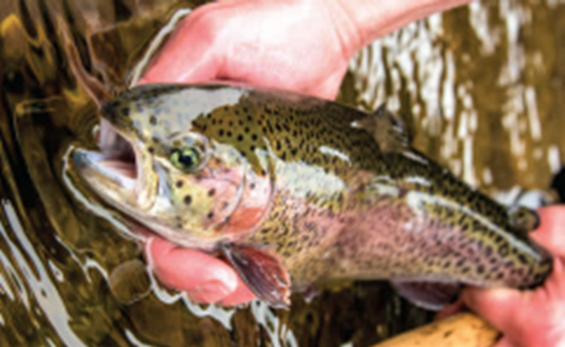
trout
To keep or release?
Some anglers fish solely for sport and release all the fish they catch. Others like to eat some types of fish or fish of a certain size and release all others. There is nothing wrong with keeping fish to eat. Regulations that limit daily catch and minimum size are designed to keep fish populations healthy even when lots of anglers keep their catches.
Catch and release tips
If you plan to release the fish you catch, there is a good chance they will survive if they are handled carefully.
- Wet your hands before touching the fish
- Support the fish by the belly when you remove your hook
- Avoid touching its gills or eyes
- Get the fish back into the water quickly and limit handling
Keeping your catch
There are limits to the number or size of some freshwater fish that you can keep in Massachusetts. Click here to review freshwater fishing regulations.
- Bring a cooler with ice or use a stringer (improvised or store-bought).
- Pull a gill or two out with your fingers or slice through them with a knife to bleed the fish while it sits in the cooler or on the stringer. Bleeding the fish before filleting will provide a cleaner finished product.
What to do about deep-hooked or gill-hooked fish
It’s only a matter of time before you encounter this dilemma. It was once commonly believed that embedded hooks would quickly rust and dissolve, but studies have shown that it’s best to remove the hook whenever possible. You should have a pair of needle-nosed pliers or some other hook removing tool for this job.
If you do hook a fish in the gill telltale sign is blood flowing out from the gill cover—it’s best to quickly cut the line and release it leaving the hook in there. Far better than attempting to remove the hook and make matters worse. To help avoid this from happening, use circle hooks. Circle hooks are designed to catch fish in the lips better than any other hook. And for all hooks it would not hurt to “go barbless” meaning file off or crimp the barb off—this will allow for much easier hook removal.