
Middlesex Community College (MCC) was established by Section 5 of Chapter 15A of the Massachusetts General Laws and operates under the direction of an 11-member board of trustees, the members of which are all appointed by the Governor. The president of MCC is the administrative head of the college and reports to the board of trustees.
MCC is a member of the Massachusetts public higher education system, which consists of 15 community colleges, nine state universities, and five University of Massachusetts campuses. MCC has campuses in Bedford and Lowell. According to its website, MCC offers more than 85 degree and certificate programs, including more than 60 associate degree programs and more than 25 certificate programs in areas such as arts, humanities, and communication; business; education; health; public service; social sciences; and science, technology, engineering, and mathematics. MCC’s main campus is at 591 Springs Road in Bedford.
Figure 1. Locations of Massachusetts Community Colleges
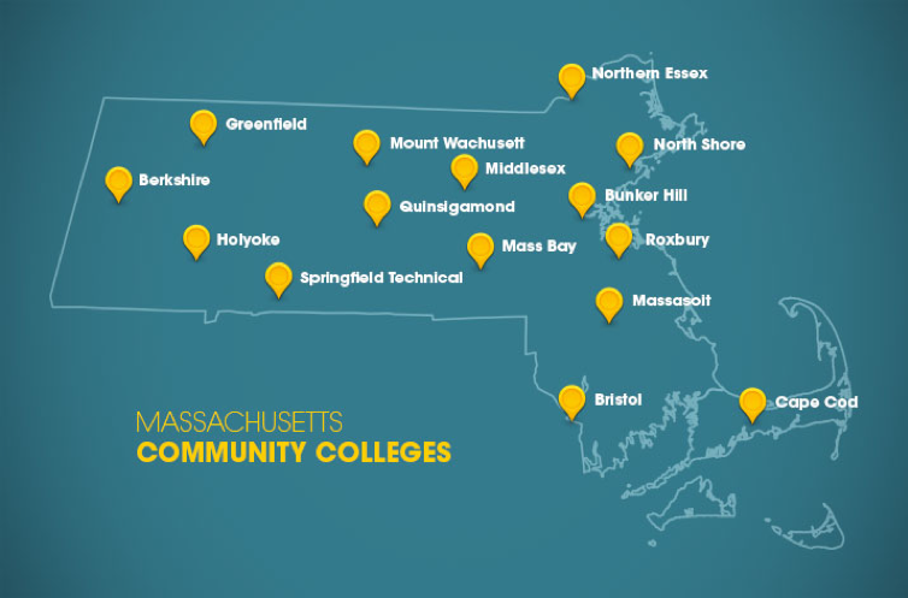
Source: Massachusetts Community Colleges website
According to MCC’s 2022–2027 Strategic Plan,
Middlesex Community College values equity and inclusion as the foundation for excellence, innovation, and success. Through [preparation and retention planning efforts], we educate, challenge, and support all students. MCC is central to the evolving educational, cultural, economic, and workforce needs of the local and global communities.
MCC employed 1,194 employees during the audit period, July 1, 2023 through June 30, 2025. The state budget allocated $28,458,000 to MCC in fiscal year 2024 and $31,969,817 in fiscal year 2025.
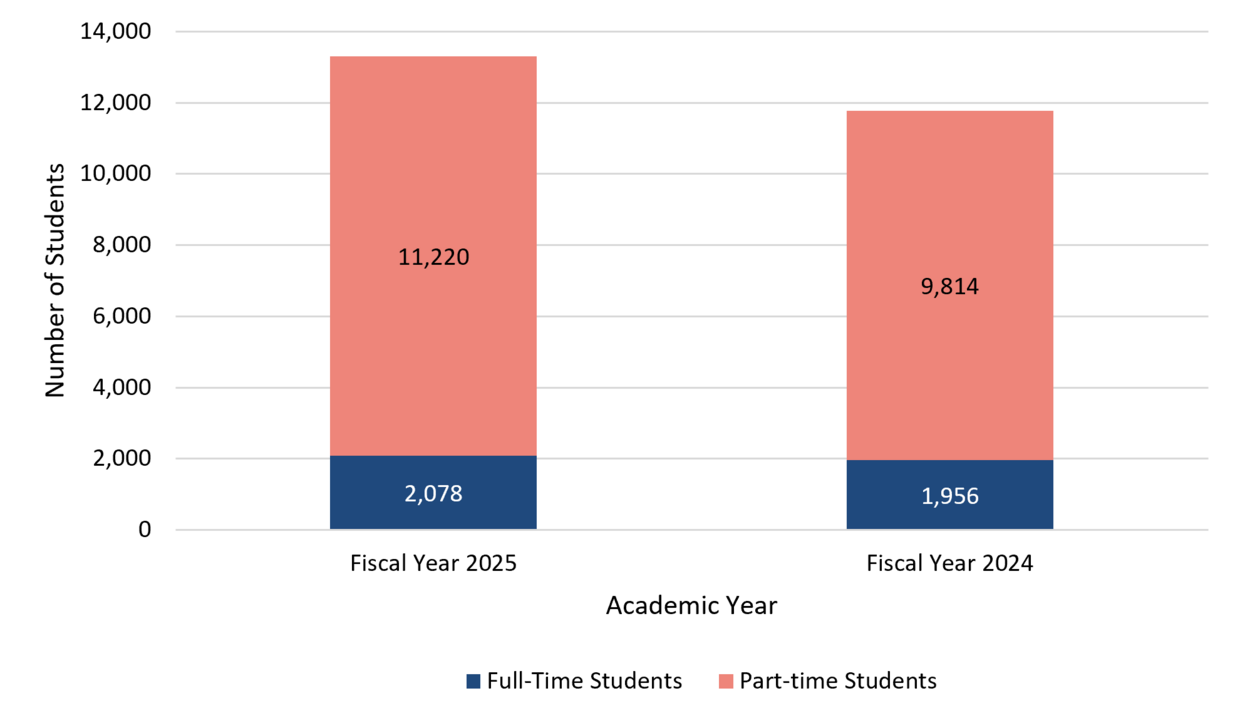
REF _Ref240535249 \r \* MERGEFORMAT Figure 2 outlines the number of students enrolled at MCC, and their schedule statuses (full or part time), for fiscal years 2024 and 2025.
Figure 2. MCC Student Enrollment and Schedule Status for Fiscal Years 2024 and 2025
Student Requests for Reasonable Accommodations
The Americans with Disabilities Act of 1990, as amended, and Section 504 of the Rehabilitation Act of 1973 protect people with disabilities from discrimination. These federal laws require public entities, such as Massachusetts higher education institutions, to provide the people they serve who have disabilities with equal access to programs and services through reasonable accommodations. Consistent with these requirements, the Massachusetts Board of Higher Education (BHE) and the Massachusetts community colleges jointly developed a systemwide “Policy on Affirmative Action, Equal Opportunity & Diversity”1 as a guide for complying with federal requirements, including providing reasonable accommodations for students with disabilities.
According to Sections IV(c) and (f) of Chapter D of BHE’s “Policy on Affirmative Action, Equal Opportunity & Diversity,”
A “reasonable accommodation” under state and federal law is defined as “modifications or adjustments to an application process, job, work environment, the way in which work is customarily performed, or a course of study that permit a qualified individual with a disability to perform the essential functions of a position or to enjoy the benefits and privileges of employment or education equally with persons without disabilities. . . .”
Reasonable accommodations in education may include, but are not limited to:
- in-class aids, such as note takers;
- extended time for examination;
- quiet rooms or alternate locations for testing;
- alternatively formatted testing; alternatively formatted textbooks and other course materials; and/or
- access to assistive technology.
According to BHE’s “Policy on Affirmative Action, Equal Opportunity & Diversity,” community colleges must provide accommodations to qualified students with disabilities.2 This policy also requires community colleges to maintain procedures for reviewing students’ reasonable accommodation requests, evaluating disability documentation, and implementing approved accommodations to support students’ access to and participation in community colleges’ academic programs and activities. Reasonable accommodation requests are reviewed individually.
While the overall process is similar across institutions, each community college manages its own procedures through a disability services office, each of which may differ in staffing, workflow, and processing timeframes. MCC’s Student Access and Support Services (SASS) staff members are responsible for coordinating students’ accommodations and serving as the central point of contact for students with documented disabilities.
A student who self-identifies as having a disability that requires an accommodation for them to complete their coursework must submit an Accommodation Request Form, along with supporting documentation, to SASS staff members through MCC’s accommodation management system. The SASS director reviews each Accommodation Request Form, verifies each student’s enrollment status, ensures that all the required documentation was submitted with the form, and marks the request as “Ready for Review” in MCC’s accommodation management system. A SASS specialist reviews the submitted documentation to ensure that the information provided sufficiently supports a student’s need for an accommodation. Once they have all the necessary information, the SASS specialist contacts the student to schedule an intake meeting, which may be conducted either in person or virtually, where the student and SASS specialist discuss the student’s needs and collaborate to determine the appropriate accommodation to implement.
Following the intake meeting, the SASS specialist approves or denies the requested accommodation and communicates the decision to the student through MCC’s accommodation management system. Students whose reasonable accommodation requests are approved must electronically sign an Accommodation Confirmation Letter acknowledging their responsibilities before an accommodation can be implemented. Once the confirmation letter is signed, MCC’s accommodation management system generates course‑specific accommodation letters and sends them to the faculty members who would be responsible for implementing the approved accommodation.
Students must renew their approved accommodations each semester by submitting semester-specific reasonable accommodation requests through MCC’s accommodation management system. SASS staff members monitor approved accommodations through ongoing communication with students and faculty, and students may report concerns regarding their accommodations through MCC’s accommodation management system, by email, or through MCC’s formal complaint process. SASS staff members document communications, follow-up actions, and resolutions within MCC’s accommodation management system.
If a student’s requested accommodation is denied, they are informed of the reason for the decision and may be asked to provide additional documentation or participate in further discussions with a SASS specialist to reassess the request. The student can file a complaint with MCC if they disagree with the decision.
During the audit period, a total of 982 students submitted reasonable accommodation requests, of which 712 had their requests approved. The remaining 270 students’ requests were still pending at the conclusion of the audit period because these students were seeking accommodations for the next academic semester.
Section 30A(g) of Chapter 15A of the General Laws requires members of the Massachusetts public higher education system to submit an annual report to the Massachusetts Department of Higher Education no later than September 1. This report must document the participation of students who have severe intellectual disabilities, autism spectrum disorders, and other developmental disabilities in all aspects of campus life, including academic courses, internships, and work-based training. MCC started collecting this information in academic year 2024–2025. The SASS program coordinator manages the reporting process by collecting student demographics, enrollment status, coursework, and program participation. The SASS program coordinator then sends it to the Massachusetts Department of Higher Education.
Association on Higher Education and Disability Guidance
The Association on Higher Education and Disability (AHEAD) is a professional organization that provides guidance and best practices to institutions of higher education for supporting students with disabilities. AHEAD’s “Program Domains, Standards, and Performance Indicators” guidance served as best-practice criteria for our evaluation of the extent to which MCC processed and implemented students’ reasonable accommodation requests. This guidance outlines standards and performance indicators for key aspects of disability services, including the development of written procedures, the communication of accommodation decisions, follow-up communications with students and faculty, and the collection of data on students’ use of and satisfaction with MCC’s disability services.
Our audit focused on MCC’s adherence to the following sections of AHEAD’s “Program Standards and Performance Indicators” guidance:
3.1.8: Communicate the denial of a requested accommodation to students in writing and include information on how to grieve the decision.
3.1.9: Follow up with students to ensure agreed-upon accommodations are effective. . . .
3.2.4: Follow up with faculty when students report that an accommodation is not available or is ineffective. . . .
4.3.2: Create written procedures and practices for determining reasonable accommodations; review and revise as needed. . . .
4.3.4: Establish a process for notifying faculty (and/or others with a need to know) of accommodations determined to be reasonable for individual students. . . .
4.4.2: Collect data to track the use of accommodations and services. . . .
4.4.4: Collect data to assess student, faculty, and administrator satisfaction with the quality and effectiveness of services.
| Date published: | November 13, 2026 |
|---|