

As we near the end of 2025, I want to take this opportunity to thank the farmers, food system members, consumers, legislators, Governor Healey and her team, and our dedicated MDAR team and state agency colleagues for their efforts to build a more resilient, equitable, and engaged local food system. With the year marked by uncertainty, the one constant was the collaboration and partnership that I witnessed at events, meetings, on farm tours, and in conversations. While it doesn’t surprise me, it is humbling to see the way we take care of one another through good and bad times and work towards a common goal despite the challenges we face. Thank you for being incredible partners to our work at the department and for setting the gold standard for how we can rise to meet any challenge that we face.
In the true spirit of Massachusetts agriculture, we are reminded that every challenge offers a lesson, every success inspires the next goal, and every connection strengthens our community. Recognizing that A LOT happened over the past year, I thought we could share a look back at notable items from 2025.
Agricultural Commissions: After hearing from farmers and stakeholders about reviving or establishing Agricultural Commission in their towns, MDAR contracted with Pete Westover and Sarah Gardner of Conservation Works, with assistance from Cheryl Lekstrom. They are working with MDAR to provide technical support for town Agricultural Commissions throughout the Commonwealth. They are available to meet in person or online with any AgCom to discuss current issues, plans, funding, Right to Farm Bylaws (RTF), or other matters related to farming in your town, or to support towns in establishing an AgCom or developing a RTF bylaw. They can also help connect local AgComs with resources available from a broad network of supportive stakeholder organizations. They hosted regional AgCom roundtables in the fall and will be seeking opportunities to re-establish the AgCom Small Grant Program.
Buy-Protect-Sell: In 2024 MDAR was granted authority to buy and sell land while ensuring its permanent protection. This will be an important tool in helping mitigate farmland loss, and will allow the department to purchase farmland when it becomes available for sale and apply permanent restrictions to ensure it does not convert to other uses in the future. We continue to seek input from community members, farmers, land trusts, landowners, and other stakeholders, as we look to launch a program to put this concept into action in 2026.
Commodity groups: From the March Maple Kick-Off, to June Dairy Month tours, to wading in cranberry bogs to celebrate October Cranberry Month, we enjoyed partnering with the commodity associations to help promote and educate about their respective agricultural sectors. We also offered a new 4-part series of online workshop trainings for members of agricultural non-profits that was designed to help improve operations and engagement for these organizations. The trainings received positive feedback and we will continue to explore further ways in which we can support these types of trainings.
Diversity: We continued to lean into diversity as one of our strengths in the Massachusetts agricultural sector. From diversity of crops to farming practices to cultural backgrounds, we recognized and celebrated the ways that farmers and food system members are positively contributing to building a resilient, equitable, and dynamic local food system. Through MDAR’s Environmental Justice newsletter, as well as tours and forum discussions, farmers were able to share their experiences and ideas to further the conversation around increasing access and opportunities for new, beginning, women, and historically underserved farmers.
Events: “On the Road Again” was our theme song for 2025. Our MDAR team attended over 300 annual and legislative meetings, farm and industry tours, and events in collaboration with commodity associations, sister agencies, Buy Locals, legislators, and food system organizations. I value the opportunity to meet and engage in-person, rather than on a screen, as the time together yields more productive conversations, new connections and networking, and one-on-one time to understand challenges, opportunities, and ways we can further collaborate. Thank you to everyone who hosted our team this year!
Farmland Partnership Program: In early 2025, MDAR launched the Farmland Partnership Program to collaborate with organizations to help achieve the goals and tasks within the Farmland Action Plan. $1.9 million in grant funding was awarded to seven groups of organizations across the Commonwealth. The grants seek to implement 29 projects that align with tasks of the Massachusetts Farmland Action Plan (MFAP). The goal of the program is to build networks of Partners who work together collaboratively and in coordination to protect farmland, enhance farm viability, and ensure access to farmland as outlined in the MFAP. These projects implement important tasks from the Plan to help reduce the speed at which we lose agricultural land and farms to other land uses, help farmers and aspiring farmers access the farmland they need and help farm businesses remain viable so the farms stay in operation.
Green Friday: For the first time since we established the Green Friday designation of cutting down the first Christmas tree of the season, we hosted the event on the Monday before Thanksgiving. MDAR’s Agricultural Marketing Resource Coordinator, Mackenzie May, collaborated with the MA Christmas Tree Growers Association to determine that the Monday before would be a great way to promote the day in advance and also not interfere with sales for the growers. This year’s event was hosted at Chestnut Mountain Farm in Hatfield, with several members of our MDAR team, legislators, Ag Youth Council members, and family and friends joining us. I cut down the ceremonial Christmas tree (with some help from an enthusiastic 8-year-old!) and we promoted Green Friday throughout the week, with many growers seeing this new date as positive. Thank you to the Schrader family for hosting us!
HPAI: Highly Pathogenic Avian Influenza, or Bird Flu as it’s more commonly known, continued to remain a concern across the Commonwealth and region. We celebrated one year of monthly testing on licensed dairy farms, a collaboration with our colleagues at Department of Public Health and the Broad Lab, and received news of the designation from USDA of being an “HPAI-negative/free” region with the other five New England states. Based on recent positive HPAI findings in domestic birds in New Hampshire and Connecticut, we also extended the waterfowl exhibition ban until April 30, 2026. We encourage individuals to maintain strong biosecurity practices at their farms and with their backyard flocks.
Invasive plants and pests: Spotted Lanternfly (SLF) continued to expand its presence across the state, with over 115 communities having identified a presence of this nuisance pest. Box Tree Moth has been found in two additional counties, Norfolk and Plymouth (one finding in each county), and the federal quarantine remains in place. We are keeping a very close eye on the Yellow Legged Hornet (invasive) and the Tropi Mite. There was some positive news this year regarding Asian Longhorned Beetle in that the town of Holden was removed from the federal quarantine area. Thus far, there have not been any new detections since 2021.Thank you to our Crop and Pest Services team for all their work and time in responding to calls and emails, and conducting outreach and site visits in response to these invasive critters and plants.
Joanna: In April, we were devastated by the sudden passing of our dear friend and colleague, Joanna Shields. Joanna was always willing to lend a hand to help all of MDAR’s programs with a smile on her face. As a tribute to Joanna, donations were made in her memory to help to provide low-cost spay and neuter services to animals in need as a lasting tribute from her friends and colleagues to honor her love of animals. We also dedicated the garden at the MA State Building in Joanna’s memory with a hand-carved plaque made of wood from a tree that had been removed from the building grounds. We continue to miss Joanna’s kindness, fierce love of family, friends, and animals, and presence in our MDAR community.
Kale: Perhaps the kale revolution is coinciding with the 250th anniversary of the American Revolution, or we just noticed a lot more kale in exhibit halls at the fairs this season! We were also served kale chips on several occasions (no complaints!) and kale Caesar salads were on more restaurant menus than I’ve noticed in the past. To all the farmers growing kale, be sure to enter it at the fair next year, connect with a local restaurant, and keep calm and kale on!
Legislature: We’ve been closely watching and providing input into a number of bills in the legislature that would impact farmers. An omnibus bill addresses a range of issues, from the membership of the Food Policy Council to local food purchasing by the emergency food system to funding for ag workforce training. Another considers how to support farmers impacted by forever chemicals like PFAS. And another would benefit farms that rely on agritourism to remain sustainable. We were also honored to participate in the Special Commission on Agriculture in the Commonwealth in the 21st Century, and appreciate the legislature’s consideration of so many issues critical to agriculture in that Commission’s final report.
Mass Ready Act: More commonly known as the Environmental Bond Bill, the historic $2.9 billion investment will strengthen and protect Massachusetts communities against increasing extreme weather events. The Mass Ready Act invests in local economies by supporting farmers, ensuring families have access to fresh, local produce and seafood, and providing communities with resources to reduce flood and heat risk. A more detailed outline of the agricultural provisions can be found here: Mass Ready Act | Mass.gov.
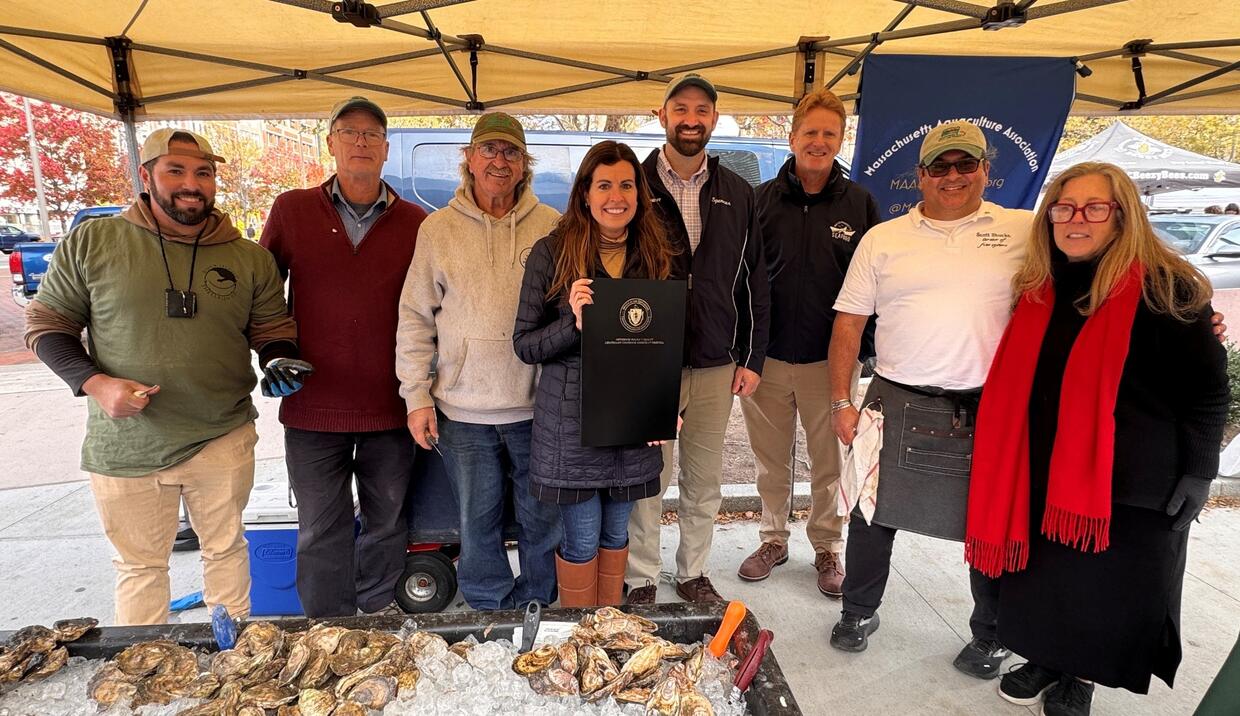
November Aquaculture Month: For the first time, MDAR and Division of Marine Fisheries collaborated with the MA Aquaculture Association for this new designation. With a kick-off event at Copley Square Farmers Market featuring a speaking program and fresh shucked oysters (the stars of the show!), it was a great opportunity to educate about the ecological, environmental, and economic benefits of the industry and our fastest growing sector of Massachusetts agriculture.
Ollie’s Law: The Ollie’s Law Commission was convened in March 2025 to discuss regulations for Commercial boarding and training kennels. This is following legislation that passed last year and had broad support from stakeholders and legislators. The Commission meets on a monthly basis and has made great progress in informing the development of standards for the industry.
Pollinators: In August, we unveiled our “MassGrown Bee” sculpture that has found its home at the Massachusetts State Building on the Eastern States Exposition fairgrounds. Along with the new bee sculpture, we continued to promote pollinators through our Growing Wild initiative. Celebrating the five-year anniversary of the program, Growing Wild has helped promote native plant habitat that supports pollinators, birds, and other wildlife throughout the Commonwealth. The program is a collaborative effort with Department of Conservation and Recreation and MA Nursery and Landscape Association, and was awarded a national award this fall for the marketing and impact of the program.

Quick Action: In July, Governor Healey signed Executive Order 643 establishing a task force to address devastating changes to the Supplemental Nutrition Assistance Program (SNAP) for the 1 million Massachusetts residents that rely on the program. I was asked by EEA Secretary Tepper to serve as her designee and Co-Chair the Task Force, along with colleagues Allison Bovell-Ammon from the Executive Office of Health and Human Services and Alana Davidson from the Executive Office of Education. Since August, we have been hosting full Task Force meetings, along with working groups focused on increasing access for families with children, immigrants, seniors, and individuals with disabilities; building rural resiliency and sustaining local food systems; and funding solutions/advocacy. We have also hosted five listening sessions to hear directly from individuals impacted by the cuts, as well as farmers, fishers, advocates, and community members. The Task Force will meet again in January to finalize recommendations, with the report due to the Governor by the end of that month.
Regional perspective: In June, I was elected to serve as President of the Northeast Association of State Departments of Agriculture (NEASDA), comprised of the six New England states, Delaware, New Jersey, New York, and Pennsylvania. This opportunity has allowed me to further collaborate with my peers and discuss timely topics that are impacting our states, share solutions, and work with staff at the National Association of State Departments of Agriculture (NASDA) to elevate concerns for their awareness. We will be hosting the NEASDA regional meeting in Amherst, MA from June 7-10. We hope you’ll join us for networking, farm tours, and in showcasing all that Massachusetts’ agriculture has to offer!
Shutdown: This fall, we experienced the longest federal government shutdown in history. From October 1 to November 12, we worked to assess funding impacts and services that were suspended. Most notably, SNAP was suspended for the first time in the program’s sixty-year history and created uncertainty, anxiety, and fear for individuals and families that rely on the program for food access. Access to farm loans were also not being processed, grant reimbursements were delayed, and access to USDA’s NRCS, FSA, and Rural Development offices were limited.
Tomato Contest: On a sunny day in Boston, MDAR and the New England Vegetable and Berry Growers Association hosted the 40th Annual Massachusetts Tomato Contest. Thank you to our hosts at the Boston Public Market for their partnership with the event. This year, the contest received 101 entries from 19 farms located all over Massachusetts. It was fun to look back and see how the contest has evolved over the forty years it’s been held, and how tomatoes remain a significant part of Massachusetts’ agricultural economy.
Urban Ag Week: MDAR hosted the second annual Urban Agriculture Week August 10-16 with twice as many participating organizations! MDAR’s Urban Ag Coordinator, Rose Arruda, did an incredible job in supporting groups that organized events throughout the week to showcase the importance of local food production and access, as well as community building. Mark your calendars for the Massachusetts Urban Farming Symposium, March 28, at UMass Boston.
Values: We continued to hold true and double down on our core values at MDAR: community, communications, and collaboration. With so much change and uncertainty happening at the federal level, we leaned into our values to further communications with stakeholders, find new ways to collaborate in the face of funding cuts and capacity constraints, and build a stronger, more resilient agricultural and food system community. This sense of community was further fostered within MDAR through team appreciation events, volunteer activities, and lunch and learn gatherings.
WooSox: MDAR hosted its second “Farmer Appreciation Night at the Ballpark” at Polar Park in Worcester in early September, with over 150 farmers, legislators, friends of agriculture, and MDAR team members attending. We first hosted the event in 2022 and received a lot of positive feedback from attendees. We revived the event this year and hope to continue to host on an annual basis. It’s a nice way to celebrate the end of summer with new and old friends, while enjoying watching the WooSox play. Even better, the WooSox won and beat the Yankees AAA-affiliate team!

X marks the spot: The spot being our licensed land across the state! In 2025, MDAR maintained 12 sites, totaling over 1,270 acres, and 33 farmers licensed to farm on the land. We also made significant investments on the land with deer fencing, wells/irrigation, continuing deer hunting on some of the properties after piloting the activity last year, and upgrading access roads to the parcels.
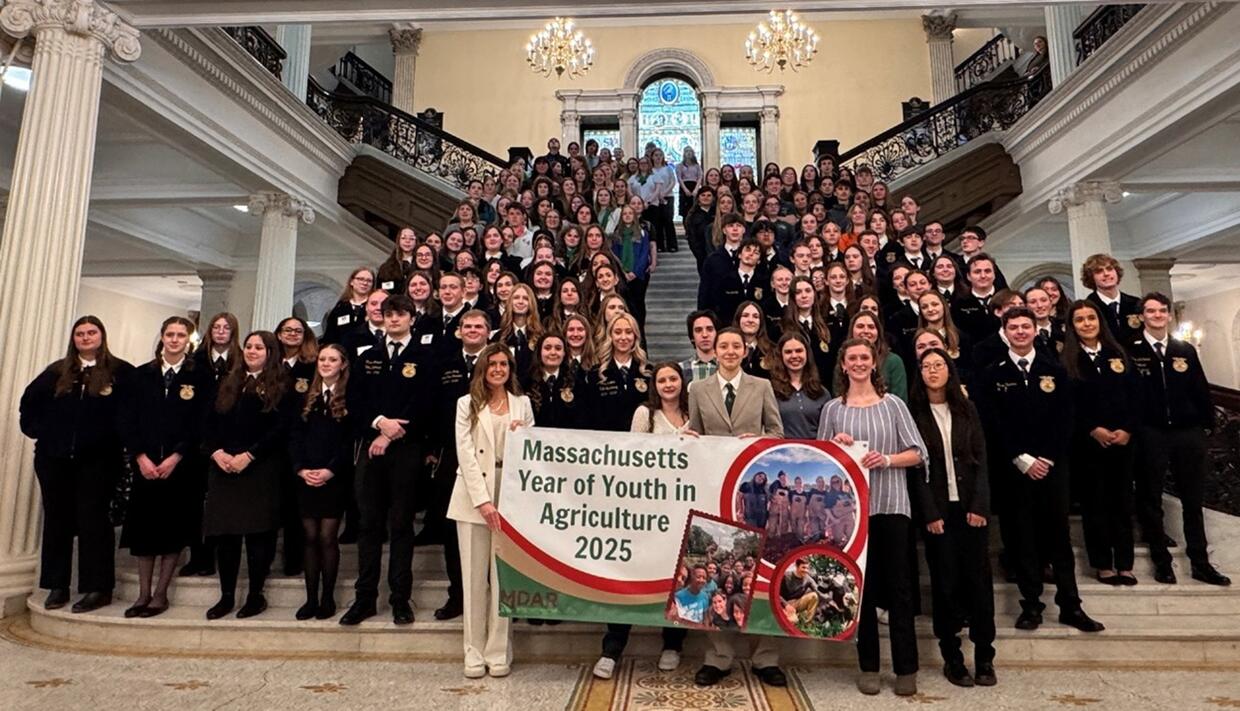
Youth: In March, MDAR declared 2025 to be the “Year of Youth in Agriculture” and focused our programming on ways to further engage youth in careers in agriculture. The second class of the Agricultural Youth Council was announced at Ag Day at the State House and continues to meet monthly, as well as attend industry events and tours. The application for the third class will be posted in January. Please share this opportunity with family members and friends during your holiday dinner conversations!
Zooming out: So often, it’s easy to get lost in the weeds (for some, literally) and the day to day of running a business or operation. When we zoom out and look at all that the Massachusetts agricultural sector accomplished in 2025, there’s a lot to be proud of. Don’t forget to take the time to reflect on all that you have accomplished, both individually and collectively.
Wishing you a joyful holiday season filled with peace, gratitude, and the promise of new possibilities in the year ahead. Looking forward to connecting in 2026!
Locally Grown and Proud,
Ashley