Learn more about cyanobacteria (HABs), including what they are, why they form, and how they can impact the health of humans, animals, and local waterways.
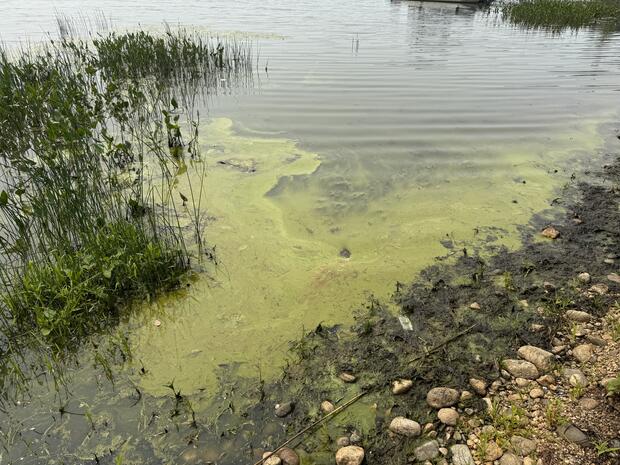
Example of windblown accumulation of cyanobacteria blooms in a lake.
Cyanobacteria, sometimes referred to as blue-green algae or harmful algal blooms (HABs), are actually bacteria that are able to photosynthesize similar to plants and algae. Cyanobacteria are estimated to be 2-3 billion years old based on some fossil records. They are found in all waterbodies and are considered a natural part of the ecosystem. However, an abundance of cyanobacteria growth, or a cyanobacteria bloom, causes their presence to be visible on a waterbody’s surface (a scum look) or throughout the water column (murky water), both of which are typically a shade of green, though they can vary. Some cyanobacteria are visually similar to green algae growth or some floating aquatic plants. It is important to know that some cyanobacteria are capable of producing toxins, referred to as cyanotoxins, that can be harmful or dangerous to humans and animals.
A combination of physical and chemical factors cause the formation of HABs in freshwater systems, inclusive of nitrogen and phosphorus concentrations, availability of light, water temperature and stratification. Typically in Massachusetts waterbodies, it is either external loading of nutrients (from the watershed) or internal loading of nutrients (being recycled from within the bottom sediment within the waterbody), or a combination of both sources of loading that provide the excess nutrients for cyanobacteria to utilize. External loading can be mitigated by addressing erosion, point and non-point source pollution, and conducting best management practices throughout the watershed. Internal loading is usually mitigated by utilizing a phosphorus-binding product within the waterbody.