
In March of 2025, DCR adopted Climate Adaptation Goals. The following Climate Adaptation Goals look at DCR through a new lens—and with a wholeagency approach—to answer the question: In the face of increased climate change impacts, what can DCR do differently, do more, or do more consistently across the Commonwealth? Implementation of these goals will range from tweaks to our procedures, to substantial policy changes, to wholesale paradigm shifts.
These goals are consistent with 2023 ResilientMass Plan, Executive Orders 594, 569, 604 and 618, the Recommendations of the Climate Chief, and the federal 2023 Advisory Council on Historic Preservation Climate Change and Historic Preservation Policy Statement, but this climate policy statement is specific to DCR. This is a living document, not intended to be exhaustive. Rather, it is a focused list of goals, intended to evolve as strategies are implemented over time. Future iterations will be informed by the latest data and thoughtful stewards to guide DCR’s next steps.
Protect Visitors and Prioritize Infrastructure for Access and Safety for all
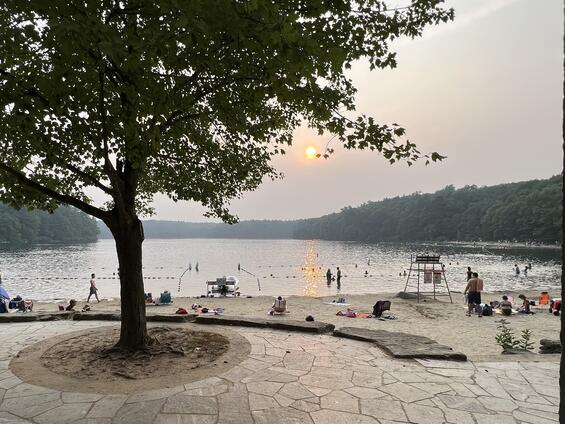
Walden Pond. Photo credit: DCR
- Adjust Recreational Facility Operations. Changes in weather patterns are impacting DCR facility schedules, staffing and visitation. DCR will plan operational adjustments to staff and hours to maintain, expand or relocate visitor access and programs.
- Prioritize Critical Infrastructure for Safety and Access. DCR infrastructure like dams, parkways and facilities provide services for both visitors and host municipalities. DCR will approach infrastructure investment and level of service more strategically, weighting criteria like visitor safety and access, and identifying some structures for rehabilitation and hardening and others for removal or down-sizing.
Protect Our Shared Heritage
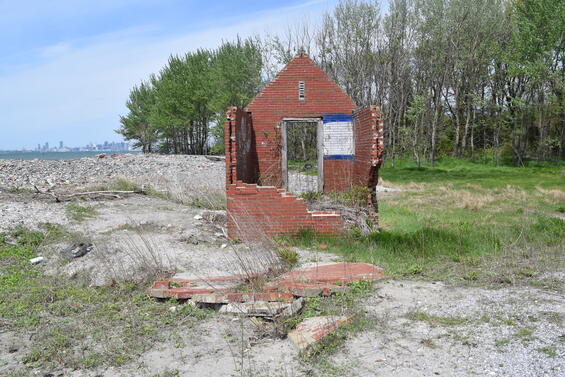
Lovell's Island. Photo credit: DCR
- Adapt Vulnerable Cultural Resources. DCR’s diverse cultural heritage of archaeological sites, historic structures, landscapes, and archives are increasingly at risk of damage or loss from climate impacts and this increased risk requires that cultural resource stewardship be conducted with urgency and immediate strategic investment. DCR will assess the significance, consequence of loss, and unique values of vulnerable assets to determine an appropriate approach.
- Learn from the Resilience of Tribal Nations and Indigenous People. DCR will engage in reciprocal relationships with Tribal Nations, Indigenous communities and their elders and culture keepers to create opportunities for knowledge and methodology sharing by integrating Indigenous Knowledge and alternative ways of knowing, experiential, and practical knowledge into adaptation strategies at DCR and in support of Indigenous resource stewardship.
Protect Biodiversity and Build Ecosystem Resilience
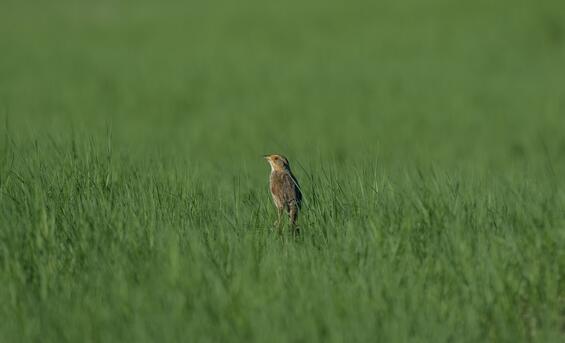
Salt marsh sparrow. Photo credit: Sean Riley, DCR
- Prioritize Ecological Stewardship and Restoration. DCR will prioritize the stewardship of all its lands and waters to protect and enhance ecosystem health and function. The agency will minimize loss of habitat, improve species diversity, and maintain and restore areas critical for reducing hazards and environmental damage, including pollution of groundwater, ponds, rivers, and streams. DCR will increase resiliency and ecosystem function of its lands by implementing site-specific landscape maintenance plans that will improve infiltration, reduce stormwater runoff, increase tree and forest health, improve habitat values, and reduce areas in need of frequent maintenance like mowing.
- Increase the Pace of Land Acquisition. DCR will increase its pace of conservation, targeting lands that protect and connect important and vulnerable natural communities, preserve biodiversity, and prevent conversion of critical forestlands to increase the resilience of its natural resources and further protect its facilities. In collaboration with Tribal Nations and Indigenous Peoples, other state agencies, and partners, DCR will also focus on landscape-scale conservation efforts that seek to strategically connect DCR lands with other protected open space, supporting ecosystem health and function, and providing opportunities for species to migrate and adapt within and across the landscape.
Ensure Success through Agency Policies and Procedures
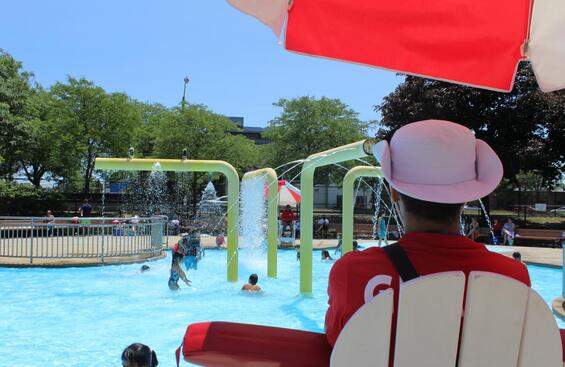
A DCR lifeguard at Artesani Park and Playground. Photo credit: DCR
- Develop a Proactive Policy for Relocation of Vulnerable Agency Assets. DCR will consider relocation of built assets and natural resources to ensure that our properties align with projected climate impacts.
- Design with Resilience in Mind. DCR will update existing design and management standards and coordinate new standards for resilience to climate impacts—incorporating nature-based solutions, low-impact development principles and sustainable methods, equipment, and materials. Other design standards are current and need to be implemented consistently and maintenance strategies put in place, like our Stormwater Design Guidelines to prevent localized flooding.
- Incorporate Climate-Smart Criteria into Capital Planning. As a part of the DCR Capital Planning and Delivery process, DCR will incorporate climate vulnerability as a critical criterion to assure that Commonwealth funds are used strategically and investment is forward-looking.
- Empower Staff and Provide Oversight to Achieve Agency Goals. DCR will train staff agency-wide to make climate-smart decisions and implement climate policies across legal, budgeting, planning, construction, maintenance, and operations processes.
- Communicate DCR’s Climate Actions. As climate change knows no boundaries, DCR’s climate actions are essential to the well-being of all. In collaboration with the Secretariat and sister agencies, DCR will communicate its goals to the public and work with visitors, land stewards, and governmental entities to inform and strengthen the implementation of our climate actions. DCR’s work will be transparent, accountable, and inclusive and in this way engage and inspire the next generation of land stewards.