
Electricity Use Patterns
While most Massachusetts residents pay a consistent rate for electricity no matter the time of day, energy use, and the cost of that energy, varies over the course of a day. At night, when most people are asleep, lights, televisions and appliances are off. At the beginning of the day, people commute from their home to their workplace and then come home after 5:00 PM. People usually complete tasks around the house after they get home, including running the dishwasher, washing their clothes, cooking dinner, or watching TV. Even though a customer uses a different amount of electricity over the course of a day, that use typically follows a pattern. The figure below shows the average electricity use for different residential appliances and how that usage varies over the course of a day. Residential demand can fluctuate from this average. For example, work from home policies during the COVID 19 pandemic increased total residential demand. Electricity use, also called electricity demand, peaks in the evening when many people are coming home from work. This time of highest electricity use is called peak demand. Appliances that heat or cool our spaces and water are the largest users of electricity in our homes and contribute the most to when peak demand occurs.
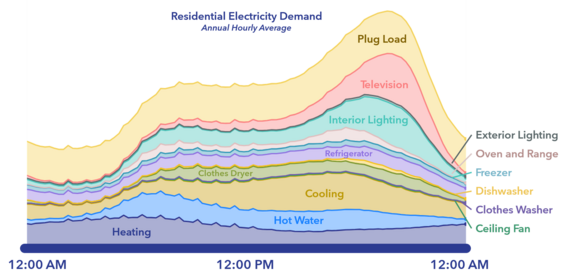
Average Daily Residential Electricity Demand in Massachusetts for Certain Uses
Not only does electricity use, or demand, vary over the course of the day, it also varies over the course of the year based on several factors. Electricity use for these technologies that heat and cool our homes is highly dependent on the weather. For example, in the winter electric water heaters must heat colder water coming into the house. This requires more electricity to achieve the same end temperature. Also, different customers have different needs. For example, residents with smaller homes that are more efficient and weatherized will require less electricity to cool their home in the summer, while other customers that have larger, draftier homes typically require much more electricity to achieve a comfortable temperature.

Different Factors that Impact Electricity Demand
Meeting Electricity Demand
We need enough electric generation resources, such as gas power plants, solar panels, and wind resources, to meet our electricity needs no matter the weather or time of year. Most of our generation resources are not located close to homes and businesses. We rely on electric transmission and distribution infrastructure to deliver electricity from generation resources to our homes and businesses. Similar to a highway with rush hour traffic, the delivery infrastructure must be sized to accommodate the time of the day when we use the most electricity.
The same is true for our electricity infrastructure. We have delivery infrastructure, such as the wires in our transmission and distribution systems. We must have enough generation built to meet our needs when customers are demanding the most electricity. At other times of the day, such as the night or when the weather is mild, our electric infrastructure is underutilized.

Peak Electricity Use and System Infrastructure
Managing Demand
By managing demand growth, the Commonwealth can shape and shift demand and reduce or flatten the peak, delaying or avoiding altogether the need for expensive infrastructure upgrades.
The first and most important strategy for managing electric demand is energy efficiency. Energy efficiency means using less energy to meet the same consumer need. Energy efficiency also has a permanent impact on electric demand, as long as that efficient technology is in use. Energy efficiency and energy building code reduces the impact of electricity growth on the peak, which reduces the need for new infrastructure.
Energy management programs can promote the use of electricity when the system is underutilized, and therefore less expensive. This may look like using a delay setting to run your dishwasher or a smart charger to charge your EV at night. Customers’ needs are still met with clean dishes and a charged car, but it was done at less cost to the system.
Predicting and Planning for Electricity Demand
The electric grid is planned at the local level. Utilities must balance their electric system not just overall, but also within smaller geographic areas. Forecasting demand in a smaller geographic area is challenging and less accurate because of the uncertainties about how a small group of customers may use electricity. Utilities have enough infrastructure to meet the current electric demand in the local area. They will then forecast the local peak demand growth into the future. At a certain time within that forecast, peak demand growth will exceed the amount the local system can support. Utilities will need to build new infrastructure to meet that new demand before that threshold is met. If the utilities do not build that infrastructure on time, new electric growth in that local area will be delayed until they can.
Shifting the utility forecast to reflect slower peak demand growth will defer new investment or even avoid investments. It is important to impact the forecast as soon as possible as the utilities need time to build infrastructure before it is needed. Because the utilities are responsible for safe and reliable electricity delivery, they consider how certain they are in their assumptions. For example, utilities will be more confident when they are aware of specific new customers with known electricity needs.

Local System Forecast with Peak Demand Mitigation
Review of Demand Management Policy and Programs in Massachusetts
Executive Order No. 654: To Secure Massachusetts’ Energy Future by Establishing an Energy Supply Plan that Drives Affordability and Reliability establishes the 10 x 10 by 10 Plan to harness some of the state's strongest assets - our innovative companies, leading universities, and skilled workers - to get 10 GW of new energy resources over the next 10 years, save customers $10 billion, and secure our energy future for generations to come - in addition to 5 GW of more storage.
As part of EO 654, DOER provides this review of existing demand and customer supply programs offered in the Commonwealth. The Review will set a foundation for work within the Commonwealth on implementing and developing programs that shift, shape, and supply energy to save energy costs. Supply and demand programs not only reduce customers’ individual energy costs but can also reduce the need for investment in our electric grid, lowering costs for all.

Developing the Report
Request for Information (RFI)
DOER is collected information from stakeholders that participate in, administer, develop, finance or seek to use these existing programs. DOER integrated information received through this RFI into the Report. All responses are provided with the RFI.

| Date published: | June 10, 2026 |
|---|---|
| Last updated: | June 10, 2026 |