
Overview
On October 1st, 2026, the Department of Energy Resources (DOER) released the Direct Costs and Benefits of Massachusetts Solar Incentives study with consultant support from Synapse Energy Economics and Sustainable Energy Advantage. The study can be found at the link below.
The goal of the study was to perform a thorough accounting of the direct utility system costs and benefits Massachusetts solar programs provided from 2018 through 2025. Direct costs and benefits affect electricity rates; they do not include broader socioeconomic impacts such as avoided greenhouse gas emissions, public health benefits, tax revenues generated, or jobs created.
Key Findings
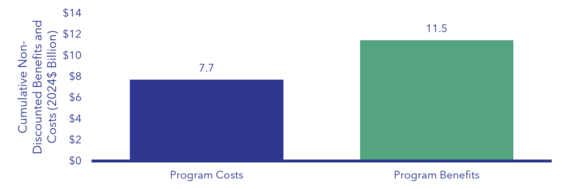
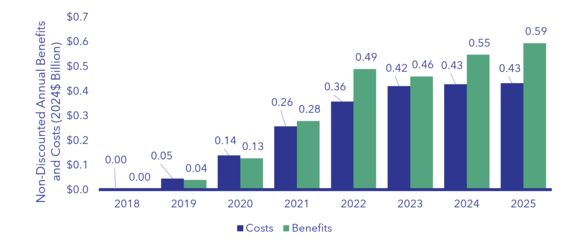
- The SMART program provides $1.49 in benefits to all ratepayers for every $1 spent. It provided $11.5 billion in direct lifetime benefits at a cost of $7.7 billion and provided almost $600 million in benefits in 2025 alone (see Figure 1 and Figure 2).
- Energy costs, including net metering, make up about 79 percent of the total cost of solar compensation and represent the largest opportunity to further improve cost-effectiveness.
- Solar installations deployed since 2018 have provided an average of $9 in annual savings per residential household, even those households with no direct connection to solar.
- Solar provides energy independence for Massachusetts consumers and helps insulate them from energy price spikes associated with the fuel supply costs of gas-fired generation. This is particularly true for the SMART program, for which, in most cases, total program costs per megawatt-hour are set when the solar array is installed.
Note on Study Results
The DOER commissioned this study to quantify the direct economic costs and benefits of statewide solar programs for nonprogram participants. Direct costs and benefits are those that affect electricity rates but do not include broader socioeconomic impacts, such as avoided greenhouse gas emissions, public health benefits, tax revenues generated, or jobs created. This report is not intended to serve as a comprehensive cost-effective analysis of solar programs, as DOER intentionally focused on the narrow set of key drivers of direct ratepayer costs and benefits.