
Description
Lake Cochituate is a 635 acre great pond located off of Route 9 and Route 30 at the intersection of the towns of Framingham, Natick, and Wayland. The lake is divided into three major basins, which are connected by navigable culverts. The Southern Basin is the largest at 257 acres and has an average depth of 19 feet and also contains the lakes deepest point at 69 feet. The middle basin is 144 acres and has an average depth of 26 feet and the northern basin is 216 acres and has an average depth of 30 feet. The pond bottom is primarily mud and gravel with the exception of the southern half of the southern basin which contains considerable areas of sand. Aquatic vegetation is common along the shore and water transparency is typically between 5 and 7 feet. While the surrounding areas are thickly developed, much of the immediate shoreline is contained within Cochituate state park and is undeveloped. Recreational usage is high throughout the warm months.
Recreational access
The Department of Conservation and Recreation (DCR) manages a large boat ramp and adjacent parking area suitable for 50 trailers within Cochituate State Park off of route 30 in Wayland on the northern shore of the middle basin (get directions). A second cartop launch and shore fishing access also managed by DCR is located off of Rt 30 in the southern half of the northern basin (get directions). Parking here is across the street at the state park headquarters and it is roughly a quarter mile walk in past the gate off Rt. 30. Cartop boat access is also provided at the Wayland town beach located off of Pemberton Rd. on the south eastern shore of the northern basin; no motors allowed (get directions). Parking fees may apply at all launching points and boats can be rented at the Wayland town beach and at the large DCR managed boat ramp in the middle basin during the operating season. The majority of the shoreline is contained within Cochituate State Park and is therefore accessible. Parking at any of the launch sites and venturing out on foot is best for shore anglers. Please contact DCR offices of Cochituate State Park or the town of Wayland for additional information, fee structure, and/or restrictions pertaining to public access of Lake Cochituate.
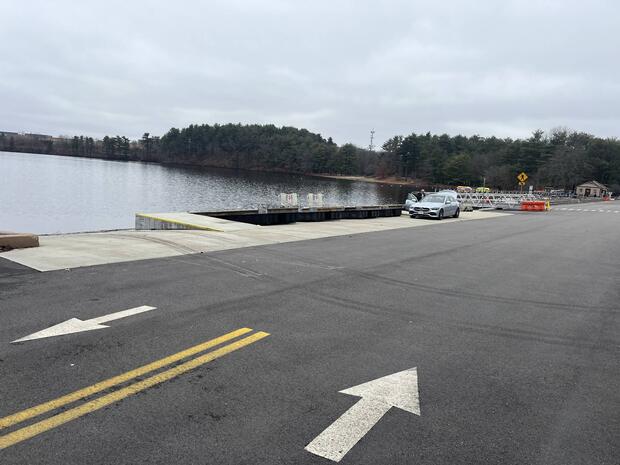
The Lake Cochituate boat ramp on the northern shore of the middle basin in Cochituate State Park off of route 30 in Wayland.
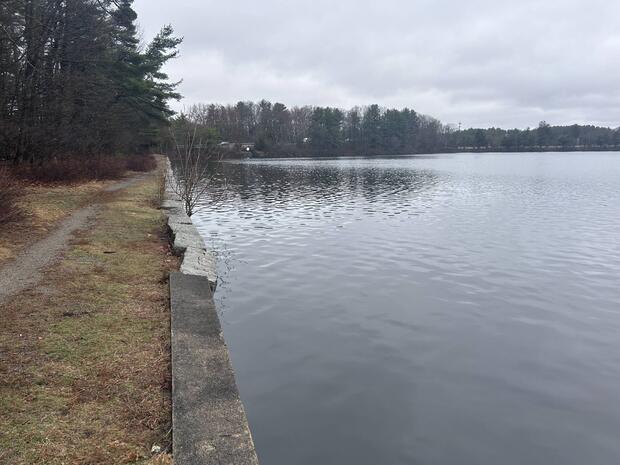
Some of the shore access from the DCR managed cartop access site off of Rt. 30 in the northern basin.
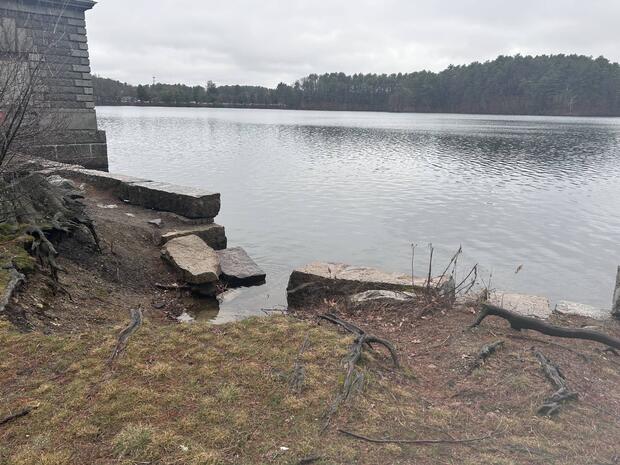
If you choose to carry in a cartop boat a quarter mile from the road you can launch here at this break in the masonry wall
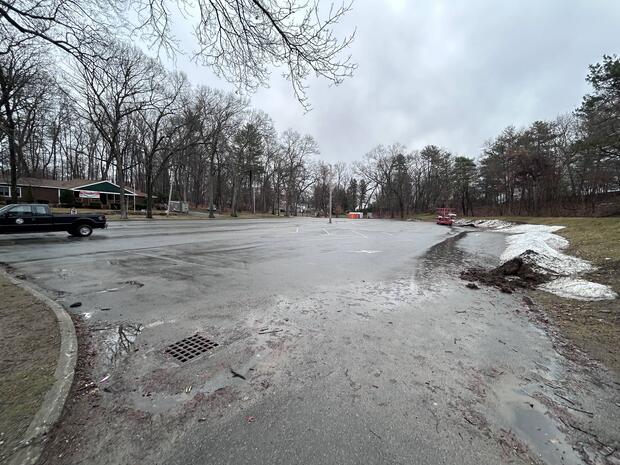
There is ample parking at the Wayland town beach which will incur a fee during the season.
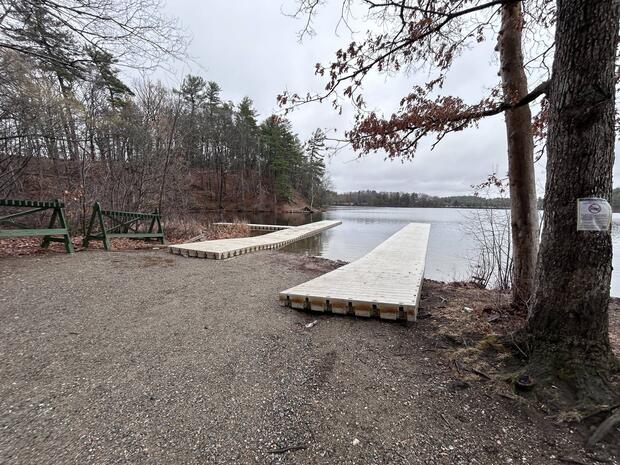
Follow the signs and launch your cartop boat at this ramp off to the side of the town beach. No motors of any kind are allowed.
Fish populations
The following fish species were found during MassWildlife surveys:
- largemouth bass
- chain pickerel
- common carp
- yellow perch
- white perch
- black crappie
- brown bullhead
- yellow bullhead
- pumpkinseed
- bluegill
- white sucker
- golden shiner
- banded killifish
- American eel
Lake Cochituate is also stocked each spring and fall with trout and occasionally northern pike or tiger muskellunge when available. Please check the MassWildlife northern pike and tiger muskellunge stocking page for stocking dates.
Fishing
Few lakes in the Commonwealth offer such a variety of fishing opportunities as Lake Cochituate. Panfish are abundant in all basins, with the bluegill and yellow perch populations in particular containing plenty of big fish. Stocked trout provide good action throughout the year and the largemouth bass fishery is excellent with an abundance of fish in all three basins. Lake Cochituate has produced largemouth bass, northern pike, chain pickerel, carp, yellow perch, black crappie, tiger trout, and brook trout that meet minimum sizes for recognition by the Freshwater Sportfishing Awards Program.
More fishing resources:
Stop aquatic hitchhikers
Prevent the transport of nuisance species; clean all recreational equipment. Visit ProtectYourWaters.net to learn more.