
This article was originally published in Massachusetts Wildlife magazine in 2026.
When MassWildlife held listening sessions earlier this year to collect public feedback on possible updates to Massachusetts hunting laws, the response was significant. Nearly 1,000 people showed up to voice their opinions on Sunday hunting, crossbow hunting, and setback distances at public meetings held statewide, and thousands more submitted comments in writing. I was one of several staff responsible for reviewing over 11,300 comments and summarizing the variety of perspectives. We heard from working families who wanted more opportunity to get outdoors together. From farmers dealing with significant damage to crops and livestock from wildlife. From parents who wanted more time to pass on the hunting tradition to the next generation. From non-hunters concerned about the impact of overabundant deer on forest health, vehicle collisions, and tick-borne diseases. Ultimately, we found about 7 out of 10 people were supportive of changing the laws on Sunday hunting, crossbows, and setbacks. The turnout reflected how deeply people care about wildlife and outdoor recreation. The process also facilitated meaningful conversations about hunting and public safety.
For those unfamiliar with hunting, questions are understandable: Who is out there? How are they trained? What rules do they have to follow? How do I stay safe in the woods when other people are hunting?
For those who hunt, the answers may seem obvious. But for those who don’t, these questions are important, especially because Massachusetts is a densely populated state where forests, farms, and neighborhoods often exist in close proximity. Public comfort, and, ultimately, public tolerance and support for hunting, depends not only on hunting laws and a strong safety record but also on confidence and trust that hunters are trained to always hunt safely and responsibly.
When Fear Shapes Behavior
I will start with an honest, slightly embarrassing confession. I am terrified of rodents. I can vividly remember every interaction I have ever had with a rodent, from the rat I saw near a dumpster at Toys “R” Us as a child, to the mouse I encountered in our basement right after we moved into our new house over 6 years ago. Rationally, I understand that a mouse in the basement is unlikely to hurt me. I know a mouse weighs less than an ounce and I am a full-grown human. I realize that a mouse is probably more scared of me than I am of it. Still, none of this knowledge helps much when I think I see something move out of the corner of my eye in the basement. In those moments, my fear is much stronger than reason. And fear has a way of changing behavior. In my house, it means I’ll avoid my basement at all costs. My husband is the one sent to the basement when we need something stored down there.
Reflecting on my own fear helps me think differently about hunting safety concerns. To be clear, trying to draw a parallel between mice and hunting is not meant to make light of safety concerns, but I think it does illustrate an important point about fear and behavior. Whether your fear is flying, public speaking, spiders, snakes, or clowns, it rarely disappears when someone offers reassuring facts. Fear is not always grounded in reason and does not always follow data, but it can make a meaningful difference in shaping our sense of comfort and associated behaviors. And, in some cases, shaping public policy.
For some Massachusetts residents, hunting may cause feelings of uncertainty, anxiety, and fear. A person may understand that hunting accidents are very rare and that hunters are required to follow safety rules, but fear can still affect whether they feel comfortable sharing the woods with hunters. At a time when society is increasingly disconnected from nature, it is more important than ever for the outdoors to feel like a safe place for everyone. People rarely overcome fear because someone tells them not to be afraid. But hunting can feel safer when the unknown becomes more familiar, when risks are explained honestly, and when people see evidence that safeguards are already in place to promote safe, ethical, and responsible behavior.
Managing Risks
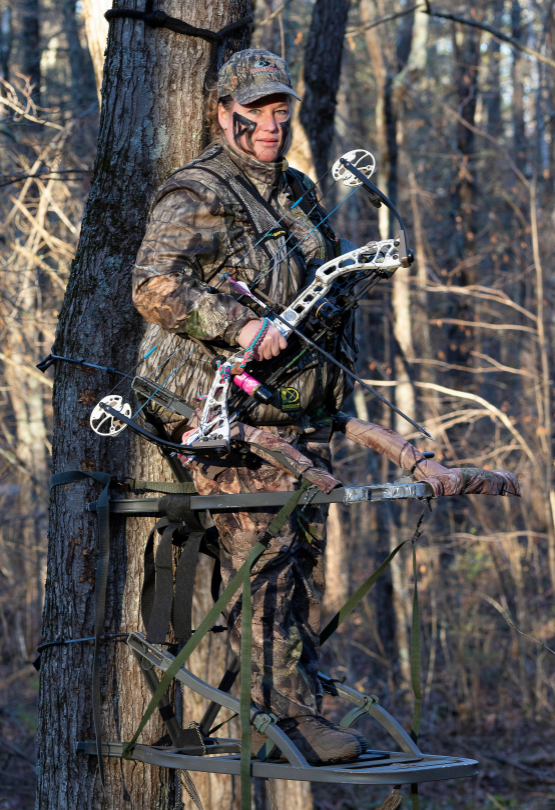
Statistically, hunting with a firearm is safer than golfing, jogging, and even bowling. Most hunting accidents are injuries sustained by hunters falling from elevated tree stands. Hunting accidents rarely involve firearms, arrows, crossbow bolts, or even non-hunters. But those statistics may not feel particularly reassuring to a non-hunter. Going to a bowling alley may feel inherently safer than being in the woods during hunting season. The gap between statistical risk and individual comfort is shaped by how we think about risk. A person who grew up in a hunting family may hear a shot in November and think of a meal of venison. A person who did not grow up in that setting may hear the same sound and feel alarmed.
Perceived risk is how dangerous something feels, and that feeling is shaped by individual experience, the frequency of exposure, and culture. The feeling of risk is real even if the likelihood of harm is low. Managing that feeling means acknowledging that hunting is not a risk-free activity and demonstrating that there are established systems in place that greatly reduce the actual level of risk.
This is where hunter education plays a crucial role, along with licensing requirements, season dates and harvest limits, legal methods of take, blaze orange, and other regulations. Hunter education does not ask students to pretend hunting is without risks. It begins from the opposite premise. Firearms, arrows, tree stands, uneven terrain, bad weather, excitement, and poor judgement can all create the opportunity for danger. The purpose of hunter education is to teach new hunters how to recognize and manage those risks before they become accidents.
We all take risks every day. We drive a car to work, cook dinner on a hot stove, and take medications. None of these activities are risk-free. What makes some risks feel acceptable is our perceived benefit relative to the risk. It also comes down to the safeguards we have in place to manage those risks, like rules, training, licensing, equipment, and experience.
Let’s look at the driving example more closely. You must wait until you’re of a certain age, receive safety training, pass a test, get a license, use certain equipment, and follow a set of laws while engaging in the activity. You also develop and maintain some level of trust that the people all around you have been properly trained and are also following the rules and acting safely. There are a lot of parallels to hunting here.
But one key difference between driving a car and hunting is familiarity. According to Consumer Affairs, about 91% of Americans had driver’s licenses in 2025. That is a stark contrast to the 1% of residents who hunt in Massachusetts. Most of us see and use cars in our everyday lives. And whether we’re aware of it or not, there are signs of the systems we’ve collectively implemented to make driving safer everywhere you look. As you drive, you’ll pass countless speed limit signs, traffic lights, stop signs, and police enforcing the rules of the road. Our vehicles must meet strict safety standards and pass routine inspections. Over time, driving has become safer thanks to seatbelts, car seats, turn signals, air bags, headlights, and newer technologies like lane departure warnings, blind spot monitoring, and automatic emergency braking.
The actions we’ve collectively taken to make hunting safer over time are not nearly as familiar or apparent to most people. I hope this article will shed some light on these systems, rules, practices, and advancements.
The Fundamentals of Hunter Education
By state law, all first-time hunters 18 years of age and older must successfully complete a Basic Hunter Education course before they are eligible to buy their first hunting license. In Massachusetts, these courses must be at least 12 hours long. The Massachusetts Basic Hunter Education course meets the same set of standards used by all other U.S. states, Canada, and Mexico, which have been established by the International Hunter Education Association (IHEA). Adherence to these international standards allows hunter education certificates to be reciprocal, so a Massachusetts hunter education certificate is recognized in all other jurisdictions across North America, and vice versa.
Our neighbors in New York became the first state to implement hunter education as a mandatory requirement in 1949. While early hunter education programs primarily focused on firearms safety in an effort to reduce accidents and fatalities, the curriculum has evolved over time to also cover ethical and legal aspects of hunting. IHEA was originally established to address the need for standardized hunter education programs across U.S. states and Canadian provinces, and later other countries. Today, IHEA continues to lead efforts to standardize hunting accident reporting, refine curriculum standards over time based on data, and create student learning objectives to make courses more effective.
In recent years, IHEA has helped programs navigate a shift to more online learning, with many states now offering an option for students to complete some, or all, parts of the course online. Massachusetts currently offers two formats for Basic Hunter Education: a traditional course completed over multiple days in person, and a blended course that requires the student to complete an online study guide, followed by an in-person field day. This provides students with the flexibility to enroll in a course that meets their schedule and preferred learning style. In both formats, students participate in hands-on learning exercises and are required to score 80% or higher on a final exam to obtain their hunter education certificate. Courses are offered for free statewide throughout the year and are taught by teams of certified volunteer instructors and MassWildlife staff.
What We Teach
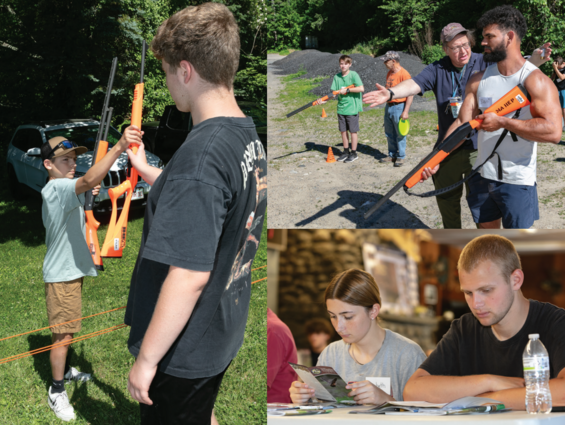
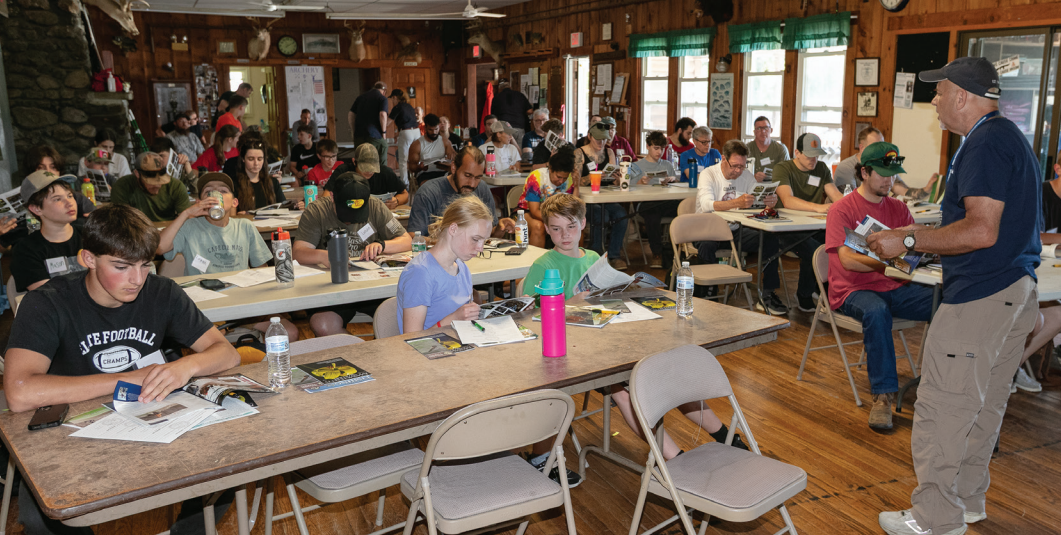
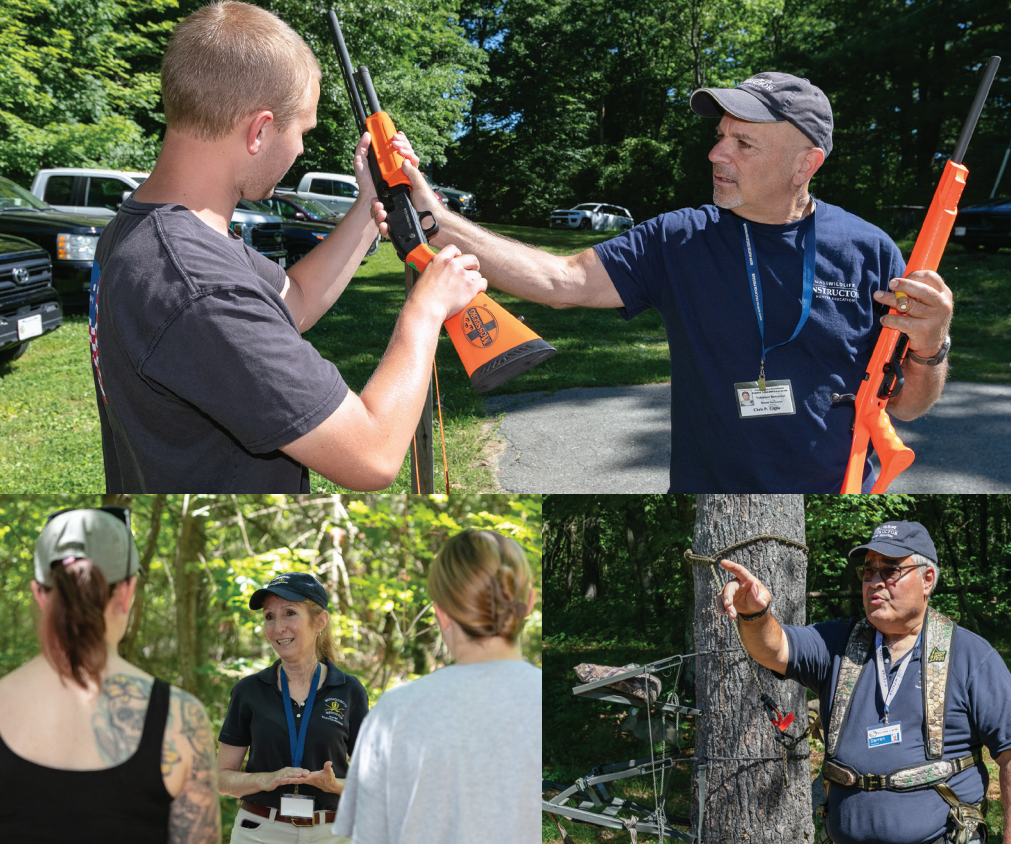
Hands-on training and classroom instruction during Basic Hunter Education courses.
The goal of Basic Hunter Education is not to convince someone to become a hunter. The goal isn’t even to teach them the skills necessary to know how to hunt (MassWildlife has other classes for that). The goal is for students to learn and practice how to be safe, legal, ethical, and responsible if they choose to hunt.
For some students, the course reinforces lessons they first learned from a parent, grandparent, or mentor. For others, it may be their first time meeting someone who hunts. That range of experience is part of what makes the course and its standard curriculum so important. Hunter education establishes a common starting point for everyone regardless of their background or prior exposure to hunting. Everyone is expected to leave the class having learned the same core principles of safety and responsibility.
The curriculum covers a variety of topics, including the safe handling and storage of hunting arms and ammunition, hunting laws and ethics, care and handling of game, and wildlife conservation. Students also learn practical skills, like identifying firearm action designs, safely loading and unloading, carrying a firearm in the field, crossing obstacles, and understanding safe zones of fire when hunting with others. But the deeper lesson running through all the topics is practicing good judgment.
Hunter education teaches every student to ask themselves three core questions in any scenario: Is it safe? Is it legal? Is it ethical? Those three questions come up repeatedly because responsible hunting depends on more than technical ability. A hunter may have the right equipment, the correct license, and a legal opportunity, but they still need to decide whether or not to shoot. Maybe the game animal cannot be clearly identified. Maybe there is not a safe backstop. Maybe another person or building is too close. Maybe the hunter does not feel confident they can make a clean, ethical shot. Hunter education teaches students that choosing not to take the shot is not failure. Sometimes it is the safest and most responsible decision a hunter can make. That point is reinforced repeatedly throughout the course.
Students hear the basic rules of firearm safety more than once because they are not meant to be memorized simply to pass the final exam. They are meant to become ingrained habits: keep the muzzle pointed in a safe direction, treat every firearm as if it is loaded, keep your finger off the trigger until ready to shoot, and know your target and what is beyond it. Hands-on portions of the course help reinforce these lessons. In Massachusetts, instructors use “round robin” stations, where small groups of students rotate through to learn and practice skills like identifying different firearm actions, loading and unloading firearms, and using safe carrying positions. For some students, this will be the first time they pick up a firearm. Under the guidance of a trained instructor, they learn how the firearm feels, how to control the muzzle direction, how to check whether it is loaded, and how to accept personal responsibility for every movement they make with it. For students who do have prior experience with firearms, the course is just as valuable. Hunter education shows everyone that safe handling is not something only beginners need to think about. The same expectation is set that safe behavior must be practiced every time, by every hunter, in every setting.
The course also makes clear that hunting safety is not all about firearms. The leading cause of injury is actually falling from tree stands, so tree stand safety has been incorporated into the curriculum over time. Students also learn basic principles of outdoor safety such as dressing properly for the weather conditions, telling someone where they are going, understanding basic navigation, carrying essential gear, and knowing what to do if something goes wrong.
Perhaps most importantly, ethics are woven throughout the course. Students are presented with various scenarios and have discussions on whether a situation is safe, legal, and ethical. Legal hunting and responsible hunting are not always the same thing. The law helps set the minimum standard, but the ethics lessons ask hunters to think beyond the minimum standard. How will my decisions affect the game animal, the landowner, other hunters, non-hunters using the same area, or even broader public support for hunting? Every hunter’s behavior has the potential to impact how hunting is perceived. A hunter who is careless, disrespectful, or dismissive of safety concerns can cause damage beyond a single incident. Alternatively, hunters who are careful, respectful, and willing to explain what they are doing can help build trust.
Basic Hunter Education is the first formal place where many new hunters learn that responsibility. A certificate is not the end of their education; it’s just the beginning. MassWildlife offers additional courses for people who want to continue learning other hunting skills, including Bowhunter Education; Trapper Education; Map, Compass, and Survival; Waterfowl Identification and Hunting; and Black Powder/Muzzleloader Education. Learn to Hunt programs are also offered for people who want more hands-on experience after completing Basic Hunter Education. Safe, ethical hunting is a lifelong practice, as laws, equipment, habitats, and hunter preferences can all change. A hunter may start with one style of hunting and later try another. Each new experience requires new knowledge, new humility, and renewed attention to the basic principles of safety first introduced in the Basic Hunter Education course.
Fear of the Unknown
Hunter education is one of the strongest tools we have to make hunting safer. The challenge is that most people never see it. A non-hunter may see the outward signs of hunting: a truck parked at the edge of a field, a person wearing blaze orange, a photo of a harvested deer. They are unlikely to know about the classroom before the hunt, see the instructor correcting a student’s muzzle direction, or hear the repeated reminders about target identification, safe zones of fire, ethics, and restraint. In other words, the risk may be visible, but the safety culture often is not.
I spent the first several years of my professional career managing MassWildlife’s social media accounts and, inevitably, every time I posted something about hunting, I observed the same back-and-forth play out in the comment section: one side talks about their fear of being mistaken for a deer while walking in the woods, and the other side responds by pointing out hunting’s strong safety record. What I have always found interesting about this “debate” is that both sides are right. Hunting can be governed by strict laws and have a strong safety record, and people can still feel uneasy about hunting. Both things can be true at once.
In Massachusetts and across the country, most adults do not hunt. A person who has never known a hunter is likely to lack context for why people hunt in the first place. Their image of a hunter may be shaped by news headlines, pop culture, social media, and movies. They may think about Davy Crockett, Katniss Everdeen, Dick Cheney, or even Elmer Fudd. Their image of a hunter may not be accurate, or particularly flattering. Most people never see the training and care that goes into safe hunting unless someone takes the time to show them.
That is why relying on the statement “hunting is statistically safe” is usually not enough to change hearts and minds. For some people, it feels reassuring but for others it sounds dismissive. A better way to tell the story is this: Hunting has become safer over time because generations of hunters, wildlife agencies, and regulators have treated safety as something that must be taught, reinforced, and improved upon over time. For non-hunters, this may be one of the most important things to understand. Hunting safety is not left to chance. It is ingrained in regulations and enforcement and introduced and practiced before new hunters ever enter the woods.
Culture of Safety
I grew up in the suburbs in New Jersey and did not know any friends or family members who hunted until I was a young adult. I did not try wild game until I was in graduate school when a friend mentioned casually that the chili I was eating was made from venison she had harvested. I don’t think I had a negative perception of hunting before then; it’s just not something I had really spent much time thinking about. That moment did instantly broaden my limited understanding of who a hunter could be (a young woman) and my appreciation for why people do it (to get delicious food). Now, because of my job at MassWildlife, I’ve met people from all walks of life who hunt: teachers, doctors, older people, younger people, people who live in the city, people who live near the woods. For me, getting to know more hunters has certainly made hunting less abstract and deepened my understanding of and appreciation for the activity and the people who spend their time learning how to do it safely and responsibly.
Research on public attitudes toward hunting has consistently shown that support for hunting depends heavily on context: why someone is hunting, how they are hunting, what species they are hunting, and whether the public believes hunters are behaving responsibly. That last part is important. While the majority of Americans generally approve of legal hunting, opinions of hunters are more mixed. Surveys show people assume hunters to be knowledgeable about wildlife and the environment, but many Americans also believe hunters practice unsafe behavior, drink alcohol, and violate hunting laws.
So how do we break through these stereotypes?
Research shows the most important variable related to support for hunting is knowing a hunter. That is a powerful finding because it suggests that public acceptance is not shaped only by facts and statistics, but also by familiarity and relationships. Fear will continue to persist where familiarity is absent. Most people will never see the care that goes into safe hunting unless someone takes the time to bring that culture into the light. Hunter education helps do that. It makes visible the training, judgment, and responsibility that begin long before opening day.
Public trust is not built by telling people they are wrong to be afraid. It is built by showing them what responsibility looks like. For hunters, that means understanding that every interaction in the field is a chance to either build trust or damage it. Wearing blaze orange, following laws, asking permission, picking up trash, respecting private property, thanking landowners, and speaking respectfully with other outdoor users contribute to this perception. The more visible the safety culture becomes, the easier it is for people to see hunting not as an unknown risk, but as a managed activity with rules, training, ethics, and accountability. If you’re curious to learn more, our hunter education programs are free and open to anyone, even if you never intend to hunt. I welcome you to join us for an upcoming course or access our free study guide online at any time to get acquainted with the safety lessons of hunter education.
Sharing the Outdoors
Most everyday risks we engage in are taken because they serve our needs. We drive because we need to go to work and we cook because we need to eat. Hunting may feel different to someone who does not hunt. They may feel they are being asked to accept a risk created by someone else’s activity that brings them no obvious personal benefit. That feeling deserves to be taken seriously. Public trust is harder to earn when the benefits and risks do not feel evenly shared. But hunting is not only a private activity. In Massachusetts and across the country, regulated hunting is an important part of wildlife management, conservation funding, local food systems, public health and safety, and cultural tradition. Those benefits may not feel immediate to someone walking a dog on a woodland trail, but they are part of the larger public context in which hunting is regulated.
That is why safety standards and hunter education matter so much. In shared landscapes, hunters are not only responsible for their own actions. They are also responsible for helping maintain the safety, trust, and comfort of others who use those same places. Hunting has become safer over time because safety has been taught, practiced, studied, and reinforced. Massachusetts has been part of that story, from the early adoption of blaze orange to the continued work of educating today’s newest hunters. By collectively adopting a culture of outdoor safety that is embraced by everyone, we can better understand one another and better share the outdoors that we all care about so much.
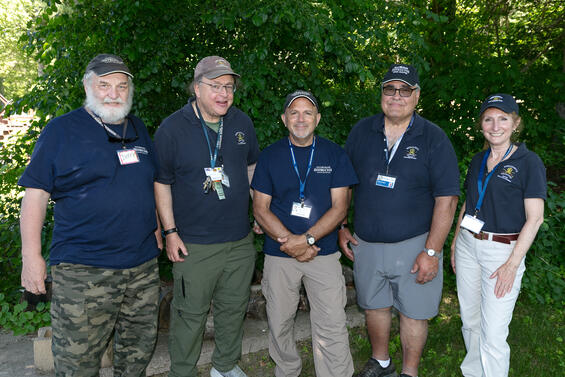
Hunter education programs would not be possible without the support of our volunteers.
MassWildlife relies on a dedicated team of over 250 volunteer instructors to teach hunter education courses across the Commonwealth. Hunter education programs would not be possible without the support of our volunteers. If you're passionate about passing on the hunting tradition, please consider becoming a Hunter Education Volunteer Instructor! To learn more, contact us at (508) 389-7820 or hunter.education@mass.gov.
About the Author
Nicole McSweeney is MassWildlife’s Assistant Director of Outreach and Education. She first took Basic Hunter Education when she was 27 years old, proving it’s never too late to learn something new about the outdoors.