
Description
Little Long Pond is a 48-acre great pond located off of West Long Pond Rd in Plymouth. Little Long Pond has an average depth of 5 feet, a maximum depth of 9 feet, and water transparency can vary throughout the year depending on algae concentrations. The bottom is generally sand and rubble, and the roughly 1.5 miles of shoreline are about half developed with year-round homes and summer camps. Long Pond is located immediately south of Little Long Pond and the two ponds are connected via a small channel.
Recreational access
The Department of Conservation and Recreation (DCR) manages a gravel boat ramp suitable for trailered craft off of Clark Rd. on the southern shore of the pond (get directions). The launch shares a parking lot with the Long Pond Boat ramp across the street and can hold approximately 24 trailers. No internal combustion engines are allowed on Little Long Pond, enforced by the town of Plymouth. The ramp leads into a particularly shallow basin of the pond and depending on water levels you may have to pole your boat out to deeper water. Shore fishing is best accomplished via wading. Please contact DCR offices of Myles Standish State Forest or the Town of Plymouth for additional information, fee structure, and/or restrictions pertaining to public access of Little Long Pond.
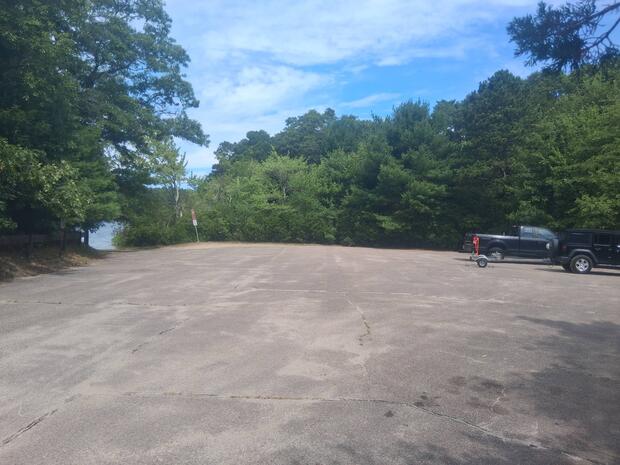
Parking for Little Long Pond is at the back of the Long Pond access parking lot.
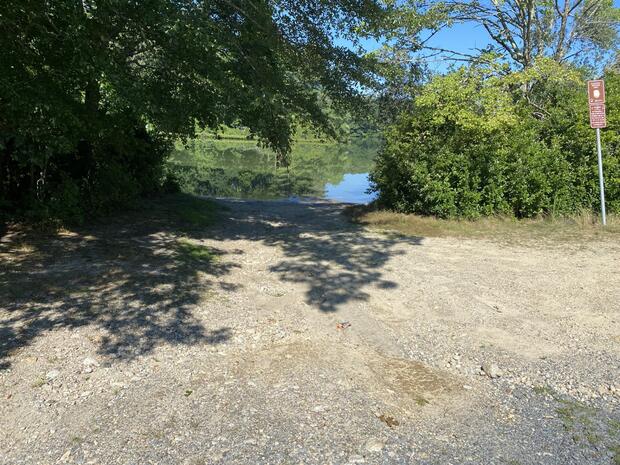
The gravel boat ramp at Little Long Pond.
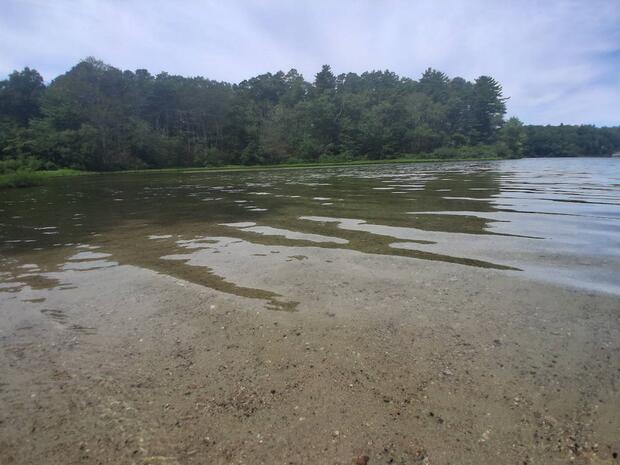
Depending on water levels you'll have to back in a little ways off the launch to float your boat.
Fish populations
The following fish species were found during MassWildlife surveys:
- largemouth bass
- smallmouth bass
- chain pickerel
- yellow perch
- pumpkinseed
- bluegill
- white sucker
Fishing
Little Long Pond has produced largemouth bass, chain pickerel, yellow perch, white perch, and rainbow trout that meet minimum sizes for recognition by the Freshwater Sportfishing Awards Program.
More fishing resources:
Stop aquatic hitchhikers
Prevent the transport of nuisance species; clean all recreational equipment. Visit ProtectYourWaters.net to learn more.